
As the winter season approaches, the focus for both professional athletes and recreational enthusiasts shifts from general fitness to sport-specific conditioning designed to handle the unique rigors of alpine environments. While many perceive skiing as a gravity-assisted descent, physiological data confirms that the sport demands an extraordinary level of muscular output, cardiovascular resilience, and neuromuscular control. To address these demands, elite coaches are increasingly emphasizing "power endurance"—a specialized fitness metric that determines how long an athlete can maintain explosive, high-intensity movements before fatigue compromises technique and safety.
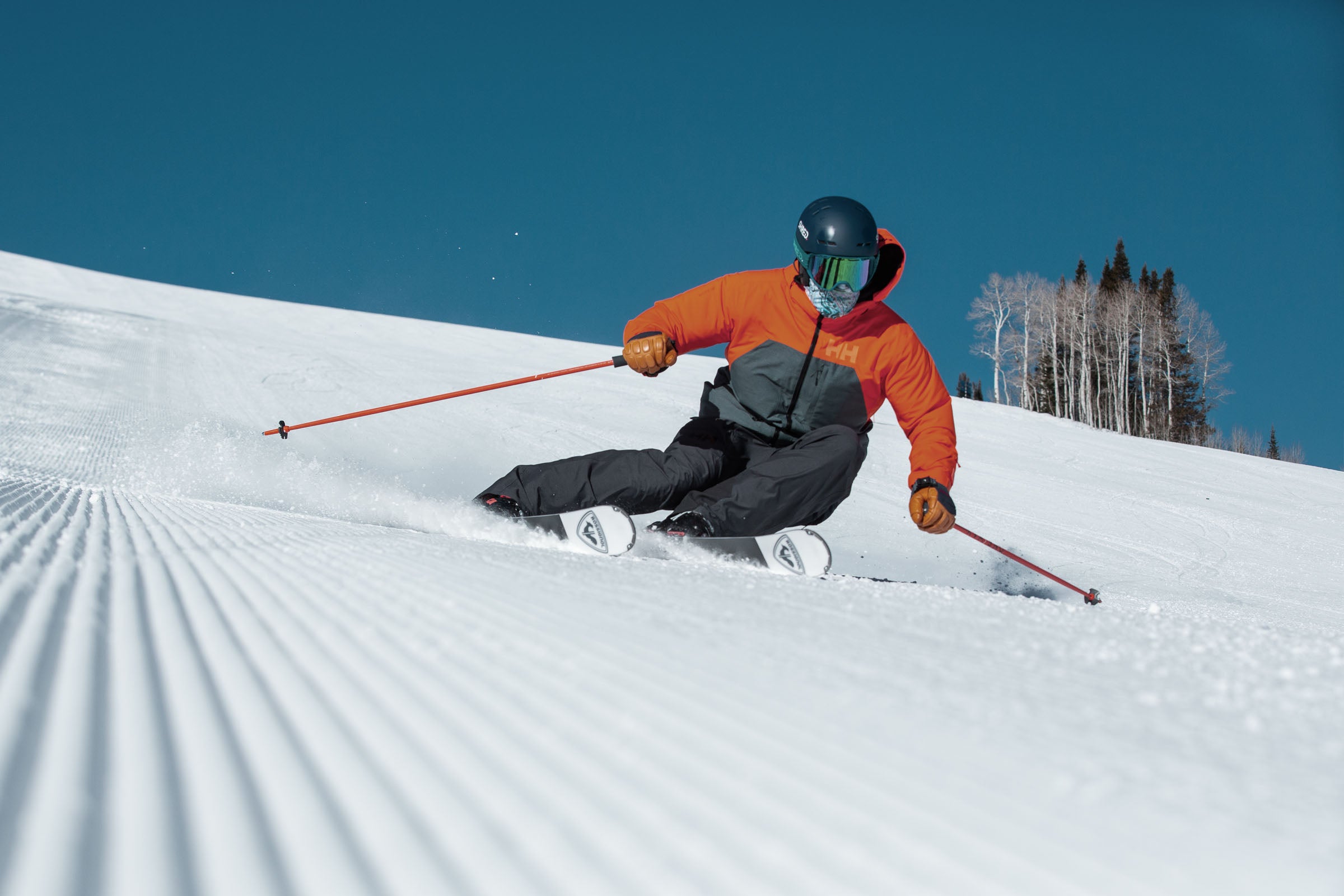
The necessity for specialized training is underscored by the physical reality of the slopes. Whether navigating the pristine corduroy of a freshly groomed trail or the unpredictable terrain of the back bowls, skiers must exert constant force to manage edge control and absorb kinetic energy. According to industry experts and veteran coaches like Chris Miller, who has spent years training world-class ski racers, the difference between a successful season and one sidelined by injury often comes down to the quality of pre-season preparation.
The Science of Power Endurance in Alpine Sports
Power endurance is defined as the ability of the musculoskeletal system to sustain high-power outputs over an extended duration. In the context of skiing, this bridges the gap between raw strength (the maximum force a muscle can exert) and aerobic stamina (the ability to perform low-intensity exercise for a long time). A typical downhill run may last anywhere from two to ten minutes, requiring the legs and core to fire repeatedly in a series of eccentric and concentric contractions.
When a skier enters a turn, they are subject to centrifugal forces that can exceed twice their body weight. Maintaining a stable line requires the quadriceps, glutes, and core to resist these forces while simultaneously preparing for the next transition. Without sufficient power endurance, the body’s "lactic threshold" is reached quickly. As metabolic byproducts accumulate in the muscle tissue, reaction times slow and the ability to stabilize joints—particularly the knees—diminishes. This physiological breakdown is a primary contributor to late-day injuries, where fatigue-induced errors lead to falls.
The Chris Miller Training Philosophy
Coach Chris Miller’s approach to ski fitness departs from traditional bodybuilding or pure distance running. His methodology focuses on "functional specificity," ensuring that every movement in the gym translates directly to the mechanics of a ski turn. Miller posits that true ski fitness requires a "trunk-first" approach, where a stable core allows the limbs to operate independently and powerfully.
"Preparing your body for the unique demands of skiing means focusing on specific, targeted movements that build not only muscle but endurance under fatigue," Miller notes. This philosophy is the cornerstone of the modern "Power Endurance Workout," a regimen designed to be accessible yet rigorous enough to challenge even seasoned racers. By simulating the interval nature of skiing—short bursts of extreme effort followed by brief periods of recovery—athletes can condition their nervous systems to remain calm and efficient under duress.
Chronology of a Successful Pre-Season Build
Professional trainers generally recommend a three-phase approach to the winter season, typically beginning 8 to 12 weeks before the first chairlift opens.
- The Hypertrophy and Base Phase (Weeks 1-4): Focuses on building muscle mass and improving general aerobic capacity. This involves traditional weightlifting and steady-state cardio to prepare the joints for heavier loads.
- The Strength and Power Phase (Weeks 5-8): Transitions toward explosive movements, such as box jumps and heavy squats, to increase the maximum force the athlete can generate.
- The Power Endurance and Specificity Phase (Weeks 9-12): This is the final stage where the "Power Endurance Workout" is most critical. It involves circuit training and plyometrics that mimic the duration and intensity of a full ski run.
Detailed Breakdown of the Power Endurance Circuit
The following workout protocol, developed to maximize "bell-to-bell" performance, requires minimal equipment—primarily a sandbag or weighted pack, a mat, and sufficient floor space.
The Warm-Up: Activation and Mobilization
Before engaging in high-impact movements, the body must undergo a dynamic warm-up to increase core temperature and lubricate the joints. This begins with five to ten minutes of light cardio (jogging or cycling), followed by the Quadruped Series.
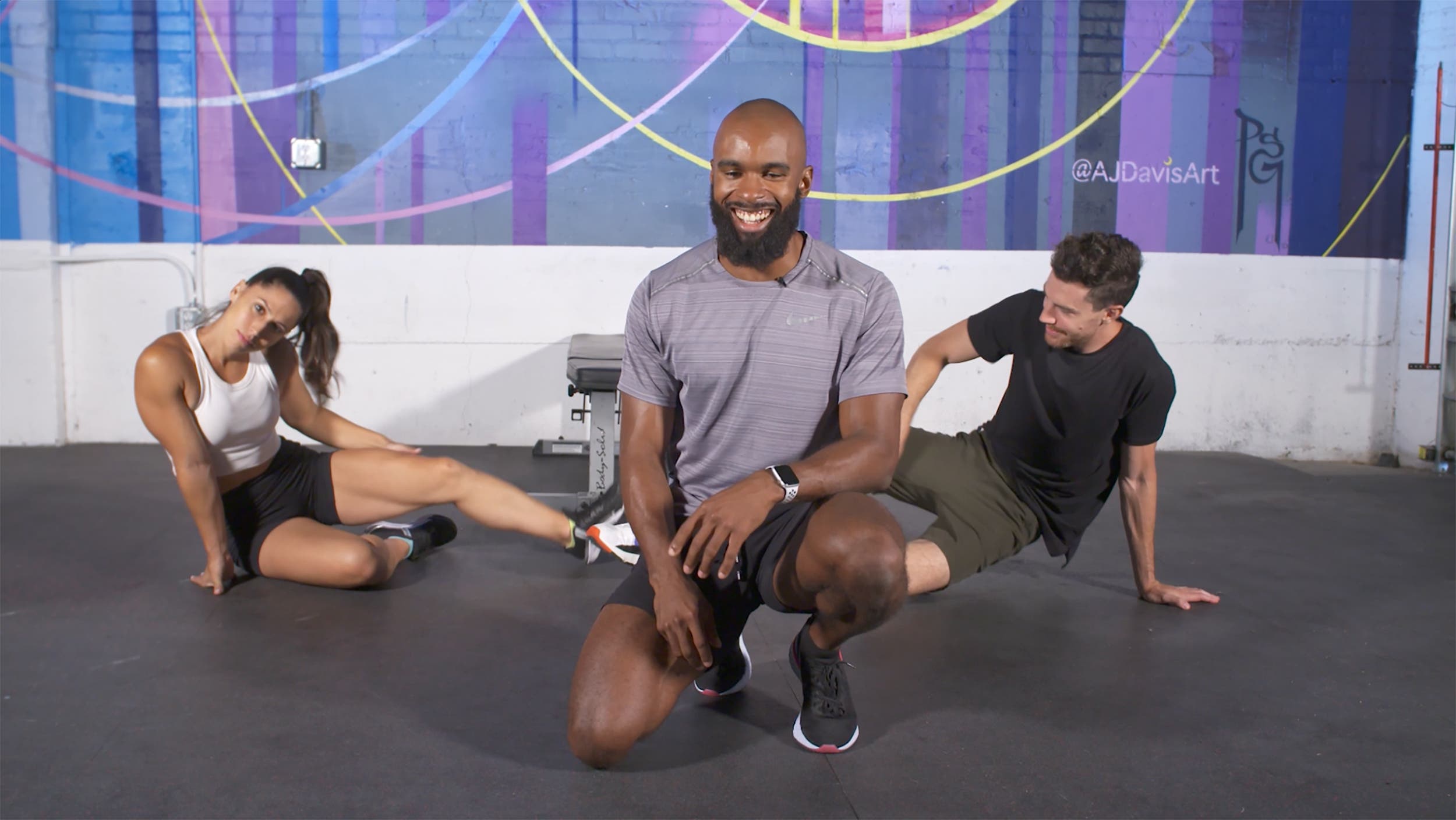
The Quadruped Series (6 repetitions per side) focuses on pelvic stability and spinal alignment. By moving through "bird-dog" variations and hip circles, the skier activates the deep stabilizers of the trunk. This is followed by a Lunge Series (2 repetitions per side, held for 30 seconds) to open the hip flexors and engage the gluteus medius—a muscle critical for preventing the knees from caving inward during a turn. The warm-up concludes with a Dynamic Series (6 repetitions per side) involving lateral swings and leg reaches to prepare the body for multi-planar movement.
Circuit No. 1: Lower Body Resilience
The primary goal of the first circuit is to build "explosive capacity" in the legs. Using a sandbag is preferred over traditional dumbbells because the shifting weight of the sand mimics the unstable nature of snow.
- Sandbag Squats: Performed with a focus on a slow eccentric (downward) phase and an explosive concentric (upward) phase.
- Skater Hops: A lateral plyometric movement that is perhaps the most sport-specific exercise for skiers. It builds the lateral power necessary for edge-to-edge transitions.
- Weighted Lunges: These build unilateral strength, ensuring that both legs can handle the load independently during a recovery or a high-speed carve.
The protocol calls for four sets with no rest between exercises and a 45-second recovery between sets. This high-density format forces the muscles to clear lactate quickly, simulating the demands of a long mogul field.
Circuit No. 2: Trunk and Anti-Movement
In skiing, the core’s primary job is not to move the body, but to resist unwanted movement. This is known as anti-rotation and anti-extension.
- Dead Bugs: A foundational core exercise that teaches the athlete to move their limbs while keeping the spine pinned to the floor.
- Plank Variations: Specifically those that involve lifting a limb to challenge stability.
- Anti-Rotation Holds: Using a resistance band or weight to prevent the torso from being pulled out of alignment.
This circuit is performed in three sets with 45 to 60 seconds of rest, focusing on "time under tension" rather than rapid repetitions.

Supporting Data: The Impact of Conditioning on Safety
Statistical analysis from mountain resorts worldwide suggests a strong correlation between physical fatigue and injury rates. A study of alpine skiing injuries indicates that a significant percentage of non-contact ACL (Anterior Cruciate Ligament) tears occur after 2:00 PM. This "afternoon slump" is attributed to the degradation of power endurance.
When the quadriceps fatigue, they lose their ability to support the knee joint, placing the brunt of the mechanical stress on the ligaments. By increasing power endurance through targeted pre-season circuits, skiers can maintain the "athletic stance" longer, effectively shielding their joints from injury. Furthermore, a conditioned body recovers faster from the inflammatory "micro-trauma" of a day on the slopes, allowing for multiple consecutive days of skiing without a decline in performance.
Broader Implications for the Ski Industry
The shift toward professional-grade fitness for the general public reflects a broader trend in the outdoor industry. As equipment technology—such as "rockered" skis and high-performance boots—allows skiers to go faster and tackle steeper terrain, the physical requirements for the human "engine" have increased.
Resorts and equipment manufacturers have a vested interest in skier fitness. A fit skier is a returning customer who spends more time on the mountain and less time in the clinic. Digital platforms and video tutorials, such as those featuring Coach Chris Miller, have democratized access to elite training, moving it from the exclusive domain of Olympic training centers to the living rooms of weekend warriors.
Conclusion
The evolution of ski training from general conditioning to specific power endurance represents a significant advancement in sports science. By focusing on the ability to sustain high-intensity efforts, skiers can transform their experience on the mountain, moving from a state of survival to a state of mastery. As the 2025-2026 season commences, those who have invested the time in these targeted circuits will find themselves better equipped to handle the pristine corduroy of the morning and the heavy slush of the afternoon with equal composure. Fitness, in this context, is more than just a physical attribute; it is the fundamental requirement for safety, longevity, and the pure enjoyment of the sport.

