
The 19-year-old downhill sensation, Mattias Wilson, has officially joined the Stifel U.S. Ski Team, marking a pivotal moment in his burgeoning career following a breakthrough season characterized by strong NorAm results, a commendable seventh-place finish at the FIS Alpine Junior World Ski Championships, and his initial foray into Europa Cup racing. This national team nomination signifies not only a personal achievement for Wilson but also a promising injection of young talent into the U.S. speed program, underscoring the ongoing development pathway for American ski racers aiming for the sport’s highest echelons. Wilson’s rapid ascent in the highly competitive world of alpine ski racing has positioned him as one of the nation’s most exciting prospects in speed disciplines. Currently ranked No. 100 in the world in downhill, his consistent top-10 finishes in speed events at the Junior Worlds have drawn significant attention. Despite these accolades, Wilson maintains a grounded perspective on his specialization, admitting, "I don’t really know," when asked about the precise reasons behind his downhill prowess, a question he frequently encounters. This humility, however, belies a deep-seated foundation built over years, rooted in a unique upbringing and a calculated approach to his development.
A Foundation Forged in Wyoming’s Rugged Terrain
The explanation for Wilson’s affinity for downhill skiing may be more evident from an external vantage point. He was raised in Jackson Hole, Wyoming, a region renowned for its steep, challenging terrain and a vibrant ski culture. His father, an avid skier who grew up in the area, instilled a love for the sport from an early age. The family connection to skiing ran deep, with Wilson’s grandparents owning a hostel at the base of Jackson Hole Mountain Resort, essentially embedding him in the heart of the ski community. This environment provided Wilson with an unparalleled apprenticeship in navigating one of North America’s most demanding mountains, long before competitive results became a primary focus. The rugged slopes of Jackson Hole, known for their steep pitches, varied snow conditions, and natural features, demand a unique blend of technical skill, courage, and an intuitive understanding of the mountain. These are the very attributes that define a successful downhill racer, suggesting that Wilson’s childhood playground was, in fact, an ideal training ground.
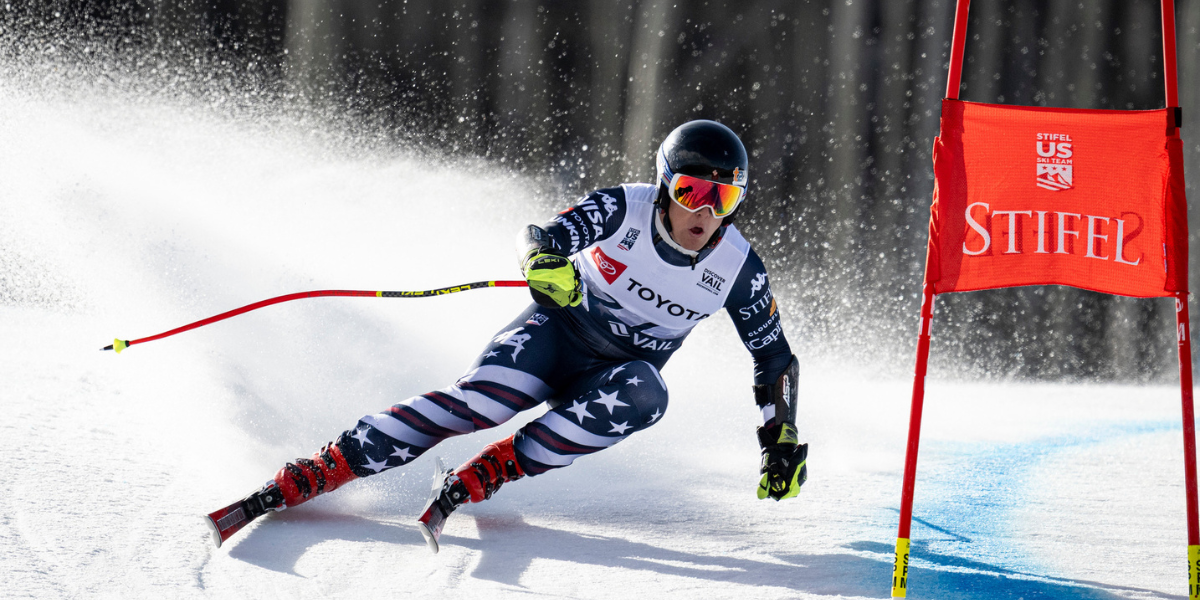
Wilson’s childhood was immersed in the resort’s Kids Ranch program, and he frequently enjoyed "powder days" when his father would pull him out of school to experience fresh snow. His early years were not centered on racing gates but on exploring the vastness and complexity of the mountain, developing an innate comfort with speed and varied conditions. He joined the Jackson Hole Ski & Snowboard Club between the ages of 10 and 12, spending at least eight formative years within its program. He credits his father significantly, stating, "I credit a lot of my skiing to my dad." Beyond family, several coaches played crucial roles in nurturing his talent, including Kevin Keane during his U14 and early FIS years, and Ned Lazarevic, whose guidance through his U16 development helped him sustain his commitment to racing during a critical phase. Ultimately, the mountain itself served as his most profound teacher, imparting invaluable lessons in terrain reading, adaptability, and maintaining composure at high velocities. This early exposure to natural, challenging terrain, rather than exclusively groomed race courses, likely contributed to his exceptional ability to "read" the snow and adapt his line at high speeds, a hallmark of top downhillers.
National Recognition on Home Snow
A significant milestone in Wilson’s early competitive career occurred on familiar ground. On March 8, 2024, he clinched the U18 national super-G championship at Jackson Hole Mountain Resort. This victory held profound meaning, not only for its national championship status but also for its location – the very mountain where he cultivated his skiing skills. "Result-wise, I think winning the U18 super-G at Jackson was pretty special just because it was at home," Wilson reflected. This triumph served as an early indicator of his ability to perform under pressure and deliver his best skiing when the stakes were highest, a pattern that has consistently manifested in subsequent competitions. Winning a national title on home turf is often a deeply personal and confidence-boosting achievement, validating years of effort and demonstrating a mastery of familiar slopes under competitive conditions.
Strategic Development: The Move to Sugar Bowl
Upon completing high school in Jackson, Wilson made a calculated decision to further his ski racing career. During his final three years of high school, he had already integrated part-time training with the Sugar Bowl Ski Team & Academy. For his fourth year of FIS racing, he transitioned to the California-based program full-time as a postgraduate athlete. This move was pivotal, driven by Wilson’s recognition that while Jackson Hole had provided an exceptional foundation, he needed a more structured, high-performance racing environment to ascend to the next level. "It wasn’t an environment where I felt like I could succeed at the next level," he explained, articulating his strategic imperative. This decision reflects the increasing specialization and professionalization required to progress in alpine racing, where dedicated academies offer focused training, access to specialized coaches, and a competitive peer group.

Sugar Bowl offered a blend of the familiar and the new. Wilson already knew Athletic Director Branko "Bronco" Zagar from his time in Wyoming and was acquainted with coaches Matej Vidovič and Matilda Sola through Western Region racing. Crucially, he perceived a clear, well-defined plan from the coaching staff. "They were really dialed in," he noted. "It just seemed like they knew what they was doing, and they had a plan. I bought in on that plan, and I think it worked out quite all right." His postgraduate season at Sugar Bowl was instrumental in converting his raw potential into consistent, impactful results. This period also fostered deep connections with his coaches and teammates, providing a vital support system. "Having my two coaches last year, Matej and Matilda, and being very close and connected to them was very strong," Wilson shared. "Being able to rely on them if stuff doesn’t go the greatest was a nice benefit." The professional environment, expert guidance, and camaraderie at Sugar Bowl proved to be the catalyst for his national team ambitions.
The NorAm Pathway and National Team Qualification
Wilson entered his most recent season with the explicit goal of earning a national team spot. This ambition solidified during the speed races at Aspen Highlands. Prior to Aspen, he had already demonstrated promising form at Whiteface Mountain, where his ability to gain time on flatter sections of the course, despite initial struggles on the upper part, highlighted a key strength. His natural gliding ability proved to be a decisive factor. "A lot of people say I’m a natural glider," he confirmed. By the time he arrived in Aspen, his burgeoning confidence complemented his technical skills. There, he secured the crucial second result required to meet the stringent nomination criteria for the Stifel U.S. Ski Team.
The NorAm Cup circuit serves as the primary development tour for North American alpine ski racers, providing a vital bridge between junior and World Cup competition. It offers a structured series of races where athletes accumulate FIS points, vie for overall and discipline titles, and earn opportunities for higher-level races like the Europa Cup and, ultimately, direct World Cup starts. Meeting the U.S. Ski Team criteria typically involves a combination of consistent top-level NorAm finishes, competitive FIS points across disciplines, and often, compelling performances at Junior World Championships. The selection process is rigorous, aiming to identify athletes with the potential to represent the U.S. on the global stage. For Wilson, the Aspen results provided undeniable evidence of his readiness to take this significant step. "After Aspen, after I got that second result, I basically knew I was going to make the team," he stated. Coach Vidovič promptly sent a congratulatory message to the Sugar Bowl group chat, yet Wilson chose to temper his celebration until the official announcement from U.S. Ski & Snowboard. "It felt really good," he said, "I didn’t really take it in until it was officially announced." This cautious approach underscores the magnitude of the achievement and the professional demeanor required at this level.
Integrating into the Stifel U.S. Ski Team Environment
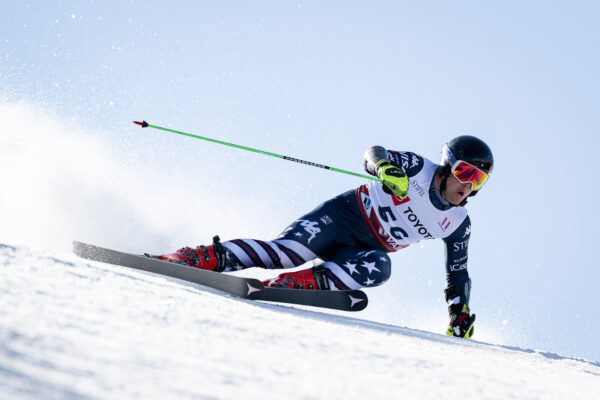
With his national team nomination confirmed, Wilson swiftly transitioned into the elite environment of the Stifel U.S. Ski Team. His first on-snow camp as a national team athlete took place at Copper Mountain, focusing primarily on giant slalom. Working under the guidance of Europa Cup coaches Mike Bansmer and Francio Bertolini, he concentrated on refining tactics and technical development. This initial experience was transformative. "It was definitely a surreal feeling," Wilson recounted, stepping onto the snow alongside seasoned national team members. Despite the initial awe, he quickly found his footing within the group, describing it as "a very nice family" where "a lot of productivity is to be had."
Beyond the slopes, Wilson spent over a month in Park City, Utah, the headquarters of

