
The MoonPay X Games Chiba 2026 officially commenced its high-stakes weekend of competition at the Makuhari Messe, marking a triumphant return to the Chiba Prefecture following the 2025 event held in Osaka. As the second stop of the newly inaugurated MoonPay X Games League (XGL), the event represents a transformative era for action sports, shifting from traditional individual-focused contests to a structured, team-based championship format. Over 80 elite athletes from 16 nations gathered to compete across eight disciplines on Saturday, delivering a mixture of veteran dominance and historic breakthroughs by the sport’s youngest competitors.
At the conclusion of the first day, the local favorites, X Games Club (XC) Tokyo, fortified their position at the top of the overall XGL standings. Building on their momentum from the season opener in Sacramento, XC Tokyo ended the day with 1,450 points. They are pursued by XC New York with 1,310 points and XC São Paulo with 1,300 points. XC Los Angeles remains in contention with 1,150 points, setting the stage for a decisive final day of competition on Sunday.
The Evolution of the MoonPay X Games League (XGL)
The 2026 season marks the full implementation of the X Games League, a strategic pivot designed to provide a more narrative-driven and consistent competitive structure for fans and sponsors alike. By organizing athletes into city-based clubs—Tokyo, New York, São Paulo, and Los Angeles—the XGL has introduced a point-accumulation system that rewards consistent podium finishes across multiple stops.
Chiba serves as a critical midpoint in the inaugural season. The league’s structure not only emphasizes individual excellence but also strategic depth, as clubs must balance their rosters across BMX, Skateboarding, and Moto X. The enthusiastic reception at Makuhari Messe underscores the growing appetite for action sports in Japan, a nation that has seen a surge in participation and professional success following the inclusion of skateboarding and BMX in recent Olympic cycles.
Record-Breaking Legacies: Garrett Reynolds and the BMX Street Dynasty
In the Monster Energy Men’s BMX Street final, Garrett Reynolds of XC São Paulo further solidified his status as the most successful athlete in the history of the discipline. Reynolds secured his 18th career gold medal, a feat that places him three golds ahead of legendary figures Nyjah Huston and Shaun White. His performance in Chiba was a masterclass in technical precision and risk management.
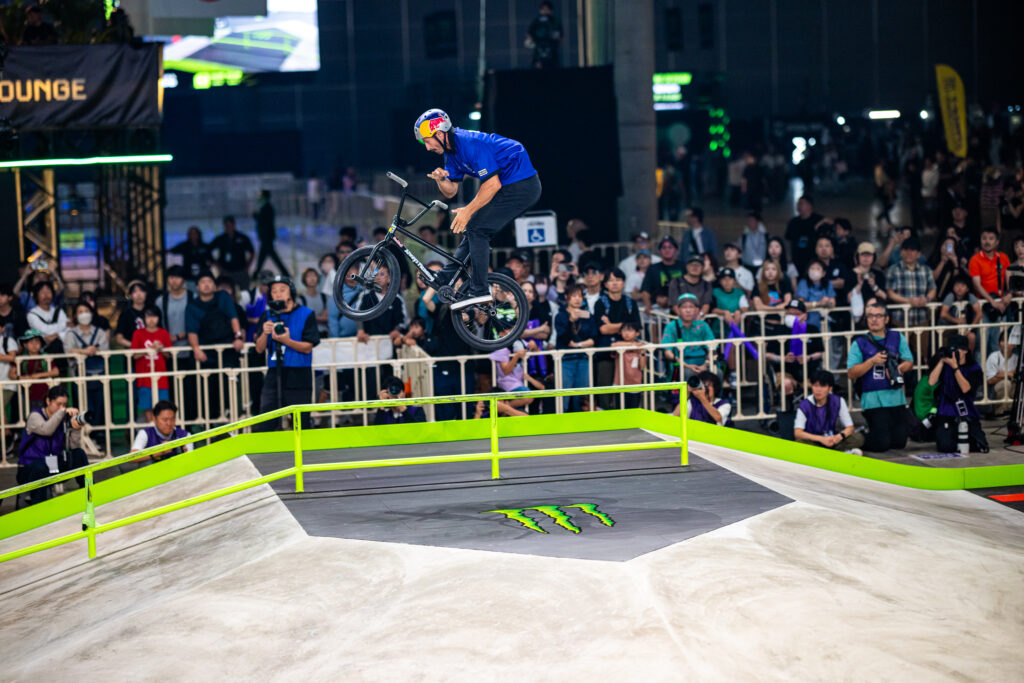
Reynolds’ consistency is statistically unprecedented; he has medaled in 23 of the 25 X Games Street competitions ever held. Since his first victory in 2008, Reynolds has maintained a presence on the podium, and his current streak of 19 consecutive Street medals is the longest in any single discipline in X Games history. His winning runs in Chiba were highlighted by a pegs-to-over 360 and an inward 180 to backward grind down the ledge, earning him the top two scores of the afternoon.
The silver medal was awarded to Jordan Godwin, marking his fourth consecutive podium finish in the discipline. Godwin’s run was noted by judges for its intricate grind combinations, specifically a high-stakes icepick grind to hard 180. Devon Smillie rounded out the podium with a bronze, his eighth career medal, utilizing a risky hardway barspin to manual icepick grind crankflip to secure his points early in the session.
The Rise of the Next Generation: Women’s BMX and Skateboarding
The narrative of the day was heavily defined by the "youth movement" currently sweeping through action sports. In the Stake Women’s BMX Park, 16-year-old Miharu Ozawa of XC Tokyo proved that her gold medal in Sacramento was no fluke. Entering her final run in second place, Ozawa executed a high-pressure "walk-off" victory, dethroning the legendary Hannah Roberts. Ozawa’s backflip tailwhip over the box was cited as the trick of the contest, securing her status as the youngest BMX medalist in the history of the Games.
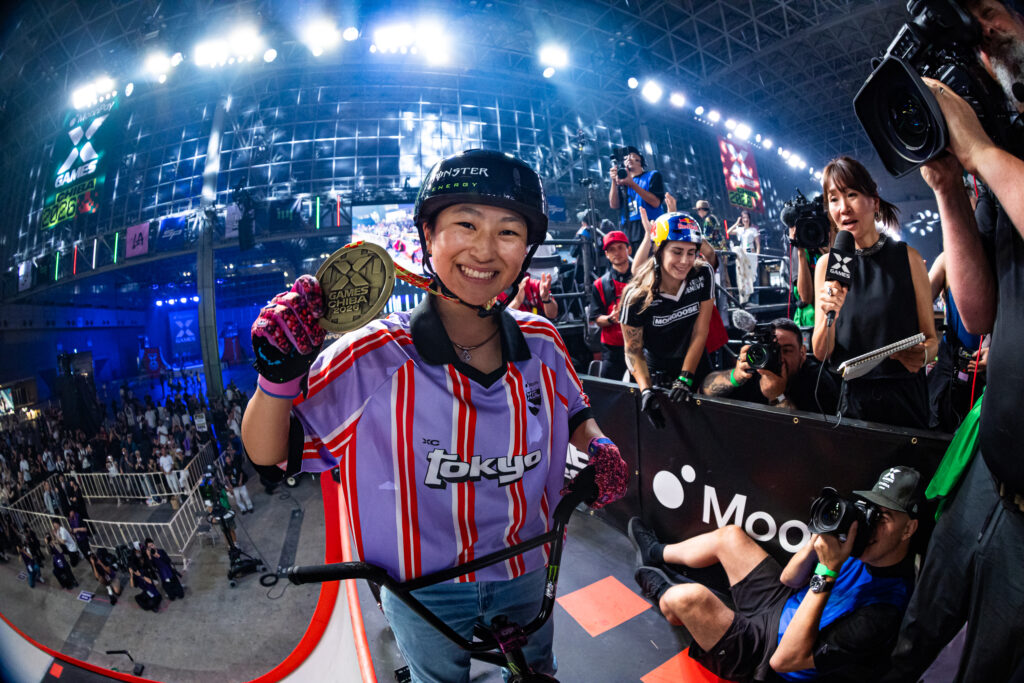
Hannah Roberts, representing XC New York, took the silver despite battling a shoulder injury sustained during practice and a respiratory illness. Despite these setbacks, Roberts posted three scores in the 90s, showcasing a 270 no-hander over the hip that remains unique in the women’s field. Kim Mueller secured the bronze, her second in a week, featuring a stylish 360 can-can tire grab.
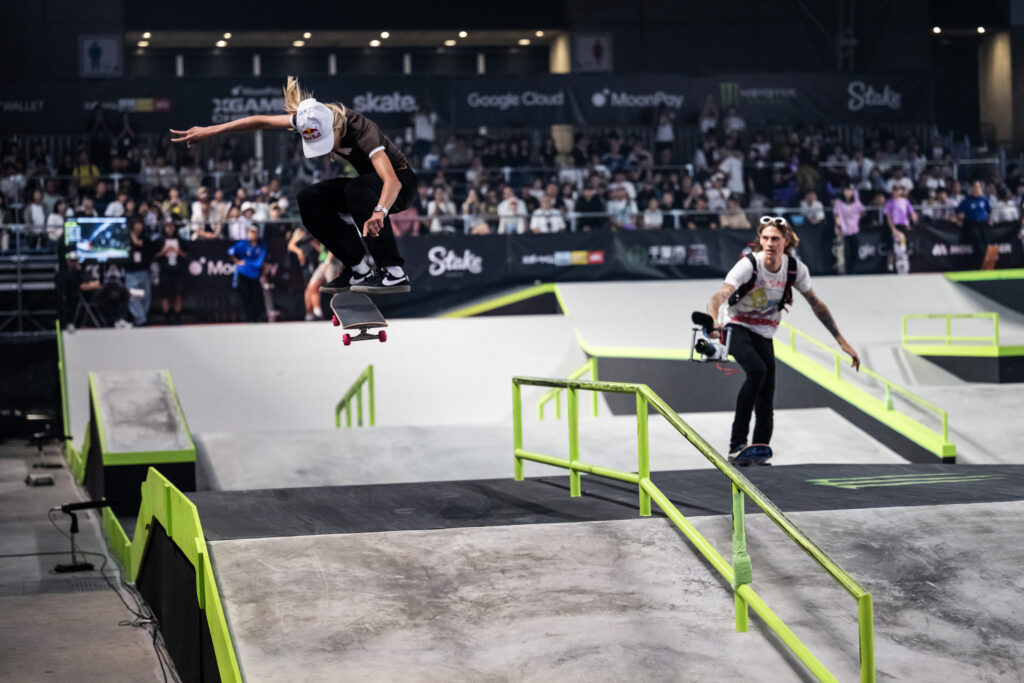
In the Monster Energy Women’s Skateboard Street, Chloe Covell of XC New York lived up to her status as the #1 overall XGL Draft pick. Covell captured her fifth career gold medal, tying the record for most gold medals in the discipline held by Leticia Bufoni since 2021. Despite technical issues with a follow-cam operator during her second run, Covell remained composed, using a rebate run to post a score of 93.33. Her victory margin of 8.33 points was the largest of the day in the skateboarding categories. Japanese athletes Coco Yoshizawa (XC Tokyo) and 14-year-old Ibuki Matsumoto (XC São Paulo) took silver and bronze, respectively, further highlighting Japan’s depth in the street discipline.
Vert Mastery and Historic Youth Milestones
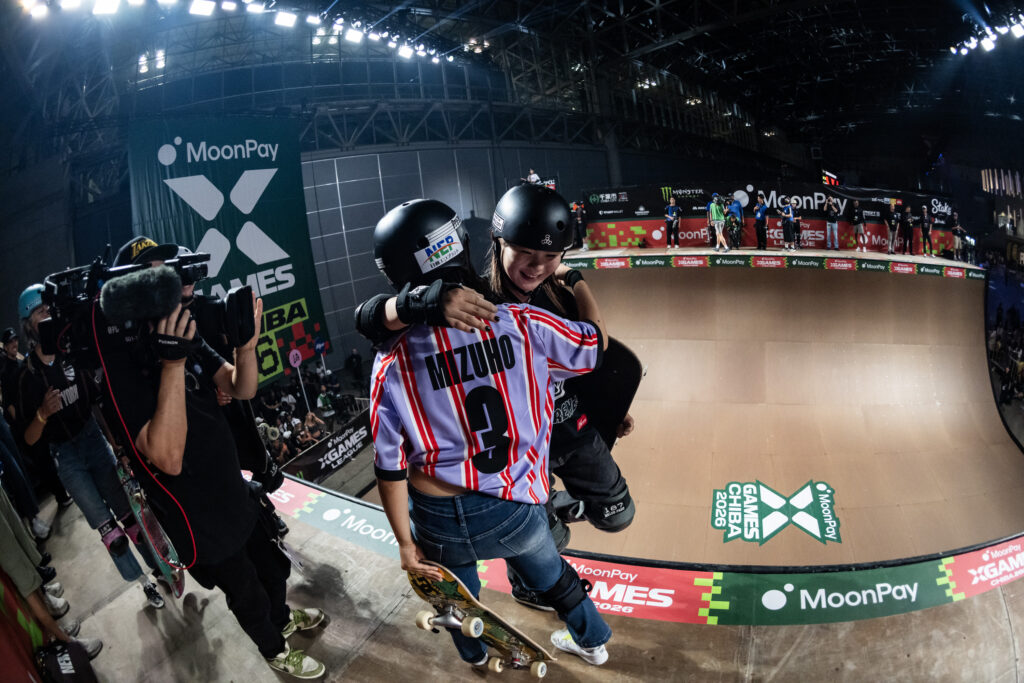
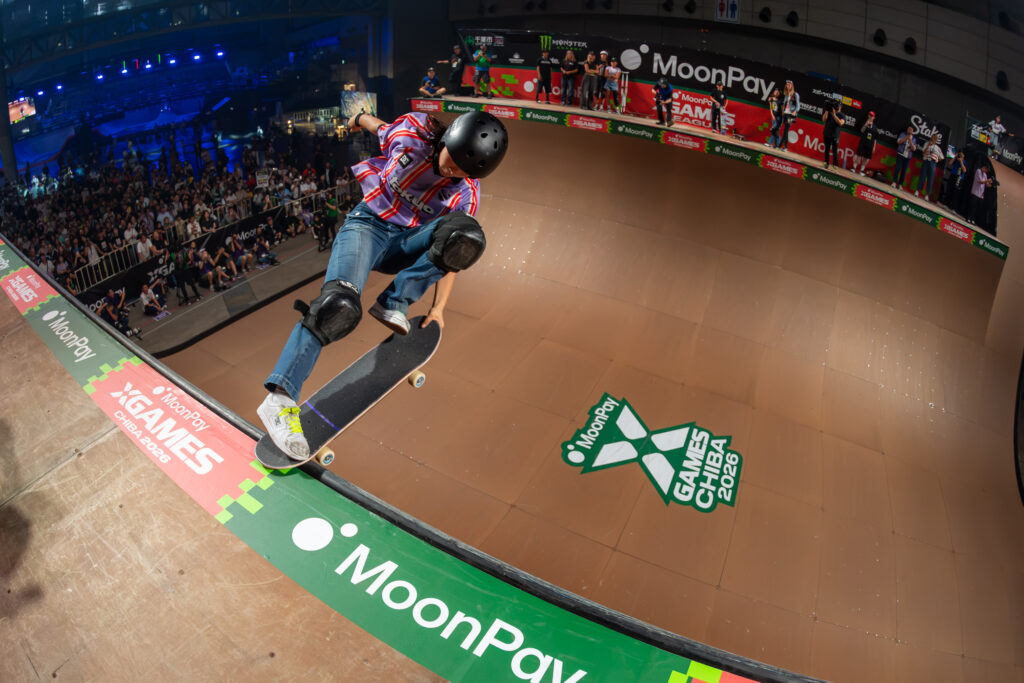
The MoonPay Women’s Skateboard Vert competition saw 15-year-old Mizuho Hasegawa of XC Tokyo claim gold in front of her home crowd. Hasegawa’s run was distinguished by her ability to land fakie-to-fakie 540s, a trick that currently sets her apart from the rest of the field. This victory brings her total X Games medal count to eight. Mia Kretzer, the 11-year-old sensation from XC Los Angeles, followed her Sacramento gold with a silver in Chiba, while Juno Matsuoka secured the bronze.
History was also made in the MoonPay Men’s Skateboard Vert. Ema Kawakami, an 11-year-old free agent, became the youngest male gold medalist in X Games history. Kawakami’s performance included back-to-back 720s, a "McKenzie" Indy 720 into a fakie-to-forward Indy 720. In winning the gold, Kawakami ended the four-event winning streak of Gui Khury (XC São Paulo), who took silver. Moto Shibata of XC Tokyo earned the bronze, delighting the local audience with a signature kickflip McTwist.
Best Trick Disciplines: Innovation and NBDs
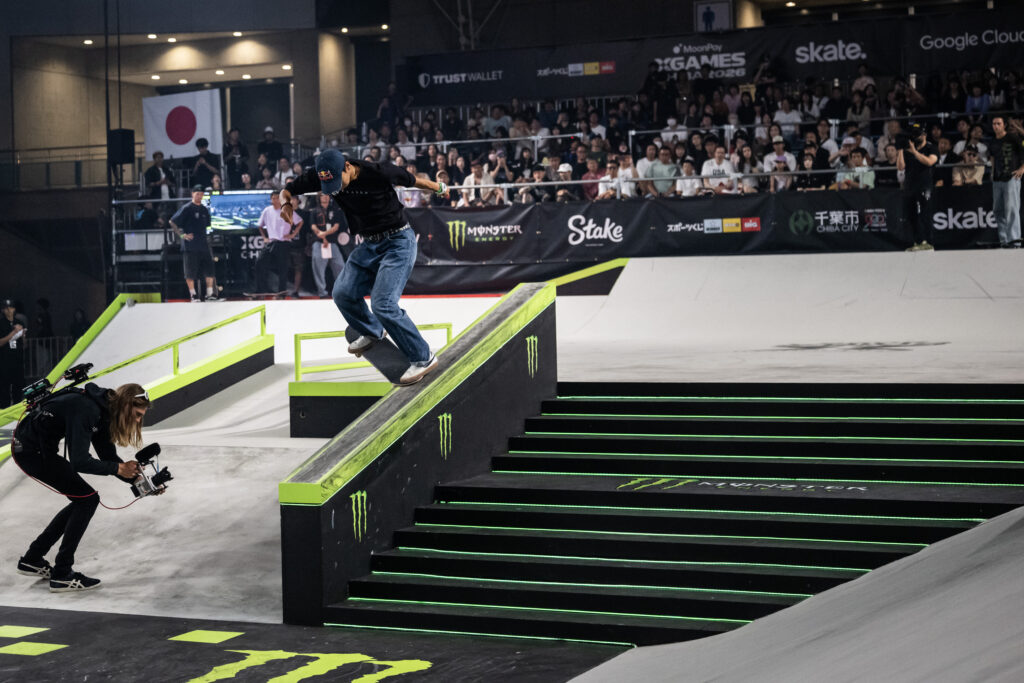
The "Best Trick" formats provided some of the most progressive moments of the day. In Men’s Skateboard Street Best Trick, Juni Kang secured his second consecutive gold medal, representing a historic peak for South Korean skateboarding. Kang landed two tricks that judges classified as "NBDs" (Never Been Done) in X Games competition: a switch heelflip backside tailslide to backside bigspin out on the hubba ledge, and a switch 180 crooked grind to nollie heelflip out.
Filipe Mota (XC Los Angeles) took silver with his own NBD—a nollie backside bigspin heelflip to backside tailslide to backside bigspin out. Ginwoo Onodera (XC New York) took bronze, maintaining his position as one of the most consistent podium threats in the league.
In the Stake Men’s BMX Park, Marcus Christopher (XC Los Angeles) utilized sheer power and amplitude to take gold. His triple downside tailwhip and flair tuck no-hander to downwhip were among the highest-flying tricks of the event. Logan Martin (XC New York), the 32-year-old veteran and current XGL points leader, took silver, while Rim Nakamura (XC Tokyo) earned bronze with a massive triple tailwhip over the hip.
Moto X Best Trick: Adelberg’s Record-Breaking Performance
The evening concluded with Moto X Best Trick, where Rob Adelberg cemented his legacy as the most decorated Australian in X Games history. Adelberg won his 11th overall gold medal and 22nd total medal, surpassing Nate Adams for the most Moto X medals in the history of the event. Adelberg’s winning trick—a frontflip Shaolin seat grab barhop—was a display of extreme risk, as he maintained contact with the motorcycle only through his hands while his feet were completely extended.
Jose Canosa, making his X Games debut at age 23, secured a silver medal with a Lazyboy frontflip to no-footer. Ben Richards took bronze, marking his fourth consecutive medal in the discipline, utilizing a body varial flip to double-grab Hart Attack.
Analysis of Implications and Looking Ahead
Day One of X Games Chiba 2026 has provided significant data points regarding the current trajectory of action sports. The dominance of Japanese athletes in the park and vert disciplines suggests that the infrastructure and coaching in the region are currently the global gold standard. Furthermore, the success of pre-teen athletes like Ema Kawakami and Mia Kretzer indicates that the technical ceiling of the sport is being pushed lower in age, necessitating a reevaluation of how veteran athletes train to stay competitive.
From a league perspective, XC Tokyo’s lead is significant but not insurmountable. The XGL format has successfully created a narrative where every placement matters for the season-long championship. Sunday’s schedule remains dense, featuring the Men’s and Women’s Skateboard Park Finals, the Dave Mirra BMX Park Best Trick, and several other Best Trick categories. As the athletes prepare for the final day, the pressure remains on XC New York and XC São Paulo to close the gap on the dominant Tokyo squad in their home territory.

