
The International Ski and Snowboard Federation (FIS) has fundamentally altered the landscape of cross-country skiing by releasing a significantly expanded list of Russian athletes granted neutral status. The update, released late Friday, marks a pivotal shift in the governing body’s policy, as it now includes high-profile competitors who were previously absent from the international circuit since the onset of the conflict in Ukraine in early 2022. Most notably, the inclusion of 31-year-old Natalia Terenteva—formerly known as Natalia Nepryaeva—signals a potential return of Russia’s elite skiing contingent to the world stage.
The Return of an Elite Competitor
Natalia Terenteva is widely considered one of the most decorated cross-country skiers of her generation. Her credentials include a gold medal in the relay at the 2022 Beijing Winter Olympics, alongside individual silver and bronze medals. In the same season, she demonstrated absolute dominance by securing both the Tour de Ski title and the overall FIS World Cup crystal globe. Her return is particularly significant because she achieved these milestones shortly before the total exclusion of Russian athletes from international competition.
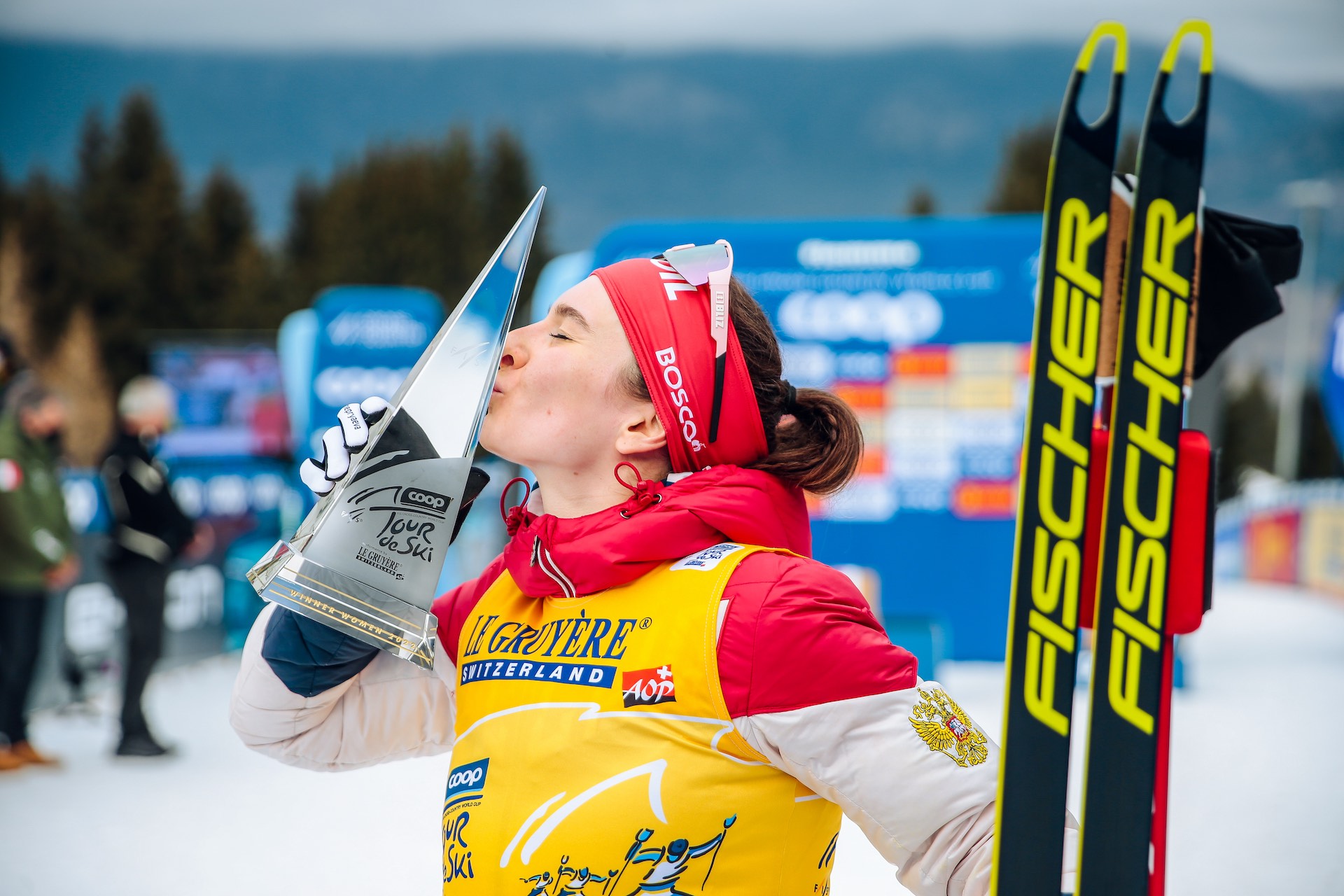
Since her last appearance in the World Cup, Terenteva’s life has undergone substantial personal changes. She married fellow skier Alexander Terentev, a rare athlete who has successfully challenged the dominance of Norwegian superstar Johannes Høsflot Klæbo. Furthermore, she has become a mother twice, with her most recent child born less than a year ago. Her decision to seek and receive neutral status confirms her intention to resume a professional career that many observers had considered effectively paused or concluded. Her sister, Dariya Nepryaeva, had already been granted neutral status in previous seasons, having competed in both Olympic and World Cup events, but the addition of Natalia represents a major escalation in the scale of Russian participation.
A Policy Shift: From Two to Sixty
The recent update to the FIS database is not an isolated incident but part of a broader, systemic change in how the federation processes applications for neutral athletes (AIN – Authorised Neutral Athletes). In the preceding season, only two Russian athletes had successfully navigated the stringent requirements to compete under a neutral banner. This season, however, the landscape has shifted dramatically, with over 60 Russian athletes now granted eligibility.
This surge in approvals follows a strategic adjustment by the FIS leadership earlier this autumn. By revising the criteria for neutral status, the federation has lowered the barriers to entry for athletes who can demonstrate they are not affiliated with military organizations and do not publicly support the ongoing conflict in Ukraine. The current tally of approved athletes from Russia and Belarus now exceeds 200, a number that is expected to grow as the FIS continues to process pending applications.
Official Responses and the Stance of the Russian Ski Federation
The Russian authorities have interpreted this development as a vindication of their lobbying efforts to reintegrate their athletes into international sports. Dmitri Svishchev, the president of the Russian Cross-Country Skiing Federation, has been vocal about his expectations for the coming months. In a statement following the announcement, Svishchev expressed confidence that the current list is merely a precursor to a larger influx of top-tier talent.
"I believe that many of our very biggest stars will receive approval from the FIS very soon," Svishchev remarked. While the return of Terenteva is a significant milestone, the sports world is now looking toward the status of other dominant figures, most notably Alexander Bolshunov and Veronika Stepanova. Bolshunov, in particular, remains the most formidable force in men’s distance skiing, and his absence has been a defining characteristic of recent World Cup seasons. The potential return of such athletes would fundamentally change the competitive hierarchy of the upcoming 2026-2027 season.
Implications for the World Cup and Beyond
The return of these athletes poses significant organizational and logistical challenges for the FIS, as well as political pressure on host nations. The World Cup season is scheduled to commence on November 26 in Ruka, Finland, a venue that has historically been strict regarding the presence of athletes from nations involved in the conflict. The integration of over 200 neutral athletes into a circuit that has functioned without them for several years will require careful management of travel, security, and potential friction between national teams.

Furthermore, the upcoming World Championships, scheduled for February 22 to March 7, loom as a massive test for the federation’s neutrality policy. The visibility of the World Championships, combined with the presence of high-profile Russian stars, will likely draw intense scrutiny from international media, human rights organizations, and local government officials in the host regions. The Swedish government, for example, has already faced discussions regarding the viability of hosting future major championships if the current trends in athlete participation continue to evolve, with some voices suggesting the possibility of stripping rights if hosting requirements conflict with political realities.
Chronology of the Exclusion and Reintegration
To understand the gravity of the current situation, it is necessary to review the timeline of the sport’s isolation of Russia:
- February 2022: Following the Russian invasion of Ukraine, the FIS Executive Board officially prohibited all Russian and Belarusian athletes from participating in international competitions, citing the need to ensure the safety of athletes and the integrity of the sport.
- 2022-2023 Seasons: The ban remained absolute. Russian athletes were removed from the FIS points lists, and the World Cup circuit proceeded with a noticeably different competitive landscape, favoring athletes from Norway, Sweden, and the United States.
- 2024: The FIS began exploring a pathway for the return of "neutral" athletes, following similar discussions within the International Olympic Committee (IOC) regarding the Paris 2024 Olympic Games.
- Autumn 2026: A formal update to the qualification criteria was finalized, drastically simplifying the verification process for Russian applicants.
- October 2026: The release of the expanded list of over 60 athletes marks the first time that genuine, podium-level stars have been cleared for competition since the start of the conflict.
Data Analysis: The Changing Competitive Landscape
The impact of this influx cannot be overstated. In the 2023-2024 and 2024-2025 seasons, the lack of Russian competition led to a concentration of power among a smaller group of nations. For instance, the absence of Bolshunov allowed a new generation of Norwegian skiers to dominate the distance events, effectively resetting the historical records of the sport.

With the return of Natalia Terenteva, the women’s distance standings are expected to become significantly more volatile. Terenteva’s technical proficiency and tactical experience make her an immediate threat to the current leaders in the World Cup standings. Similarly, if the FIS continues to approve more athletes of her caliber, the points race for the overall crystal globe will become a far more crowded and competitive affair.
The logistical reality, however, is that while these athletes are granted "neutral" status, they will still face restricted access to certain training facilities, reduced sponsorship opportunities, and the requirement to compete under the FIS flag rather than their national colors. The tension between the athlete’s desire to compete and the political context of their home country remains a delicate balancing act for the FIS.
The Path Forward
As the season opener in Ruka approaches, the primary question for the FIS will be the consistency and transparency of its vetting process. With a goal of maintaining a fair and safe environment, the federation must ensure that the criteria for neutrality are applied uniformly, regardless of an athlete’s fame or previous medal count. The pressure on the FIS will only increase as more "stars" from the Russian team seek entry.
The sporting community remains divided on the issue. While some argue that athletes should not be held responsible for the geopolitical actions of their government, others maintain that the participation of representatives from Russia legitimizes the status quo. The inclusion of figures like Natalia Terenteva serves as a test case for how the global sports community will navigate this polarization in the coming months. With the World Championships acting as the ultimate centerpiece of the season, the FIS is entering a period of unprecedented complexity, where every race result will be analyzed through both a sporting and a geopolitical lens.
As the season progresses, stakeholders will be monitoring the performance of these returning athletes closely. If their return proves successful, it will likely pave the way for a full-scale normalization of Russian participation in FIS events. Conversely, any public controversy or incident involving the returning athletes could force the federation to re-evaluate its current trajectory. For now, the sport of cross-country skiing stands at a crossroads, with the return of its most controversial participants marking the beginning of a highly unpredictable winter season.

