
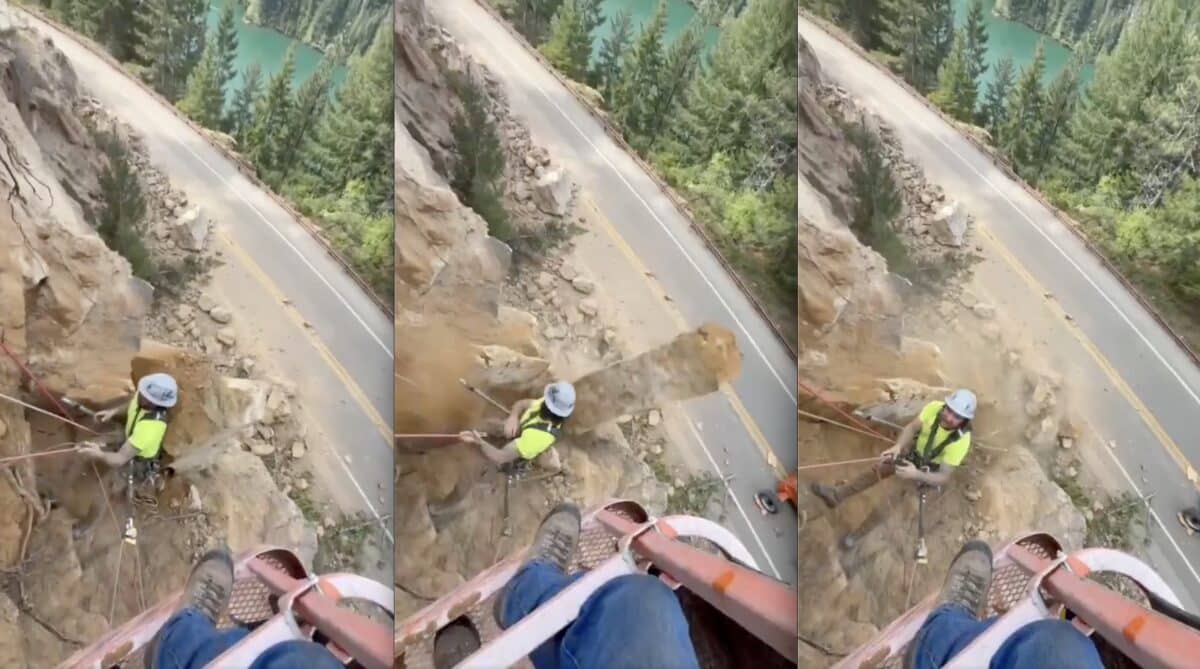
A routine operation to enhance roadside safety on Washington State Route 20 near Diablo Lake has captured significant attention after a Washington State Department of Transportation (WSDOT) worker was filmed dislodging a substantial boulder with what appears to be a controlled nudge. The incident, occurring during what is described as a "scaling operation," highlights the inherent risks and precise methodologies employed by WSDOT crews to maintain the integrity of mountainous roadways and prevent potential rockfall hazards.
The Precision of Scaling Operations
Scaling, in the context of civil engineering and infrastructure maintenance, refers to the process of identifying and removing loose rocks, debris, and unstable geological formations from steep slopes and cliff faces adjacent to roadways. This proactive measure is critical in preventing uncontrolled rockfalls, which can pose a severe threat to public safety, disrupt transportation networks, and cause extensive property damage. WSDOT employs specialized crews trained in techniques such as rappelling, manual dislodging, and the use of specialized equipment to meticulously clear these hazardous materials.
The footage, shared by WSDOT North on social media platforms, depicts a worker suspended by ropes on a steep embankment. The worker is seen applying force to a large boulder, which, after a moment of resistance, begins to move. The boulder then cascades down the slope, ultimately coming to rest on the roadway below, where it was presumably managed and removed by other crew members. While the video might suggest a simple push, the operation likely involved a combination of tools and techniques honed through extensive training and experience.
According to WSDOT protocols, scaling operations involve a systematic approach. Crews begin by conducting thorough visual inspections of the slope from top to bottom. Loose rocks and boulders are identified, and their stability is assessed. Subsequently, workers utilize a range of tools, from basic hand tools like pry bars and hammers to more advanced equipment such as compressed air tools and even small excavation machinery where access permits. The objective is to dislodge only those elements that pose a clear and imminent risk, ensuring that the slope is stabilized without causing unnecessary disruption or further erosion.
Background and Context: North Cascades Highway Safety
State Route 20, also known as the North Cascades Highway, is a vital artery connecting western and eastern Washington. Its dramatic elevation changes and passage through rugged mountainous terrain make it particularly susceptible to geological hazards, including rockslides and avalanches. WSDOT regularly undertakes extensive maintenance and safety projects along this route, especially during the spring and fall seasons when freeze-thaw cycles can exacerbate instability.

The specific operation near Diablo Lake is part of WSDOT’s ongoing commitment to ensuring the safety and accessibility of the North Cascades Highway. This particular section of the route is known for its steep, often unstable, cliff faces. The presence of large geological features like the boulder in question underscores the necessity of these specialized scaling efforts. While the date of the specific video footage shared by WSDOT North is May 7, 2026, the accompanying text indicates that contractor crews were performing these scaling works over several days as part of a broader project.
A Closer Look at the Technique
The effectiveness of scaling operations hinges on the expertise of the workers involved. These individuals are not merely laborers; they are skilled professionals who understand geology, engineering principles, and the safe execution of high-risk tasks. The use of compressed air bags, as alluded to in the original report, is a common technique in rockfall mitigation. These airbags are inserted into cracks or beneath boulders, and then inflated to create pressure, gradually loosening and dislodging the rock in a controlled manner. This method allows for a more precise application of force compared to brute strength alone, minimizing the risk of unintended consequences.
The phrase "good old fashion muscle" used in the initial description, while perhaps intended to convey the effort involved, should be understood within the framework of skilled application of force. The worker’s ability to assess the boulder’s leverage points and apply force strategically, possibly in conjunction with other tools or preparations, is what makes the operation successful and, importantly, safe. The sheer scale of the boulder suggests it would have required significant and carefully directed force to initiate movement.
Official Statements and Perspectives
A quote attributed to WSDOT North in the original reporting highlights the meticulous nature of the work: "Contractor crews are performing scaling work, rappelling down the slope to carefully examine it for loose rock or debris. They use hand tools and compressed air to dislodge and send potential hazards down the slope. This is a meticulous process that will take several days as they work their way from the top of the slope to bottom." This statement underscores the systematic and deliberate approach taken by WSDOT, emphasizing that such operations are not impulsive but are part of a carefully planned safety initiative.
The broader context provided by WSDOT, referencing similar scaling handiwork on northbound I-5 earlier in the year, indicates that these operations are a recurring and essential part of maintaining Washington’s extensive highway infrastructure. These projects are often part of larger initiatives to upgrade safety features, improve drainage, and enhance the resilience of roadways against natural elements.
Data and Implications: Road Safety in Mountainous Regions
The economic and social impact of maintaining safe and accessible roadways in mountainous regions like the North Cascades cannot be overstated. For Washington State, the North Cascades Highway is not only a critical transportation corridor for residents and commercial traffic but also a significant contributor to tourism. Disruptions due to rockfalls can lead to substantial economic losses, affecting businesses that rely on the highway for transport and tourism.
According to WSDOT’s own data, rockslides and rockfalls are among the most frequent types of geohazard events impacting the state’s roadways. The cost of responding to and clearing these events, as well as implementing preventative measures, runs into millions of dollars annually. Projects like the scaling operation near Diablo Lake are therefore essential investments in public safety and economic continuity.
The implications of successful scaling operations are multifaceted:
- Enhanced Public Safety: The primary implication is the reduction of risk to motorists and passengers. By proactively removing hazardous geological formations, WSDOT directly prevents potential accidents and injuries.
- Uninterrupted Transportation: Maintaining clear and safe routes ensures that essential services, commercial goods, and emergency responders can move without delay. This is particularly critical for communities that may be isolated during adverse weather conditions.
- Infrastructure Longevity: Regular maintenance, including scaling, helps to preserve the integrity of the roadway and its surrounding infrastructure, potentially extending its lifespan and reducing the need for more costly repairs in the future.
- Environmental Stewardship: While seemingly disruptive, controlled dislodging of rocks is often a more environmentally sound approach than allowing uncontrolled slides, which can cause significant erosion and damage to surrounding ecosystems.
The visual of a single worker, through skill and precision, managing such a substantial geological element serves as a powerful reminder of the dedication and expertise of the individuals who work to keep Washington’s roads safe. The incident, while visually striking, is a testament to the effectiveness of WSDOT’s robust hazard mitigation programs and their ongoing commitment to protecting the public from the inherent challenges posed by the state’s dramatic natural landscape. The controlled release of the boulder, though dramatic in its visual impact, represents a successful intervention that prevented a potentially more dangerous and uncontrolled event.

