
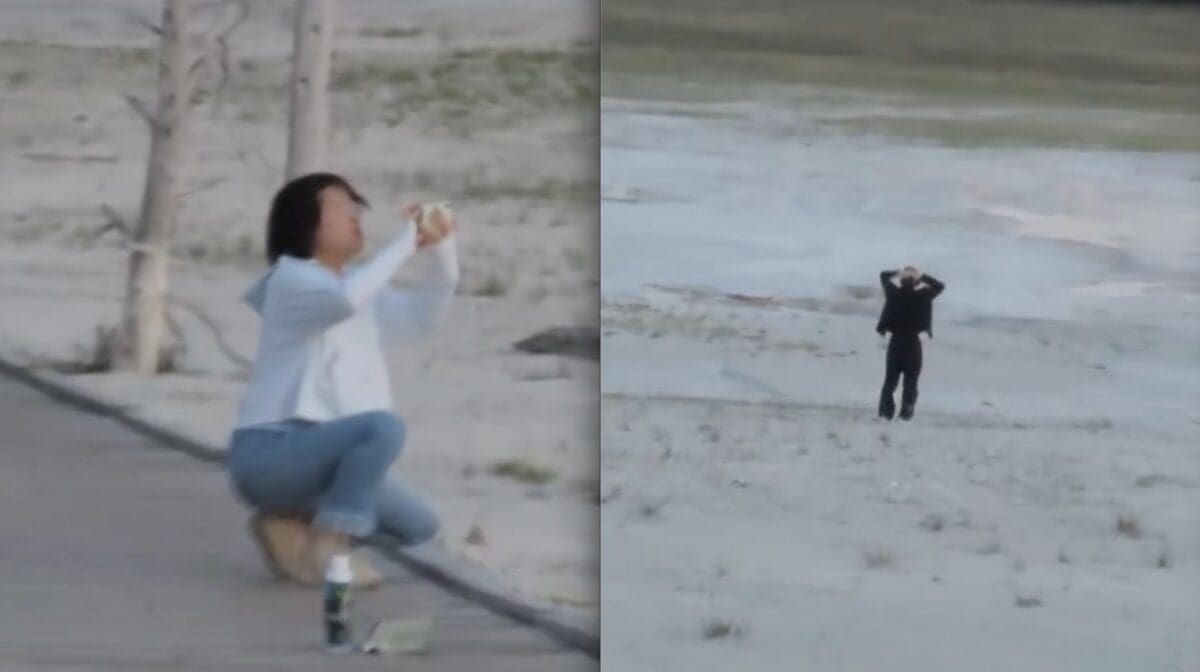
Yellowstone National Park, a sanctuary of unparalleled natural beauty and geological marvels, is once again grappling with the persistent issue of visitor safety violations. A recent incident, captured in a photograph that has since circulated online, depicts a tourist venturing off the designated boardwalks in a sensitive hydrothermal area, apparently for the purpose of an illicit photoshoot. This act of defiance not only jeopardizes the fragile ecosystem but also poses a significant risk to the individual involved, highlighting a recurring challenge for park management in balancing public access with conservation and safety imperatives.
The photograph, taken along the Fountain Paint Pots Trail in the Lower Geyser Basin, shows an individual standing directly on the thermophile-rich ground surrounding actively erupting geysers. The individual’s companion, presumably a family member or friend, is seen operating a camera, documenting the unauthorized excursion. This behavior is a stark contravention of explicit park regulations designed to protect both visitors and the unique geothermal features that define Yellowstone. The image serves as a potent visual reminder of the dangers inherent in these areas and the disregard some visitors exhibit towards established safety protocols.
Yellowstone National Park encompasses a staggering 2.2 million acres, a vast expanse renowned for its diverse wildlife, the majestic Grand Canyon of the Yellowstone, and its extraordinary concentration of hydrothermal features. The park is home to approximately half of the world’s active geysers, alongside thousands of other geothermal phenomena, including hot springs, mudpots, travertine terraces, and fumaroles. These features are not merely geological curiosities; they are dynamic ecosystems that harbor unique life forms, such as thermophilic microorganisms, which thrive in extreme temperatures and are responsible for the vibrant, otherworldly colors observed in many hot springs, like the Grand Prismatic Spring.
The Fragile Nature of Hydrothermal Environments
The delicate balance of these geothermal ecosystems is easily disrupted. The crust surrounding hot springs and geysers is often deceptively thin, masking the dangerously hot water beneath. Microscopic organisms, known as thermophiles, create the vivid hues seen in many thermal features, and their existence is intrinsically linked to the precise chemical and thermal conditions of their environment. Human interaction, even seemingly minor, can cause irreparable damage to these sensitive biological communities and the geological structures they inhabit. Stepping off boardwalks can crush these organisms, alter water flow, and destabilize the fragile crust, leading to lasting ecological harm.
Furthermore, the inherent danger of these features cannot be overstated. Yellowstone’s hydrothermal waters can reach extreme temperatures, with some hot springs measuring around 145°F (63°C) and geyser eruptions capable of exceeding 200°F (93°C). At these near-boiling temperatures, severe burns and fatalities can occur within moments. The park service strictly mandates that visitors remain on designated boardwalks and trails in all hydrothermal areas to prevent such tragedies and to safeguard the integrity of the geothermal landscape.

A Pattern of Risky Behavior
The incident on the Fountain Paint Pots Trail is not an isolated event. Yellowstone National Park has a documented history of visitors disregarding safety guidelines in its thermal areas. These violations often stem from a desire to capture dramatic photographs or videos, a trend amplified by the pervasive influence of social media. The pursuit of viral content can unfortunately override a visitor’s judgment, leading them to take extreme risks.
The Fountain Paint Pots Trail is a popular destination within the Lower Geyser Basin, offering visitors a close-up view of various geothermal features, including bubbling mudpots and the impressive Fountain Geyser. It is precisely in such accessible yet hazardous areas that park rangers frequently encounter individuals straying from marked paths. The motivation behind such behavior is often a complex interplay of curiosity, a desire for unique photographic opportunities, and perhaps a miscalculation of the immediate dangers involved.
Legal Ramifications and Past Precedents
Park regulations in Yellowstone are enforced with the understanding that the consequences of non-compliance can be severe. Visitors caught venturing off boardwalks in hydrothermal areas face potential charges, which can result in substantial fines and even jail time. The park service utilizes signage, ranger patrols, and educational outreach to reinforce the importance of adhering to safety guidelines.
A notable case that underscores the seriousness of these offenses occurred in 2020. Two men were convicted and sentenced for trespassing on the cone of Old Faithful Geyser. Their punishment included ten days of incarceration, a restitution payment of $540, five years of unsupervised probation, and a five-year ban from entering Yellowstone National Park. This sentencing reflects the park’s commitment to deterring such reckless behavior and sending a clear message that the preservation of its natural and geological resources, as well as the safety of its visitors, are paramount.
The Broader Impact and Park Management Challenges
Incidents like the one captured on the Fountain Paint Pots Trail highlight the ongoing challenge of managing visitor behavior in a park that attracts millions of people annually. While Yellowstone strives to provide accessible and memorable experiences, it must simultaneously enforce regulations that protect its unique environment and ensure the safety of all who visit.
The park employs a multi-faceted approach to visitor management. This includes:
- Education and Awareness: Informational displays, ranger talks, and park literature emphasize the dangers of hydrothermal areas and the importance of staying on marked paths.
- Enforcement: Park rangers actively patrol sensitive areas and issue citations to those who violate regulations.
- Infrastructure: Boardwalks and designated trails are designed to guide visitors safely through hazardous zones while minimizing environmental impact.
However, the sheer scale of the park and the constant influx of visitors present significant logistical challenges. The visual evidence provided by such incidents serves as a critical tool for the park service to underscore the reality of these risks and to reinforce the necessity of visitor compliance.
Analyzing the Implications
The photograph of the tourist venturing off-boardwalk for a photoshoot carries several important implications. Firstly, it underscores the persistent need for robust public awareness campaigns regarding the unique hazards of Yellowstone’s geothermal areas. While many visitors respect the rules, a vocal minority continues to pose a risk. Secondly, it highlights the effectiveness of citizen reporting and photography in bringing such violations to light. The image serves as immediate evidence and a catalyst for discussion about visitor behavior.
From an ecological perspective, even a single instance of walking off-boardwalk can have lasting consequences. The delicate microbial communities can be destroyed, and the structural integrity of the ground can be compromised, potentially leading to collapses or altered thermal activity. The long-term impact on these sensitive ecosystems, which have evolved over millennia, can be significant.
Moreover, such incidents can strain park resources. Rangers must dedicate time and effort to addressing violations, which could otherwise be allocated to conservation efforts, scientific research, or other visitor services. The potential for injury or fatality also necessitates a response from emergency services, further taxing park resources.
A Call for Responsible Tourism
Yellowstone National Park is a treasure that demands respect. Its geothermal wonders are not mere backdrops for selfies but fragile ecosystems with inherent dangers. The park service’s regulations, particularly those mandating adherence to boardwalks in thermal areas, are not arbitrary restrictions but essential measures for preserving the park’s unique character and ensuring the safety of all who visit.
The individual in the photograph, while perhaps seeking a memorable experience, ultimately engaged in a behavior that is detrimental to the park and potentially life-threatening to themselves. As visitor numbers continue to rise, the responsibility falls on each individual to prioritize safety, respect the environment, and understand that some of nature’s most spectacular displays come with inherent risks that necessitate caution and adherence to established guidelines. The allure of a unique photograph should never outweigh the imperative of preserving these natural wonders for future generations and ensuring that all visitors can experience Yellowstone safely and responsibly. The ongoing challenge for park management is to foster a culture of stewardship among visitors, where understanding and respect for the delicate balance of nature are paramount.

