
The inaugural Red Bull Features Cup redefined the landscape of competitive snowboarding with an innovative multi-zone format that prioritized collaboration, unpredictability, and unadulterated creativity over rigid, traditional scoring metrics. Staged on an outrageously designed, multi-faceted course, the event brought together elite regional squads from Europe, North America, and Asia-Pacific to test the absolute limits of board control, tactical adaptability, and team chemistry. What followed was a masterclass in modern freestyle snowboarding, culminating in a mathematically improbable three-way deadlock that required a high-stakes, impromptu tiebreaker to crown a champion.
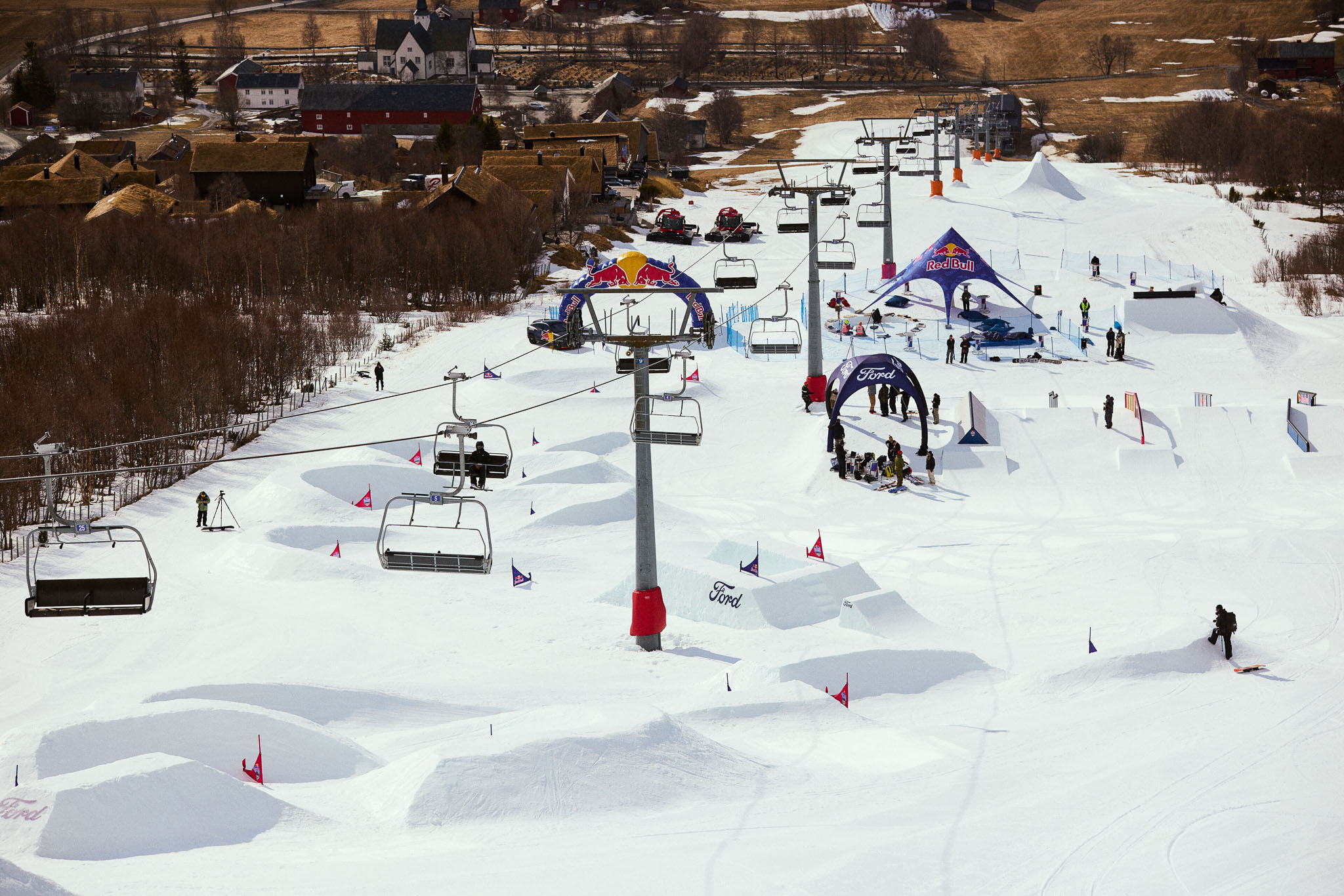
The global rosters featured some of the most celebrated and progressive talents in the sport. Team Europe was spearheaded by the endlessly inventive Marcus Kleveland, alongside Fridtjof Tischendorf, Isak Ulstein, and Celia Petrig. North America countered with a powerhouse lineup consisting of Luke Winkelmann, Denver Orr, Egan Wint, and Lane Weaver. Meanwhile, the Asia-Pacific delegation relied on the distinct styles and technical prowess of Cool Wakushima, Zephyr Lovelock, Rocco Jamieson, and Miyabi Onitsuka. Together, these athletes navigated a four-zone course comprising a banked slalom, a rail jam, a quarterpipe, and a jump session, with layers of tactical challenges introduced through the event’s signature Mischief Multiplier.
The Evolution of Competitive Snowboarding: Background and Context
For decades, professional snowboarding contests have largely adhered to standardized formats that judge athletes on individual runs down singular, linear courses—typically featuring a rail section followed by a series of massive jumps. While these traditional formats have successfully propelled the sport into the global mainstream and the Winter Olympic Games, critics and athletes alike have frequently noted a growing disconnect between elite contest riding and the organic, session-driven culture of everyday snowboarding.
The Red Bull Features Cup was conceived to bridge this exact gap. By shifting the paradigm toward regional team dynamics, multi-discipline versatility, and spontaneous rule alterations, the event organizers sought to dismantle the sterile pressure cooker of conventional heats. The inclusion of the Mischief Multiplier and the zone-based scoring system—where points were awarded on a 5-3-1 basis per zone—encouraged strategic roster management. Teams could not simply rely on a single standout performer; success required depth, adaptability, and tactical coordination across wildly contrasting terrains.
Chronology of the Competition: Four Zones of Chaos and Creativity
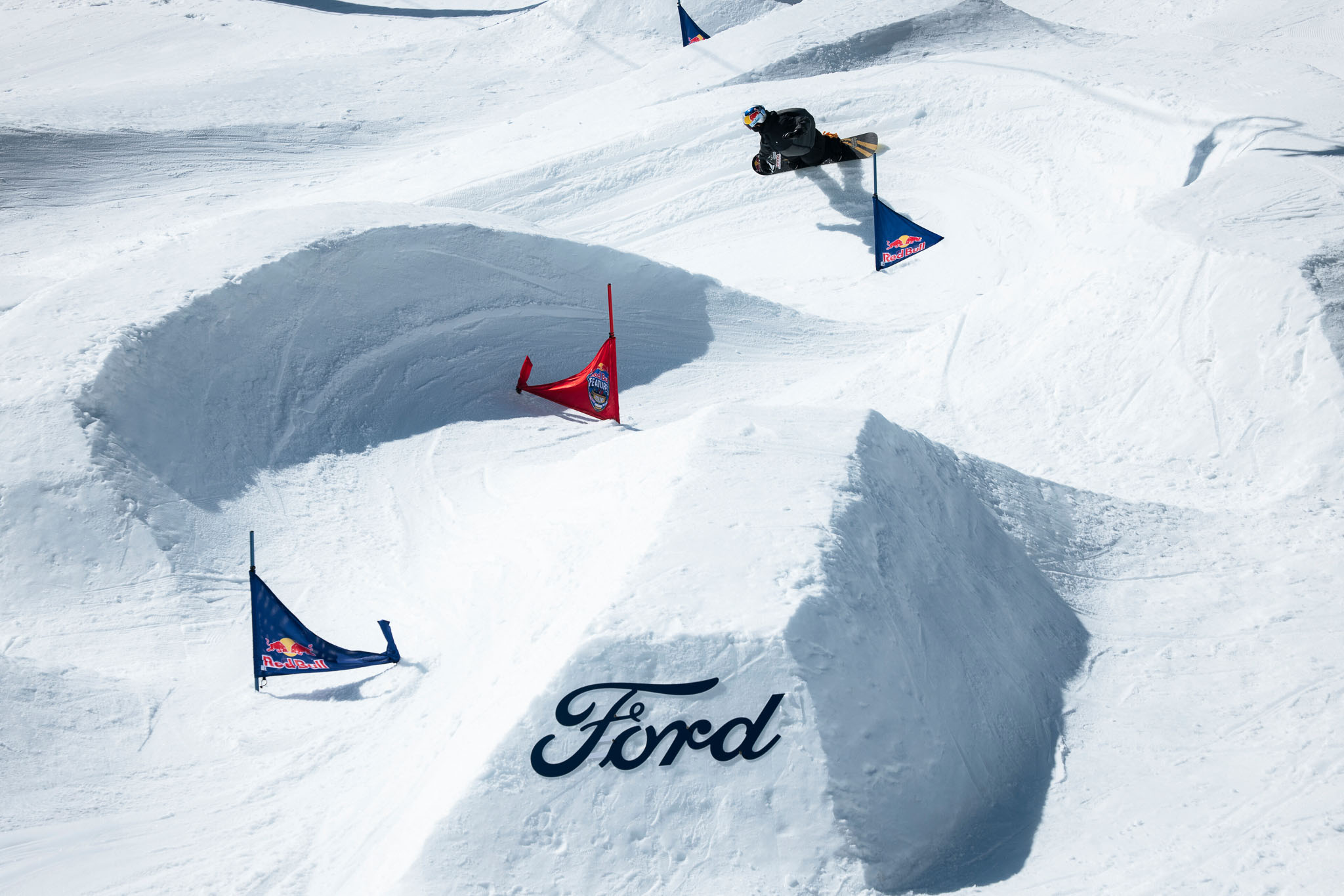
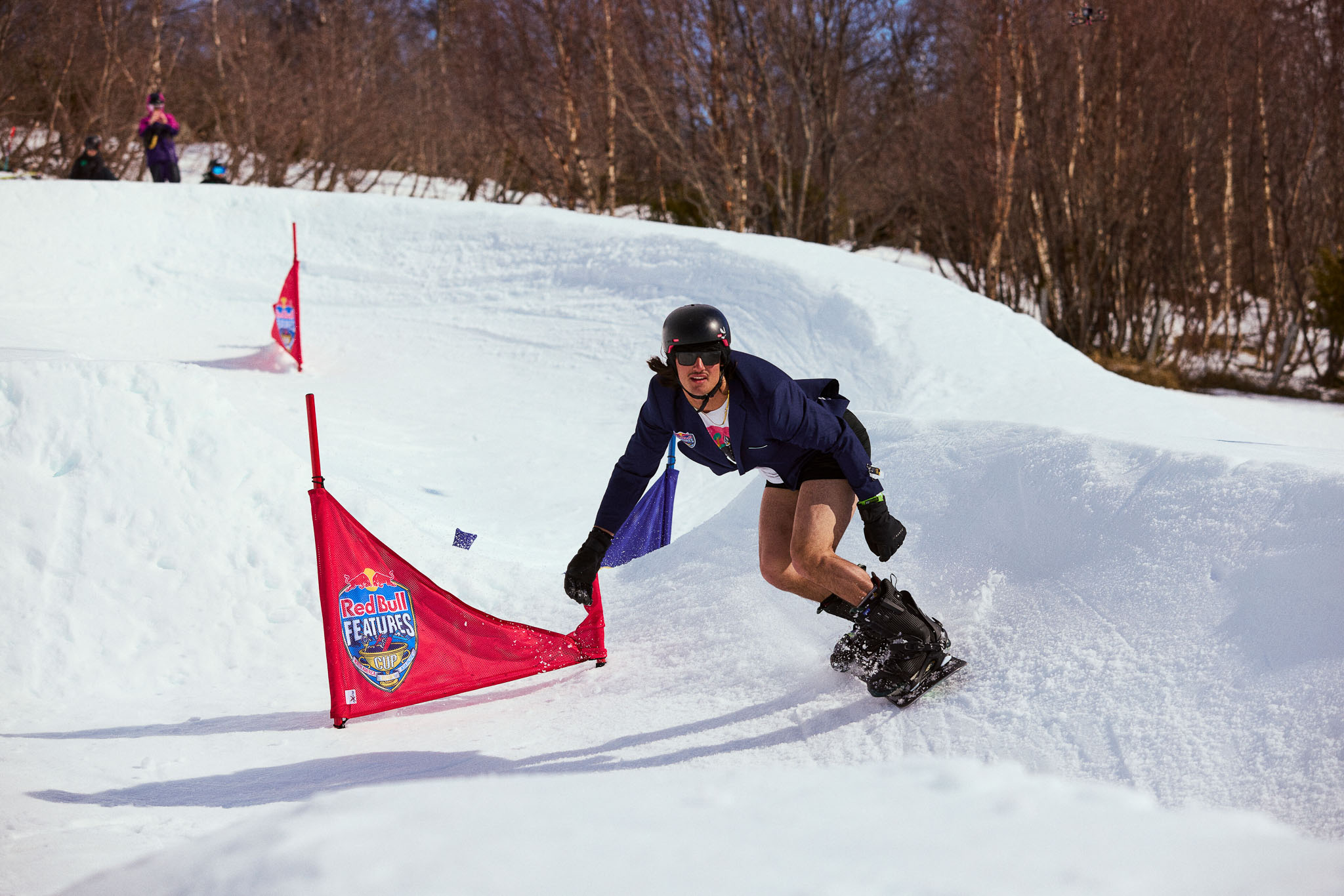
The competition kicked off with the banked slalom, a zone explicitly designed to test raw speed, strategic racing lines, and split-second adaptability. Teams logged cumulative times across two distinct runs: one utilizing standard snowboards and another forcing riders onto mini boards. The traditional racing format was immediately subverted by an intricate penalty and bonus system. Missed gates resulted in time penalties, while creative risk-taking—such as executing mid-course flips—granted valuable time deductions. North America’s Luke Winkelmann quickly established a blistering pace on his standard board, showcasing the squad’s early acceleration, though format twists and course penalties kept the overall leaderboard tightly compressed.
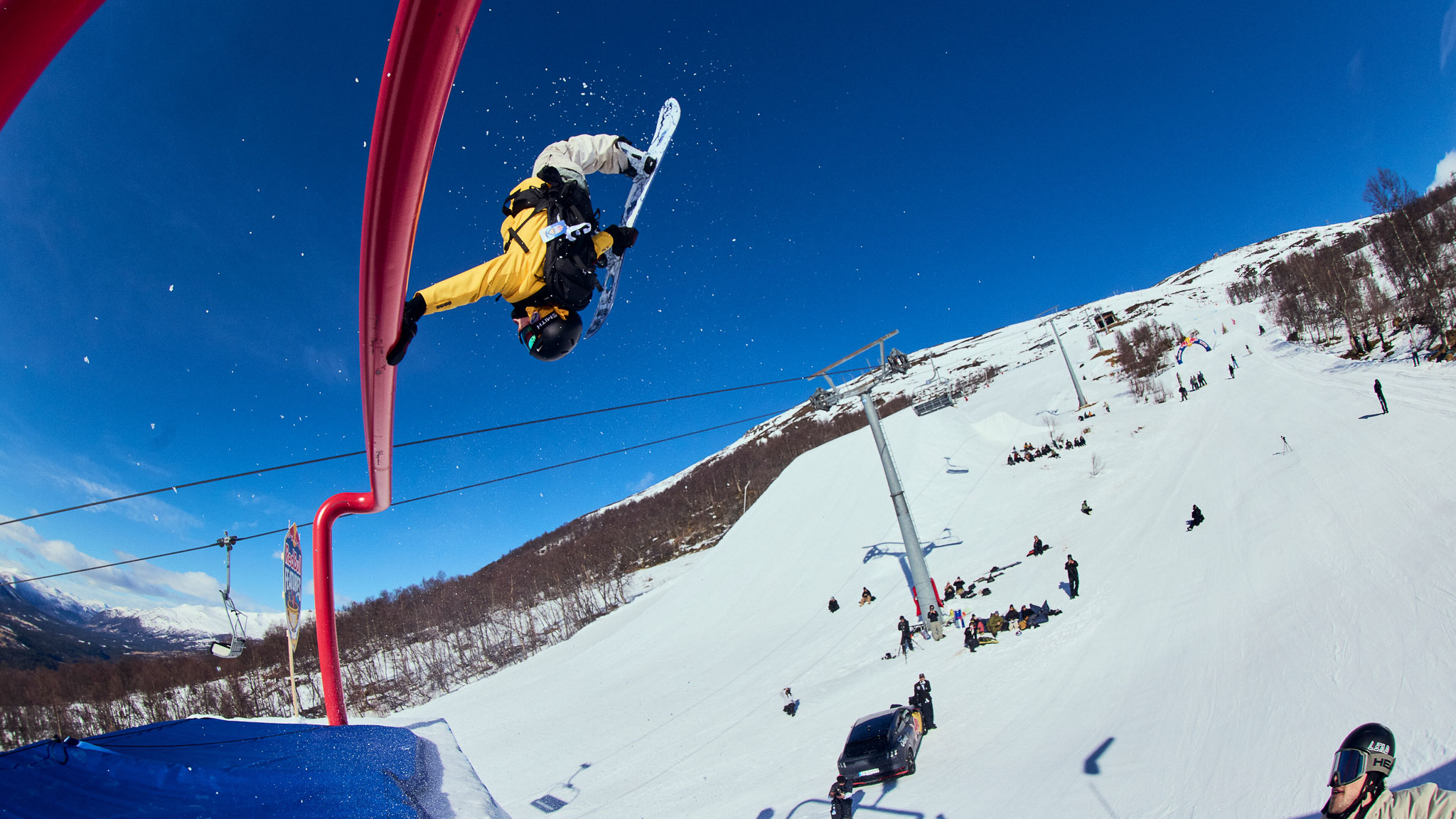
As the action transitioned to the rail jam, the atmosphere shifted from calculated speed to high-frequency technical wizardry. Initially starting as an open-format session, the zone quickly escalated with the introduction of a randomizer spin wheel. Riders were forced to incorporate specific, randomly generated tricks and obstacles on the fly, testing their capacity for rapid problem-solving under acute pressure. North America leaned heavily into its deep technical rail catalog to dominate portions of the session. However, Europe’s Fridtjof Tischendorf—affectionately known in the community as "Fridge"—stole the spotlight by seamlessly adapting to both open-session creativity and the chaotic demands of the spin wheel.
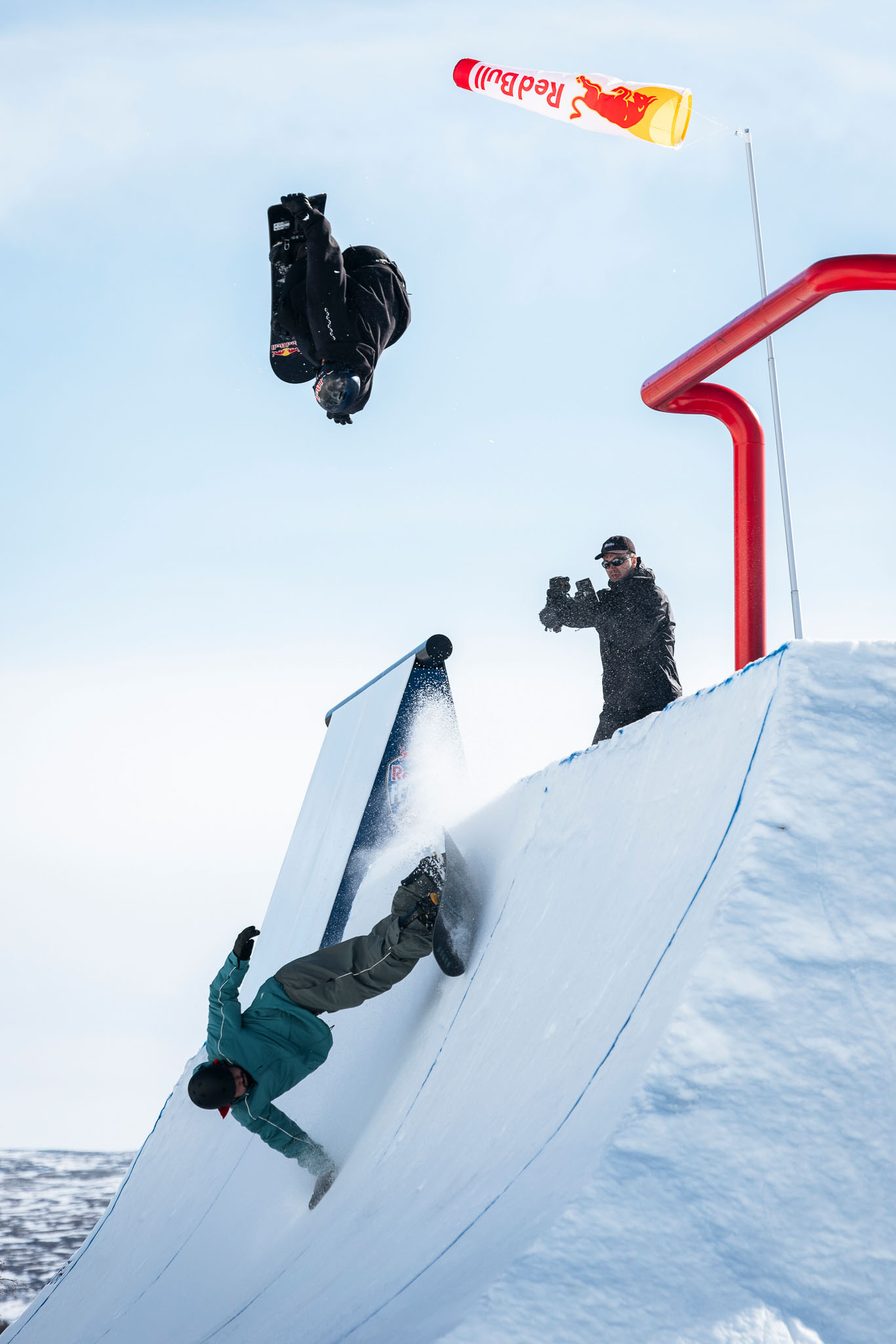
The third battleground, the quarterpipe, elevated the focus to amplitude, style, and intricate team coordination. Organizers expanded the creative canvas by incorporating specialized architectural features, including a wall ride and a hitching post. Crucially, the scoring structure heavily incentivized synchronized "doubles" runs, awarding bonus points for maneuvers where one rider carved low on the coping while a teammate launched an aerial rotation directly over them. All three regional teams successfully executed doubles, generating a palpable wave of collaborative energy. Tischendorf continued his stellar afternoon by anchoring the European effort, while Asia-Pacific displayed remarkable air awareness, though the zone standings ultimately remained razor-thin.
The final scheduled phase of the competition was the progressive jump session, which provided some of the most memorable moments of the weekend. Rejecting the standard "huck-it-at-all-costs" mentality often seen in big air events, organizers implemented a strict progression format. Riders were required to systematically build their trick difficulty upward, starting with basic 180s and capping out at a maximum rotation of 900 degrees. This restriction effectively neutralized the advantage of raw, uncalculated hucking, placing a premium on pristine execution, grab variations, trajectory, and landing flow. Europe, led by the peerless style of Marcus Kleveland, entered the session as statistical favorites, but athletes from all three regions met the technical challenge head-on, delivering a breathtakingly consistent finale.
The Mathematical Improbability of a Three-Way Tie
When the scores from the banked slalom, rail jam, quarterpipe, and jump sessions were finally tallied, the competition delivered an outcome that left judges, media, and athletes astounded. In a testament to the supreme parity and evenly matched skillsets of the competing rosters, the event ended in a rare three-way tie. Europe, North America, and Asia-Pacific finished the four primary zones dead even, each accumulating a matching total of 12 points.
A closer examination of the zonal breakdowns revealed just how fiercely contested the event had been. Europe had claimed two outright zone victories, relying on technical dominance and veteran savvy. Asia-Pacific combined a single zone win with a series of crucial second-place finishes, maintaining constant pressure at the top of the leaderboard. Meanwhile, North America achieved ultimate balance, registering consistent podium finishes across every single discipline to neutralize any single-zone deficits.
With no historical precedent for a three-way deadlock under the experimental ruleset, tournament officials and event directors were forced to devise an immediate resolution. The tie was broken through a high-stakes, sudden-death showdown on an unplanned fifth zone: a technical hip feature that had been constructed for practice and media sessions.
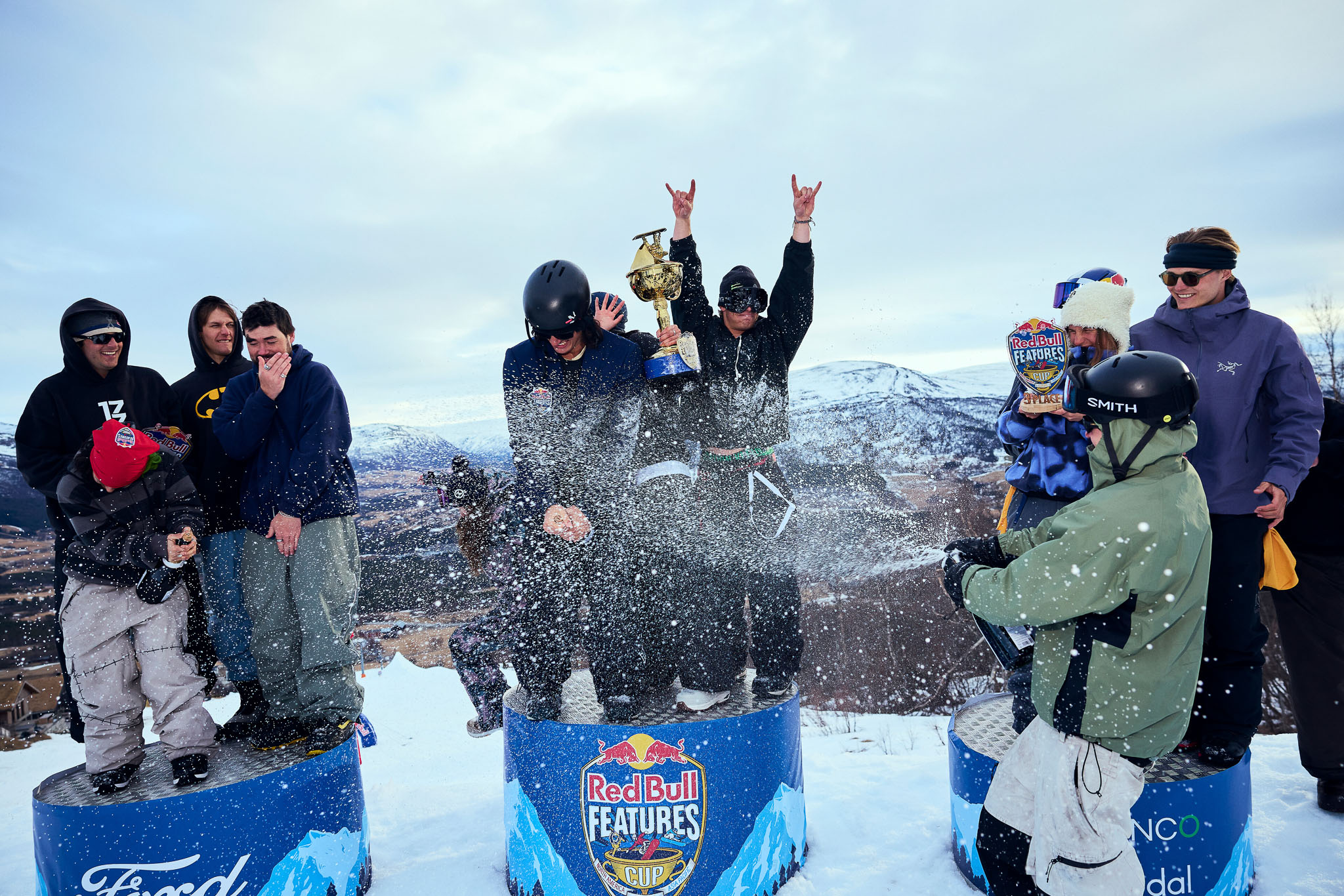
Entering the impromptu tiebreaker with a surge of momentum, the Asia-Pacific squad capitalized on their collective depth and fearless approach to the hip. While North America and Europe fought valiantly to match their output, Asia-Pacific executed cleaner, higher-impact maneuvers under intense pressure, successfully capturing the sudden-death battle and securing the overall Red Bull Features Cup championship.
Final Event Standings:
- Asia-Pacific (Cool Wakushima, Zephyr Lovelock, Rocco Jamieson, Miyabi Onitsuka)
- North America (Luke Winkelmann, Denver Orr, Egan Wint, Lane Weaver)
- Europe (Marcus Kleveland, Fridtjof Tischendorf, Isak Ulstein, Celia Petrig)
Industry Response and Stakeholder Perspectives
In the immediate aftermath of the dramatic conclusion, reactions from competitors, coaches, and industry insiders were overwhelmingly positive. Rather than lamenting the chaotic tiebreakers or the unconventional scoring parameters, participants praised the event for restoring the pure, unadulterated joy of snowboarding.
"We didn’t come here worrying about judge panels or standard contest run sheets; we came here to push each other, try weird ideas, and have the best session possible," noted members of the competing delegations in post-event reflections. The absence of traditional contest anxiety allowed athletes to attempt high-risk, experimental maneuvers that would typically be avoided in high-stakes Olympic or World Cup qualifiers, where a single fall can ruin an entire season’s ranking.
Event organizers and media analysts have similarly lauded the tournament as a resounding success, noting that the broadcast and digital reception points toward a shifting appetite within action sports viewership. Fans increasingly gravitate toward authentic, rider-driven formats that emphasize camaraderie and progressive innovation over rigid athletic compartmentalization.
Broader Impact and Future Implications for Competitive Snowboarding
The successful debut of the Red Bull Features Cup establishes a formidable new benchmark for the future of competitive snowboarding and action sports at large. By demonstrating that high-level competition can successfully coexist with a relaxed, session-driven ethos, the event has provided a blueprint for alternative contest series moving forward.
As the action sports industry looks toward the next generation of events, the lessons learned in this inaugural cup are likely to reverberate across the competitive calendar. Organizers of established tours are already taking note of the enthusiastic reception afforded to the Mischief Multiplier, zone-based tactical scoring, and progressive trick caps. By lowering the psychological barrier of traditional judging and elevating team-based collaboration, formats like the Features Cup ensure that creativity remains the undisputed driving force of snowboarding’s cultural and athletic evolution.

