
The boundary between the alpine peaks of the high country and the coastal swells of the Pacific is often perceived as a divide, but for a growing coalition of outdoor enthusiasts, these landscapes represent a single, interconnected ecosystem under siege. Protect Our Winters (POW) and the Surfrider Foundation have officially launched the "Ridge to Reef" collection, a collaborative initiative featuring the artwork of Dominic McLeod, designed to mobilize the outdoor community against the escalating threats of offshore oil and gas drilling. This partnership serves as more than a fundraising endeavor; it is a strategic effort to unify disparate subcultures—climbers, skiers, mountain bikers, and surfers—into a singular, cohesive political force capable of influencing national environmental policy.
The Convergence of Environmental Advocacy
The impetus for this collaboration stems from a resurgence in federal interest regarding offshore leasing. Recent legislative proposals have sought to expand oil and gas exploration in federal waters, a move environmental advocates argue would irrevocably damage coastal ecosystems, jeopardize marine biodiversity, and undermine the transition to a carbon-neutral economy.
The Surfrider Foundation, which has monitored coastal water quality and legislative threats for decades, has identified offshore drilling as a primary risk to the coastal recreation economy, which contributes billions of dollars annually to the United States GDP. Concurrently, Protect Our Winters—founded by professional snowboarder Jeremy Jones—has historically focused on the impact of climate change on the cryosphere. The "Ridge to Reef" initiative acknowledges that the legislative battles occurring in the halls of Congress are not isolated to either the mountains or the sea; rather, they are symptomatic of a broader extractive philosophy that threatens all natural spaces.
Historical Context and Institutional Synergy
The relationship between POW and the Surfrider Foundation is rooted in a shared heritage of grassroots activism. Jeremy Jones, a long-time member of the Surfrider Foundation, has often cited his early experiences with the organization as a foundational influence on his own approach to climate advocacy.
In the late 20th century, the surfing community became one of the first major recreational groups to formalize its political presence through the Surfrider Foundation, successfully lobbying for the Clean Water Act and various coastal protection statutes. By adopting these organizational frameworks, POW has effectively bridged the gap between winter sports—often criticized for their carbon-intensive travel requirements—and the conservation-heavy culture of surfing. This cross-pollination of advocacy is exemplified by the artistic vision of Dominic McLeod, whose work intentionally blends iconography from disparate sports to illustrate the fluidity of the outdoor experience.
The Mechanics of the Ridge to Reef Collection
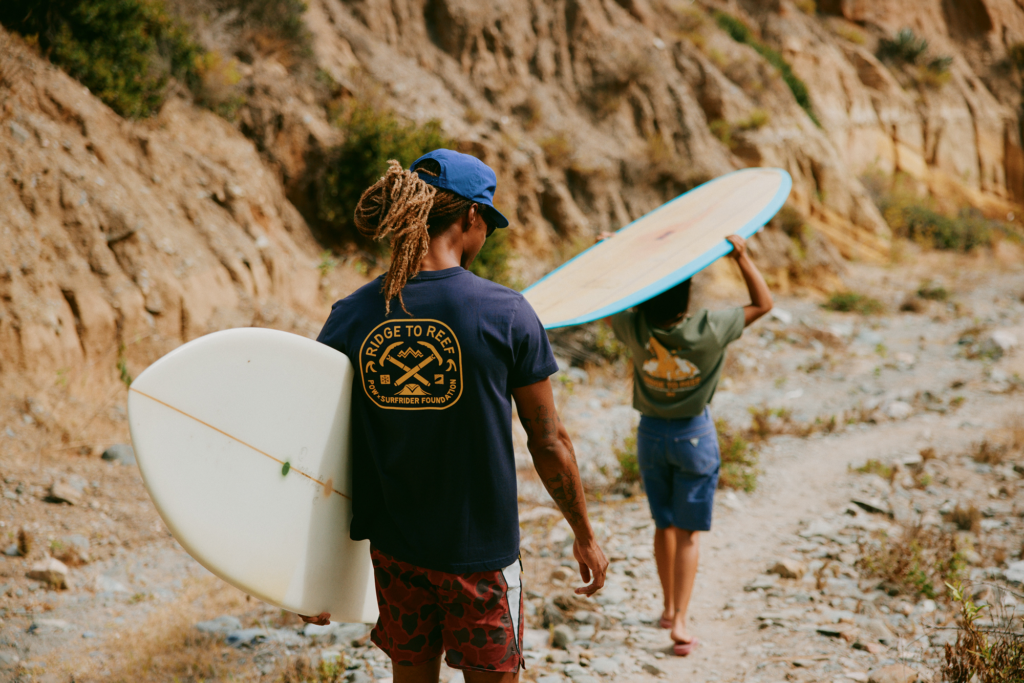
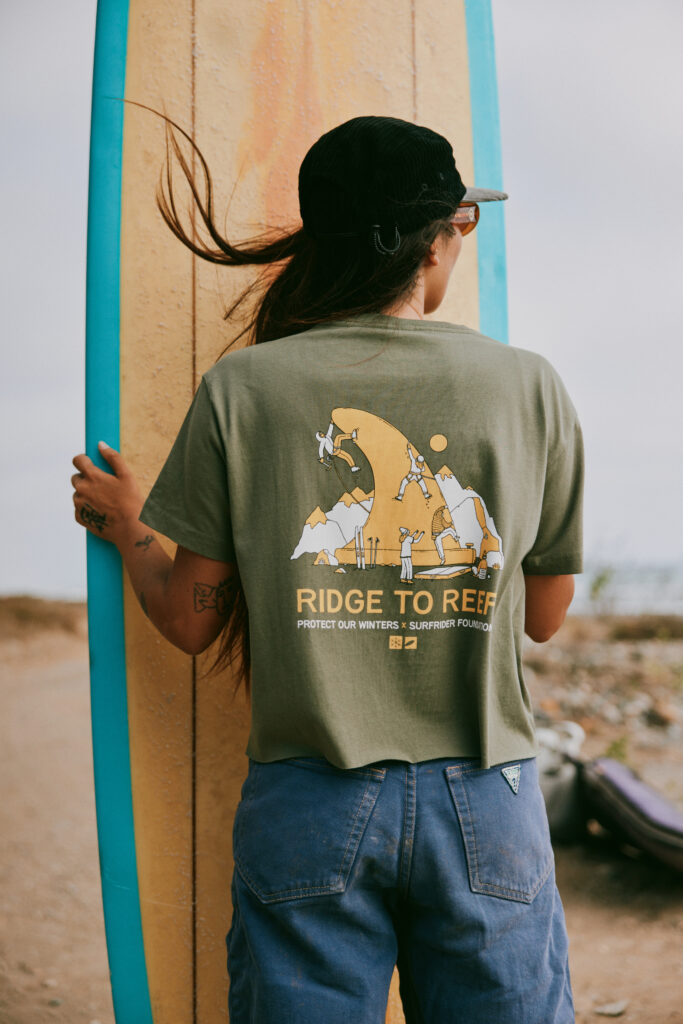
The collection, featuring designs by McLeod of Dom Fish Designs, utilizes visual storytelling to communicate the urgency of the climate crisis. The design process is meticulous, involving iterative sketches that are later digitized to ensure the messaging remains sharp and accessible.
Beyond the aesthetic value, the initiative serves as a financial engine. Every purchase from the collection is earmarked for direct advocacy, legal defense, and lobbying efforts. These funds are intended to bolster:
- Legal Challenges: Supporting litigation against the Bureau of Ocean Energy Management (BOEM) to prevent the expansion of lease sales.
- Legislative Advocacy: Providing the resources for lobbyists to work directly with lawmakers to promote the "Clean Ocean and Climate Act" and similar protections.
- Public Awareness Campaigns: Utilizing media and community events to shift public perception regarding the necessity of a fossil-fuel-free coastline.
Supporting Data and Environmental Risks
The expansion of offshore drilling is not merely an aesthetic or moral concern; it is a data-driven economic and environmental risk. According to the Bureau of Safety and Environmental Enforcement (BSEE), there have been hundreds of significant oil spills in federal waters over the past decade. Even when spills do not occur, the process of seismic airgun blasting—used to locate oil deposits—has been shown to disrupt the migratory patterns and communication of marine mammals, including endangered whale species.
Furthermore, economic data suggests that the "blue economy" (coastal and ocean-based industries) is highly sensitive to the impacts of drilling. Coastal tourism, recreational fishing, and surfing are reliant on pristine water conditions. A single major leak could devastate local economies that rely on these activities for their livelihoods. By aligning with the Surfrider Foundation, POW is leveraging the economic weight of the outdoor industry—a sector that contributes nearly $900 billion annually to the U.S. economy—to exert pressure on federal regulators who might otherwise prioritize short-term energy extraction over long-term ecological stability.
The Philosophy of Inclusive Advocacy
A core theme of the "Ridge to Reef" project is the rejection of "purity tests" within environmentalism. Dominic McLeod, whose artistic contributions are central to this campaign, emphasizes that the climate movement has historically been hindered by the exclusionary idea that one must live a perfectly sustainable life to participate in advocacy.
"You don’t have to be a mathematician or a climate scientist to contribute," McLeod stated in a recent briefing. "You just have to be willing to use the skills you do have." This sentiment reflects a shift in strategy for both organizations. Rather than demanding total lifestyle changes, the campaign encourages "additive advocacy"—the idea that every outdoor enthusiast, regardless of their carbon footprint, has a responsibility to demand systemic change. By framing the issue this way, the campaign aims to reach individuals who may have previously felt alienated by the environmental movement.
Broader Implications and Strategic Outlook
The launch of the "Ridge to Reef" collection comes at a critical juncture in U.S. climate policy. With the current administration facing pressure from both industrial lobbyists and the environmental sector, the role of grassroots advocacy is more vital than ever. The partnership serves as a model for how non-profit organizations can pool resources to achieve a greater impact than they could as individual entities.
The implications of this collaboration are twofold:
- Cultural Integration: By blurring the lines between mountain sports and water sports, the organizations are building a broader, more diverse constituency that is harder for policymakers to ignore.
- Strategic Resource Allocation: By focusing on the intersection of these two fields, the organizations can target key coastal districts that often hold the swing votes necessary to pass environmental protection legislation.
As the campaign progresses, both organizations intend to expand the "Ridge to Reef" narrative through regional events, educational seminars, and ongoing artistic releases. The success of this collaboration will be measured not only by the funds raised but by the degree to which it succeeds in shifting the public narrative—from viewing environmental protection as a burden to recognizing it as a shared necessity for the future of all outdoor recreation.
In conclusion, the "Ridge to Reef" collection is a testament to the power of cross-disciplinary advocacy. By combining the artistic vision of Dominic McLeod with the institutional strength of Protect Our Winters and the Surfrider Foundation, the project offers a blueprint for how the outdoor community can confront the existential threats posed by offshore drilling. It serves as a reminder that whether the terrain is covered in snow or salt water, the fundamental goal remains the same: the preservation of the wild places that define our culture and our future.

