
The UCI 2.1-ranked Tour of Slovakia, known locally as Okolo Slovenska, returns this September for its 70th edition, spanning 889.4 kilometers of challenging terrain across the heart of Central Europe. Running from September 16 to 20, the five-stage event has attracted a high-caliber field, including three WorldTour teams, a collection of ambitious ProTeams, and a deep roster of continental squads. This year’s route is meticulously designed to balance the interests of pure sprinters against the tactical brilliance of general classification (GC) contenders, culminating in a summit finish that is widely regarded as the most difficult in the race’s seven-decade history.
A Legacy of Cycling Excellence
Established in 1954, the Tour of Slovakia has grown from a regional competition into a cornerstone of the European cycling calendar. Over the last 70 years, it has served as a proving ground for future Grand Tour stars and a stage for the continent’s most resilient climbers. The race is known for its unpredictable weather, technical descents, and the passionate cycling culture of the Slovakian public. As the sport has professionalized, the Tour of Slovakia has adapted, securing UCI status and inviting global talent to navigate the High Tatras and the rolling hills of the central regions. This year’s anniversary edition is particularly significant, as organizers have pushed the difficulty to new heights to ensure that the yellow jersey is won by a rider of exceptional climbing pedigree.
Strategic Landscape: The Sprint-Climb Dichotomy
The start list for the 2025 edition reveals a classic tension between speed and endurance. Paul Magnier, the Soudal Quick-Step prodigy who commanded the 2024 edition with four stage victories, returns as the heavy favorite for the flatter, opening days. Magnier’s explosive finish and tactical awareness make him the man to beat in any bunch sprint. However, the route design suggests that the race will be decided by more than just raw speed.
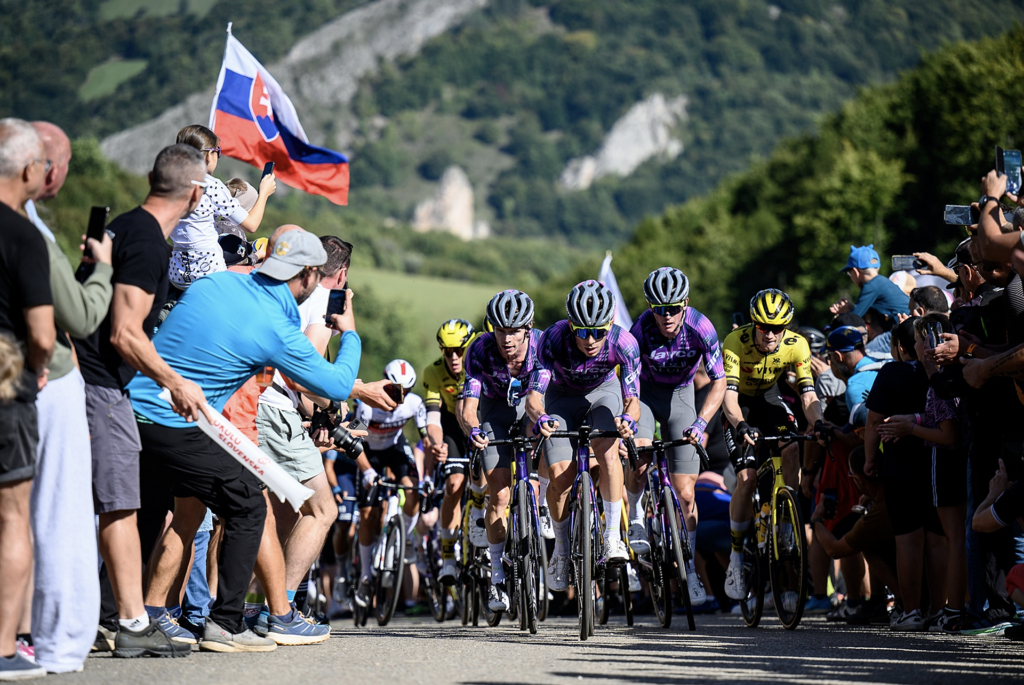
The general classification battle is expected to be wide open, with the absence of a singular dominant favorite creating space for tactical warfare. Lennert Van Eetvelt of Lotto-Intermarché enters the race as one of the primary threats for the overall standings. His ability to recover on multi-day tours and his prowess on steep gradients place him at the center of team strategies. Alongside him, the Cofidis duo of Ion Izagirre and Benjamin Thomas brings a wealth of experience, particularly in managing crosswinds and positioning during high-stakes mountain stages. Other riders to watch include Liam Slock, Jenthe Biermans, and the young talent Maxime Decomble, all of whom possess the versatility required to navigate the varying profiles of the five stages.
Stage-by-Stage Chronology
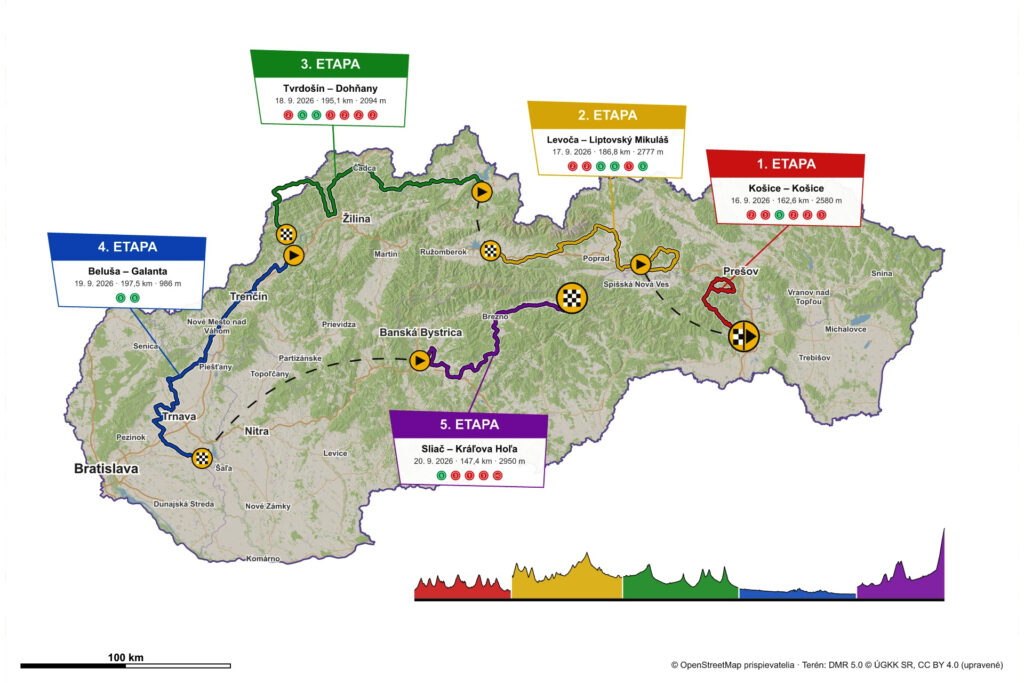
Stage 1: Košice – Košice (162.6 km)
The race opens on Wednesday, September 16, with a demanding loop around Košice. The route is deceptively difficult, featuring five categorized climbs. The peloton will tackle Jahodná, Klenov, and the Pavelov vrch—the latter of which is crested twice and stands at an altitude of 652 meters. The final ascent occurs just 20 kilometers from the finish line, providing a perfect launchpad for punchy attackers to disrupt the sprinters.
Stage 2: Levoča – Liptovský Mikuláš (186.8 km)
Thursday, September 17, transitions the riders toward the High Tatras. This stage features three categorized climbs, with the centerpiece being Štrbské Pleso, a renowned winter sports hub. Rising to 1,262 meters, it is the first Category 1 climb of the race. While the final 55 kilometers are relatively benign, the altitude exposure at Štrbské Pleso will test the legs of the peloton early in the week.
Stage 3: Tvrdošín – Dohňany (195.1 km)
The longest day of the tour takes place on Friday, September 18, and includes a brief excursion into the Czech Republic. The route is littered with five categorized climbs, but the focus will be on the final ascent of Kohútka. Stretching 6.2 kilometers with an average gradient of 6.8 percent, this climb serves as the first real filter for the GC contenders. With 20 kilometers of technical road remaining after the summit, descending skills will be at a premium.
Stage 4: Beluša – Galanta (197.5 km)
Saturday, September 19, provides a necessary reprieve for the climbers. As the only completely flat stage, this is the definitive opportunity for the pure sprinters. However, the race organizers have noted that the weather, particularly the wind in the southwestern plains near Trnava, could create echelons. For riders like Magnier, this stage is a tactical imperative to secure points before the final showdown.
Stage 5: Sliač – Kráľová hoľa (147.4 km)
Sunday, September 20, is the day of reckoning. This final stage is the shortest in distance but arguably the hardest in the history of the event. After an early Category 3 climb and a Category 1 ascent at Lom nad Rimavicou, the route descends toward Brezno. Then comes the climb to Kráľová hoľa. Measuring 12.6 kilometers with an average gradient of 8.7 percent, and reaching an altitude of 1,934 meters, this HC-rated climb is a brutal finish. It is here that the 70th Tour of Slovakia will likely be decided, separating the climbers from the opportunists.
Data-Driven Insights and Historical Precedent
Reflecting on the 2024 edition provides context for the upcoming battle. Last year, Paul Magnier’s dominance in the opening stages secured him the points jersey with 86 points, but he was ultimately outmaneuvered in the mountains by Britain’s Paul Double of Jayco AlUla. Double’s victory on the final climb remains a benchmark for this year’s hopefuls; he secured the overall title by 33 seconds over Bart Lemmen, with Thomas Gloag rounding out the podium. The youth classification was won by Cian Uijtdebroeks, a testament to the race’s ability to identify emerging talent who quickly move on to the WorldTour’s biggest stages.
The Norwegian Contingent and International Participation
A noteworthy aspect of this year’s entry list is the significant presence of Nordic riders. Team Drali-Repsol has confirmed a squad that includes Toralf Rydningen Martinsen, Sander Granberg, Georg Rydningen Martinsen, Ulrik Bjune, Håkon Eiksund Øksnes, Jørgen Sekse, and Sebastian Veslum. Additionally, the Lucky Sport Cycling Team will feature Simen Evertsen-Hegreberg and Morthen Wang Baksaas. Their participation highlights the growing international reach of the race and provides a unique dynamic to the peloton, as these riders look to gain exposure against WorldTour-level competition.

Organizational and Logistical Outlook
The race is supported by a robust broadcasting package, with SC Play providing live coverage for all five stages. The logistical undertaking of hosting a race of this magnitude—involving 20 teams and 139 riders—requires significant coordination with local authorities and safety marshals. The choice of Kráľová hoľa as the final summit finish is a strategic move by the race organizers to elevate the prestige of the event, ensuring that the race concludes with a spectacle that challenges the world’s best climbers.
Implications for the Professional Circuit
The Tour of Slovakia serves as a vital late-season indicator of form. For teams like Soudal Quick-Step and Lotto-Intermarché, success here validates their training blocks and tactical structures heading into the final races of the season. For the continental teams, the race is an audition. A strong performance in the Slovakian mountains can be the catalyst for a young rider to secure a contract with a WorldTour outfit for the following year.
As the peloton gathers in Košice, the atmosphere is one of focused intensity. With the race record clearly in the crosshairs and a summit finish that promises to redefine the limits of the riders, the 70th Tour of Slovakia is set to be a defining moment in the 2025 cycling season. Whether the sprinters can maintain their influence or the mountain specialists will dictate the terms of the race remains the central question of the week. One thing is certain: by the time the riders cross the finish line on the slopes of Kráľová hoľa, the winner will have proven their place among the elite of the sport.

