
The International Biathlon Union (IBU) has officially announced a sweeping reform of its competitive rulebook, signaling a shift toward a zero-tolerance philosophy that will define the upcoming 2024/2025 World Cup season. Following a series of incidents during the recent "Loop One" season-opener, where multiple high-profile athletes—including Czech star Lucie Charvatova—were disqualified on the spot, the governing body has confirmed that the days of lenient warnings for technical infractions are over. As the circuit prepares for the official World Cup kick-off in Kontiolahti, Finland, on November 26, athletes and support teams are facing a new reality characterized by immediate disqualifications, significant time penalties, and potential long-term suspensions for even minor lapses in safety or equipment compliance.
The Catalyst for Change: Lessons from Loop One
The impetus for this aggressive regulatory tightening stems from the observations made during the pre-season Loop One events. Biathlon, a sport that combines the extreme physical exertion of cross-country skiing with the high-stakes precision of rifle marksmanship, has always maintained strict protocols. However, the IBU disciplinary committee identified a concerning trend where athletes were increasingly pushing the boundaries of safety regulations to gain marginal time advantages.
The most notable flashpoint involved the handling of rifles while entering the shooting range. A long-standing practice known as "the strap hack"—where athletes would loosen their rifle straps while still approaching the shooting mat to save critical milliseconds—has been officially outlawed. Under the previous, more ambiguous regulations, this created a "gray zone" that officials struggled to enforce consistently. During Loop One, the IBU moved to eliminate this ambiguity entirely. Any athlete found loosening their rifle strap before they are physically on the shooting mat now faces immediate disqualification.
Johan-Olav Botn, the Norwegian talent who found himself at the center of this transition after receiving a formal warning during the test events, has become a spokesperson of sorts for the adjustment process. "The first month, I forgot the new rule almost every time," Botn admitted in a recent interview. "It is a fundamental shift in muscle memory. However, when you look at the safety implications, it is impossible to argue against the necessity of these changes."
Safety First: The New Enforcement Protocol
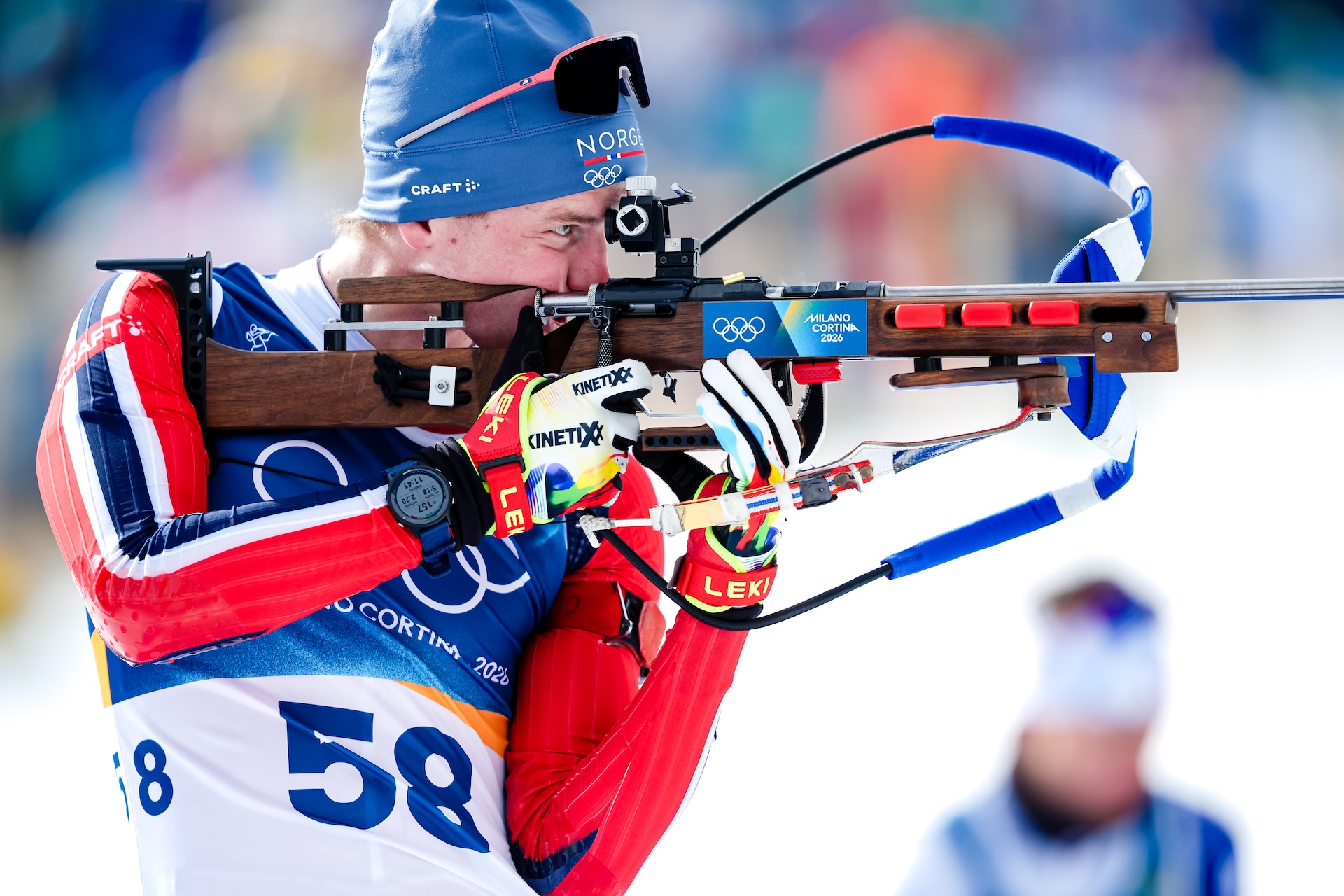
The IBU’s new stance is grounded in the principle of risk management. The most severe of the updated regulations pertains to muzzle discipline. The governing body has established that any instance where a rifle is aimed—even momentarily—away from the target area, such as during cleaning, adjustment, or standing up, will result in an automatic and immediate disqualification.
The rationale provided by the IBU is clear: as the speed of the sport increases, the margin for error at the shooting range decreases. Vlastimil Jakes, the race director in Nove Mesto, noted that athletes had begun to manipulate their rifles in ways that occasionally pointed weapons toward spectators, officials, or other competitors. By codifying these movements as grounds for immediate expulsion, the IBU is signaling that the sanctity of the range is the sport’s highest priority. Furthermore, the IBU disciplinary committee has been granted the authority to impose multi-month bans for repeat offenders, moving beyond simple race-day disqualifications to ensure long-term behavioral compliance.
Fluorine Prohibition and Technical Integrity
Beyond physical safety, the IBU is intensifying its crackdown on illegal equipment, specifically targeting the use of fluorine-based waxes. The prohibition of fluorinated ski waxes, which has been a contentious issue across Nordic sports due to environmental concerns and the desire for a level playing field, is now entering a phase of strict enforcement.
Starting this November, the presence of fluorine on skis at the start line will trigger an automatic disqualification. The IBU has also committed to continuing its rigorous post-race testing regime. Should traces of fluorine be detected after a race, the consequences will be significantly more severe than in previous years. Beyond the disqualification of the athlete, the IBU has signaled that it will target the support infrastructure, with the potential for substantial fines and the suspension of entire coaching and waxing teams. This move is designed to shift the burden of compliance from the athlete to the entire professional support staff, effectively creating a "collective responsibility" model for technical integrity.
Strict Penalties for Procedural Errors
The era of subjective debate regarding procedural errors on the range is also coming to a close. Previously, officials occasionally exercised discretion regarding missed penalty loops or accidental discharge issues. That flexibility has been replaced by a rigid, non-negotiable penalty structure.
The new regulations stipulate the following:
- Missed Penalty Loops: Failure to complete the mandatory penalty loop will result in an automatic two-minute time penalty for every missed loop, regardless of whether the omission was intentional or accidental.
- Ammunition Management: Leaving the firing line with a live round remaining in the magazine—a rare but significant safety risk—will now incur a two-minute penalty per round.
These changes remove the element of human judgment from the officiating process, ensuring that the rules are applied uniformly regardless of the athlete’s status or the significance of the race.
Broader Implications for the 2024/2025 Season
The implications of these changes for the World Cup season are profound. Coaches and performance directors are currently in the process of re-evaluating their training camps to incorporate these new safety-first routines. The focus has shifted from finding "hacks" to ensuring absolute procedural compliance.
From an analytical perspective, this shift is likely to impact race times, particularly in high-pressure mass start and pursuit events. Athletes who have spent their careers optimizing their entry onto the shooting mat will need to recalibrate their internal clocks. The psychological toll of the new "zero-tolerance" environment cannot be understated; the pressure to perform while simultaneously navigating a high-stakes, high-penalty rulebook will test the mental fortitude of even the most experienced veterans.
Moreover, the financial implications for teams caught in violation of the anti-fluorine protocols could be catastrophic. The threat of suspending entire support teams creates a high-stakes environment where a single error by a wax technician could effectively end an athlete’s season. This suggests that teams will likely double or triple their internal testing and quality control measures before skis even reach the start house.
The Path Forward
As the Norwegian season opener approaches at Geilo from November 13 to 15, the international community will be watching closely to see how these rules are applied in a competitive setting. These races will serve as the final dress rehearsal before the World Cup officially begins in Finland.
The IBU’s decision to standardize and harden these rules is a clear effort to modernize the sport’s regulatory framework. While the transition will undoubtedly be difficult for many athletes—as evidenced by the early disqualifications at Loop One—the goal is to ensure the longevity of the sport by prioritizing safety and fairness above all else.
In the coming weeks, all eyes will be on the firing lines of the world’s biathlon venues. The athletes who adapt the fastest to this new era of precision and accountability will likely be the ones standing on the podium when the season concludes. The sport of biathlon is evolving, and for those who fail to align with the new, stricter standards, the penalty is no longer just a missed shot—it is the loss of the race itself. The message from the IBU is unequivocal: the rulebook is no longer a set of guidelines, but a rigid framework of mandates that will define the trajectory of the 2024/2025 season. Whether these changes lead to a safer, fairer sport or result in an influx of disqualifications that dampen the competitive spirit remains to be seen, but the IBU has clearly decided that the cost of inaction is too high to bear.

