
The modern ski market is dominated by a homogenized profile: a traditional all-mountain shape featuring a modest camber pocket underfoot, an early-rise tip, and a slight tail splay, usually sitting around 95 millimeters underfoot. While this predictable geometry satisfies the majority of consumers seeking safety and familiarity, a persistent segment of gear testers, equipment manufacturers, and backcountry purists argue that this standardization has created a plateau in skiing sensation. At the center of this debate is the full rocker, or reverse camber, ski—a banana-shaped profile characterized by the complete absence of a traditional camber pocket underfoot. Once dismissed as a radical novelty designed exclusively for extreme helicopter skiing in British Columbia, the full rocker ski is undergoing a quiet renaissance among manufacturers aiming to redefine modern freeride performance, offering a unique blend of loose playfulness and edge-to-edge versatility.
To understand the current standing of full rocker technology, it is necessary to examine the chronology of its development. The inception of the reverse camber concept is widely credited to legendary skier Shane McConkey in the late 1990s and early 2000s. Operating on a concept shared by filmmaker Scott Gaffney—who observed that conventional skis floated significantly better once their traditional camber wore down and flattened out from heavy use—McConkey partnered with Volant to develop the Volant Spatula. Released to the market in 2002, the Spatula was the world’s first commercially produced full rocker ski.
McConkey did not merely design a new piece of equipment; he issued a philosophical challenge to the skiing establishment. Each pair of Spatulas was distributed with an accompanying essay in which McConkey urged skiers to discard conventional technique, famously writing that buyers should put everything they had ever learned about skiing "in the garage next to your shaped skis." The original Spatula featured both a full reverse camber profile and a reverse sidecut, making it an extraordinary tool for deep powder but a liability on hard-packed snow. It was built exclusively to slip, slide, and smear—or "slarve"—through bottomless powder without fear of submarining, establishing a benchmark for specialized backcountry design.
For over two decades following the introduction of the Spatula, the ski industry remained cautious. Skis are capital-intensive to manufacture, requiring expensive molds, rigorous safety testing, and significant marketing expenditures. In an industry where profit margins depend on predictable sales volumes, both manufacturers and retail consumers have historically exhibited a strong aversion to financial and technical risk. Consequently, the mainstream market gravitated toward the safe middle ground of traditional camber and mild rocker combinations, leaving full rocker designs largely relegated to niche powder specialists such as the 4FRNT Renegade.
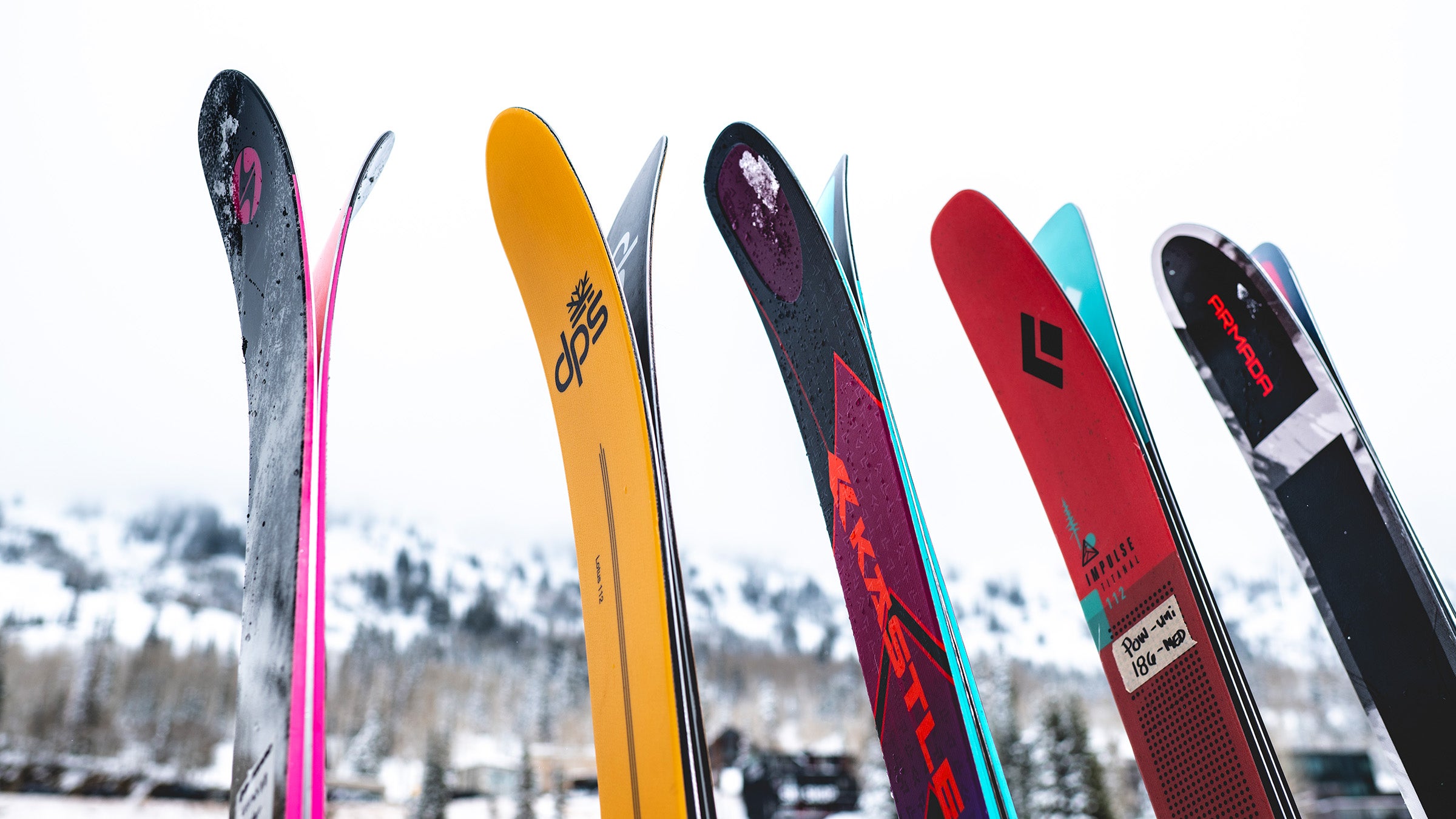
However, the past several years have marked a distinct evolution in reverse camber engineering. Contemporary ski designers have reevaluated McConkey’s original premise, recognizing that extreme full rocker combined with reverse sidecut was unnecessarily restrictive for everyday resort skiing. Modern manufacturers have successfully bridged the gap by pairing a full rocker profile with conventional sidecut geometries. Skis like the Moment Meridian and the 4FRNT Devastator demonstrate this refined approach, incorporating true reverse camber beneath the bindings while retaining sidecut along the edges.
This hybridization yields specific mechanical advantages. When a modern full rocker ski is ridden flat on its base, it behaves with the loose, swervy, and catch-free freedom that defines the reverse camber experience. This makes the design exceptionally forgiving in variable, heavy, or "grabby" snow conditions frequently encountered in the backcountry and late-season resort environments. Conversely, when the skier weights the boot and tips the ski onto its edge, the sidecut engages with the snow surface, allowing the ski to track and rail through turns in a manner that traditionalists often assume is impossible on a rockered platform.
Industry analysts and equipment manufacturers point to shifting consumer demographics as a catalyst for these design changes. As the popularity of backcountry touring and sidecountry exploration surged over the last decade, skiers began demanding equipment tailored to unpredictable snowpacks rather than perfectly groomed corduroy. According to outdoor industry market research, the freeride and touring segments have experienced steady, annualized growth, outpacing traditional alpine equipment sales in several key markets across North America and Europe. This shift has emboldened independent ski brands to experiment with unconventional geometries, viewing differentiation as a vital competitive advantage against mass-market conglomerates.
Industry response from design teams highlights a growing consensus that gear shapes should prioritize experiential diversity over mechanical conformity. Lead engineers at several prominent independent ski companies note that the primary driver for consumers purchasing non-traditional shapes is the pursuit of novel tactile feedback. Rather than focusing strictly on speed or vertical descent metrics, modern skiers increasingly value the sensation of weightlessness in untracked snow, the dynamic pressure build-up of a carved turn, and the psychological freedom afforded by equipment that handles variable terrain without demanding aggressive physical compensation.
Despite these advancements, broader market adoption of full rocker skis remains constrained by consumer hesitancy and economic realities. Premium alpine skis frequently retail between $800 and $1,200, representing a significant financial investment for the average household. In an economic climate characterized by tighter discretionary budgets, consumers are naturally disinclined to allocate funds toward unfamiliar, specialized equipment that they cannot test extensively prior to purchase. Retail shops, operating on tight inventory margins, often stock safer, proven models that guarantee rapid turnover, reinforcing the cycle of product homogeneity.
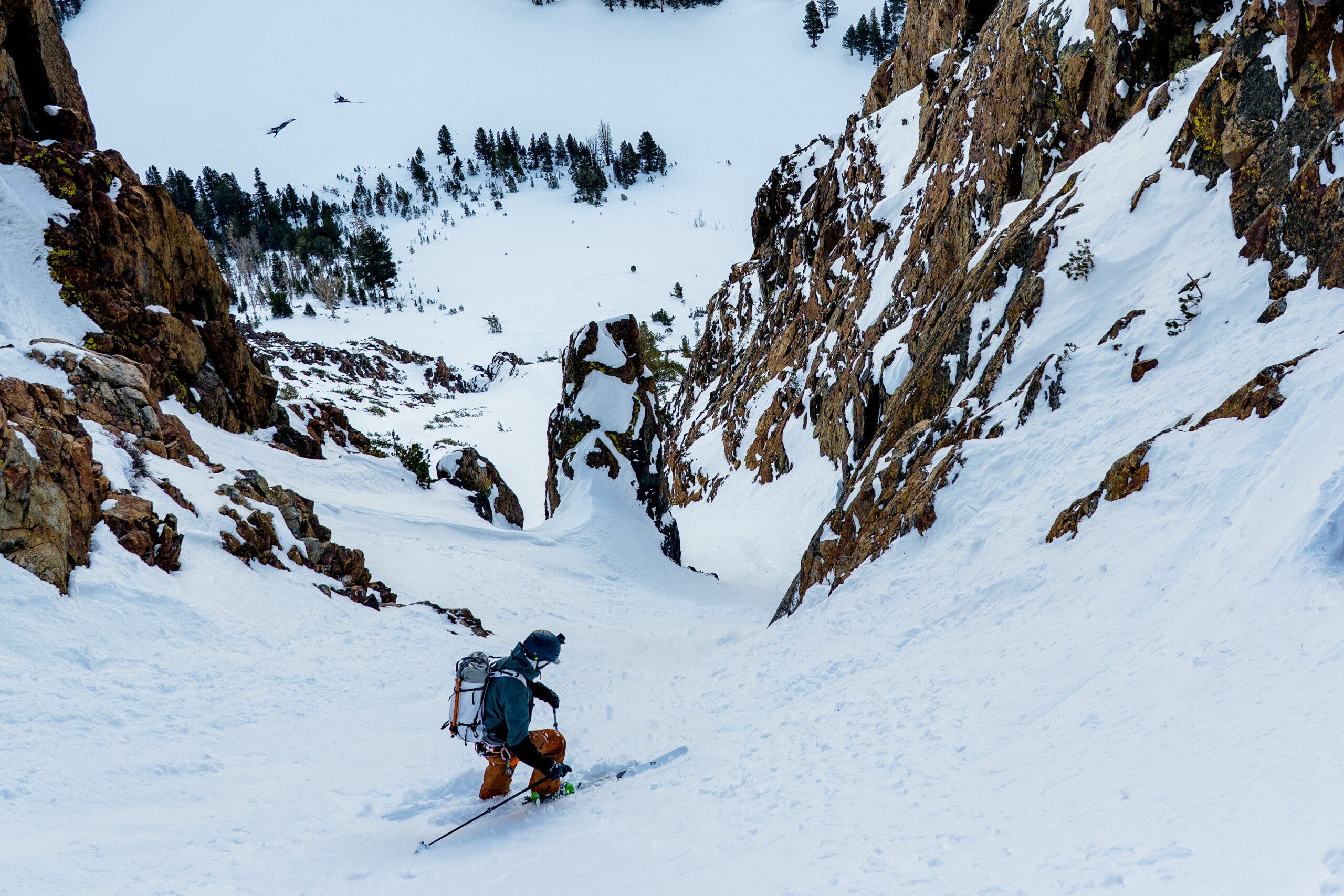
Nevertheless, industry advocates argue that prospective buyers do not need to leap directly into extreme, ultra-wide powder boards to experience the benefits of reverse camber technology. Today’s market features a diverse spectrum of all-mountain full rocker and heavily rockered designs with waist widths ranging from 100 to 110 millimeters, making them viable daily drivers for progressive skiers. These intermediate shapes are engineered to provide the playful turn initiation characteristic of rockered tips and tails while maintaining enough stability to handle chopped-up resort snow and occasional groomers.
The broader implications of the full rocker movement extend beyond simple equipment sales, touching on the fundamental philosophy of ski instruction and technique progression. Traditional ski pedagogy has long emphasized forward pressure, ankle flexion, and precise edge angles derived from traditional cambered platforms. The introduction and refinement of full rocker geometries challenge instructors and skiers alike to rethink balance points, weighting distribution, and turning mechanics. By altering how a ski interacts with the snow, reverse camber profiles encourage a more upright, centered stance and a more creative approach to line selection down the mountain.
As ski manufacturing technology continues to advance—incorporating lighter wood cores, advanced carbon fiber laminates, and sophisticated 3D top-sheet profiling—the structural compromises that once plagued early rockered skis are steadily disappearing. Manufacturers can now tune the flex patterns of full rocker skis to offer torsional rigidity where it is needed most, mitigating the "flap" or instability at high speeds that historically deterred cautious buyers.
Ultimately, the persistence of full rocker technology serves as a testament to the enduring influence of innovation in a mature sport. While the traditional, camber-dominant all-mountain ski will undoubtedly retain its market share due to its universal utility on hard-packed snow, the continued refinement of reverse camber profiles ensures that skiers have viable alternatives to uniformity. For those willing to look past conventional design standards and embrace a slightly different mechanical approach, the modern full rocker ski offers a gateway to uninhibited movement, proving that equipment evolution is still capable of transforming the on-snow experience decades after Shane McConkey first challenged the industry to open its collective mind.

