
The winter sports equipment industry has long operated under a uniform manufacturing paradigm that historically overlooked physiological differences between male and female athletes. For decades, the development of alpine ski boots followed a standardized process where manufacturers designed a singular prototype around a male-centric sample size, later attempting to adapt the finished product for female consumers through cosmetic adjustments and minor component scaling. This long-standing industry practice shifted significantly when K2 Sports introduced the 2027 K2 Anthem AF Zonal BOA, marking a structural departure from traditional manufacturing methods by engineering a true women-specific alpine ski boot from the ground up.
Main Facts and the Breakthrough Design
The development of the 2027 K2 Anthem resolves a fundamental mismatch in ski gear engineering. Historically, nearly all ski boot brands developed their products using a mondopoint size of 26.5 or 27.5—roughly equivalent to a men’s size 8.5 to 9.5—as the primary testing and molding benchmark. This master mold, known in the industry as the "tool," was then scaled up or down through a linear process called grading to produce sizes ranging from 22.5 to 30.5.
To market these items as women’s boots, manufacturers typically lowered the cuff height, softened the flex index, added a heel ramp, and incorporated softer liners with narrower heel pockets. However, because the underlying shell originated from a male anatomy baseline and was tested exclusively by male engineers and athletes, the resulting products failed to account for the actual biomechanical needs of female skiers. Furthermore, linear grading assumes that human feet shrink uniformly across all dimensions, a premise that contradicts anatomical reality, particularly regarding the disproportionately narrower heels and distinct forefoot structures of female feet.
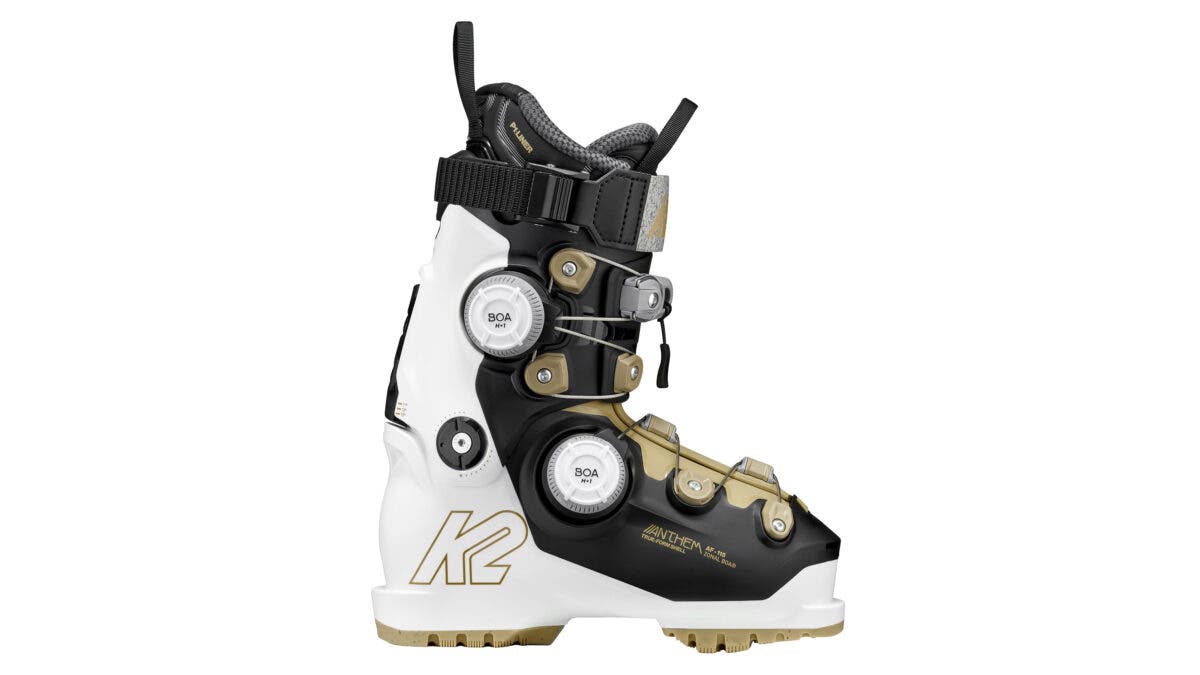
Led by female boot engineer Christie Burow, who joined K2 as lead designer in 2022, the brand invested nearly $1 million—representing a substantial portion of the company’s annual hardgoods budget—to develop a dedicated women’s mold built around a 23.5 mondopoint size. Rather than retrofitting an existing unisex chassis, Burow redesigned the Anthem collection to feature a cone-shaped cuff tailored to the volume and proportion of female calves, an adjusted internal last with a narrower heel pocket and a wider toe box, and an increased forward lean paired with a corresponding heel ramp to prevent the common sensation of skiing in the "backseat."
Chronology and Historical Context
The absence of true women-specific ski boots is particularly striking given that the snowsports industry successfully pivoted toward gender-specific equipment in other categories decades earlier. In the 1990s, pioneer Jeanne Thoren championed the creation of women-specific skis, demonstrating that female skiers required unique sidecuts, flex patterns, and mounting points to optimize performance due to differences in center of gravity and muscle mass distribution. While skis evolved rapidly, boots lagged behind due to the exorbitant capital costs associated with aluminum tooling and separate injection molds.
The sole historical precedent prior to the K2 Anthem was the introduction of the Head Dream boot in 2006. Head engineered the Dream as a dedicated women’s boot featuring its own mold, a wide forefoot, a narrow heel, and an adjustable calf. Despite favorable market reception, the product was discontinued after a few seasons. According to Andrew Couperthwait, Head’s Vice President of US Wintersports, the high cost of maintaining a separate women’s mold proved financially unviable at a time when competitors were successfully marketing adapted unisex boots as women-specific models, leading corporate leadership to deem the venture a poor return on investment.
For twenty years, the status quo remained unchallenged until Burow’s arrival at K2 in 2022. Tasked initially with testing prototypes using standard industry sizing pipelines, Burow experienced firsthand the limitations of the traditional development cycle. Because testing samples in her size (23.5) were rarely available during the initial prototyping phase, she was forced to evaluate boots months too late to influence production parameters. Recognizing that standard grading formulas created structural distortions in smaller sizes, Burow initiated a campaign to secure corporate approval for an independent women’s development program. With backing from immediate engineering teams and CPO Alex Draper, and under the leadership of K2’s first female CEO, Josée Larocque—who assumed the role in 2024—the company authorized the capital expenditure required to bring the Anthem to life.
Supporting Data and Anatomical Ergonomics
The redesign of the K2 Anthem addresses several critical biomechanical factors that influence ski control, comfort, and safety. Among the most notable engineering achievements is the correction of lateral stance alignment to accommodate the female Q-angle—the measurement of the angle formed by the quadriceps and the patellar tendon. Because women generally possess wider hips relative to their knee spacing, their femurs angle inward toward the centerline, whereas male skeletal structures feature a straighter hip-to-knee alignment.
Traditional ski boots are manufactured with a slight outward cant to accommodate male skeletal geometry. When female skiers place their feet into standard boots, their knees are frequently forced inward into an A-frame posture, diminishing edge-grip and power transfer on the outside ski. The K2 Anthem incorporates a laterally straighter stance profile that aligns with the natural Q-angle of female athletes, enabling balanced pressure distribution across both edges.
In addition to stance alignment, the Anthem line introduces an adult resort boot available in a mondopoint size of 21.5, a category largely ignored by major manufacturers due to projected low sales volumes. Historically, adult skiers with petite feet were forced to compromise by purchasing children’s race boots, which lack the comfort, insulation, and progressive flex characteristics required for recreational all-mountain skiing. By presenting internal survey data indicating that roughly one in five female skiers prioritizes smaller adult sizing, and highlighting elite K2 athletes like freeride skier McKenna Peterson—who measures a true 21.5 and historically competed on oversized equipment—Burow successfully argued for the inclusion of the smallest adult size category in the production run.
Official Responses and Industry Implications
The commercial launch of the 2027 K2 Anthem collection represents a potential watershed moment for winter sports manufacturing. Industry analysts note that while niche brands occasionally test specialized design concepts, a major manufacturer committing significant capital to separate, parallel development tracks for men’s and women’s alpine boots sets a new benchmark for product integrity.
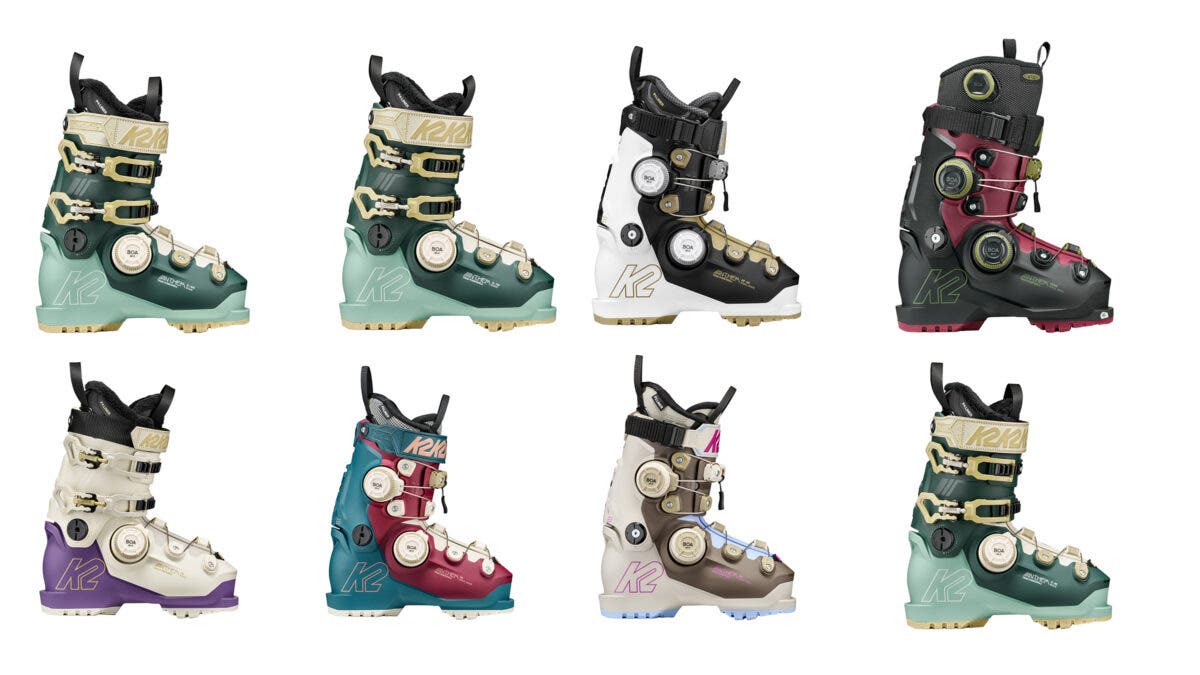
"Christie drove this, and the guys got out of her way," stated Josée Larocque, reflecting on the internal cultural shift that enabled the project’s completion. The development process required six times the typical engineering workload, resulting in a comprehensive lineup of eight distinct models spanning flex indices from 85 to 125, incorporating a mix of traditional buckles, single BOA dials, and dual BOA configurations.
Industry observers suggest that the commercial performance of the K2 Anthem will likely influence competitor product roadmaps in upcoming design cycles. As consumer awareness regarding anatomical engineering grows, the historical practice of scaling down men’s molds may face increased scrutiny from retail buyers and end-users alike.
Burow emphasized that the broader goal extends beyond corporate market share: "I don’t want this to just be a K2 thing. I want everyone to have a good experience on snow. I hope this will make an impact on all boots from here on out."
With select models already rolling out to online retailers and specialty shops ahead of the formal 2027 retail season, the ski industry is poised to observe whether the market broadly embraces true gender-specific geometry as the new standard for alpine footwear performance.

