
The 2025-2026 snow season in the Western United States has concluded as one of the most volatile and climatologically significant periods in recent history. Characterized by extreme temperature anomalies and erratic precipitation patterns, the season has forced a re-evaluation of water resource management and the economic viability of winter-dependent industries. While the total volume of precipitation across the region remained within a manageable range, the lack of consistent sub-freezing temperatures prevented the accumulation of a stable snowpack, leading to what hydrologists describe as a "warm-winter anomaly." As the region transitions into the summer months, the implications of this abbreviated winter are becoming increasingly apparent for agriculture, municipal water supplies, and wildfire risk management.
Seasonal Chronology and the December Temperature Spike
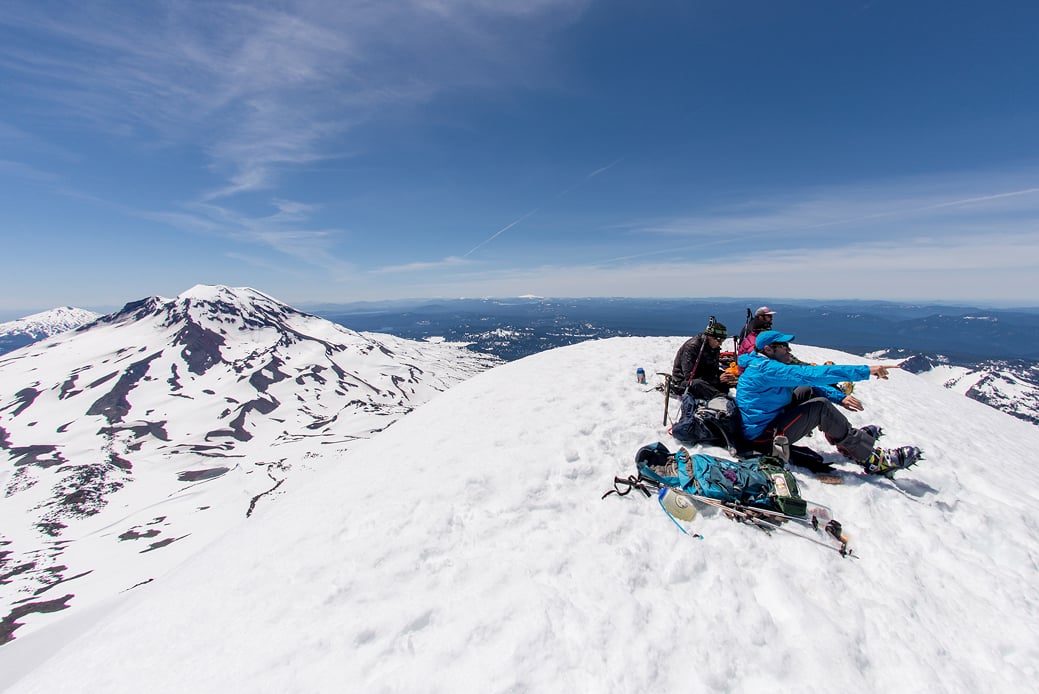
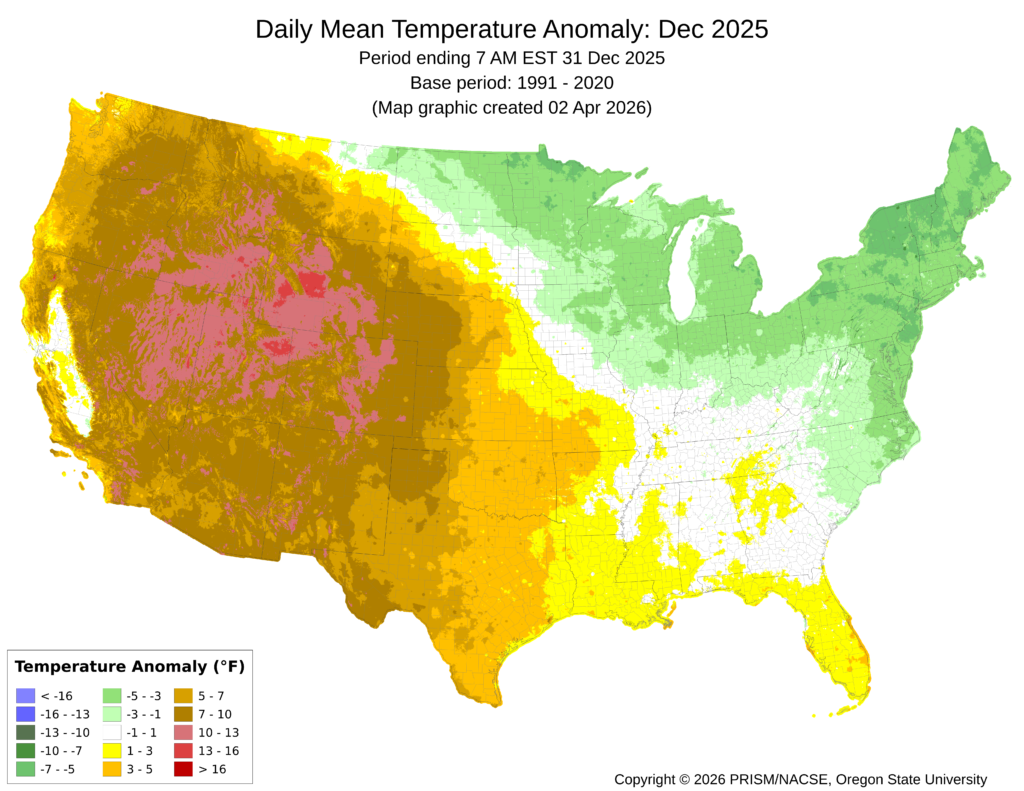
The 2025-2026 water year began with a degree of cautious optimism as early autumn storms brought moisture to the Pacific Northwest and the Northern Rockies. However, the trajectory of the season shifted dramatically during the final month of the calendar year. December 2025, a month traditionally critical for building the "base" of the mountain snowpack, saw temperatures across much of the Western U.S. rise to between 5 and 15 degrees Fahrenheit above the long-term average. Data from the PRISM Climate Group indicates that while the Northeast and Upper Midwest experienced temperatures up to 5 degrees below average, the West was trapped under a persistent high-pressure ridge that funneled warm, subtropical air into high-elevation basins.
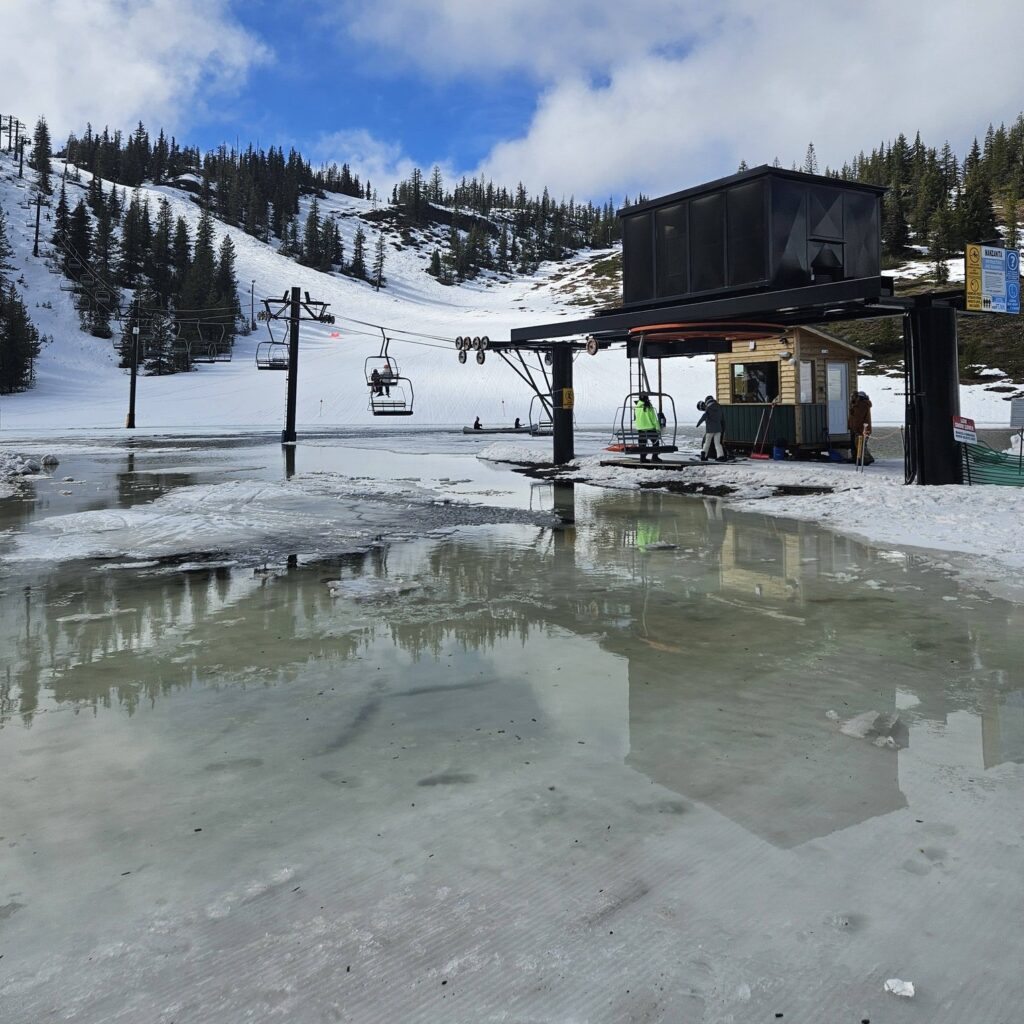
This thermal trend resulted in a series of "moving goalposts" for the winter sports industry and backcountry enthusiasts. Initially, operators hoped for a robust New Year’s opening, which was subsequently delayed to Martin Luther King Jr. Day. By the time President’s Day weekend arrived, many lower-elevation resorts were already struggling with bare ground, forcing several facilities to pause operations or close entirely. The Santiam Pass in Oregon, for instance, witnessed unscheduled "pond skims"—events usually reserved for late April—as early as mid-March. This compression of the season highlights a growing trend where the traditional five-month winter is being reduced to a narrow window of viable conditions.
Comparative Precipitation and Snow Water Equivalent (SWE) Data
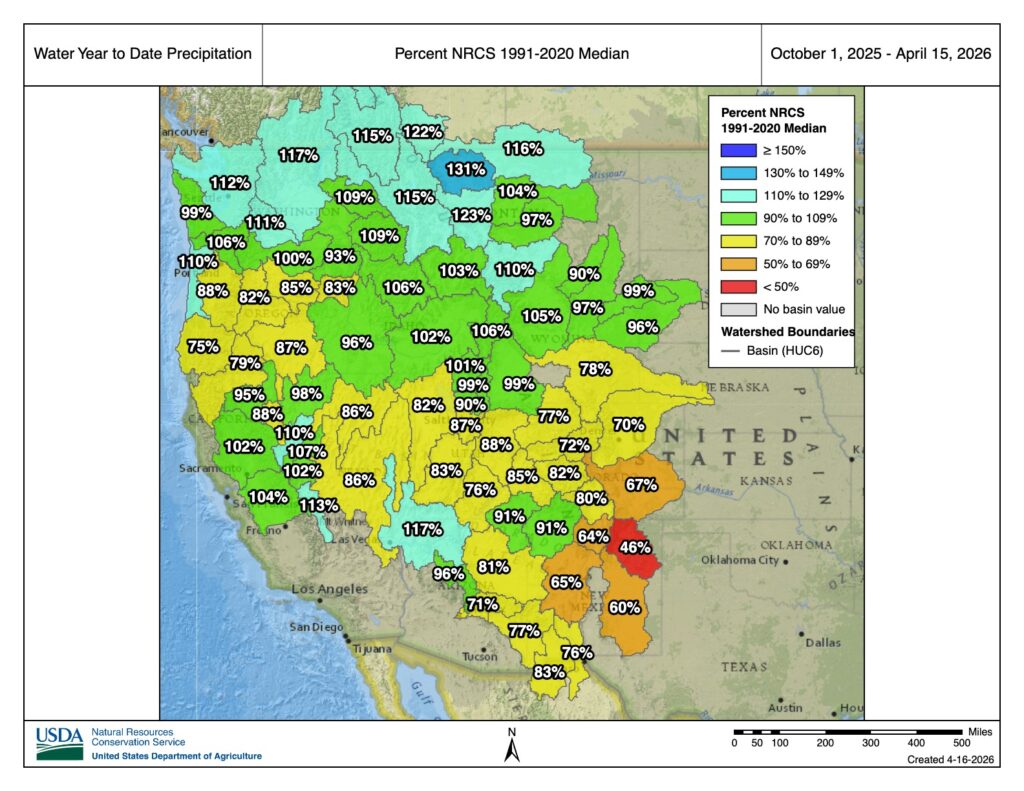
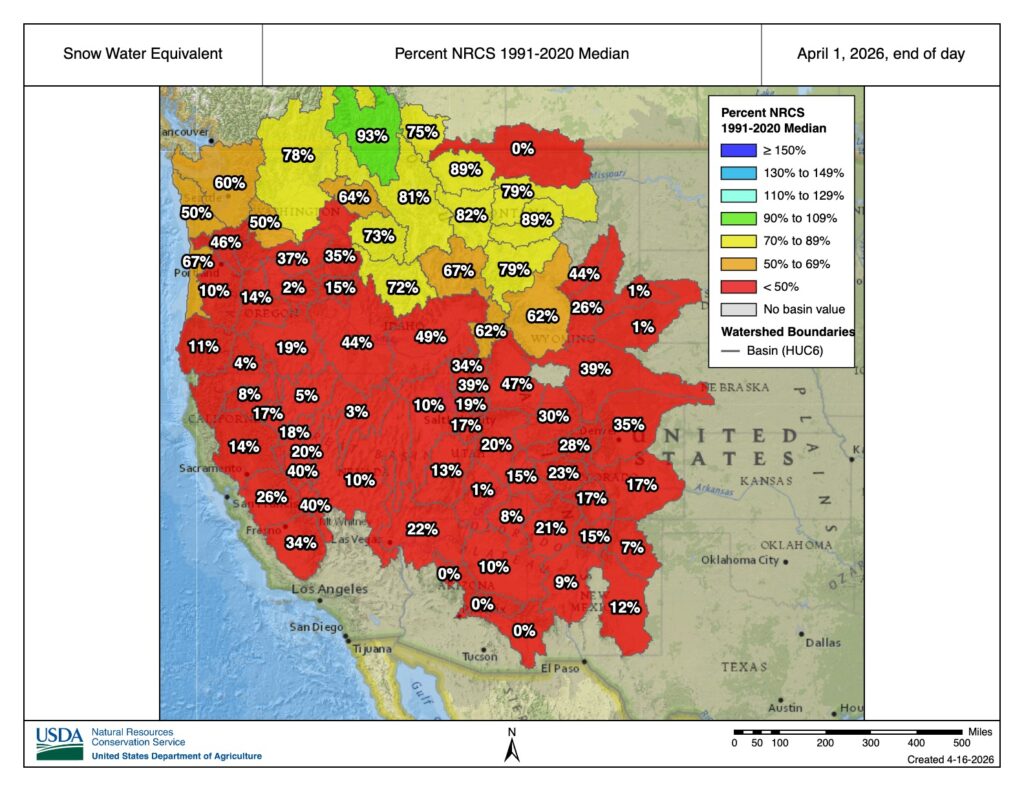
To understand the 2025-2026 season, it is necessary to distinguish between total precipitation and snow accumulation. According to the Natural Resources Conservation Service (NRCS), the "water year" precipitation—which includes both rain and snow—was statistically average for many regions. Northwest Wyoming, Montana, Idaho, and Washington even recorded slightly above-average moisture levels. Conversely, Oregon, Utah, and Colorado experienced a drier-than-normal cycle.
The critical failure of the season lay in the "Snow Water Equivalent" (SWE), the measurement of how much water is contained within the snowpack. Because the precipitation fell largely as rain rather than snow at mid-elevations, the April 1 SWE values—a primary benchmark for water forecasting—were a mere fraction of historical norms. Many SNOTEL (Snow Telemetry) observation stations across the Cascades and the Sierra Nevada posted their lowest peak SWE values in 45 years.
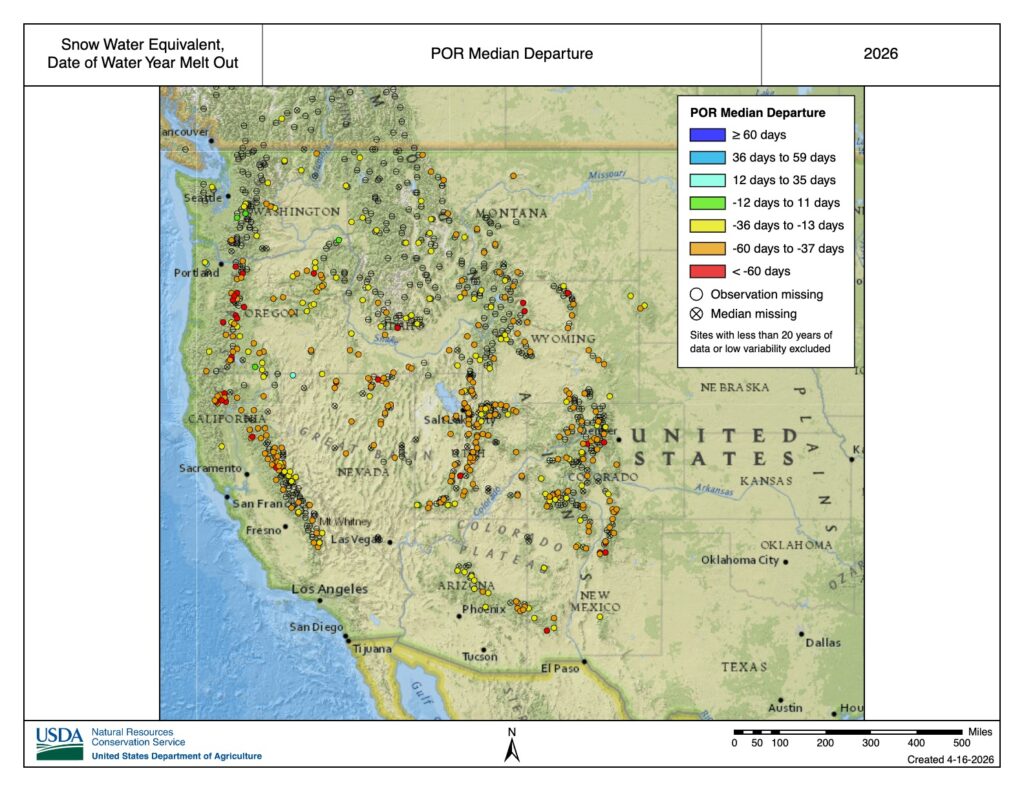
Furthermore, the "snow-off" dates, marking the point when the ground becomes bare, occurred significantly ahead of schedule. In several high-altitude locations, the snow vanished not just weeks, but a full two months earlier than the long-term average. This rapid melt-out has effectively eliminated the natural "slow-release" mechanism that Western states rely on to sustain streamflows through the dry summer months.
The Hydrologic Cycle and the Scarcity of Accessible Water
The 2025-2026 season serves as a stark reminder of the fragility of the Earth’s freshwater systems. When viewing the planet’s water in a global context, the volume available for human use is remarkably small. If all the Earth’s water were consolidated into a single sphere, its diameter would be only about 40% of the moon’s diameter, or 10% of the Earth’s own diameter. Within that sphere, the vast majority is salt water or inaccessible deep groundwater. Less than one-hundredth of one percent of global water is readily available to support the daily needs of billions of people and the ecosystems they inhabit.
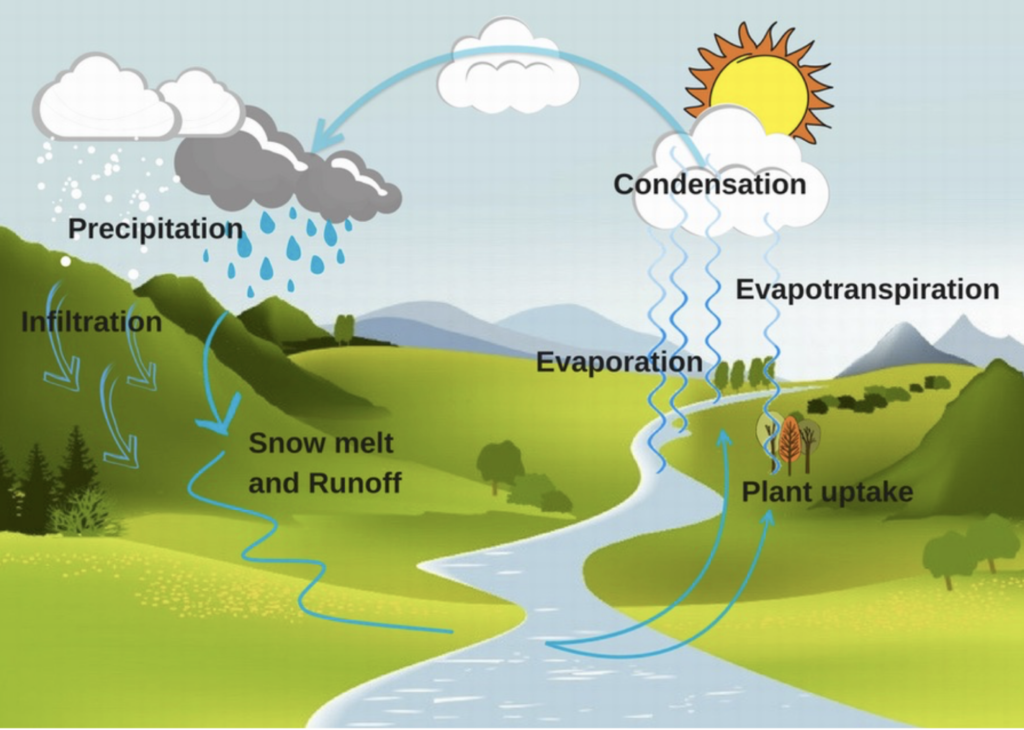
In the Western United States, the movement of this water—the hydrologic cycle—is heavily dependent on the seasonal storage of snow. On average, one meter of precipitation falls annually across the Earth’s land surfaces, which translates to roughly 13,000 gallons per person per day. However, the challenge is rarely the total volume, but rather the spatial and temporal distribution. In the West, moisture typically arrives in the winter, while the demand for irrigation and municipal use peaks in the summer. To bridge this gap, the region has historically relied on two types of infrastructure: man-made reservoirs and the natural "water tower" of the mountain snowpack.
The Role of Snow as a Distributed Reservoir
The importance of the snowpack cannot be overstated when compared to conventional engineering projects. The seasonal snowpack acts as a massive, distributed reservoir that holds back billions of gallons of water during the winter and releases it gradually as temperatures rise in late spring. This lag between precipitation and runoff is essential for maintaining cool stream temperatures, which are vital for the survival of salmonids and other aquatic species, and for reducing the risk of catastrophic spring flooding.
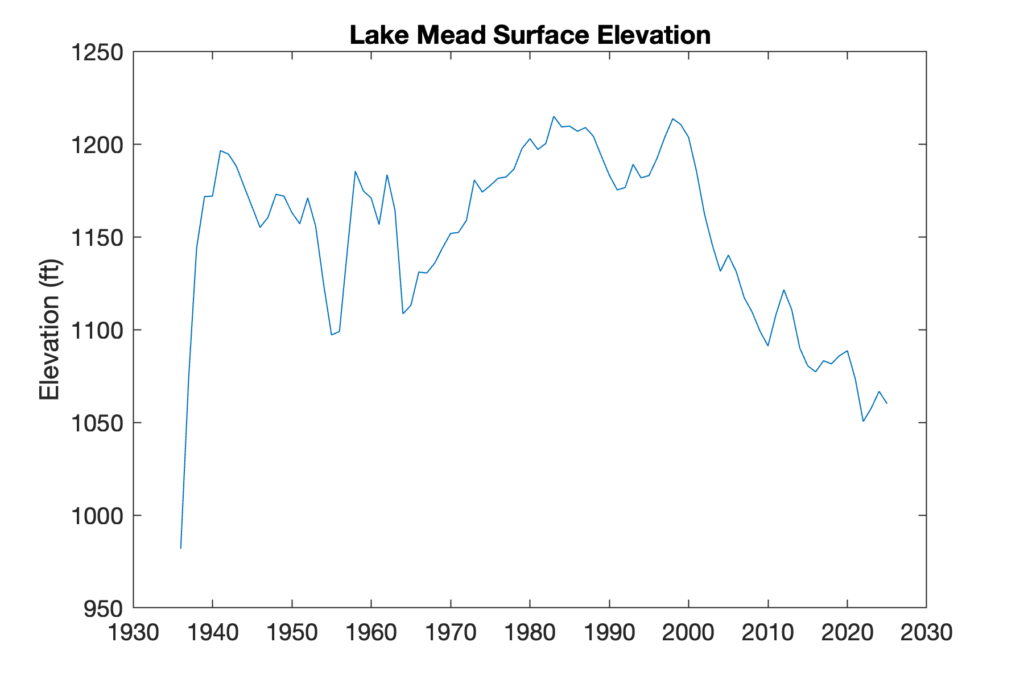
By current estimates, the amount of water stored as snow in the contiguous United States at its peak is approximately five times the total capacity of Lake Mead, the nation’s largest man-made reservoir. When the snowpack fails, as it did in the 2025-2026 season, the burden falls entirely on surface reservoirs like Lake Mead and Lake Powell. However, these systems are already under immense pressure. Lake Mead has seen steadily declining elevations for years due to a combination of over-allocation and prolonged drought in the Colorado River Basin. The absence of a robust snowpack in the upper basin states means that these reservoirs will not receive the necessary "recharge" this spring, likely triggering more urgent conversations regarding water rationing among municipalities and agricultural users in the Lower Basin states, including Arizona, Nevada, and California.
Socio-Economic Impact and Inferred Reactions
The 2025-2026 season has elicited a spectrum of reactions from stakeholders across the region. Economic analysts point to significant revenue losses in the outdoor recreation sector, which contributes billions of dollars to the GDP of Western states. Small mountain communities that rely on winter tourism have reported sharp declines in hospitality and service-related income.
While official statements from state water boards have remained measured, there is a clear undercurrent of concern regarding the upcoming fire season. State forestry departments have noted that an early melt-out leads to a longer "drying-out" period for forest fuels, potentially extending the window for high-intensity wildfires. In agriculture, irrigation districts are already preparing for "junior" water rights holders to be shut off earlier than usual, as streamflows are expected to drop to critical levels by mid-July.
Environmental advocacy groups have used the 2025-2026 data to emphasize the accelerating impacts of climate change. They argue that this season is not an outlier, but rather a preview of a "low-to-no snow" future. The psychological impact on the public—ranging from disappointment among recreationists to genuine grief over the changing landscape—is also being recognized as a factor in public policy and climate resilience planning.
Analysis of Long-Term Trends and Future Resilience
Despite the dire outcomes of the 2025-2026 season, climatologists urge a nuanced view of the data. Snow accumulation is characterized by high interannual variability, often described as a "boom or bust" cycle. Historical data from sites like Hogg Pass in Oregon show that a record-low year can be followed by a record-high year. This variability, however, is now occurring on top of a downward long-term trend in total snow volume and duration.
The primary takeaway for water managers is the need for increased flexibility in infrastructure and policy. As the "natural reservoir" of snow becomes less reliable, the region must explore alternative storage solutions, such as managed aquifer recharge—where excess winter runoff is pumped into underground basins—and more aggressive water conservation measures.
In conclusion, the 2025-2026 snow season in the Western United States has provided a critical case study in the intersection of climate, hydrology, and society. While the "glass half full" perspective suggests that a single lean year can be recovered, the broader trend indicates a fundamental shift in how the West receives and stores its most precious resource. The transition from a snow-dominated hydrologic system to a rain-dominated one represents one of the most significant challenges for the 21st century, requiring a unified approach to science, engineering, and environmental stewardship.

