
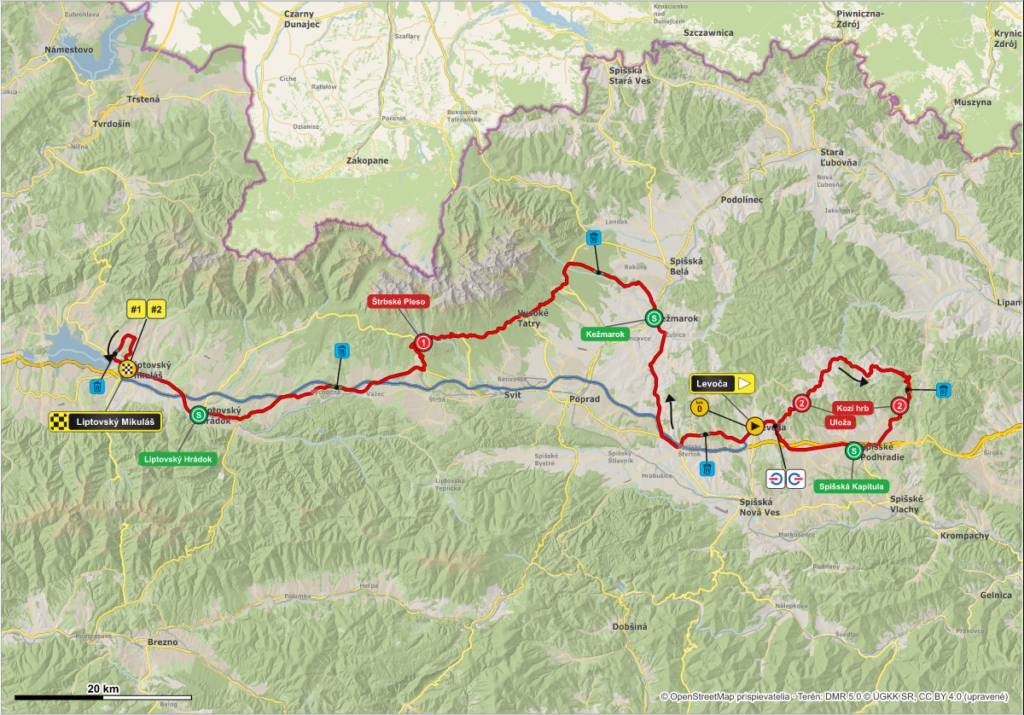
The second stage of the 2026 Tour of Slovakia represents a tactical pivot point in the race, as the peloton transitions from the opening maneuvers into the rugged, high-altitude terrain of the High Tatras. Covering 187 kilometers from Levoča to Liptovský Mikuláš, the stage is headlined by an ascent to the famous ski resort of Štrbské Pleso. While the climb reaches an elevation of 1,262 meters, cycling analysts and team directors remain divided on whether the gradient is sufficient to neutralize the sprinters, or if the long, sweeping descent to the finish will facilitate a regrouping of the peloton.
The Geography of the Challenge
The stage profile is deceptively complex. Starting in the historic town of Levoča, the riders face an almost immediate demand on their climbing legs. The organizers have front-loaded the route with two Category 2 climbs within the opening kilometers, a deliberate design choice intended to force an early, high-intensity selection. This initial phase is crucial for teams looking to control the race; if a strong breakaway group establishes a gap here, they could potentially dictate the tempo for the remainder of the afternoon.

The primary point of interest is the ascent to Štrbské Pleso, a location deeply ingrained in the cultural memory of winter sports enthusiasts. Known globally for hosting world-class cross-country skiing and biathlon events, the resort provides a dramatic backdrop for professional cycling. However, from a technical standpoint, the climb itself poses a specific set of variables. Stretching over approximately six kilometers, the ascent averages a modest 3.1 percent gradient. While the elevation gain from the base—starting at roughly 620 meters and peaking at 1,262 meters—is significant in terms of cardiovascular stress, the lack of steep, punishing ramps suggests that pure climbers may struggle to distance the faster, heavier sprinters who have trained specifically to survive such terrain.
Strategic Implications for the Peloton
The second half of the stage is characterized by a long, 50-kilometer descent followed by flat, rolling roads leading into the finish at Liptovský Mikuláš. This configuration creates a classic "catch-22" for the peloton. If the gap to a breakaway is not significant by the time the riders summit Štrbské Pleso, the flat run-in provides the perfect platform for teams with sprinters to organize a chase.
"The length of the climb is the main factor here," says one team directeur sportif. "If a group of strong, non-threatening riders goes clear early, we might see the GC teams allow it to stay away to avoid the chaos of a sprint. But if a threat to the leader’s jersey is in the mix, the descent will be ridden at a breakneck pace to bring them back."

The implication for the general classification (GC) is clear: while the stage may not be mountainous enough to crown a race winner, it is certainly treacherous enough to cause a time loss for a leader who is caught out of position or suffers a mechanical issue during the descent. The riders must balance the necessity of conserving energy for the final sprint with the requirement to stay near the front of the pack to avoid the risk of splitting in crosswinds or crashes on the technical downhill sections.
Chronology and Key Milestones
The stage follows a rigorous timeline designed to maximize television coverage and maintain the safety of the riders.
- Early Phase (0–20 km): Immediate climbing begins. Expect intense attacks from smaller teams seeking visibility.
- Mid-Stage (20–100 km): The peloton settles into a rhythm. The gap to the breakaway will likely stabilize here, with the team in the leader’s jersey setting a tempo that is brisk but not overly exhausting.
- The High Tatras (100–127 km): The ascent to Štrbské Pleso. This is the tactical fulcrum of the day. The KOM (King of the Mountains) points will be hotly contested here by riders looking to secure the polka-dot jersey.
- Final Run-in (127–187 km): The descent and the flat approach to Liptovský Mikuláš. This will likely be the most chaotic period of the race as teams scramble to position their lead-out trains for the final sprint.
Data Points and Performance Metrics
The classification systems in place for the Tour of Slovakia ensure that every kilometer counts. With time bonuses of 10, 6, and 4 seconds on offer for the top three finishers, the sprinters—if they survive the climb—have a genuine incentive to fight for the stage win.
Furthermore, the points competition for the green jersey will see a significant shift after today. The intermediate sprints combined with the high points allocation at the finish line mean that today’s winner could potentially jump several spots in the overall standings, provided they have performed well in the opening prologue or stage one.
The expected arrival time at the finish line is between 17:05 and 17:30 local time. This window is contingent on the average speed maintained by the pack; if a headwind hampers the race, the finish could be delayed, further complicating the tactical calculations for the lead-out trains.
Historical Context and Regional Significance
The Tour of Slovakia has grown significantly in stature over the last decade, transitioning from a regional event to a key fixture on the UCI calendar. By incorporating iconic locations like Štrbské Pleso, the race organizers are clearly attempting to highlight the diversity of the Slovakian landscape. The region of the High Tatras is the highest mountain range in the Carpathian chain, and its inclusion in the route provides not only a test of physical endurance but also a visual showcase of the country’s natural beauty.
For the local riders, the atmosphere at the roadside is expected to be electric. Slovakia has seen a surge in cycling interest, partly driven by the success of its national stars on the world stage. This home-field advantage often results in smaller, domestic teams riding with an extra level of motivation, frequently punching above their weight in the early breakaway attempts.
Official Responses and Team Tactics
While official statements from major team managers remain guarded to protect tactical secrets, there is a general consensus that the race will be decided in the final 20 kilometers.
"We are treating today as a day for the sprinters, but with a caveat," noted a spokesperson for a leading WorldTour team. "The climb is not a wall, but it is long enough to drain the legs. If the pace is set high from the bottom, it will be a test of pure endurance. We expect the race to be decided by which teams have the most riders left in the final five kilometers to control the pace."
Observers note that the lack of steep gradients at the summit of the climb is a deliberate tactic by race planners to keep the race "open" for as long as possible. By preventing a total separation between the climbers and the sprinters, they ensure that the battle for the stage win involves a larger group of riders, which creates more excitement for the spectators and a more challenging environment for the team directors to manage.
Conclusion: A Test of Versatility
The second stage of the 2026 Tour of Slovakia is a quintessential example of modern professional road racing, where the outcome is as much about tactical intelligence as it is about physical output. The climb to Štrbské Pleso will serve as the litmus test for the sprinters; those who can manage their effort on the long, low-gradient slopes and recover during the descent will be the favorites for the win.
For the GC contenders, the goal is simple: survive, stay safe, and avoid any unnecessary risks in the final hours of the race. As the tour continues, the lessons learned on the roads to Liptovský Mikuláš will be vital. Whether the day ends in a bunch sprint or a triumphant escape, the stage promises to be a defining moment in the early development of the 2026 general classification battle. Fans can follow the live progression of the race via the official SC Play platform, which provides real-time tracking and comprehensive coverage of the climb and the subsequent sprint finish.

