
The promising career of Austrian cross-country skier Katharina Engelhardt has been abruptly halted after a harrowing medical emergency that saw her suffer two cardiac arrests and spend four days in a coma. The 18-year-old talent, who had recently achieved significant international success in junior competitions and national championships, has been forced to make the devastating decision to retire from professional skiing.
Engelhardt’s remarkable breakthrough in the recent winter season was overshadowed by a sudden and severe health crisis. Her life was irrevocably altered overnight, leading to a period of intense medical intervention and a profound realization of life’s fragility. The news of her retirement, first reported by Bild, has sent shockwaves through the cross-country skiing community, highlighting the inherent risks associated with elite athletic pursuits and the vulnerability of even the most conditioned athletes.

A Rapid Rise Halted by a Medical Crisis
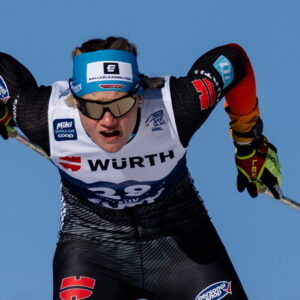
Katharina Engelhardt had been on an upward trajectory in the world of junior cross-country skiing. Her performances in the junior cup circuit had garnered attention, with multiple international podium finishes cementing her status as a rising star. Her success extended to the national level, where she secured a silver medal in the Austrian national championships, a testament to her dedication and talent. This promising ascent, however, was brutally interrupted by a life-threatening medical event.
The exact timeline leading to Engelhardt’s collapse is still being pieced together, but the severity of her condition underscores the unpredictable nature of such cardiac incidents. What began as a seemingly ordinary period of training or competition escalated into a critical medical emergency, requiring immediate and advanced care.
The Ordeal: Cardiac Arrest, Coma, and a Fight for Survival
The core of Engelhardt’s medical crisis involved two instances of cardiac arrest, a condition where the heart suddenly stops beating. This is an immediate life-threatening emergency requiring prompt resuscitation efforts. Following these cardiac arrests, Engelhardt experienced a severe inflammation of the heart, a condition known as myocarditis, which can be caused by various factors, including viral infections.

The severity of her condition necessitated her admission to intensive care, where she remained in a coma for four days. This period of unconsciousness is a critical indicator of the body’s struggle to function and the extent of the damage inflicted. During her time in the intensive care unit, medical professionals worked tirelessly to stabilize her condition and manage the complex physiological challenges she faced.
Engelhardt’s own words, as quoted by Bild, convey the profound impact of this experience: "My life was turned upside down from one day to the next, and you realize that you should be grateful for every single day." This statement reflects the stark contrast between her life as a burgeoning athlete and the sudden confrontation with mortality.
A Surgical Battle and the Implantation of a Defibrillator
The medical intervention extended beyond initial stabilization. Engelhardt underwent a surgical procedure to implant a defibrillator. An implantable cardioverter-defibrillator (ICD) is a device that monitors the heart’s rhythm and delivers an electrical shock if it detects a life-threatening arrhythmia, such as ventricular tachycardia or fibrillation, thereby preventing sudden cardiac arrest. The implantation of such a device is a significant medical intervention, often indicating a persistent risk of cardiac events.
The surgical procedure itself presented considerable risk, a fact acknowledged by Engelhardt and the medical team. She recounted that even the highly skilled doctors in Linz expressed doubts about her survival. "Even the skilled doctors in Linz didn’t think I would make it. They were wrong, because I survived," she stated, underscoring the gravity of the situation and the remarkable nature of her recovery. The fact that she was discharged from intensive care within a week of waking from her coma is a testament to both her resilience and the effectiveness of the medical care she received. However, her recollection of the events remains fragmented, a common consequence of such traumatic experiences and the induced coma.
Broader Context: Cardiac Issues in Elite Sports
Engelhardt’s situation is not an isolated incident within the world of elite sports, particularly in endurance disciplines like cross-country skiing. Athletes push their bodies to extreme limits, and while this often leads to exceptional cardiovascular health, it can also, in rare cases, exacerbate underlying predispositions or lead to acquired cardiac conditions.
Over the years, several skiers, both amateur and professional, have been forced to end their careers due to heart-related problems. These issues can range from heart arrhythmias, such as atrial fibrillation or supraventricular tachycardia, to more serious conditions like myocarditis or congenital heart defects that are aggravated by intense physical exertion.

The case of Engelhardt also brings to mind other instances of young athletes facing similar heart-related challenges. For example, in 2022, Norwegian ski jumper Eirin Maria Kvandal, a significant talent, had her season cut short due to a heart condition. Similarly, other endurance athletes across various sports have experienced career-ending or career-altering cardiac events. These incidents serve as stark reminders of the biological toll that elite athletic training can take and the critical importance of comprehensive cardiac screening and ongoing monitoring for athletes.
The Difficult Decision: Retirement from the Sport
The prognosis following such a severe cardiac event, especially one involving cardiac arrest and requiring the implantation of a defibrillator, often necessitates a re-evaluation of an individual’s ability to safely engage in high-intensity competitive sports. The risks associated with a return to professional skiing, with its extreme physical demands and potential for sudden, strenuous efforts, would be substantial.
Engelhardt’s announcement that "Top-level sport will unfortunately no longer be a part of my life" is a poignant acknowledgment of this reality. The decision to retire, especially at such a young age and after experiencing a significant breakthrough, is undoubtedly a deeply emotional and challenging one. She expressed her gratitude for the sport, stating, "The sport has given me so much, I have learned so many things, I have laughed and cried." This sentiment highlights the profound personal connection athletes develop with their chosen disciplines and the sacrifices involved in pursuing them.
Implications and Future Considerations
The case of Katharina Engelhardt raises important questions about the screening, monitoring, and long-term well-being of young athletes in high-risk sports. While rigorous medical checks are standard in professional sports, the unpredictable nature of cardiac events means that no system can entirely eliminate risk.
Moving forward, discussions within sports federations and medical communities will likely focus on:
- Enhanced Screening Protocols: Exploring whether existing cardiac screening methods are sufficient for identifying all potential risks, especially in young athletes. This might include more advanced diagnostic tools or a greater emphasis on genetic predispositions.
- Athlete Education: Ensuring athletes are fully aware of the potential cardiac risks associated with extreme training and competition, and encouraging them to report any unusual symptoms promptly.
- Support Systems: Providing robust psychological and emotional support for athletes who are forced to retire due to medical reasons, helping them navigate this significant life transition.
Engelhardt’s story is a powerful reminder of the human element within elite sports. While the focus is often on performance and achievement, the health and safety of the athletes must remain paramount. Her journey from a promising young talent to a survivor facing a drastically altered future is a testament to her strength and courage. The cross-country skiing community, and indeed the broader sporting world, will undoubtedly be following her recovery with hope and wishing her well in whatever future endeavors she chooses.

