
Despite the gravity-assisted nature of alpine skiing, elite athletes and seasoned coaches agree that navigating challenging terrain is an intensely demanding athletic endeavor. While recreational skiers often view the sport as a leisurely descent down a mountain, professional trainers recognize that charging through steep back bowls, navigating uneven moguls, and executing high-speed carves require exceptional physiological resilience. To bridge the gap between casual weekend warrior status and elite performance, fitness professionals are increasingly emphasizing the critical role of power endurance in pre-season conditioning programs.
Elite ski coach Chris Miller, renowned for training world-class ski racers, points out that true alpine fitness extends far beyond basic leg strength. Preparing the human body for the unique biomechanical stresses of skiing demands targeted physical conditioning designed to build muscle while simultaneously fighting off fatigue. This specific fitness threshold is known as power endurance—the physiological capacity to sustain high-intensity muscular explosions repeatedly over extended periods.
Understanding the Physiological Demands of Alpine Skiing
Alpine skiing places extraordinary demands on the musculoskeletal and cardiovascular systems. Every turn executed on a groomed run or a powder-filled bowl requires a burst of explosive muscular power from the lower body and core. However, unlike a single-effort sprint or a heavy one-rep maximum lift, skiing requires this explosive force to be continuously repeatable from the first chair at 9:00 a.m. to the final run of the day.
Skiers rely heavily on their quadriceps, glutes, hamstrings, and core stabilizers to absorb aggressive terrain variations, manage centrifugal forces during high-speed turns, and maintain dynamic balance. According to sports science researchers, maintaining this level of muscular contraction under continuous eccentric loading causes significant micro-trauma and rapid metabolite accumulation in the muscle tissue. Without adequate power endurance training, physical fatigue manifests rapidly.
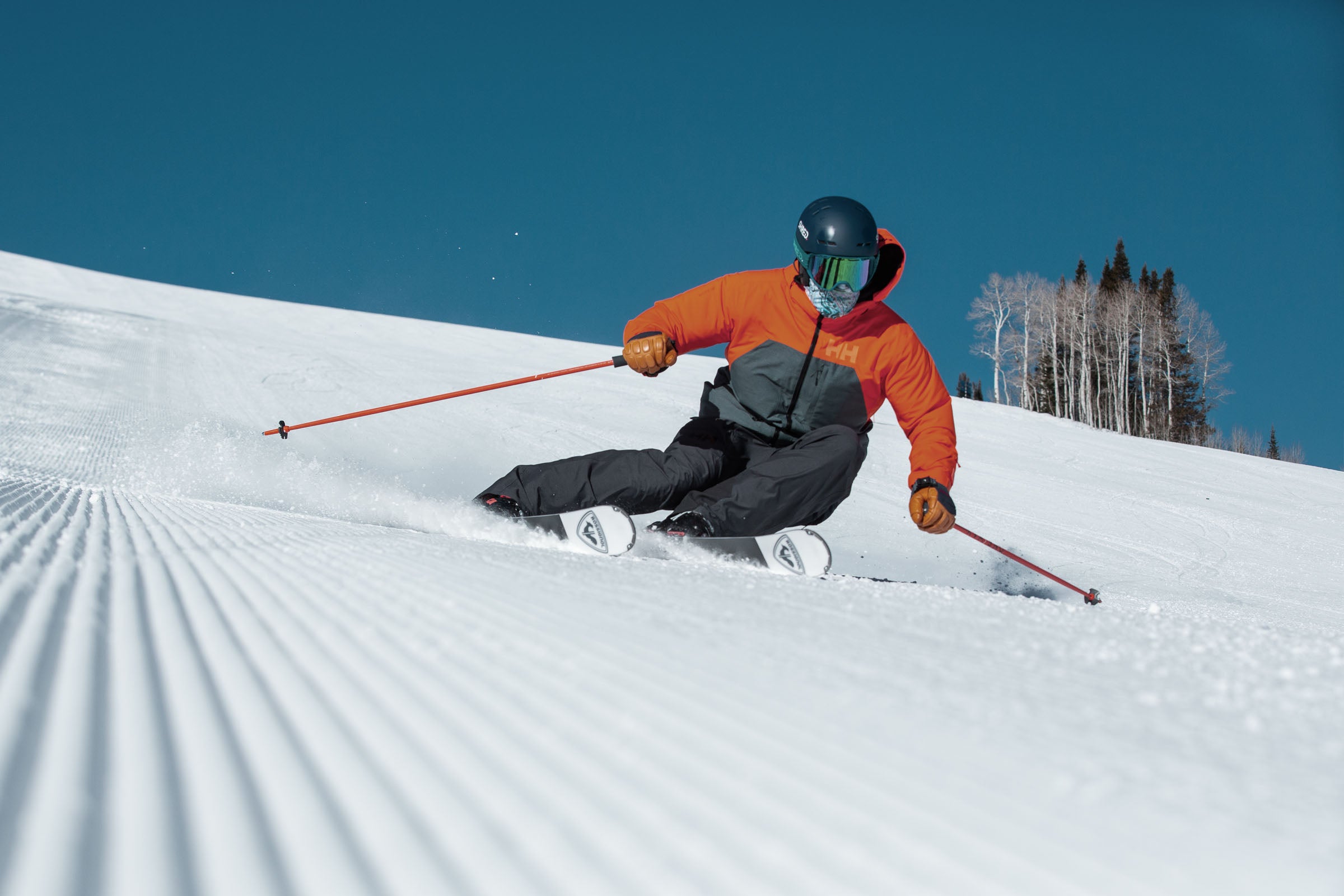
When fatigue sets in, physiological compensation occurs: reaction times slow down, postural alignment degrades, and technical execution becomes sloppy. Crucially, sports medicine data consistently shows that the vast majority of non-contact ski injuries—such as anterior cruciate ligament (ACL) tears and meniscus strains—occur during the final hours of the ski day, directly correlating with acute muscular fatigue and diminished core stability. By integrating structured power endurance routines—such as plyometric circuits, jump squats, and interval-based resistance training—skiers can delay the onset of fatigue, preserve technical form, and drastically reduce their susceptibility to season-ending injuries.
The Evolution of Pre-Season Ski Conditioning
The methodology of ski preparation has undergone a significant transformation over the past several decades. Historically, pre-season conditioning programs relied heavily on high-repetition, low-weight exercises or prolonged, steady-state cardio like running and cycling. While these traditional methods built general aerobic capacity, they failed to replicate the erratic, stop-and-start, multi-planar movements required on the mountain.
Modern sports science emphasizes neuromuscular efficiency and functional movement patterns. Coaches like Miller utilize a phased approach to training, starting with fundamental mobility and stability before progressing to dynamic power circuits. This chronological evolution of fitness prepares the nervous system to fire fast-twitch muscle fibers efficiently while maintaining structural integrity under heavy duress.
The integration of specific movement blocks—such as quadruped stability series, dynamic lunge progressions, and anti-rotation core work—ensures that athletes develop a bulletproof trunk. In skiing, the core acts as the central transmission point for force generation and absorption; if the trunk fails, the legs cannot perform at their optimal capacity. Consequently, modern conditioning frameworks prioritize trunk anti-movement exercises alongside explosive lower-body regimens like skater hops and sandbag complexes.
Comprehensive Power Endurance Workout Blueprint

To assist athletes in preparing for the upcoming winter season, fitness experts have standardized a comprehensive, multi-phase power endurance workout. This protocol is specifically engineered to target the exact muscle groups utilized during aggressive alpine skiing.
Equipment Needed for the Routine
- Standard utility mat or soft flooring
- Medium-weight training sandbag
- Clear workspace allowing for lateral and linear movement
Cardio Warm-Up Phase
Before engaging in high-intensity power output, athletes must elevate their core body temperature and increase synovial fluid lubrication within the major joints. A progressive 5-to-10-minute cardiovascular priming phase—incorporating light jogging, skipping rope, or dynamic cycling—prepares the cardiovascular system for the impending workload.
Power Circuit Warm-Up: The Quadruped Series
The warm-up transitions directly into a targeted quadruped series designed to awaken dormant stabilizer muscles in the shoulders, hips, and spine.
- Quadruped Series: Execute 6 controlled repetitions per side, focusing on strict postural alignment and zero pelvic rotation.
- Lunge Series: Perform 2 repetitions per side, deepening the dynamic stretch in the hip flexors and activating the gluteal complex.
- Dynamic Series: Complete 6 repetitions per side, emphasizing range of motion and neuromuscular connection.
Power Circuit No. 1: Lower Body Explosiveness
The primary lower-body circuit is structured around continuous-tension movements designed to push the muscles into an anaerobic state, thereby stimulating power endurance adaptations. Utilizing a sandbag series consisting of four distinct exercises performed back-to-back with zero rest between movements, athletes build resilience against lactic acid buildup.
- Structure: Complete 4 total sets. Rest exactly 45 seconds only after completing a full round of all four exercises.
- Key Movements: Incorporate explosive lateral movements, such as weighted skater hops and deep rotational squats, which closely mimic the lateral weight transfer required during carving.
Power Circuit No. 2: Trunk Stability and Anti-Movement
The final phase of the training protocol addresses core resilience through anti-movement principles. Skiing is rarely a movement-generating exercise for the core; rather, the core’s primary job on the mountain is to resist unwanted external forces, such as bumps pushing the skis sideways or wind gusts disrupting balance.

- Structure: Execute 3 dedicated sets, allowing 45 to 60 seconds of complete recovery between sets.
- Key Movements: Utilize exercises like the dead bug and advanced plank variations that challenge the anterior, lateral, and rotational stability of the spine.
Broader Implications and Industry Impact
As ski resorts experience record-breaking season attendance and the sport continues to attract younger, more aggressive demographics, the emphasis on structured off-season preparation has never been more vital. Insurance data from winter sports organizations indicates that comprehensive conditioning programs not only enhance individual enjoyment—allowing for "bell-to-bell" ski days without excessive soreness—but also ease the logistical and financial burdens placed on mountain rescue teams and local emergency medical services.
Industry analysts note a marked surge in the commercial availability of home-fitness regimens tailored specifically for snow sports. By democratizing access to elite-level training frameworks through instructional digital media, coaches are empowering everyday enthusiasts to take control of their physical readiness. Ultimately, investing time in power endurance training transforms the skiing experience, replacing the dread of late-day leg burn with sustained confidence, precise control, and uncompromised safety from the first snowfall to the final spring corn run.

