
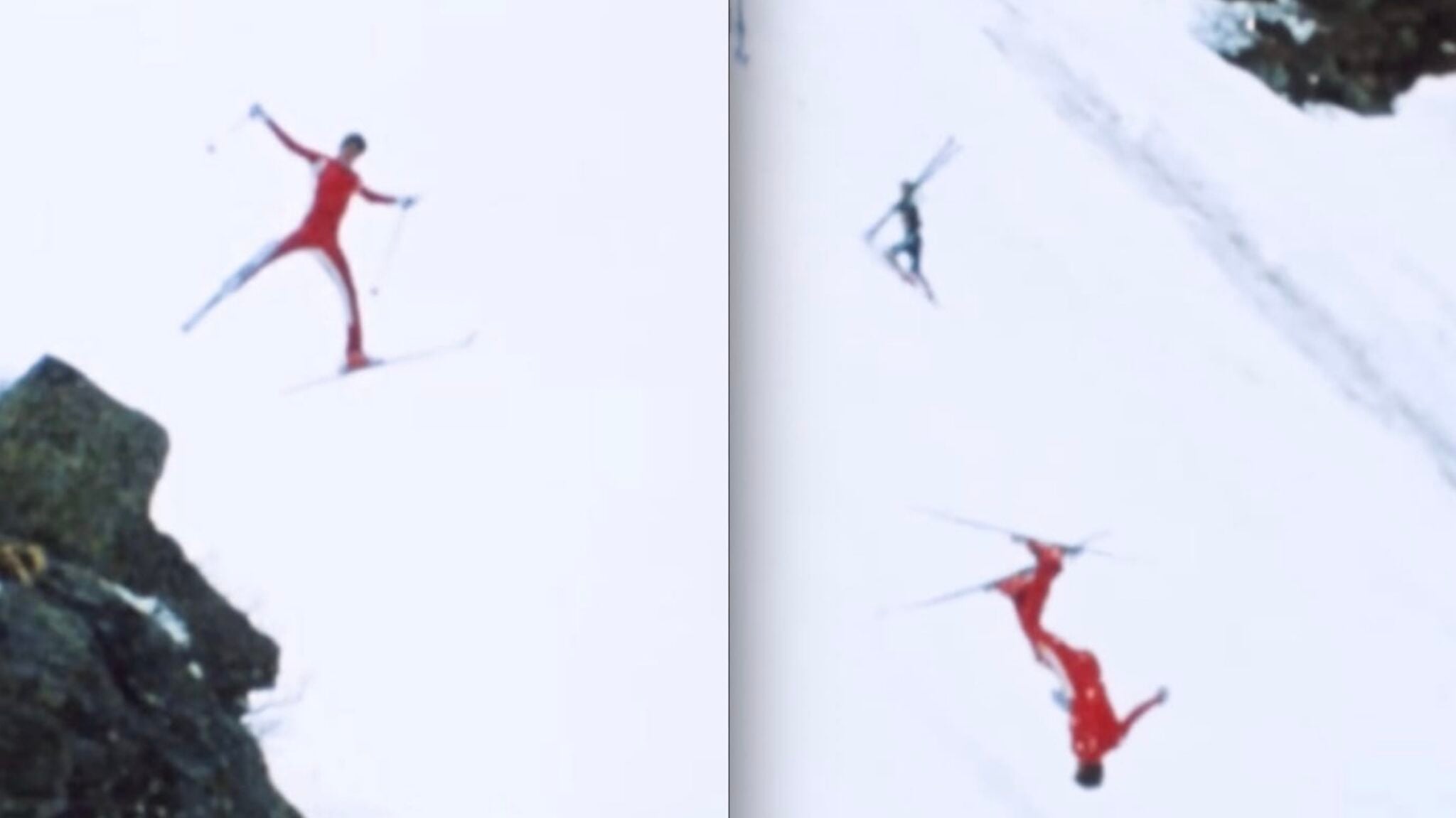
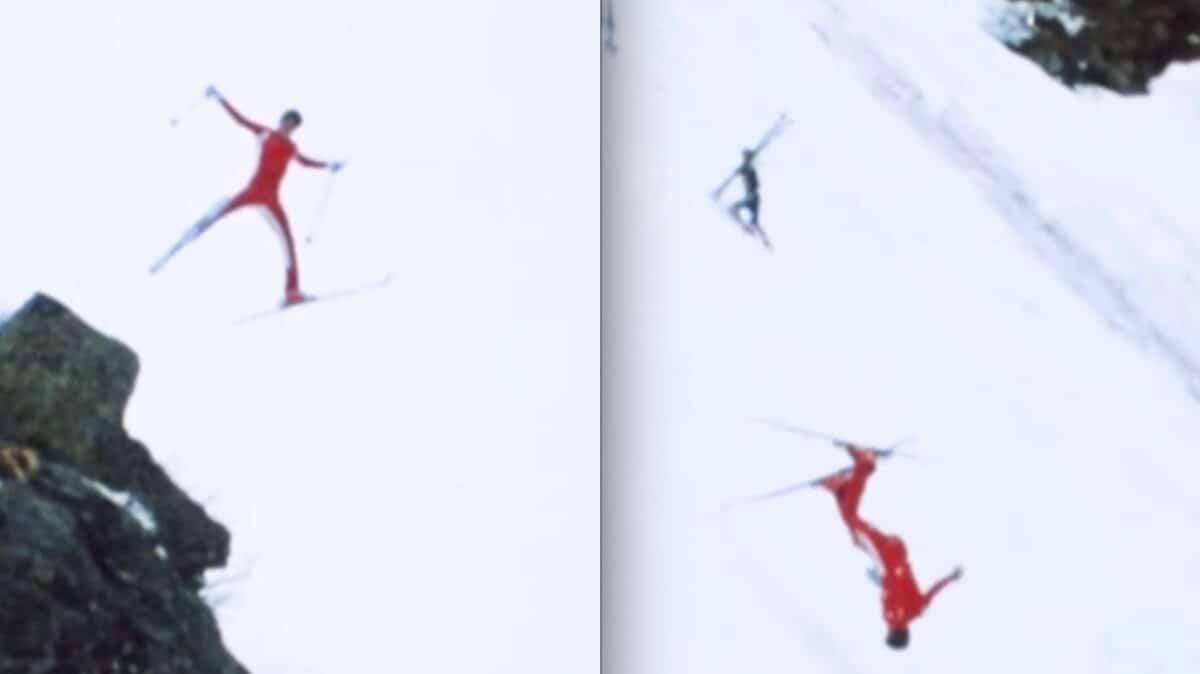
Tuckerman Ravine, a legendary couloir nestled on the formidable slopes of Mount Washington in New Hampshire, has long been etched into the annals of American skiing history. Its challenging terrain and dramatic topography have not only tested the mettle of countless skiers and snowboarders but have also served as a crucible for the evolution of snow sports. The recent resurfacing of a remarkable vintage clip, showcasing a spectacular cliff jump and subsequent wipeout in Tuckerman Ravine, offers a compelling visual testament to the ravine’s enduring allure and its pivotal role in the genesis of extreme skiing in the United States. This footage, originating from the opening segment of Warren Miller Entertainment’s 1984 film "Ski Country," specifically highlights skier Greg Smith’s ambitious attempt at a massive cliff jump within the ravine, a moment that encapsulates the daring spirit of early backcountry pioneers.
The Genesis of a Legend: Tuckerman Ravine’s Skiing Heritage
The story of skiing in Tuckerman Ravine dates back to 1913, when Dartmouth College students Fred Harris, Joseph Cheney, and Carl Shumway are credited with the first documented ascent and descent of the ravine’s steep face. This pioneering act marked the nascent beginnings of a tradition that would transform the ravine into a pilgrimage site for skiers seeking the ultimate challenge. Its iconic bowl-like structure, punctuated by formidable cliffs and steep pitches, quickly earned Tuckerman Ravine the moniker "birthplace of extreme skiing in the U.S." This reputation was not merely an accolade but a reflection of the ravine’s inherent danger and the extraordinary skill required to navigate its treacherous slopes.
Over the decades, Tuckerman Ravine has witnessed the exploits of generations of skiers and snowboarders. From the early pioneers who braved its icy descents with rudimentary equipment to the modern-day athletes pushing the boundaries of aerial acrobatics and steep skiing, the ravine has consistently served as a proving ground. The involvement of renowned entities like Warren Miller Entertainment, whose films have documented and popularized extreme skiing for decades, further cemented Tuckerman’s place in the sport’s cultural narrative. The 1984 film "Ski Country" featured Tuckerman prominently, capturing the essence of its challenging appeal.
A Glimpse into the Past: Greg Smith’s Audacious Jump
The unearthed footage from "Ski Country" depicts skier Greg Smith launching himself from a substantial cliff within Tuckerman Ravine. The clip captures a daring backflip, a maneuver that, even by today’s standards, is indicative of significant courage and skill. However, the landing proved to be less than ideal, with Smith experiencing a hard impact and an uncontrolled forward flip, ultimately landing on his head. While the visual may appear dramatic, it is crucial to understand the context of early extreme skiing. Equipment was less advanced, safety protocols were in their infancy, and the understanding of aerial dynamics and landing techniques was still evolving. This incident, though a wipeout, underscores the risks undertaken by these early adventurers in their pursuit of pushing the sport’s envelope.
The precise date of this particular filming within Tuckerman Ravine, while not explicitly stated in the original caption, would have occurred prior to the release of "Ski Country" in 1984. Given the typical production cycles of such films, it is highly probable that the footage was captured during the 1983-1984 ski season. This era was a golden age for the nascent extreme skiing movement, characterized by a raw, unbridled enthusiasm for exploring and conquering the most challenging natural environments.
The Perils of Tuckerman Ravine: An Ever-Present Reality
Beyond the exhilarating challenges of steep descents and aerial feats, Tuckerman Ravine is notorious for its inherent natural hazards, particularly during the spring thaw. These hazards are a constant consideration for anyone venturing into the ravine and contribute to its reputation as a high-consequence environment.
- Icefalls and Rockfalls: The dramatic temperature fluctuations on Mount Washington, especially during spring, can lead to the thawing and refreezing of ice and snowpack on the ravine’s steep walls. This process can dislodge ice formations and rocks, sending them tumbling down the slope. These "icefalls" and "rockfalls" pose a significant threat to skiers and hikers below.
- Glide Cracks: As the snowpack absorbs moisture and warms, it can begin to slide on the underlying ground surface. This creates large, often deep cracks in the snow known as glide cracks. These can be unstable and may lead to sudden, localized avalanches.
- Undermined Snow: The warmer temperatures and increased moisture can weaken the snowpack from below, creating hollows and voids. Skiers can inadvertently break through these weakened sections, leading to falls or entrapment.
- Wet Avalanches: In spring conditions, saturated snow can become heavy and unstable, leading to wet slab avalanches. These are often slower-moving than dry snow avalanches but can carry significant force and debris.
- Refrozen Snow Surfaces: Overnight refreezing can transform soft spring snow into hard, icy conditions. Navigating these crusty surfaces requires significant skill and can increase the risk of falls and loss of control, especially on steep terrain.
The frequency and severity of these hazards are influenced by a myriad of factors, including recent weather patterns, snowpack stability, and the specific microclimate of the ravine. Mount Washington itself is known for its extreme weather, often experiencing hurricane-force winds and rapid temperature shifts, which can exacerbate these natural dangers.
Data and Statistics: Quantifying the Risks
While precise, publicly aggregated statistics on injuries specifically within Tuckerman Ravine are difficult to pinpoint due to reporting variations, anecdotal evidence and historical records from mountain rescue teams and park authorities paint a clear picture of the inherent risks. Reports from the Mount Washington Avalanche Center (MWAC) and the Appalachian Mountain Club (AMC), which operates on Mount Washington, frequently detail the types of incidents occurring in the area.
- Incident Reports: Mountain rescue logs often include incidents ranging from minor sprains and fractures due to falls on icy terrain to more severe injuries resulting from falls from height, avalanches, or encounters with falling debris.
- Search and Rescue Operations: The U.S. Forest Service and local rescue teams are frequently called upon for search and rescue operations in the Presidential Range, with Tuckerman Ravine being a common location for such calls during the spring skiing season.
- Historical Accounts: Numerous articles and books detailing the history of Mount Washington and its recreational pursuits document instances of accidents and rescues within Tuckerman Ravine, underscoring its consistent reputation for danger.
The inherent unpredictability of mountain weather and snow conditions means that even experienced individuals can face unforeseen challenges. The ravine’s popularity, particularly on weekends and holidays during the spring, also means a higher concentration of people, potentially increasing the likelihood of incidents and the demand on rescue resources.
Inferred Reactions and Expert Analysis
While direct quotes from individuals involved in the 1984 filming are not readily available in the provided text, one can infer the sentiments of the time. Skiing pioneers like Greg Smith and filmmakers like Warren Miller were driven by a passion for adventure and a desire to capture the raw essence of the sport. Their actions were likely motivated by a combination of ambition, camaraderie, and a deep respect for the mountains.
From a modern perspective, seasoned backcountry skiers and avalanche safety experts would likely view the vintage footage with a mixture of admiration and caution.
"That era was about exploring the limits," commented a hypothetical experienced backcountry guide, speaking generally about the history of extreme skiing. "They didn’t have the sophisticated forecasting tools or the advanced safety gear we have today. It was more about instinct, experience, and sheer nerve. While the spirit of pushing boundaries is commendable, it’s a stark reminder of how far safety protocols and avalanche education have come. Today, a skier attempting a jump of that magnitude would conduct extensive snowpack analysis, consider wind loading, and have a comprehensive rescue plan in place."
The fact that Greg Smith survived the fall, albeit with a significant impact, speaks to a degree of luck but also perhaps to the slightly softer snow conditions typical of spring, which might have offered some cushioning compared to a hard, icy landing. Nevertheless, the incident serves as a potent illustration of the risks involved in early extreme skiing.
Broader Impact and Implications: Shaping the Future of Skiing
The footage from Tuckerman Ravine, and similar historical clips, are more than just nostalgic glimpses into the past; they represent a crucial phase in the development of modern snow sports.
- Evolution of Techniques: The early attempts at extreme maneuvers, even those resulting in falls, provided invaluable learning experiences. These moments contributed to the gradual understanding of aerial dynamics, body positioning for landings, and the importance of controlled aggression.
- Growth of Avalanche Education: The inherent dangers highlighted by incidents in places like Tuckerman Ravine played a significant role in the growing awareness and subsequent development of avalanche safety education programs. Organizations like the American Institute for Avalanche Research and Education (AIARE) and the National Avalanche Center have their roots in addressing the risks faced by skiers in such environments.
- Influence on Film and Media: The raw, often dramatic footage captured by filmmakers like Warren Miller inspired countless individuals to take up skiing and snowboarding, particularly those drawn to the adventurous and challenging aspects of the sport. This visual storytelling has been instrumental in popularizing backcountry skiing and the pursuit of extreme terrain.
- Conservation and Respect for the Environment: As the popularity of areas like Tuckerman Ravine grew, so did the need for responsible access and environmental stewardship. The challenges of managing human impact on fragile mountain ecosystems have become increasingly important, leading to initiatives focused on Leave No Trace principles and sustainable recreation.
The vintage wipeout from Tuckerman Ravine, while a moment of personal mishap for Greg Smith, has become a symbolic representation of the daring spirit that defined early extreme skiing. It serves as a powerful reminder of the risks undertaken by those who paved the way for the sport as we know it today, highlighting both the allure of challenging terrain and the ever-present need for respect, knowledge, and caution in the mountains. The enduring legacy of Tuckerman Ravine continues to draw adventurers, a testament to its unparalleled status in the world of snow sports.

