
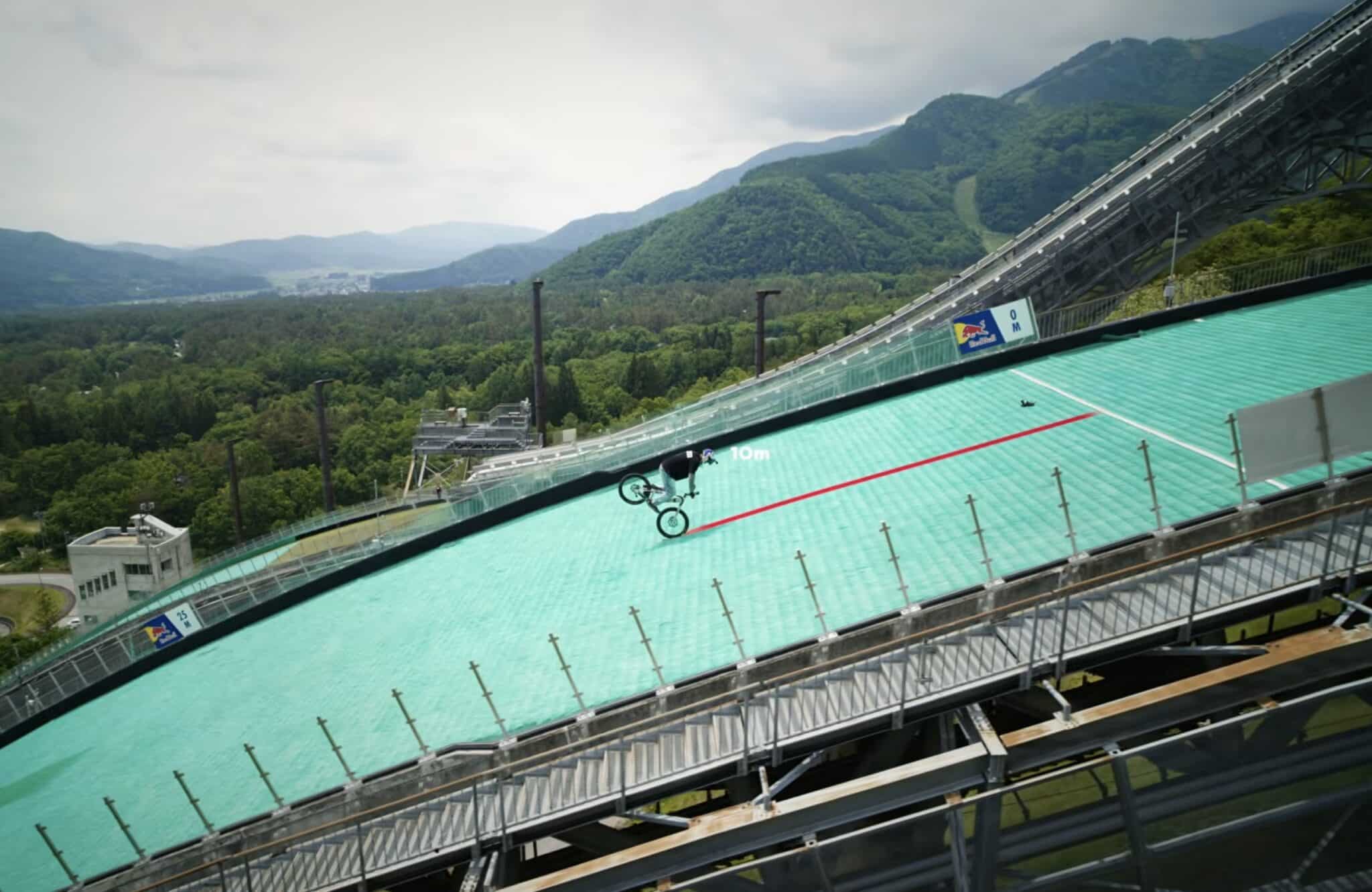
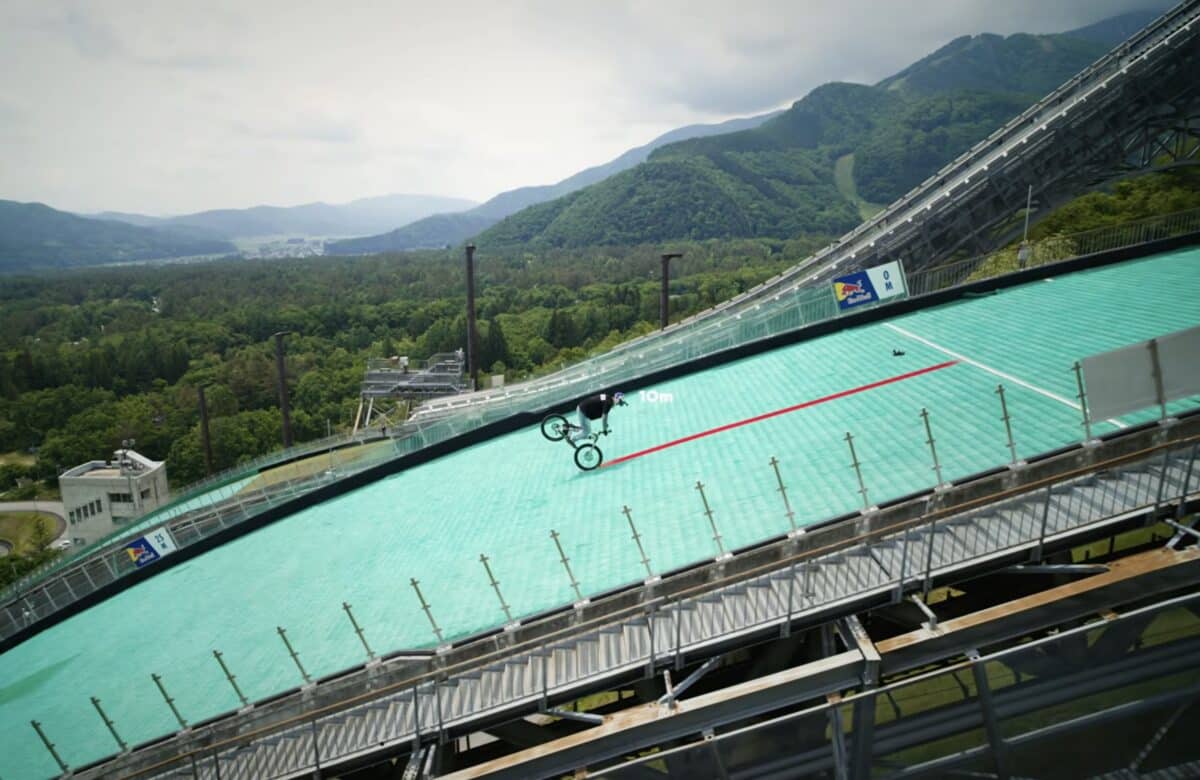
Hakuba, Japan – In a remarkable display of skill, courage, and technical mastery, Japanese mountain bike trials rider Tomomi Nishikubo has officially etched his name into the annals of extreme sports history by setting two Guinness World Records on the challenging incline of an Olympic ski jumping hill in Hakuba, Japan. Nishikubo successfully executed a "fakie nose manual" – a daring maneuver involving riding backward on only the front wheel while maintaining balance – down a formidable 37.5-degree slope. This unprecedented feat not only showcases the pinnacle of bicycle control but also pushes the boundaries of what is considered achievable in gravity sports.
A Steep Descent into the Record Books
The official records certified by Guinness World Records confirm Nishikubo’s extraordinary accomplishment. He achieved the steepest bicycle fakie nose manual at 37.5 degrees, a testament to his exceptional balance and precision. Complementing this, he also secured the record for the longest distance traveled in this specific maneuver on a ski jumping hill, covering an impressive 448 feet. During this record-setting descent, Nishikubo reportedly reached speeds exceeding 37.2 miles per hour and maintained the precarious front-wheel balance for a sustained period of 35 seconds. This combination of extreme angle, distance, and duration underscores the immense technical difficulty and physical demand of the achievement.
The Genesis of a Record-Breaking Ambition
The inspiration behind Nishikubo’s daring endeavor can be traced to a moment of awe and ambition sparked by another notable sporting achievement. The 34-year-old trials rider was motivated by Ryōyō Kobayashi’s record-setting ski jump in Iceland. This event ignited Nishikubo’s imagination, leading him to identify the iconic ski jumping venue in Hakuba, Japan, as the perfect stage for his own world-record attempt. The initial scouting of the location began in August 2024, marking the first concrete step in a journey that would span over two years of meticulous planning, relentless practice, and overcoming significant technical hurdles.
A Two-Year Odyssey of Preparation and Perseverance
The path to Guinness World Record recognition was far from a straightforward descent. Nishikubo’s initial attempt in 2025, after 35 runs on the ski jump, proved unsuccessful. This setback, while discouraging, provided invaluable data and highlighted critical areas for improvement. The rider identified two key factors that needed refinement: enhancing tire grip on the slick, snow-covered or icy surface of the ski jump, and perfecting his braking control to manage the extreme speeds and angles.
To meticulously address these challenges, Nishikubo embarked on a rigorous preparation regimen. He constructed a custom 10-meter practice ramp designed to replicate the precise 37.5-degree gradient of the ski jump. This controlled environment allowed him to experiment with various tire configurations and braking techniques without the inherent risks of the full-scale attempt. Through extensive testing, he concluded that standard tires were insufficient for the demanding conditions.
Engineering for Extreme Traction
The solution to the grip problem involved a significant modification to his equipment. Nishikubo ultimately opted for 24-inch tires, which he then custom-equipped with metal studs. This innovative approach aimed to provide the necessary bite and traction on the potentially icy and compacted snow surface of the ski jump, ensuring he could maintain control during the steep descent. The development and testing of these specialized tires represented a critical phase in the preparation, requiring both engineering acumen and a deep understanding of material science in relation to extreme sports.
Overcoming Mechanical Adversity
The second attempt at Hakuba was met with a new set of formidable mechanical challenges. As Nishikubo pushed the limits of his braking system to manage the high speeds, he encountered a significant issue with overheating. The intense friction generated by the braking system caused repeated failures, leading to the destruction of ten spare brake rotors over the course of two days. This constant mechanical breakdown threatened to derail the entire project, requiring immediate and effective solutions.
The breakthrough came on the third day of the second attempt. After a thorough analysis of the problem, Nishikubo made a crucial switch in his braking components. He transitioned from resin brake pads, which are more prone to overheating under extreme stress, to metal brake pads. This change proved to be the key to resolving the overheating issue, allowing his braking system to function reliably and preventing further mechanical failures. This adaptation was pivotal, enabling him to finally execute a successful and record-setting run.
The Significance of the Achievement
Tomomi Nishikubo’s accomplishment transcends mere record-breaking. It represents a profound advancement in the discipline of mountain bike trials riding, demonstrating an extraordinary level of rider skill, equipment innovation, and mental fortitude. The ability to maintain precise balance on a single wheel, at high speeds, on such a steep and unforgiving surface, is a testament to years of dedicated practice and a deep understanding of the physics involved.
The implications of this feat are likely to resonate within the extreme sports community. It sets a new benchmark for what riders can achieve with specialized equipment and innovative techniques. Furthermore, it highlights the potential for repurposing existing sporting infrastructure for novel and challenging extreme sports endeavors. The success in Hakuba may inspire other athletes and engineers to explore similar unconventional venues and techniques, potentially leading to the emergence of new sub-disciplines within trials riding and other action sports.
A Look Ahead
While Nishikubo has achieved his ambitious goals, the spirit of innovation and pushing boundaries continues. The original article also hinted at a desire to share more of his "backwards riding excellence," suggesting that this achievement might be a stepping stone to further exploration of his unique skill set. The sporting world will undoubtedly be watching to see what Tomomi Nishikubo attempts next, as he has firmly established himself as a pioneer in the realm of extreme bicycle maneuvers. His dedication, technical prowess, and unwavering commitment to his vision serve as an inspiration to athletes worldwide, proving that with enough passion and perseverance, even the most audacious goals can be realized.

