
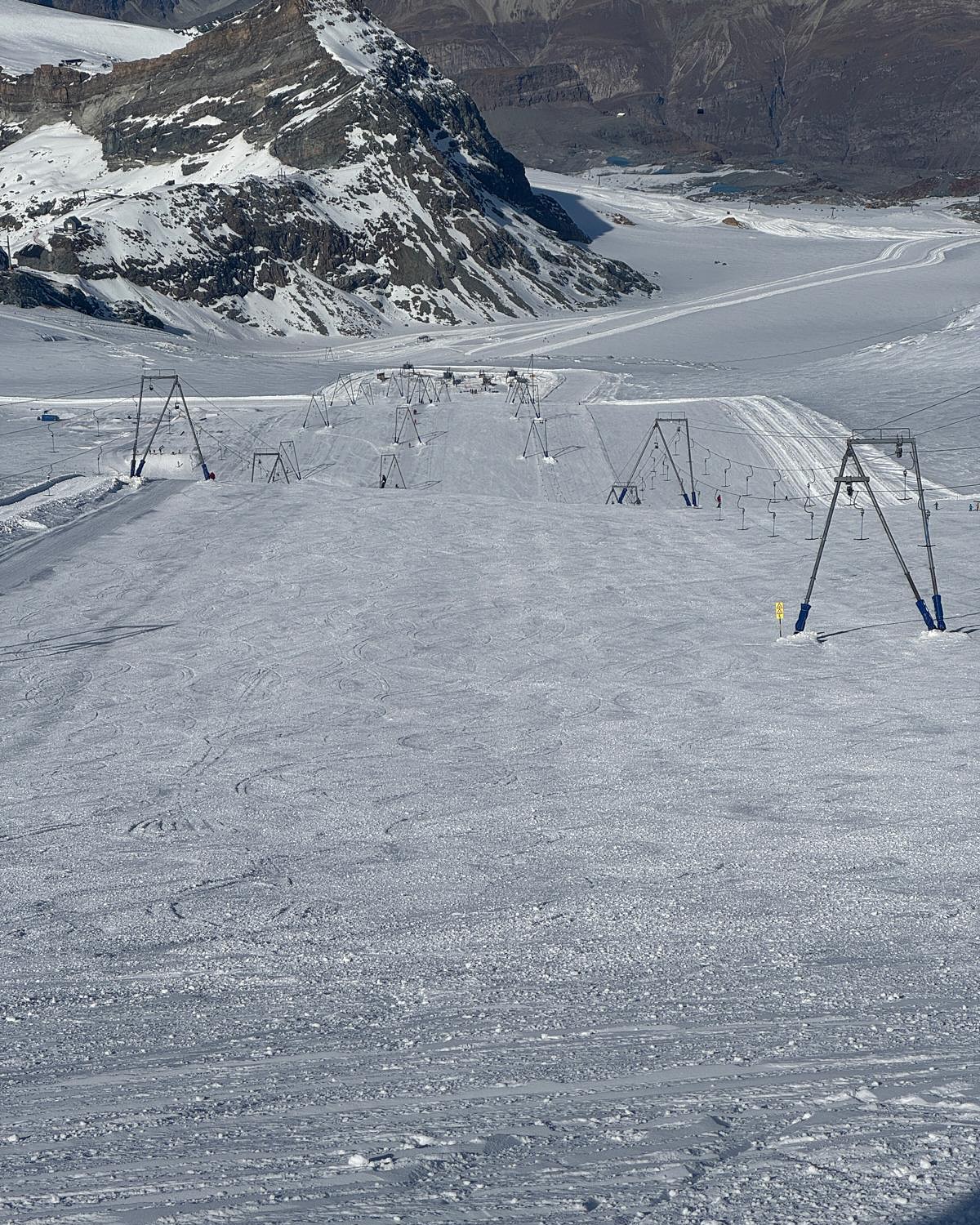
11th May 2026 – In a significant development for the European ski season, the Zermatt/Cervinia glacier area has emerged as the sole resort in the Alps with aspirations for continuous, 365-day-a-year skiing. This ambitious goal is bolstered by recent infrastructure upgrades, specifically a new lift designed to enhance accessibility to the high-altitude slopes. The announcement by Cervinia signals a bold strategy to redefine the traditional ski calendar, a move that will undoubtedly be closely monitored by the global winter sports industry.
While Zermatt/Cervinia charts a course for perpetual skiing, other renowned glacier resorts are recalibrating their operational timelines, largely influenced by prevailing weather patterns and snow conditions. The Hintertux Glacier in Austria, a long-standing proponent of year-round skiing, has announced a planned closure on July 26th, 2026. The resort’s official statement indicates a shift in focus for the summer months, stating, "After that, we’ll enjoy the glacier summer to the fullest off the slopes." This suggests a temporary pause rather than a permanent cessation of year-round operations, with skiing expected to resume in September 2026 and the "Hintertux Park Opening" slated for early October. The ambiguity surrounding whether this is a one-year adjustment or a longer-term strategic change leaves the future of Hintertux’s 365-day ambition uncertain.
Summer Skiing Options Expand and Contract Across the Alps
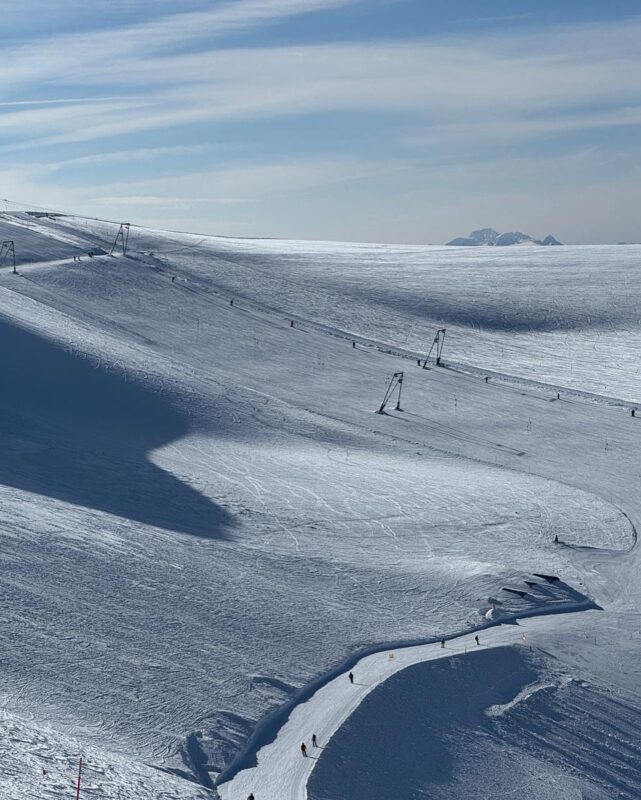
Beyond the ambition of Zermatt/Cervinia and the revised schedule of Hintertux, several other European resorts are offering summer skiing opportunities, albeit with defined closing dates. Saas-Fee in Switzerland plans to keep its slopes open from July 18th to October 31st, providing a substantial window for summer snow enthusiasts. Tignes, France, will offer skiing from June 20th to July 19th.
The French resort of Les2 Alpes continues to be a prominent destination for spring and summer skiing. Recent snowfall of 70cm has significantly improved conditions, with the glacier reported to be in excellent shape. Skiing is even extending beyond the glacier itself, with runs accessible down to an elevation of 2,600 meters. The resort is scheduled to remain open until July 5th, a period that will be further enhanced by the recent snow accumulation.
Snow Conditions and Forecasts Influence Operational Decisions
The availability of snow remains a critical factor in the viability of summer skiing operations. Many glacier areas are currently experiencing below-average snow depths for mid-May, a trend that has prompted some resorts to adjust their closing dates. Kaunertal, for instance, initially planned to remain open until May 25th but brought its closure forward by a week to May 17th due to diminishing snowpack.
However, a more optimistic outlook is emerging for the coming week, with forecasts predicting significant snowfall across the Alps. Fraser Wilkin of weathertoki.co.uk commented, "This week’s snow forecast is great news for the alpine glaciers, nearly all of which have lower than average snow depths for the middle of May but will see much-needed top-ups over the next few days." He further highlighted Les 2 Alpes as a standout, not only due to its planned top-ups but also because it is already boasting above-average snow depths on its glacier area. This influx of fresh snow could prove crucial for resorts aiming to extend their seasons or maintain optimal conditions for summer operations.
Canadian Rockies See Successful Summer Skiing Push
In Canada, Sunshine Village near Banff, Alberta, is continuing its skiing operations following a highly successful winter season. The resort is slated to close on May 18th, only to reopen in the latter half of June for a brief summer skiing period extending into July. This decision to offer summer skiing is directly attributed to record snowfall throughout the past winter.
Sunshine Village currently reports a mid-mountain snow base of 1.82 meters, with an impressive 2.38 meters on its upper slopes. The planned summer operation will likely utilize the Strawberry Express lift, with the potential for an additional lift to open depending on conditions. This lift provides access to the eastern side of Mount Standish, primarily featuring beginner-friendly terrain.
Kendra Scurfield, Vice-President of Brand and Communications for Sunshine Village, described the past season as "a bit of a fairy tale." She elaborated on the summer skiing experience, stating, "It won’t be like deep powder turns during summer skiing, but it will be slushy summer skiing – high vibes – and just with the novelty of skiing in July in the Canadian Rockies." This sentiment captures the unique appeal of summer skiing, often characterized by softer snow conditions and a more relaxed atmosphere, combined with the novelty of the activity during the warmer months.
US Resorts Maintain Summer Skiing Presence
Across the United States, several resorts are also continuing to offer skiing into the summer. In Utah, Snowbird remains open. Mammoth Mountain in California, Timberline Lodge in Oregon, and Jay Peak in Vermont are also providing summer skiing opportunities. PlanetSKI is actively verifying operational status with other potential summer ski areas and will provide updates as information becomes available.
Background and Context: The Evolving Landscape of Glacier Skiing
The pursuit of year-round skiing is not a new phenomenon, but it has become increasingly challenging due to climate change and its impact on snow reliability. Historically, numerous glacier resorts across the Alps offered some form of summer skiing, capitalizing on the permanent snowfields at high altitudes. However, fluctuating temperatures and altered precipitation patterns have made consistent snow cover more difficult to guarantee.
The Zermatt/Cervinia area, straddling the border between Switzerland and Italy, benefits from its exceptional altitude, with its highest points reaching over 3,800 meters. This natural advantage provides a more stable snow base compared to lower-lying glacier ski areas. The recent investment in new lift infrastructure is a strategic move to optimize access and enhance the overall experience for skiers choosing to visit during the summer months. This could position Zermatt/Cervinia as a premier destination for dedicated skiers seeking to extend their season or engage in training throughout the year.
The shift in operational strategies among resorts like Hintertux highlights the economic and logistical considerations involved in maintaining year-round operations. While the allure of 365-day skiing is strong, resorts must also balance operational costs with visitor numbers and the feasibility of snow preservation. The decision by Hintertux to close for a period suggests a strategic re-evaluation, potentially focusing on optimizing resources or adapting to current environmental conditions.
Analysis of Implications: A Tale of Two Strategies
The contrasting approaches observed in the Alps – Zermatt/Cervinia’s ambition for continuous operation versus the more modulated summer schedules of other resorts – reflect a broader trend in the ski industry. On one hand, resorts with significant high-altitude glacier terrain are exploring innovative ways to leverage their natural assets for year-round income. This diversification can provide a crucial buffer against the seasonality of traditional winter sports.
On the other hand, resorts facing more challenging snow conditions or higher operational costs are adopting more pragmatic approaches. This may involve focusing on shorter, well-managed summer skiing periods, or pivoting to other summer tourism activities that capitalize on the mountain environment. The increasing reliance on snowmaking technology, while helpful for winter seasons, often has limitations in the context of maintaining extensive glacier surfaces for summer skiing.
The success of Zermatt/Cervinia’s 365-day goal will likely depend on several factors, including sustained investment in snow management, effective marketing to attract a consistent flow of skiers, and, crucially, the ongoing impact of climate change. The resort’s ability to maintain high-quality skiing conditions throughout the year, regardless of external weather variations, will be paramount.
The North American approach, as exemplified by Sunshine Village, demonstrates a strategy of capitalizing on exceptionally good snow years to offer extended summer skiing. This opportunistic model allows resorts to celebrate and monetize a successful winter season by providing a unique summer offering, driven by abundant natural snowfall.
Looking Ahead: The Future of Summer Skiing
The trend towards extended and year-round skiing, where feasible, is likely to continue as the ski industry seeks to adapt to changing climate patterns and diversify its revenue streams. Resorts with significant glacier resources will remain at the forefront of this movement, while others will need to carefully assess the viability of such operations. The decisions made by key resorts like Zermatt/Cervinia and Hintertux will undoubtedly shape the future landscape of summer skiing in the Alps and beyond. The coming years will reveal whether the ambitious pursuit of 365-day skiing is a sustainable model or a fleeting dream for many.

