
The third stage of the Tour of Slovakia stands as the definitive litmus test for the peloton, forcing riders to contend with a demanding 195.1-kilometer route that blends endurance, technical terrain, and a cross-border excursion into the Czech Republic. As the longest stage of the 2026 edition, this day is widely regarded by analysts and team directors as the most pivotal moment for general classification contenders and breakaway specialists alike. The stage, which begins in Tvrdošín, demands a high degree of tactical discipline, as the combination of five categorized climbs and a high-speed, 20-kilometer descent into the finish at Dohňany creates a volatile environment where the race lead could easily change hands.
Route Analysis and Geographical Challenges
The route profile for stage 3 is characterized by a gradual accumulation of fatigue. Following a start in Tvrdošín, the race heads westward, navigating the undulating landscape north of Žilina. The early phases of the race are expected to be relatively controlled, yet the inclusion of five categorized climbs provides ample opportunity for aggressive riders to disrupt the rhythm of the main pack.
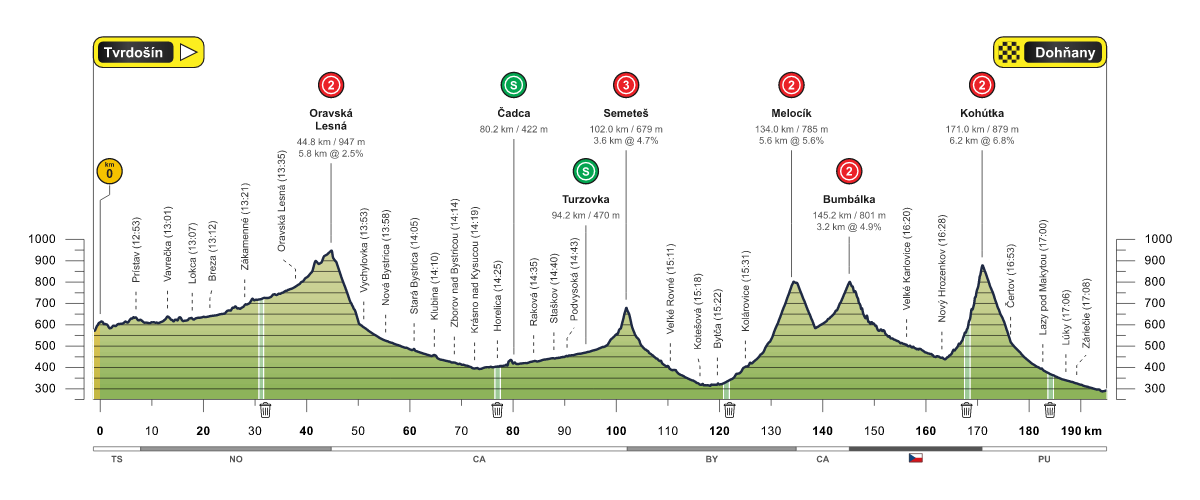
A unique feature of this year’s route is the international transit. Between the fourth and fifth categorized climbs, the course crosses the border into the Czech Republic. This brief foray into foreign territory adds a logistical layer to the stage, as teams must account for potential changes in road surface quality and wind exposure on the exposed ridges leading toward the final ascent at Kohútka. The climb to Kohútka is expected to be the focal point of the day; it is the final major obstacle before a technical descent that will likely see riders reaching speeds exceeding 80 kilometers per hour.
The final 20 kilometers are predominantly downhill, rewarding those who possess superior bike-handling skills and the audacity to take risks on the sweeping curves leading into the finish at Dohňany. With the finish line located in a valley, the tactical imperative will be to neutralize late-race attacks on the climb and prepare for a high-velocity finale.
Tactical Implications of the Longest Stage
At 195.1 kilometers, this stage is significantly longer than the typical sprint-oriented stages seen earlier in the week. This distance is a deliberate design choice by the race organizers to test the depth of the squads. In cycling, as the distance increases, the metabolic cost of maintaining a high pace climbs exponentially. For teams protecting a leader in the general classification, the challenge is to control the gap to the breakaway for over four hours without exhausting their domestiques before the final, decisive climb.

Breakaway specialists will view this stage as their primary objective. Given the number of climbs and the length of the route, the peloton may be more inclined to let a large, non-threatening group of riders clear off early. If the composition of such a breakaway is balanced, the leaders may struggle to bring them back, potentially allowing a rider to gain significant time in the overall standings. Conversely, if the pace is set high from the start, the field will likely shatter on the final two ascents, leaving only the strongest climbers to contest the stage win.
Historical Context and the Tour of Slovakia
The Tour of Slovakia has grown in prestige, evolving from a regional race into a significant fixture on the international cycling calendar. Over the past decade, the event has attracted WorldTour teams looking to sharpen their rosters for the autumn classics and world championships. The 2026 route underscores this transition, prioritizing variety in terrain to ensure that the eventual winner is a well-rounded athlete capable of performing on both flat, high-speed finishes and punishing mountain roads.
Previous editions have shown that the Tour of Slovakia is often decided by mere seconds. The introduction of time bonuses—specifically the 10, 6, and 4-second awards for the top three finishers—is a strategic element that race directors use to encourage aggressive racing. Even for those not aiming for the yellow jersey, these bonuses are critical for team morale and podium positioning.

Performance Metrics: Time Bonuses and Points
The competition for the green jersey, awarded to the leader of the points classification, adds another layer of complexity. With 20 points awarded to the stage winner and a sliding scale down to the tenth-place finisher, sprinters who can survive the intermediate climbs will look to maximize their points haul. The distribution (20-15-12-10-8-6-4-3-2-1) ensures that consistency is rewarded as much as outright victory.
For the general classification, the math is straightforward but daunting. A rider who captures the stage win and the corresponding 10-second bonus can drastically alter the hierarchy of the race. Observers should look for teams like those with strong mountain trains to set a "tempo" pace on the penultimate climb, designed to discourage attacks and ensure the favorites arrive at the foot of the final descent together.
Official Perspectives and Team Strategy
While official statements from team directors remain guarded to protect tactical advantages, the consensus among observers is that stage 3 is where the "pretenders" will be separated from the "contenders."
"This is not a day for the faint of heart," noted one team analyst familiar with the Slovakian terrain. "The distance is the first hurdle. The second is the cross-border section, where the roads narrow and the terrain becomes unpredictable. If you lose contact on the climb to Kohútka, you are not coming back on that descent. It is a day for the tactically astute."
Teams are expected to prioritize nutrition and hydration management throughout the first 100 kilometers. With the heat often being a factor in this region during September, the physical toll of the five categorized climbs will be compounded by the sheer duration of the effort. Riders who fail to fuel properly during the mid-stage transition will likely suffer a "bonk" or dramatic loss of power during the final ascent, regardless of their fitness level.
Broader Impact and Future Outlook
The outcome of this stage will set the narrative for the remainder of the Tour of Slovakia. A victory for a breakaway rider would signal a more open, chaotic race in the following days, while a victory for a general classification favorite would solidify their position as the individual to beat.
Beyond the immediate race results, the event serves as a showcase for Slovakian cycling infrastructure. The inclusion of the Kohútka climb and the challenging technical descent highlights the region’s capacity to host top-tier sporting events. For the riders, the physical demands of this 195.1-kilometer trek serve as a vital training stimulus. Many of the participants are using the Tour of Slovakia as a final block of high-intensity racing before the end-of-season championships.
As the peloton prepares for the start in Tvrdošín, the atmosphere is one of focused intensity. The riders are well aware that the combination of the longest distance and the most difficult climbing profile makes this the "Queen Stage" of the 2026 event. By the time the riders reach the finish line in Dohňany, the general classification will likely have undergone a significant transformation, with the race favorites forced to emerge from the shadows of their teammates to prove their form.
Ultimately, stage 3 is a testament to the endurance required in modern professional cycling. It is a day where strength, strategy, and mental fortitude are tested in equal measure, ensuring that whoever stands on the podium in Dohňany will have truly earned their place in the annals of this year’s Tour of Slovakia. The race remains a spectacle of resilience, and as the kilometers tick away, the tactical maneuvering will only intensify, culminating in a finale that promises to be as grueling as it is decisive. Whether it is a solo breakaway or a select group of favorites sprinting for the line, the third stage will undeniably define the tactical landscape for the rest of the tour.

