
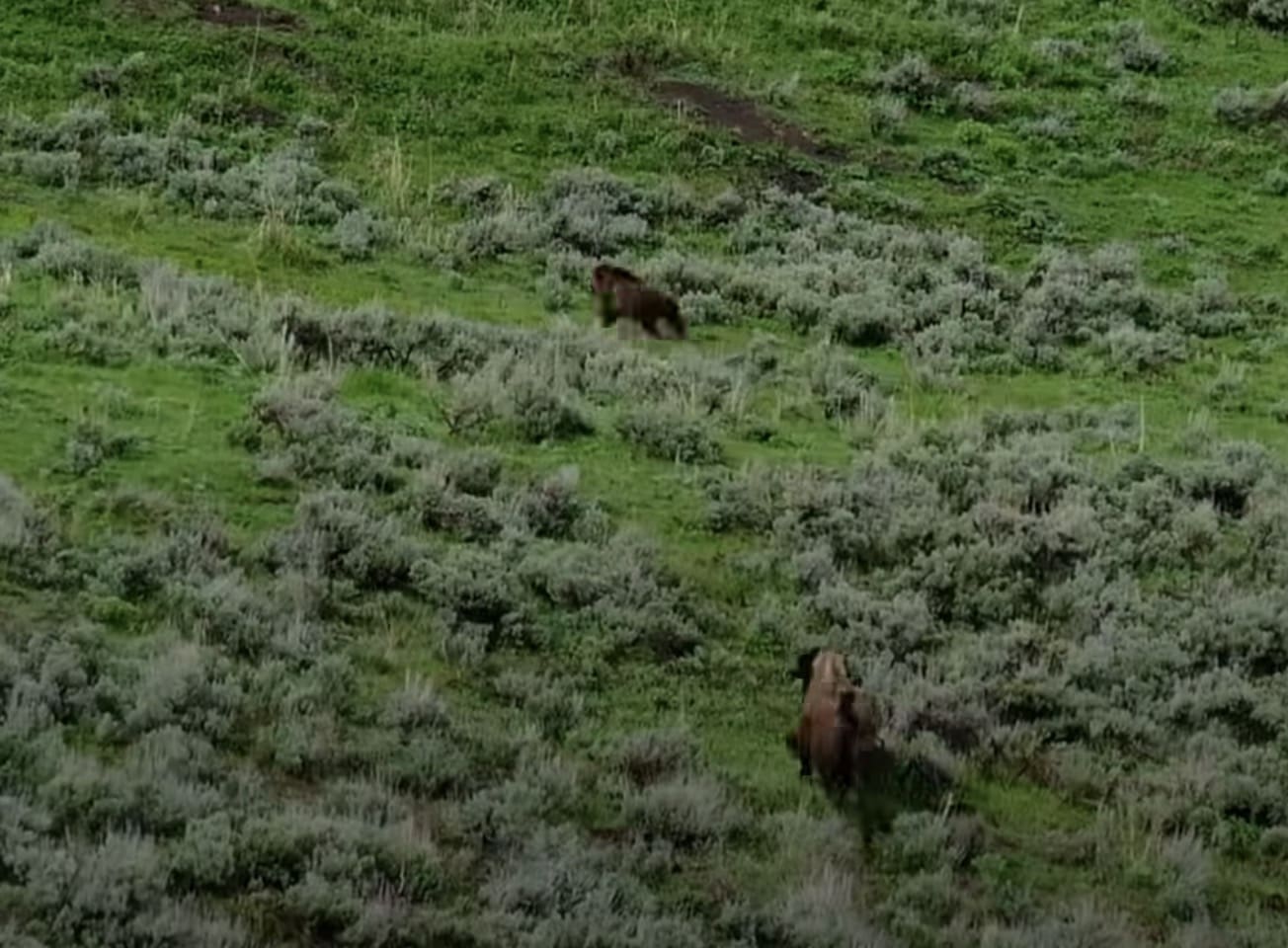
The untamed heart of Yellowstone National Park recently played host to a remarkable and somewhat startling display of nature’s raw power, as a formidable bison was captured on video not only standing its ground but actively pursuing a grizzly bear. This dramatic encounter, observed in the scenic Lamar Valley, serves as a potent reminder of the complex predator-prey dynamics at play within one of America’s most iconic wilderness areas and challenges common perceptions of the grizzly bear’s unchallenged dominance.
A Shift in the Predator-Prey Dynamic
Grizzly bears, known for their impressive size and predatory prowess, are highly adaptable omnivores with a diverse diet. In Yellowstone, their foraging habits shift seasonally. From March through May, a significant portion of their caloric intake comes from ungulates, primarily elk and bison. While grizzlies are known to prey on these large mammals, their success is not guaranteed, especially when confronting adult bison. These North American giants, with bulls capable of reaching up to 2,000 pounds and standing six feet tall at the shoulder, represent a dangerous and challenging quarry. Grizzlies typically target the most vulnerable members of bison herds, such as injured individuals or young calves, to minimize the risk of injury to themselves. However, this recent incident highlights that even a solitary grizzly can find itself on the defensive.
The video footage captures a pivotal moment where the expected order of things is reversed. Instead of the bison being the pursued, it is the grizzly bear that finds itself in a hasty retreat, propelled by the aggressive charge of the much larger herbivore. This interaction underscores the inherent risks involved in any predatory attempt on a healthy adult bison and showcases the bison’s own formidable defensive capabilities.
Contextualizing the Encounter in Yellowstone’s Ecosystem
Yellowstone National Park, established in 1872, is a vast expanse of diverse habitats, supporting a rich tapestry of wildlife. The Lamar Valley, often referred to as the "Serengeti of North America," is particularly renowned for its abundant wildlife viewing opportunities, including large populations of bison and grizzly bears. The park’s management aims to maintain natural ecological processes, which includes the ongoing interactions between predators and their prey.
The relationship between grizzly bears and bison in Yellowstone is a critical element of the ecosystem’s health. Grizzlies play a role in regulating ungulate populations, while bison, as keystone herbivores, shape the park’s vegetation. Encounters like the one captured on video, while perhaps visually arresting, are part of the natural checks and balances that have sustained this ecosystem for millennia. It is important to note that while grizzlies may occasionally prey on bison, adult bison are not a primary or easy food source. Their sheer size, herd behavior, and powerful defense mechanisms make them a risky target for a solitary predator.
The Anatomy of a Confrontation: Bison’s Defense
Bison are exceptionally well-equipped to defend themselves. Their immense physical strength, coupled with powerful horns and a thick hide, makes them formidable opponents. When threatened, a bison can charge with surprising speed and agility, capable of outrunning humans and inflicting severe injury. The sheer force of a charging bison is enough to deter even large predators like grizzly bears, who, despite their predatory instincts, are also driven by a strong survival imperative. Injury sustained during a hunt could render a bear unable to forage, hunt, or defend itself, potentially leading to starvation or becoming prey itself. Therefore, a calculated risk assessment is always at play, and in this instance, the grizzly likely deemed retreat the wiser option.
Expert Analysis and Implications
Wildlife biologists and park officials often emphasize that such interactions, while dramatic, are not uncommon in the wild. Dr. Sarah Jenkins, a wildlife ecologist specializing in large carnivore behavior, commented, "This footage is a fantastic illustration of the fact that predators don’t always win. Adult bison are incredibly powerful animals, and grizzlies are pragmatic hunters. They will assess the risk versus reward. If a bison is healthy and determined to defend itself, a grizzly might very well decide it’s not worth the potential for serious injury."

The implications of this event extend beyond a single sighting. It reinforces the need for visitors to maintain a safe and respectful distance from all wildlife. The park’s guidelines are not merely suggestions but crucial safety protocols designed to protect both humans and animals. When wildlife feels threatened or cornered, their natural defense mechanisms can be triggered, leading to dangerous encounters.
Safety First: Navigating Yellowstone’s Wild Side
Yellowstone National Park is a living, breathing ecosystem, and visitors are guests within its boundaries. The park’s wildlife is wild, and their behavior is dictated by instinct and survival. The incident serves as a stark reminder of the importance of adhering to established safety guidelines.
Park regulations mandate specific distances for visitor-wildlife interactions:
- Bears and Wolves: A minimum of 100 yards (91 meters) must be maintained.
- Bison, Elk, and Other Animals: A minimum of 25 yards (23 meters) is required.
These distances are not arbitrary. They are based on scientific understanding of animal behavior and the potential for animals to perceive humans as a threat. Getting too close can lead to defensive behavior from the animal, which can result in injury to the human or stress and displacement for the animal. In the case of bison, they have historically been responsible for more injuries to visitors in Yellowstone than any other animal. Their unpredictable nature and explosive speed make them particularly dangerous when approached too closely.

The Broader Significance of Yellowstone’s Wildlife
Yellowstone’s wildlife, including its iconic bison and grizzly bears, is a testament to the success of conservation efforts and the resilience of nature. These animals are not merely attractions; they are integral components of a complex and interconnected ecosystem. Understanding their behavior, respecting their space, and prioritizing safety allows for the continued preservation of these magnificent creatures and the wild landscapes they inhabit.
The visual evidence of a bison effectively deterring a grizzly bear offers a profound insight into the balance of power within the natural world. It highlights that while grizzlies are apex predators, they are not invincible, and other species possess their own potent defenses and can, at times, assert their dominance. This encounter, captured for all to see, serves as an educational moment, fostering a deeper appreciation for the wild and the importance of coexisting responsibly with its inhabitants.
Looking Ahead: Conservation and Visitor Education
The ongoing management of Yellowstone’s wildlife populations and the education of its visitors are paramount to ensuring the park’s ecological integrity and public safety. The National Park Service continually works to monitor wildlife behavior, update safety protocols, and educate the public on responsible wildlife viewing.
This recent dramatic interaction between a bison and a grizzly bear serves as a powerful, albeit unscripted, educational tool. It underscores that while Yellowstone offers unparalleled opportunities to witness nature in its rawest form, such experiences come with inherent risks. By adhering to park regulations, maintaining a safe distance, and approaching wildlife encounters with respect and caution, visitors can contribute to the preservation of this extraordinary wilderness and ensure their own safety while marveling at its wonders. The Yellowstone ecosystem, in its dynamic and often surprising interactions, continues to offer profound lessons about the power and resilience of the natural world.

