
At just 17 years old, Mari Renick has carved an extraordinary path onto the Stifel U.S. Ski Team, a testament to raw talent, unwavering dedication, and an unconventional development trajectory. Her debut FIS season concluded with remarkable achievements, including a second-place finish in the NorAm downhill standings and fifth in the NorAm super-G, milestones that not only secured her coveted spot on the national team but also earned her a personal start position in the prestigious 2026-27 World Cup downhill. Renick’s journey deviates significantly from the traditional "gates-first" progression common among aspiring ski racers, instead rooting itself deeply in the free-spirited, big-mountain ethos of her Colorado upbringing.
The Cradle of Confidence: Crested Butte’s Influence
Renick’s story begins not on groomed racecourses, but amidst the rugged, challenging terrain of Crested Butte, Colorado. Born and raised in a town renowned for its steep slopes and authentic ski culture, Renick first clipped into skis at the tender age of two. Her childhood dream wasn’t to chase gates or podiums; it was to become "the coolest big-mountain skier ever." This aspiration, fueled by an innate love for the sport and the constant pursuit of her older brother, Mason, around Mount Crested Butte, laid a unique foundation for her future success.
Living mere minutes from the mountain, skiing was an integral part of Renick’s daily life. Weekends and weekday afternoons were spent exploring the mountain with friends and family, often driven by a five-minute shuttle ride or a quick bus trip. This immersive environment fostered a profound connection to the sport, shaping her skills and confidence long before competitive racing became a focus. "I would go skiing pretty much every weekend and during the weekdays after school, we’d just drive five minutes up the mountain or take the bus and go skiing with all my friends and family," Renick recounted to Ski Racing Media.
The very nature of Mount Crested Butte, with its internationally recognized steep and challenging terrain, became Renick’s most influential early teacher. She spent countless hours free skiing, tackling moguls, navigating cliffs, and mastering natural features. This fearless exploration instilled in her a deep sense of self-assurance and adaptability, qualities that would later prove invaluable in the high-speed disciplines of downhill and super-G. "I feel like I built so much of my confidence just free skiing around Crested Butte," she affirmed, highlighting how her unconventional background provided an edge rarely found in athletes whose primary training involves strictly defined courses.
While she began recreational ski racing around age six, it remained a secondary pursuit, overshadowed by her passion for big-mountain skiing. This changed dramatically, however, when her family made a pivotal decision to relocate.
The Shift to Structure: Vail and the Racing Crucible
The Renick family’s move to Vail was largely motivated by Mason’s burgeoning ski racing ambitions. For Mari, this transition marked a significant turning point, propelling her from a free-skiing paradise into the structured, high-intensity world of competitive racing. Joining Ski & Snowboard Club Vail (SSCV) as a second-year U10 athlete, Renick experienced an immediate and profound shift in her skiing life.
Crested Butte’s ethos was one of exploration and self-directed skill development; Vail, by contrast, centered on rigorous training and disciplined racing. This new environment, while demanding, proved instrumental in honing her technical abilities and competitive mindset. "It definitely made me a better ski racer," Renick observed. "Everyone was so much more serious about it in Vail." The move immersed her in a culture where every session was purposeful, every run analyzed, and every athlete driven by the pursuit of excellence.
Beyond the slopes, Vail’s specialized educational institutions, particularly Vail Ski & Snowboard Academy (VSSA), played a crucial role in her holistic development. VSSA is renowned for its flexible academic programs designed to accommodate elite young athletes, allowing them to balance demanding training schedules with rigorous coursework. Renick credits SSCV and VSSA with fostering discipline, organization, and commitment, skills that extended far beyond ski racing. "It helped me with my time management in school," she explained, detailing the demanding schedule of morning skiing, afternoon classes, and evening homework.
As Renick prepares to enter her senior year at VSSA this fall, she faces the added challenge of balancing her academic commitments with her inaugural season as a Stifel U.S. Ski Team athlete. This will require meticulous planning, especially given the likelihood of extensive travel to Europe during the winter season. Her strategy involves front-loading her coursework, aiming to complete nearly all of her classes during the first semester, leaving just one course for the second semester. This foresight underscores the maturity and organizational prowess she has cultivated, essential attributes for navigating the demanding world of professional ski racing.
The Breakthrough: Whiteface and the International Stage
Renick’s first FIS season was a whirlwind of new experiences and rapid ascent, culminating in a series of breakthrough performances. The NorAm circuit, a vital developmental platform for North American skiers, provided the arena for her to showcase her burgeoning talent. It serves as a proving ground, allowing athletes to accumulate FIS points and qualify for higher-level competitions, including the World Cup.
The defining moment of her early career arrived at Whiteface, New York. In a stunning display of speed and skill, Renick, starting near the back of the field, clinched her first NorAm victory in the downhill event. This triumph immediately announced her as one of the country’s most promising young speed prospects, sending a clear message to the national ski racing community.
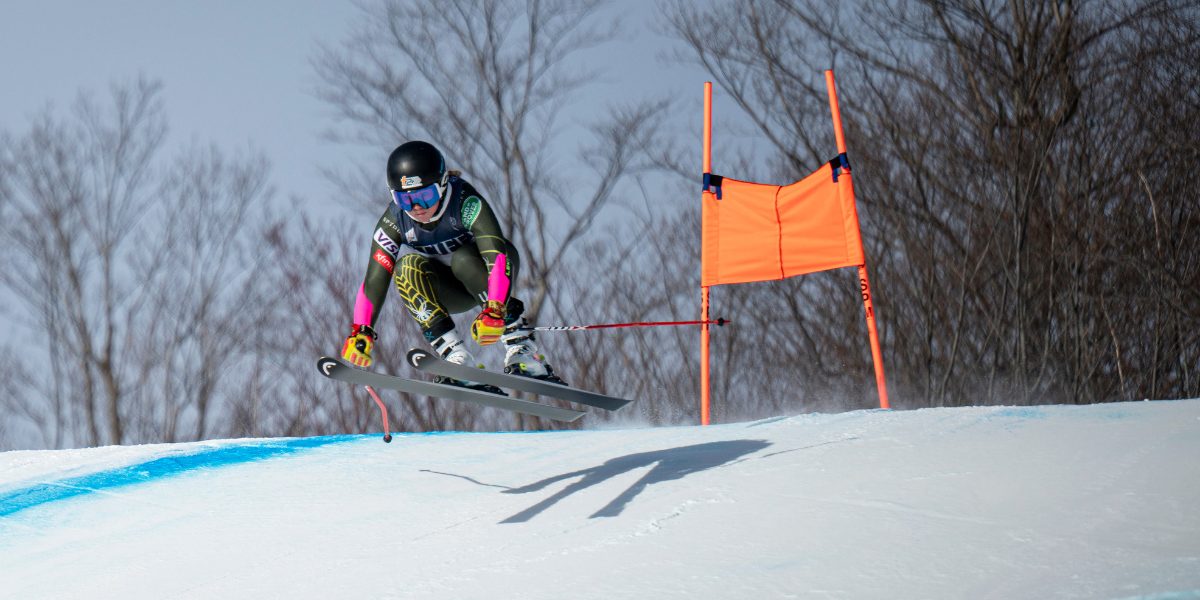
The significance of this victory extended beyond the podium. It was the result that secured her first trip to the FIS Junior World Ski Championships, an elite international competition that gathers the best junior ski racers from around the globe. Representing the United States on such a prestigious stage was a monumental achievement for a first-year FIS racer. The emotional resonance of that win was palpable, particularly for her coach, Pat Duran. "I had never felt so supported," Renick recalled. "Coach Pat Duran came down crying and I’ve never seen him emotional before." This raw display of emotion underscored the collective investment and the sheer impact of her accomplishment.
Despite the exhilaration of her Whiteface win and the experience of Junior Worlds in Narvik, Norway, Renick still viewed a spot on the Stifel U.S. Ski Team as a distant, perhaps even unlikely, goal. The path, however, was about to take another dramatic turn, orchestrated by the very person who had first inspired her on the slopes of Crested Butte.
Brotherly Insight: The Aspen Climax
Following the FIS Junior World Ski Championships, Renick harbored doubts about her chances of qualifying for the Stifel U.S. Ski Team. The demanding criteria for national team selection often require consistent top-tier results, and while her season had been impressive, the final hurdle seemed daunting. It was at this critical juncture that her older brother, Mason, intervened with a pivotal phone call.
Mason, having diligently tracked the intricate qualification scenarios, saw an opportunity that Mari herself had missed. The door to the national team was still open, provided she could deliver a few more exceptional performances at the season-ending NorAm races in Aspen. His conviction and enthusiasm were infectious. "He was very emotional on the phone," Renick recounted. "He was like, ‘Mari, Mari, you still have a chance. You’re going to make the ski team if you do this, this, and this in Aspen.’" This call was a profound motivator, igniting a renewed sense of purpose and drive within Renick.
Armed with her brother’s belief and her own fierce determination, Renick arrived in Aspen ready to seize the opportunity. In the first NorAm downhill, she delivered a stunning third-place finish, competing against an elite field that included established Stifel U.S. Ski Team World Cup athletes such as Isabella Wright and Tricia Mangan. For a first-year FIS racer, outperforming seasoned national team members was an extraordinary feat and one of the strongest results of her season.
The following day, Renick reinforced her claim, securing another podium finish by taking second place, just behind fellow Stifel U.S. Ski Team rookie Beatrice May. While Wright and Mangan did not start the second downhill, the back-to-back podiums solidified an already impressive body of work, demonstrating consistency and a burgeoning ability to perform under pressure.
Weeks after Mason’s initial, hopeful call, the final calculations were complete, and he called again. This time, there were no scenarios left to discuss, only confirmation. "He told me that I qualified," Renick said, her disbelief palpable. "I was just over the moon and kind of just in disbelief." The moment was made even more meaningful by her modest expectations at the season’s outset. "I didn’t even expect to make World Juniors that year," she admitted. What began as a goal to prove herself among the nation’s best junior racers had culminated in a spot on the prestigious Stifel U.S. Ski Team, the highest echelon of American ski racing.
The Allure of Speed: A Fearless Philosophy
Renick’s Crested Butte background manifests most vividly in her profound affection for downhill and super-G. These disciplines, which demand unparalleled courage, precision, and a willingness to push the limits, perfectly align with her innate desire for challenge. The appeal, for Renick, lies in the visceral sensation of pushing beyond her comfort zone, of flirting with the edge of control.
She often reflects on a specific jump at Whiteface from her breakthrough season. Recalling how she carved a straighter line than her competitors, carried immense speed, caught a tailwind, and launched into the air, she describes the experience with an almost spiritual reverence. "It was incredible," she reminisced. "I still think about it to this day." This moment encapsulates the exhilaration that defines her passion for speed skiing.
When articulating what she loves about venturing to the brink of her comfort zone, Renick’s response is immediate and unequivocal. "It’s so unreal to feel this adrenaline rush in my body when you’re about to make just the gnarliest turn and you know it’s going to be good because you’re pushing far past what you’re comfortable with," she explained. This powerful description reveals a unique psychological makeup—one that not only tolerates but actively seeks out the intensity of high-speed racing.
Her philosophy is perhaps best encapsulated in a statement that serves as a defining characteristic of her burgeoning career: "Terrifying is the reason I keep doing it. You’ve got to be a little crazy to do speed." This candid admission perfectly illustrates the athlete forged on Mount Crested Butte’s steep terrain, an individual for whom fear is not an impediment but an essential component of the attraction. For Mari Renick, the thrill of the unknown, the challenge of mastering terrifying speeds, is precisely what fuels her relentless pursuit of excellence in ski racing.
Joining an Elite Legacy: Mentorship and Team Dynamics
Mari Renick now enters a Stifel U.S. Ski Team women’s speed group that is widely regarded as one of the strongest in the world. This formidable squad boasts Olympic champions, World Cup winners, and a deep roster of exceptional downhill and super-G talent. The caliber of her new teammates is a source of both intimidation and inspiration for the young athlete. "It’s for sure a bit intimidating being such a young athlete with the speed girls," Renick admitted, but quickly added, "But they’re all such great people."
Her initial experiences training with members of the team in Mammoth, California, left a lasting impression, particularly regarding the supportive and cohesive team culture. "They support each other and always bring each other up," she observed. "I think that’s why the women have been so strong the last few years." This emphasis on mutual encouragement and collective strength provides a nurturing environment for a rising star like Renick, allowing her to learn and grow amidst the best.
Central to Renick’s continued development is her collaboration with Pat Duran, who has recently been named Europa Cup coach. Duran has been a pivotal figure in her journey, having coached her at Ski & Snowboard Club Vail and subsequently at the regional level. His expertise has been instrumental in shaping her into a speed skier. "He’s pretty much taught me speed – all the speed event things I know," Renick acknowledged. The Europa Cup circuit is a crucial stepping stone for athletes aspiring to the World Cup, providing intense competition and opportunities to gain valuable experience on challenging courses across Europe.
Renick has also benefited immensely from the guidance of Duran’s wife, Alice McKennis Duran, a highly accomplished American speed skier. A two-time Olympian and a World Cup winner, McKennis Duran famously triumphed in a World Cup downhill in St. Anton, Austria, in 2013. Her subsequent role coaching athletes on the U.S. Ski & Snowboard Regional Team further enriched her ability to mentor young talent. For a budding speed skier, having access to the combined knowledge and experience of both Pat and Alice McKennis Duran offers an unparalleled advantage, providing a rare depth of downhill expertise.
Looking Ahead: World Cup Aspirations and Strategic Planning
Renick’s stellar NorAm downhill season has already secured her a personal World Cup downhill start position for the 2026-27 season, a remarkable achievement that underscores her potential. While the prospect of a World Cup debut looms, Renick is approaching the decision with thoughtful consideration, prioritizing long-term development over immediate gratification.
Her summer training in Ushuaia, Argentina, a prime location for Southern Hemisphere ski training, will be crucial in determining her readiness for an early World Cup start. A debut at Beaver Creek, a home-state venue, would be a dream scenario, laden with emotional significance. However, Renick recognizes the immense demands of such a high-stakes event. "That would be the most incredible experience ever, obviously, being at home," she mused. "I’m not sure I’ll do that one since it is the first World Cup of the year and it’s a pretty intense World Cup track." Having slipped the course many times, and potentially fore-running it, she understands the sheer intensity and technicality required.
A midseason World Cup start might be a more likely scenario, allowing her to gain further experience and confidence on the Europa Cup circuit, which will be her primary focus this season, interspersed with select NorAm races. Her preparation is already intensely focused on enhancing her physical and mental capabilities. She aims to become stronger, generate more energy out of her skis, and continue pushing the boundaries of her comfort zone. Training at Copper Mountain in June, she honed higher edge angles, refined her turns, and aggressively tested her limits with line and depth.
Beyond the physical attributes, the mental aspect of racing remains a critical focus. Renick is dedicated to continually learning how to commit fully when the course, speed, and pressure escalate, demanding absolute resolve. This blend of physical conditioning and mental fortitude will be essential as she navigates the rigorous challenges of elite ski racing.
The Anchors: Community and Balance
Despite the rapid trajectory of her breakthrough season, Renick remains firmly grounded, attributing much of her success and well-being to her supportive community. Her teammates, coaches, and school friends have become an invaluable network, providing an essential foundation amidst the highs and lows of competitive sport. "The people I’ve met and my teammates in ski racing have become a whole new family to me," she expressed, describing it as a "second family." This strong support system is vital in a sport characterized by intense pressure, demanding travel, and often solitary pursuits.
Maintaining these connections, particularly at Vail Ski & Snowboard Academy, is a conscious effort for Renick during her senior year, even as her schedule becomes increasingly complex. "School is a place where I can talk to people who are not ski racers; it just clears my mind a little bit," she shared. This ability to step away from the ski racing bubble and engage with diverse perspectives offers crucial mental respite and helps maintain a healthy balance in her life. This balance, while challenging to sustain as her career expands, will likely become even more critical for her long-term well-being and performance.
The little girl who once fearlessly chased her brother around the steep slopes of Crested Butte now stands at the threshold of the World Cup, a testament to an extraordinary journey. Ahead lie more academic milestones, continued physical and mental conditioning, and the invaluable experience to be gained on the European circuits. The demands of joining one of the sport’s strongest women’s speed programs are significant, yet Renick possesses a foundation built on unconventional wisdom and an inherent love for the thrill of speed.
Her path was forged on the challenging terrain of Mount Crested Butte, sharpened by the structured environment of Ski & Snowboard Club Vail, fortified by the unwavering support of family and coaches, and spectacularly revealed during a breakthrough season that unfolded with astonishing speed. Mari Renick may not have initially dreamed of being a ski racer, but she has undeniably become the quintessential athlete who thrives when the slopes steepen, the speeds escalate, and the comfort zone vanishes, embracing the terrifying as her ultimate inspiration.

