
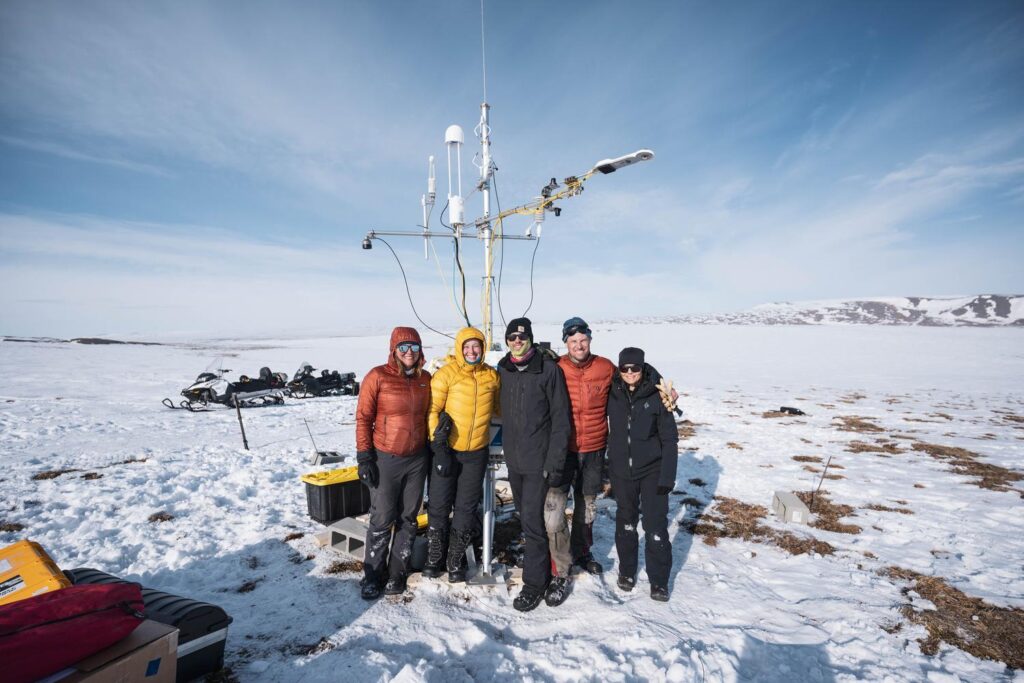
Researchers operating out of the Toolik Field Station on Alaska’s North Slope have successfully completed the installation of a specialized flux tower designed to monitor greenhouse gas emissions from rapidly deteriorating permafrost. Led by Dr. Kelly Gleason, an assistant professor of eco-hydro-climatology at Portland State University, and ecologist Jenny Watts, the expedition represents a critical advancement in understanding the Arctic’s transition from a carbon sink to a potential carbon source. The project, supported by the Protect Our Winters (POW) Science Alliance, focuses on a specific geological phenomenon known as a permafrost thaw slump—a site where the once-permanently frozen ground has collapsed, exposing ancient organic matter to the atmosphere.
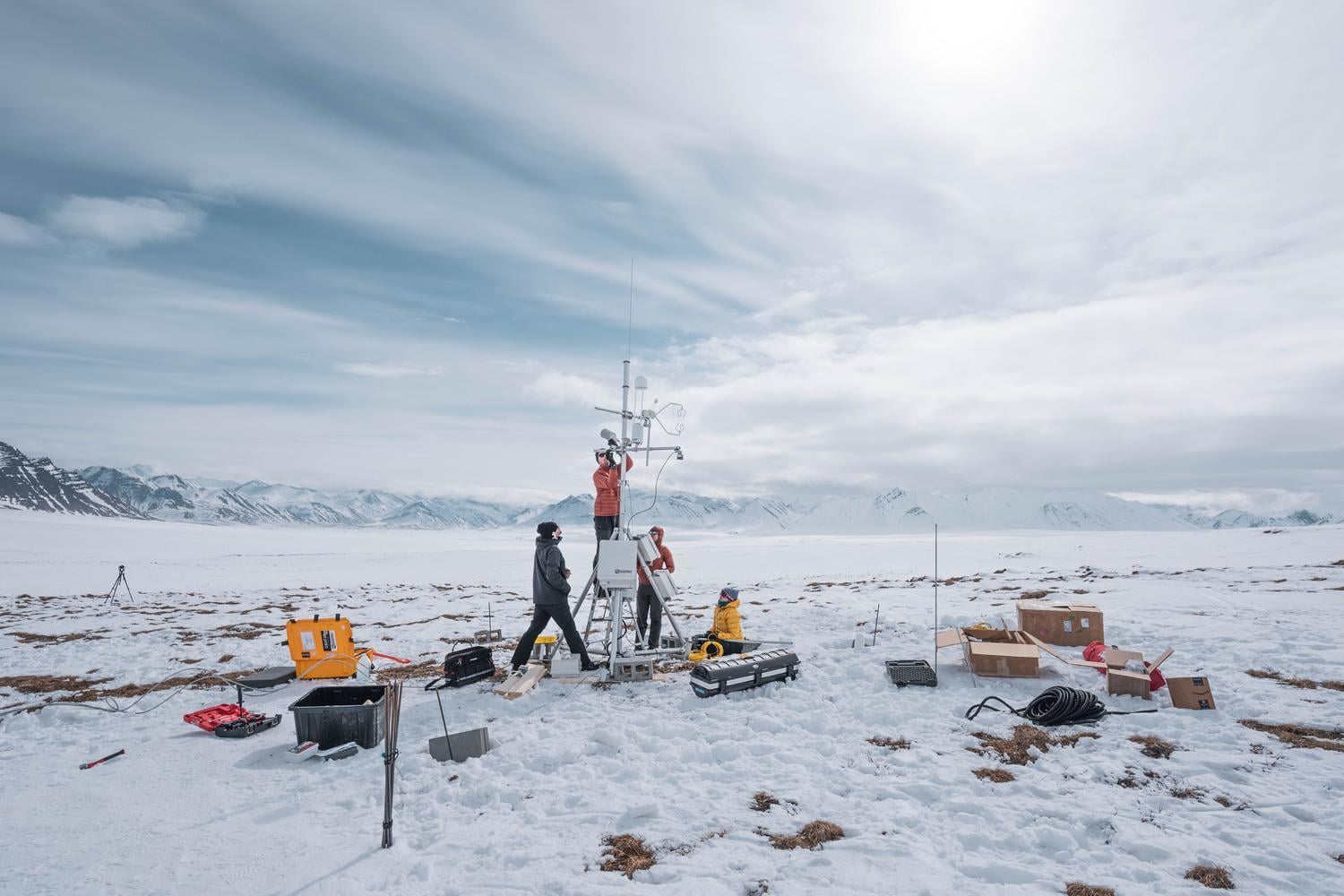
The mission comes at a time when the Arctic is warming nearly four times faster than the global average, a phenomenon known as Arctic amplification. As temperatures rise, the permafrost—which stores approximately 1,500 billion tons of carbon, nearly twice the amount currently in the Earth’s atmosphere—is beginning to thaw. The newly installed flux tower at the North Slope site is the first of its kind in the region specifically positioned to evaluate the simultaneous release of methane and carbon dioxide from a high-activity thaw slump.
Chronology of the Expedition and Technical Deployment
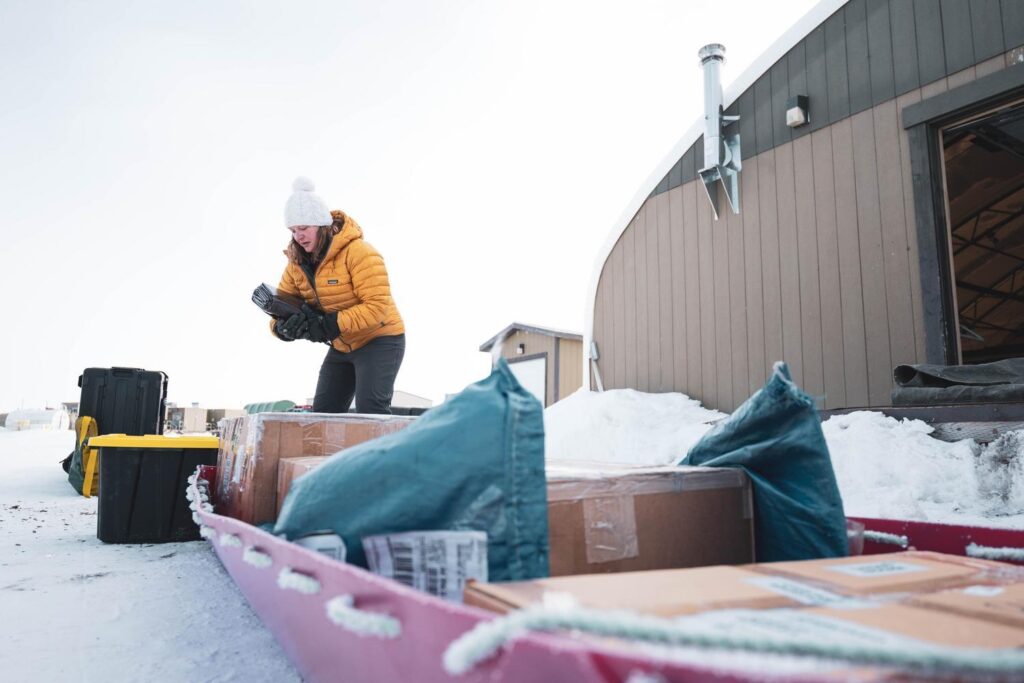
The deployment began in early May, during a period characterized by extreme sub-zero temperatures and the persistent hoarfrost typical of the Brooks Range foothills. The research team, comprising Dr. Gleason, Watts, and field technicians Kyle, Christina, and Kai, utilized snowmachines and heavy-duty sleds to transport several thousand pounds of equipment across the tundra. The logistical challenges were significant, as the site remained accessible only by traversing the vast, snow-covered expanse surrounding Toolik Field Station.
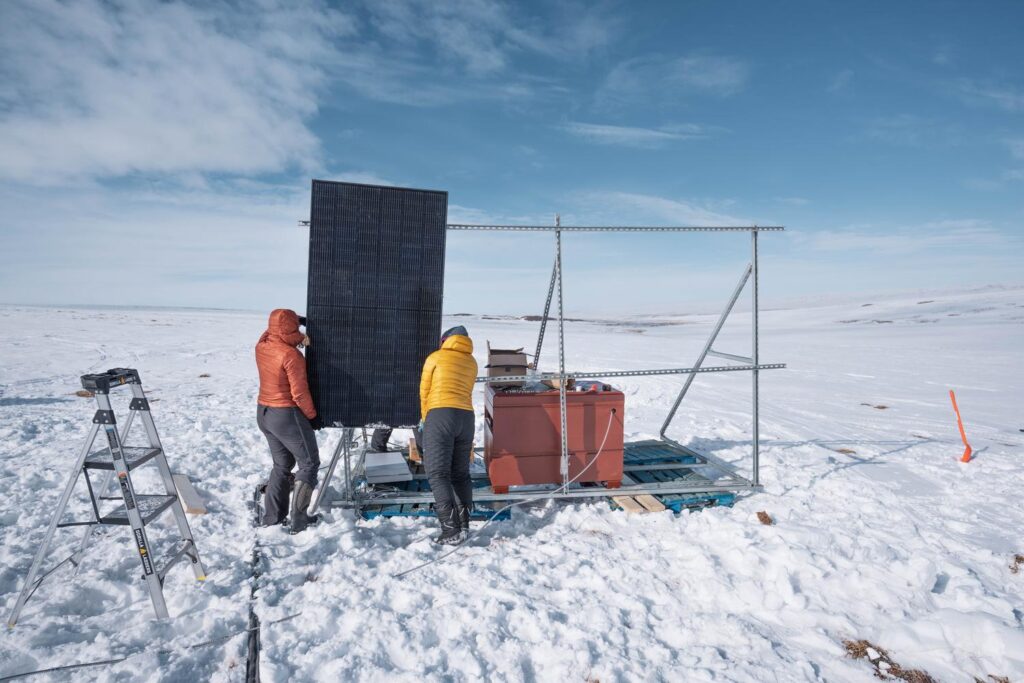
Upon arrival at the target thaw slump, the team initiated the assembly of a 15-foot-tall aluminum frame. This structure serves as the primary mounting point for sensitive meteorological and gas-sensing instruments. The technical suite includes an eddy covariance system, which measures the vertical turbulence of air to calculate the net exchange of gases between the ground and the atmosphere. To power these sensors in the remote Arctic environment, the team installed four large-scale solar panels and eight deep-cell batteries, each weighing in excess of 100 pounds.
The installation was completed over several days of intensive field labor, involving the anchoring of guy-lines into the frozen substrate and the mounting of a massive electrical enclosure. The tower is now operational, providing real-time data on the invisible release of methane—a greenhouse gas with 80 times the warming potential of carbon dioxide over a 20-year period—and CO2 as the summer thaw season approaches.
Scientific Analysis of Permafrost Thaw Slumps
Thaw slumps are among the most dramatic indicators of a changing Arctic landscape. These features occur when ground ice melts, causing the soil to lose its structural integrity and slump downhill. This process creates steep, eroding cliffs that expose layers of organic material that have been frozen for millennia. When this "ancient" carbon is exposed to oxygen and warmer temperatures, microbial decomposition begins, releasing greenhouse gases into the air.
While global climate models have long accounted for gradual, top-down permafrost thaw, they frequently overlook the abrupt thaw events represented by slumps and thermokarst lakes. Research suggests that these localized but high-intensity emission sites could significantly increase the Arctic’s total contribution to global warming. By placing a flux tower directly over a slump, the Gleason-Watts team aims to provide the empirical data necessary to refine these global models.
The Dual Role of Snow: Reflectivity Versus Insulation
A secondary but equally vital component of the expedition involved Dr. Gleason’s specialized research into snow hydrology and albedo. In the Western United States, snow is primarily viewed as a seasonal reservoir for water resources. In the Arctic, however, its role is more complex, functioning as both a cooling agent and a thermal blanket.
Dr. Gleason’s field observations during the expedition highlighted a troubling feedback loop involving snow depth and ground temperature. Snow has a high albedo, meaning it reflects a significant portion of solar radiation back into space, thereby cooling the Earth’s surface. However, as the Arctic atmosphere becomes wetter due to the loss of sea ice, certain regions are experiencing increased snowfall.
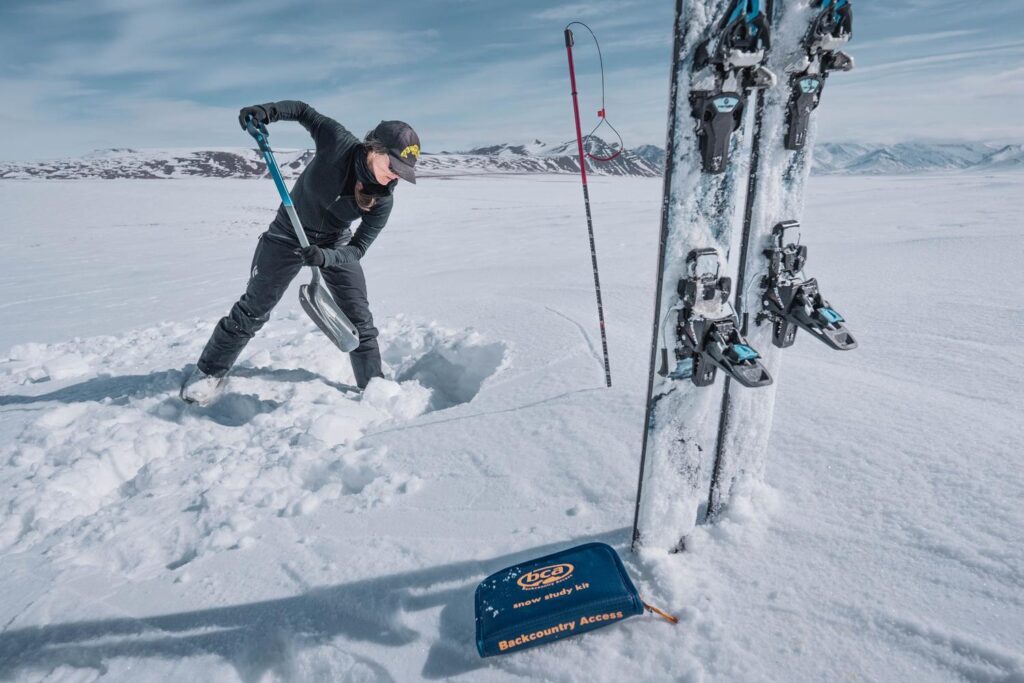
To investigate the thermal properties of this changing snowpack, Dr. Gleason conducted comparative analyses using snow pits of varying depths. The data revealed a stark contrast:
- Shallow Snowpack (57 cm): Temperatures at the base of the snowpack dropped to -10°C, allowing the ground to remain deeply frozen and suppressing microbial activity.
- Deep Snowpack (Approx. 2 meters): Despite surface temperatures of -3°C, the temperature near the soil surface rose to nearly -3°C.
This finding confirms that deeper snow acts as a powerful insulator, shielding the ground from the extreme cold of the Arctic winter. By keeping the permafrost warmer throughout the winter months, the deep snowpack may actually accelerate the thawing process and facilitate year-round microbial decomposition, even when the air temperature is well below freezing.
Supporting Data and Regional Context
The urgency of this research is underscored by data from the National Oceanic and Atmospheric Administration (NOAA) and the Intergovernmental Panel on Climate Change (IPCC). Recent Arctic Report Cards indicate that the region is losing its "refrigeration" capacity. The transformation of the North Slope is not merely a local concern; it has global ramifications for sea-level rise and the stability of the global climate system.
According to recent studies, the Brooks Range and the North Slope have seen a marked increase in the frequency of thermokarst events over the last two decades. The data collected by the Gleason-Watts flux tower will be integrated into larger datasets maintained by the Woodwell Climate Research Center and the Toolik Field Station, providing a more granular view of how these landscapes are responding to record-breaking thermal anomalies.
Advocacy and the Role of the POW Science Alliance
The expedition also serves as a focal point for the Protect Our Winters (POW) Science Alliance, an organization that seeks to bridge the gap between scientific research and climate advocacy. Dr. Gleason and Watts emphasize that while the collection of data is paramount, the communication of that data to policymakers and the public is equally critical.
"Protecting the Arctic starts with understanding it," the researchers noted, highlighting the need for scientists to take an active role in climate discourse. The mission of the Science Alliance is to translate complex environmental data into actionable narratives, advocating for systemic policy changes that address the root causes of Arctic warming.
The collaboration between academic researchers and advocacy groups like POW represents a growing trend in the scientific community. As the window for staying within the temperature targets of the Paris Agreement narrows, scientists are increasingly stepping out of the laboratory and into the realm of public responsibility.
Broader Impact and Future Implications
The data generated by the new flux tower on the North Slope is expected to influence several areas of climate science. First, it will help determine the "carbon balance" of the Arctic tundra—whether the region is still sequestering more carbon through plant growth than it is losing through permafrost thaw. Second, it will provide insights into the specific conditions that trigger abrupt thaw events, allowing for better risk assessment for Arctic infrastructure, including pipelines and indigenous communities.
Furthermore, the study of snow insulation properties adds a new layer of complexity to the understanding of the "Arctic greening" phenomenon. As shrubs and taller vegetation move northward into the tundra, they trap more snow, creating deeper drifts that further insulate the ground. This creates a self-reinforcing cycle of warming that could lead to a permanent shift in the Arctic ecosystem.
As the team concludes this phase of the installation, the flux tower stands as a sentinel on the North Slope, documenting the transition of a landscape in flux. The findings from this project will likely serve as a cornerstone for future Arctic research, emphasizing that what happens in the remote reaches of Alaska has profound consequences for the rest of the planet. The integration of high-resolution gas monitoring with snow hydrology research marks a significant step forward in the global effort to quantify and mitigate the impacts of the climate crisis.

