
As the global energy sector undergoes its most significant transformation since the Industrial Revolution, the rapid scaling of renewable energy technologies has been met with an equally sophisticated and well-funded campaign of opposition. While wind, solar, and battery storage technologies reached record-breaking deployment levels in 2023 and 2024, a parallel surge in digital narratives has sought to undermine public confidence in these solutions. These narratives often manifest as localized concerns regarding property values, agricultural integrity, and wildlife conservation, yet analysts suggest they are frequently the product of a coordinated disinformation ecosystem designed to protect the market share of traditional fossil fuel interests.
The proliferation of these claims presents a significant challenge to climate policy and infrastructure development. From social media platforms to community town halls, the discourse surrounding the energy transition is increasingly polarized. To navigate this landscape, it is essential to distinguish between organic skepticism and strategic disinformation, while grounding the conversation in the empirical realities of modern energy production.
Defining the Information Crisis: Misinformation vs. Disinformation
In the context of the climate transition, the distinction between misinformation and disinformation is critical for understanding how progress is stalled. Misinformation refers to the unintentional sharing of false or misleading information. This often occurs when individuals, motivated by genuine concern for their communities or environments, repeat inaccuracies they have encountered online. A common example involves the "well-intentioned" observer who attributes localized ecological changes to offshore wind developments without consulting scientific data. While the individual is not acting with malice, the repetition of these points creates a "red herring" effect, distracting from systemic climate solutions and fostering internal conflict within communities.
Disinformation, by contrast, is the intentional creation and dissemination of false information to achieve a specific goal—typically to delay policy changes, dodge corporate accountability, or protect financial interests. Within the energy sector, disinformation is often a calculated corporate strategy. Fossil fuel entities, possessing vast capital and influence, have spent decades crafting marketing campaigns that strategically place misleading narratives across digital landscapes. These campaigns are designed to sow doubt about the reliability, safety, and aesthetic impact of clean energy, effectively "bursting the bubble" of progress through high-budget obfuscation.
A Chronology of Climate Narratives and Strategic Delay
The current wave of anti-renewable sentiment does not exist in a vacuum; it is the latest iteration of a decades-long communications strategy.
In the 1970s and 1980s, internal research conducted by major oil companies, such as ExxonMobil, accurately predicted the trajectory of global warming caused by fossil fuel combustion. However, as public awareness grew in the 1990s, the industry pivot shifted toward "denialism," questioning the validity of climate science itself. By the 2010s, as the scientific consensus became undeniable, the strategy evolved into "climate delayism." This tactic involves acknowledging the reality of climate change while arguing that current renewable technologies are "not ready," "too expensive," or "more harmful than the problem they solve."
In 2023, the International Energy Agency (IEA) reported that global renewable capacity increased by 50% compared to the previous year, the fastest growth rate in two decades. This acceleration has triggered a defensive reaction from incumbents. Modern disinformation campaigns now focus on "discourse of delay," which includes highlighting the minor flaws of renewables to argue for the continued expansion of oil and gas production—a logical inconsistency, as global decarbonization goals cannot be met while simultaneously increasing fossil fuel output.
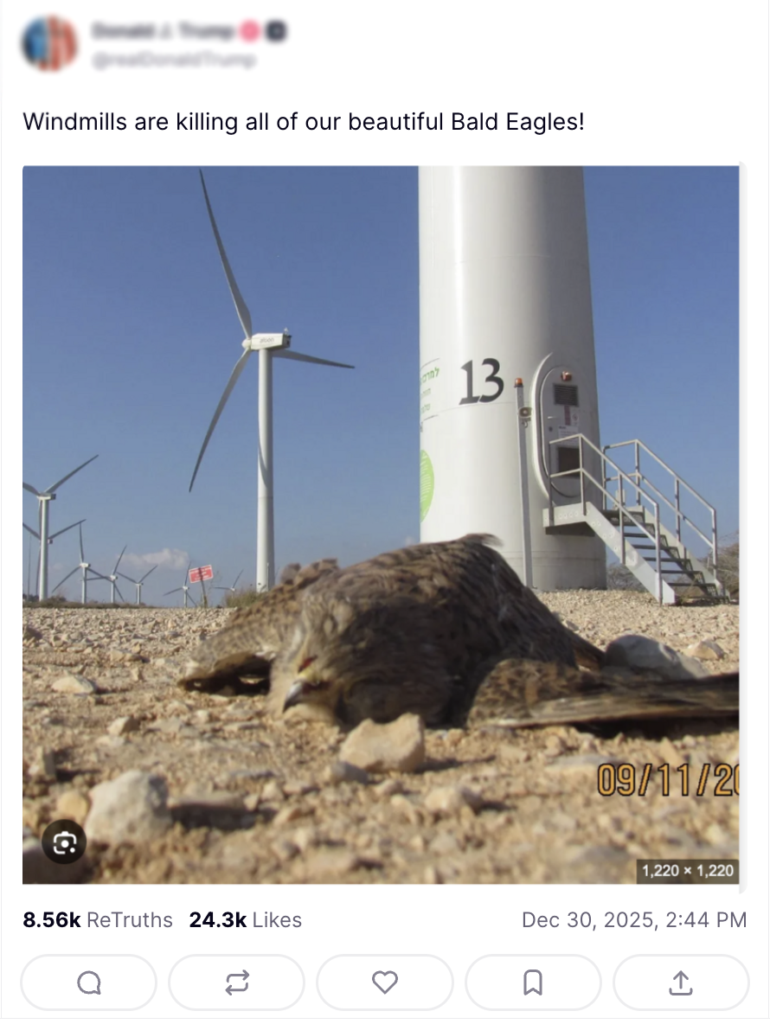
Addressing the Data: Life-Cycle Analysis of Electric Vehicles
One of the most persistent narratives in the anti-renewable campaign concerns the environmental impact of Electric Vehicle (EV) production. Critics often claim that the resource extraction required for lithium-ion batteries makes EVs more harmful to the environment than conventional internal combustion engine (ICE) vehicles.
However, comprehensive life-cycle assessments (LCA) conducted by the Massachusetts Institute of Technology (MIT) and other leading research institutions provide a different conclusion. While it is true that mineral mining involves carbon-intensive processes and localized environmental risks, the long-term carbon footprint of an EV is significantly lower than that of a gasoline-powered car. According to MIT’s Climate Portal, gasoline cars emit, on average, more than 350 grams of CO2 per mile driven over their entire lifetime. In contrast, fully battery-electric vehicles create approximately 200 grams of CO2 per mile, even when accounting for the current carbon intensity of the electrical grid. As the grid becomes "greener" with more solar and wind inputs, the emissions profile of EVs continues to improve, whereas the emissions of ICE vehicles remain static or increase as extraction becomes more difficult.
Biodiversity and Infrastructure: The Offshore Wind Debate
Another focal point of disinformation is the impact of offshore wind farms on marine life, specifically avian populations and whale migrations. Headlines frequently claim that wind turbines are "killing property values" or "devastating bird populations."
A factual analysis requires a comparative approach. All forms of energy production require infrastructure, and all infrastructure has an ecological footprint. However, the risks associated with offshore wind must be weighed against the catastrophic risks of the fossil fuel status quo. Offshore oil rigs present constant threats of spills, which can poison entire ecosystems for decades, as seen in the Deepwater Horizon disaster.
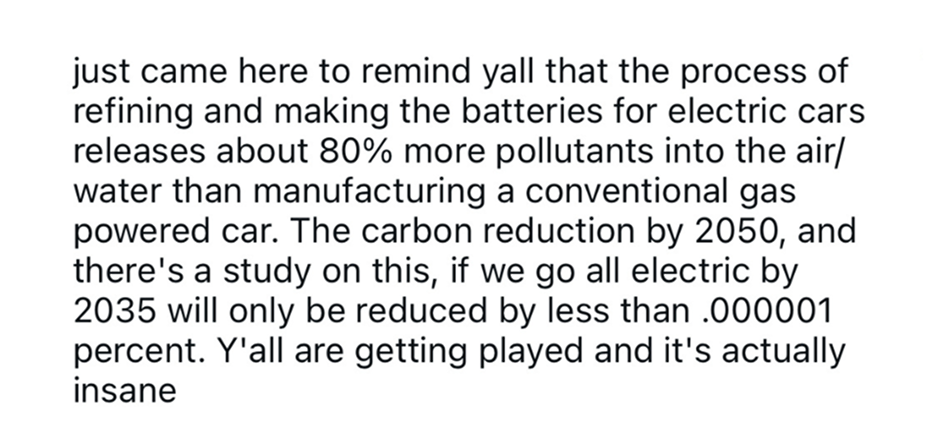
Regarding wildlife, organizations such as the National Oceanic and Atmospheric Administration (NOAA) have stated there is no evidence linking offshore wind surveys or equipment to recent whale strandings. Furthermore, climate change itself remains the single greatest threat to ocean biodiversity, causing acidification and rising temperatures that collapse food chains. While conservation-minded planning is essential for wind projects, using localized wildlife concerns as a "straw man" to defend fossil fuel expansion ignores the broader ecological devastation caused by carbon emissions.
The Economic Reality of the Transition
Beyond environmental concerns, disinformation often targets the economic viability of renewables, labeling them as "unreliable" or "expensive." Market data contradicts these claims. The Levelized Cost of Energy (LCOE) for solar and wind has plummeted by nearly 90% and 70%, respectively, over the last decade. In many parts of the world, building new renewable capacity is now cheaper than continuing to operate existing coal or gas plants.
The "reliability" argument often ignores the advancements in battery storage and grid management. During the 2021 Texas power grid failure, initial disinformation campaigns blamed wind turbines for the blackouts. Subsequent investigations by the Federal Energy Regulatory Commission (FERC) revealed that the primary cause was the failure of natural gas infrastructure to operate in freezing temperatures. This incident highlights how disinformation can be used to shift blame from legacy systems to emerging technologies during times of crisis.
Official Responses and Policy Implications
Governments and international bodies have begun to recognize disinformation as a formal barrier to climate action. The United Nations’ Intergovernmental Panel on Climate Change (IPCC) noted in its Sixth Assessment Report that "rhetoric and misinformation on climate change and the deliberate undermining of science have contributed to misperceptions of the scientific consensus, uncertainty, disregarded risk and urgency, and low dissent."

In response, several jurisdictions are implementing "Greenwashing" legislation to prevent companies from making misleading environmental claims. In the United States, the Inflation Reduction Act (IRA) has provided the economic framework to counter disinformation by demonstrating the tangible job growth and cost savings associated with clean energy. By 2030, the transition is expected to create millions of new jobs in manufacturing, installation, and maintenance, providing an economic counter-narrative to the "fear campaigns" run by fossil fuel interests.
Conclusion: Becoming Pillars of Truth
The transition to a clean energy economy is an immense human endeavor that requires rigorous debate and responsible planning. However, that debate must be conducted on a foundation of facts rather than manufactured fear. Perfection should not be the enemy of progress; while renewable energy is not without its challenges, it remains the most viable, scalable, and affordable path toward a sustainable future.
To combat the surge of disinformation, advocates and citizens must exercise high levels of discernment. This involves:
- Verifying Sources: Prioritizing data from peer-reviewed scientific journals, government agencies (like the EPA or IEA), and reputable academic institutions.
- Identifying Logical Fallacies: Recognizing when a "red herring" or "straw man" argument is being used to distract from the primary goal of emissions reduction.
- Engaging in the Democratic Process: Participating in local municipality meetings and voting for policies that support transparent, science-based energy transitions.
By identifying the mechanics of disinformation and redirecting the conversation toward empirical evidence, communities can ensure that the transition to renewable energy is not only fast but also just and informed. Human progress has always been met with resistance, but history demonstrates that innovation, when backed by truth, eventually overcomes the narratives of the past.

