
The Swiss alpine resort of Crans-Montana recently served as the epicenter for the 2026 edition of the Wildstrubel by UTMB, a premier event in the international trail running circuit. From September 18 to September 20, 2026, the resort welcomed thousands of athletes, their support crews, and spectators, marking a significant milestone in the town’s ongoing efforts to revitalize its tourism sector following a catastrophic fire on New Year’s Eve 2025. While the event demonstrated the growing global appetite for mountain endurance sports, it also highlighted a distinct contrast to the hyper-congested conditions often associated with the flagship UTMB Mont Blanc event in Chamonix.

The Evolution of the Wildstrubel Event
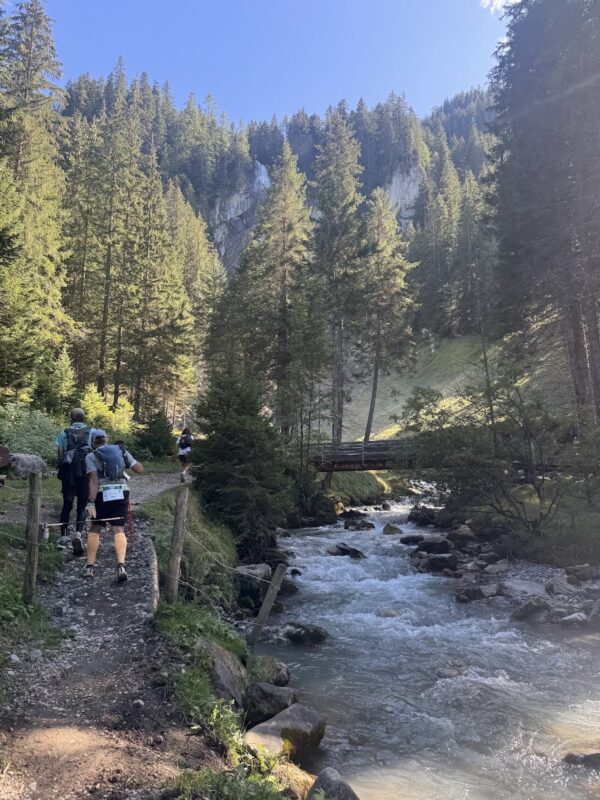
The Wildstrubel by UTMB has rapidly transitioned from a regional trail race into a cornerstone of the UTMB World Series. By integrating the technical terrain of the Valais Alps, the event provides a rigorous test of endurance that spans distances ranging from 10km sprints to the grueling 100km+ ultra-marathons. The course design purposefully leverages the geography of the Wildstrubel massif, utilizing paths that are intimately familiar to the winter sports community. For instance, the 70km route incorporates sections of the Chuenisbärgli in Adelboden—a legendary venue on the FIS Alpine Ski World Cup circuit—thereby bridging the gap between summer trail running and the resort’s deep-rooted heritage in alpine skiing.
The 2026 edition attracted 8,500 registered participants, a figure that, when combined with family members and support teams, resulted in an influx of approximately 15,000 to 20,000 visitors. This influx arrived during a critical period for the local economy, as the municipality continues to navigate the long-term recovery phase following the New Year’s Eve disaster that forced the closure of several major tourism facilities.

Chronology of the 2026 Race Weekend
The event schedule was structured to maximize flow across the rugged landscape, beginning on Friday morning with the start of the longer ultra-distances in Kandersteg. The race sequence was as follows:
- Friday, September 18: The 72km Wild 70 race commenced at 7:20 am in Kandersteg. Participants faced a vertical gain of 4,600 meters, traversing the Bunderschrinde pass, descending into the Lenk valley, and navigating the high-altitude reaches near the Wildstrubel hut before concluding in Crans-Montana.
- Saturday, September 19: The schedule saw the arrival of the elite field for the shorter, high-intensity formats. Moroccan athlete Elhousine Elazzaoui demonstrated tactical superiority, securing a win in the 55km category with a time of 4:49:05.
- Sunday, September 20: The final festivities and closing ceremonies took place at the race village in the heart of Crans-Montana, accompanied by local community events designed to integrate the visiting athletes with the local populace.
Comparative Analysis: The "Chamonix Effect"
A primary observation during the 2026 event was the absence of the "town-swallowing" phenomenon that has characterized the UTMB Mont Blanc in France. In Chamonix, the surge of attendees often leads to severe infrastructure strain, including localized traffic gridlock, inflated accommodation costs, and overcrowded dining facilities. In contrast, Crans-Montana maintained a level of functionality that allowed for the seamless coexistence of the race and local commerce.

This difference can be attributed to several factors. First, Crans-Montana possesses a robust infrastructure capable of accommodating up to 50,000 overnight guests, meaning the influx of 20,000 visitors did not reach the threshold of capacity saturation. Second, the spatial layout of the resort, which features two distinct centers, allowed event organizers to concentrate the finish line festivities in a dedicated zone, leaving other parts of the town to operate under normal conditions. This suggests that, unlike the geographically confined valley of Chamonix, Crans-Montana has the spatial capacity to scale up its sports hosting capabilities without alienating its resident population or year-round tourists.
Official Perspectives and Economic Strategy
Pierre-Henri Mainetti of Crans-Montana Tourism emphasized that the event is a critical component of a broader, multi-decade strategy to establish the resort as a year-round destination. "Our objective is to leverage the international recognition of the UTMB brand to demonstrate that Crans-Montana is not just a seasonal ski destination, but a hub for outdoor excellence during the spring, summer, and autumn months," Mainetti noted.

The 2026 season has presented significant challenges. Following the New Year’s Eve fire, which resulted in a dip in tourism-related revenue and negative international media coverage, the local government has been cautious about recovery efforts. Mainetti underscored that the priority is the steady, sustainable rebuilding of visitor confidence. The successful execution of a high-profile, orderly event like the Wildstrubel serves as a public-facing testament to the resort’s operational resilience.
Broader Implications for Trail Running
The event has reignited a debate within the trail running community regarding the trajectory of the sport. As the "bigger is better" philosophy—often characterized by ever-increasing distances and participant counts—faces pushback from local authorities and environmental advocates in regions like the Chamonix valley, the Crans-Montana model offers a potential template for the future.
Chamonix Mayor François-Xavier Laffin has recently voiced concerns regarding the environmental impact of large-scale events, specifically citing the pressure on protected mountain flora and fauna caused by thousands of footsteps on sensitive terrain. Laffin’s administration has suggested that future permits for the UTMB Mont Blanc may require a reduction in total runner numbers to preserve the integrity of the ecosystem.
In this context, the Wildstrubel by UTMB provides a successful case study in "balanced growth." By utilizing a resort with significant buffer capacity and a clear, pre-existing tourism infrastructure, the organizers were able to provide a world-class experience without the associated social and environmental friction.

The Shift in Athlete Mentality
For many participants, the 2026 Wildstrubel served as an introspective experience regarding the nature of ultra-endurance racing. The prevailing trend of equating "progress" in the sport with distance—moving from 50km to 100km to 100-mile races—is beginning to face a counter-movement. Many athletes are increasingly focusing on performance efficiency and speed over distance, a shift mirrored by the event’s own organizers, who appear to be prioritizing high-quality route management over the sheer volume of entrants.
As the trail running industry looks to 2027 and beyond, the success of the Wildstrubel by UTMB suggests that host destinations do not need to choose between economic development and resident quality of life. By focusing on smart logistics, utilizing existing event infrastructure, and maintaining a respectful balance with the local community, resorts like Crans-Montana can sustain the growth of the sport while mitigating the negative externalities that have plagued other, more saturated alpine hubs.

The event concluded with a clear consensus among organizers, athletes, and local officials: the future of mountain sports lies in professionalization and thoughtful integration rather than unchecked expansion. For Crans-Montana, this represents a vital step toward a stable and prosperous future, proving that the path to recovery is built not just on the ashes of the past, but on the disciplined, measured steps of the present.

