
The transition from the pinnacle of elite athletics to the routines of everyday life can be a profoundly disorienting experience for many professional athletes. For former U.S. Ski Team luminary Libby Ludlow, the abrupt disappearance of finish lines and structured training regimens could have marked a fracture in identity. Instead, her post-racing narrative is one of fluid evolution, a testament to adapting a relentless pursuit of improvement and a deep-seated passion for skiing into new, impactful forms. Today, Ludlow, a mother of two, has cultivated a remarkable second act as a successful children’s book author, a dedicated volunteer coach, and an increasingly influential voice in the discourse surrounding youth sports development. In essence, she continues to embody the very principles that defined her as an athlete: a dedication to process, a commitment to growth, and an unwavering love for the sport itself.
Ludlow’s athletic career, spanning nearly a decade on the U.S. Ski Team, saw her compete at the highest levels, including the 2006 Torino Olympics. Her journey through the competitive ranks was driven not primarily by the allure of medals or podiums, but by an intrinsic motivation. "I loved the process of getting better," Ludlow reflects. "Competing was fine, but it wasn’t what I did it for. I just loved skiing." This foundational sentiment—a love for the sport and the journey of mastery—has become the guiding principle for her multifaceted endeavors post-retirement.
Navigating the Post-Athletic Landscape: A Common Challenge
The journey out of elite sport is often fraught with challenges. Studies by organizations like the International Olympic Committee (IOC) and various national athlete associations consistently highlight the difficulties athletes face in transitioning to life after competition. These can range from identity crises, where an athlete’s self-worth is inextricably linked to their athletic achievements, to mental health struggles, financial instability, and a loss of purpose or community. For many, the structured environment of high-performance sport, with its clear goals and daily routines, leaves a void that is difficult to fill. The "What now?" question that Ludlow implicitly addresses is a universal one for retiring athletes, underscoring the critical need for support systems and alternative pathways for self-actualization.
While Ludlow’s transition wasn’t entirely a "clean break," as she describes it, her capacity to pivot and redefine her engagement with skiing stands in contrast to the struggles many experience. Her ability to channel her athletic discipline into new creative and advocacy pursuits offers a compelling model for sustainable post-athletic success.
A Return to Roots: Rediscovering the Joy of Skiing
In the past year, Ludlow has experienced a profound resurgence of her passion for skiing, a rediscovery forged not through the rigors of competition but through the simple joys of community and family. Following stints working with NBC during the Olympics and contributing to coaching initiatives in Park City, she found herself reconnecting with the sport on a deeply personal and meaningful level. "What I have—my background, my experience—it’s unique," she states, acknowledging the value of her elite perspective. "And I’m just happy to be able to get back in and use it."
This renewed connection has been significantly catalyzed by her own children, aged six and nine, who are embarking on their nascent journeys on the snow. Crucially, Ludlow and her husband, Jake, have consciously opted out of the high-pressure performance pathway often associated with ski racing households. Their philosophy is refreshingly simple and profound: "Our job is for our kids to love skiing and want to ski for the rest of their life," Ludlow explains. "No amount of performance pressure should ever come in the way of that." This approach directly challenges the prevailing ethos in many youth sports, where early specialization and competitive results frequently overshadow long-term enjoyment and athlete well-being.

Challenging the Status Quo: Rethinking Youth Sports Development
Ludlow’s perspective is not an isolated one; it mirrors a growing shift in philosophy within ski racing and the broader landscape of youth sports. The traditional model, which often emphasizes early specialization, high-volume training, and intense competition from a young age, is increasingly being questioned by researchers and progressive sports organizations. Ludlow, through her coaching and advocacy, champions an alternative: a balanced, patient, and long-term approach to development.
In Park City, her children participate in a low-key, after-school program designed around fun and fundamental skill-building, deliberately de-emphasizing competition. "It’s more consistent with the research—fun, not forcing kids to specialize early," she explains. This stands in stark contrast to what she observes as a concerning trend of intensity, often fueled by parental aspirations and a fear of children falling behind their peers. "There are kids skiing gates five days a week," Ludlow notes, highlighting the potential for burnout and disengagement. "Of course they’ll get results. But what’s the goal if we’re playing the long game?"
This concern is backed by extensive research. Organizations like the Aspen Institute’s Project Play consistently advocate for multi-sport participation, emphasizing that diverse athletic experiences foster a broader range of motor skills, reduce the risk of overuse injuries, and mitigate burnout. Studies published in journals such as the Journal of Sport and Exercise Psychology have shown that athletes who specialize later tend to have longer, healthier careers and are more likely to achieve elite status. The focus, according to these findings, should be on developing a love for movement, fundamental skills, and intrinsic motivation, rather than chasing early competitive success. Ludlow’s advocacy aligns perfectly with these evidence-based principles, positioning her as a champion for a healthier, more sustainable youth sports ecosystem.
From Athlete to Author: Crafting Narratives of Enthusiasm
Parallel to her renewed engagement with coaching, Ludlow has forged a unique path as an entrepreneur and author. Her children’s books, A-B-Skis and Goodnight Chairlift, have resonated deeply within the ski community, becoming beloved staples in countless ski households. Their popularity, spreading largely through word of mouth, speaks to their authentic connection with young skiers and their families. "I’ll be standing in the lift line, helmet on with an A-B-Skis sticker, and I’ll see a parent nudge their kid and say, ‘Look, A-B-Skis,’" she recounts. "The way it’s caught on has been really special."
These books are more than just playful tales; they are purposeful tools designed to cultivate enthusiasm for skiing, gently introduce young athletes to the rich culture of the sport, and help parents manage expectations before their children even hit the snow. They reflect Ludlow’s core values, aiming to foster "character development, imagination, and stoking enthusiasm for skiing." In essence, her literary creations mirror her evolving approach to the sport itself: prioritizing the experience and the intrinsic joy over purely performance-driven outcomes. This venture showcases her entrepreneurial spirit, handling everything from creative development and illustration collaboration (with Nathan Y. Jarvis, illustrator of A-B-Skis) to sourcing, distribution, and marketing—a comprehensive skill set reminiscent of the self-reliance and strategic thinking required in elite sport.
The Enduring Principle: A Focus on Process
Those who trained alongside Ludlow on the U.S. Ski Team frequently recall her exceptional work ethic. "I remember thinking, ‘She works her tail off,’" recalls a former training partner, underscoring a defining characteristic of her athletic career. Ludlow acknowledges this reputation but frames it through a lens of control and influence. For her, intense effort was not merely about grinding; it was a strategic response to the inherent unpredictability of competitive skiing. "There are so many things out of your control," she explains. "I just poured myself into what I could influence."
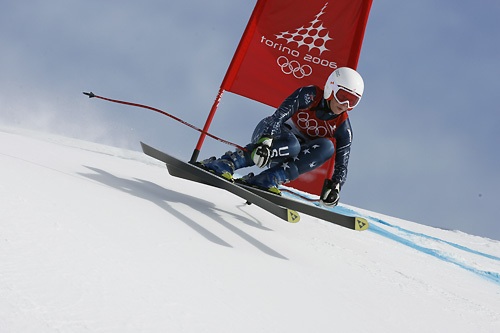
This "process over outcome" mindset remains a powerful through-line in her current endeavors. Whether it’s meticulously crafting a children’s book or building an advocacy platform, Ludlow applies the same disciplined approach. "It’s similar to ski racing," she observes. "You focus on each small step, and eventually you create something you’re proud of." This philosophy, cultivated on challenging slopes, now underpins her entrepreneurial success and her mission to reshape youth sports.
A New Mission: Spearheading Youth Sports Reform
Ludlow’s latest chapter promises to be her most ambitious and impactful. She has launched a Substack initiative dedicated to providing clear, research-based guidance for parents, coaches, and sports organizations. The objective is not to prescribe a singular, rigid pathway but to equip stakeholders with accessible, evidence-backed information on what truly serves the best interests of children in sports. "There’s so much data about what’s good for kids," she laments, highlighting a critical knowledge gap. "But no one is putting it together in a way that’s digestible."
Her concern stems from a belief that youth sports—including ski racing—are increasingly veering away from their fundamental purpose: to foster healthy development, life skills, and a lifelong love for physical activity. "They’re too powerful and important as a vehicle for kids," she asserts, emphasizing the transformative potential of sports. "For parents and organizations to ruin it." This conviction drives her to distill complex sports psychology, physiology, and developmental research into practical advice, empowering parents and coaches to make informed decisions that prioritize a child’s holistic well-being over fleeting competitive victories. Her Substack serves as a crucial resource in an era where misinformation and commercial pressures often dictate youth sports trends, aiming to bring an evidence-based perspective to a field ripe for reform.
Full Circle: The Magic of Discovery
For Libby Ludlow, the seemingly disparate elements of her life—from World Cup competitor to devoted mother, imaginative author, and passionate advocate—are woven together by a surprisingly simple thread. It is not about the medals she won or the rankings she achieved. It is, instead, about the profound moment when a child first discovers the sheer joy and magic of skiing. "The best experience on skis," she declares, with an almost palpable sense of wonder, "is watching a kid discover the magic of it."
In this sense, Ludlow’s illustrious career has not merely ended or been replaced; it has undergone a remarkable evolution. She has transitioned from being a recipient of the sport’s magic to becoming a dedicated steward and facilitator of that magic for the next generation. Her journey stands as a powerful testament to the idea that true athletic success extends far beyond the competitive arena, finding its deepest resonance in the capacity to inspire, educate, and foster a lifelong love for the very activity that once defined her. Her impact, both on the slopes and off, continues to grow, shaping a more compassionate and sustainable future for youth sports.

