
Polish elite ski mountaineer Andrzej Bargiel has etched another legendary chapter into the annals of high-altitude mountaineering. In June 2026, Bargiel successfully summited Pakistan’s Nanga Parbat—standing at an imposing 8,126 meters (26,660 feet) as the world’s ninth-highest mountain—and completed the first-ever continuous ski descent from its apex to the snowline. Executed entirely without the aid of supplemental oxygen, this extraordinary feat not only redefines the boundaries of human endurance and technical skill in the "Death Zone," but also marks another monumental milestone in Bargiel’s ongoing quest to conquer the planet’s most formidable peaks on two planks.
The expedition, characterized by meticulous planning, physical resilience, and elite alpine navigation, saw Bargiel accompanied by fellow Polish alpinist Janusz Gołąb, who provided crucial support during the initial ascent phase. Together, the team tackled one of the most unpredictable and perilous environments in the Karakoram and Himalayan ranges.
Main Facts of the Historic Ascent and Descent
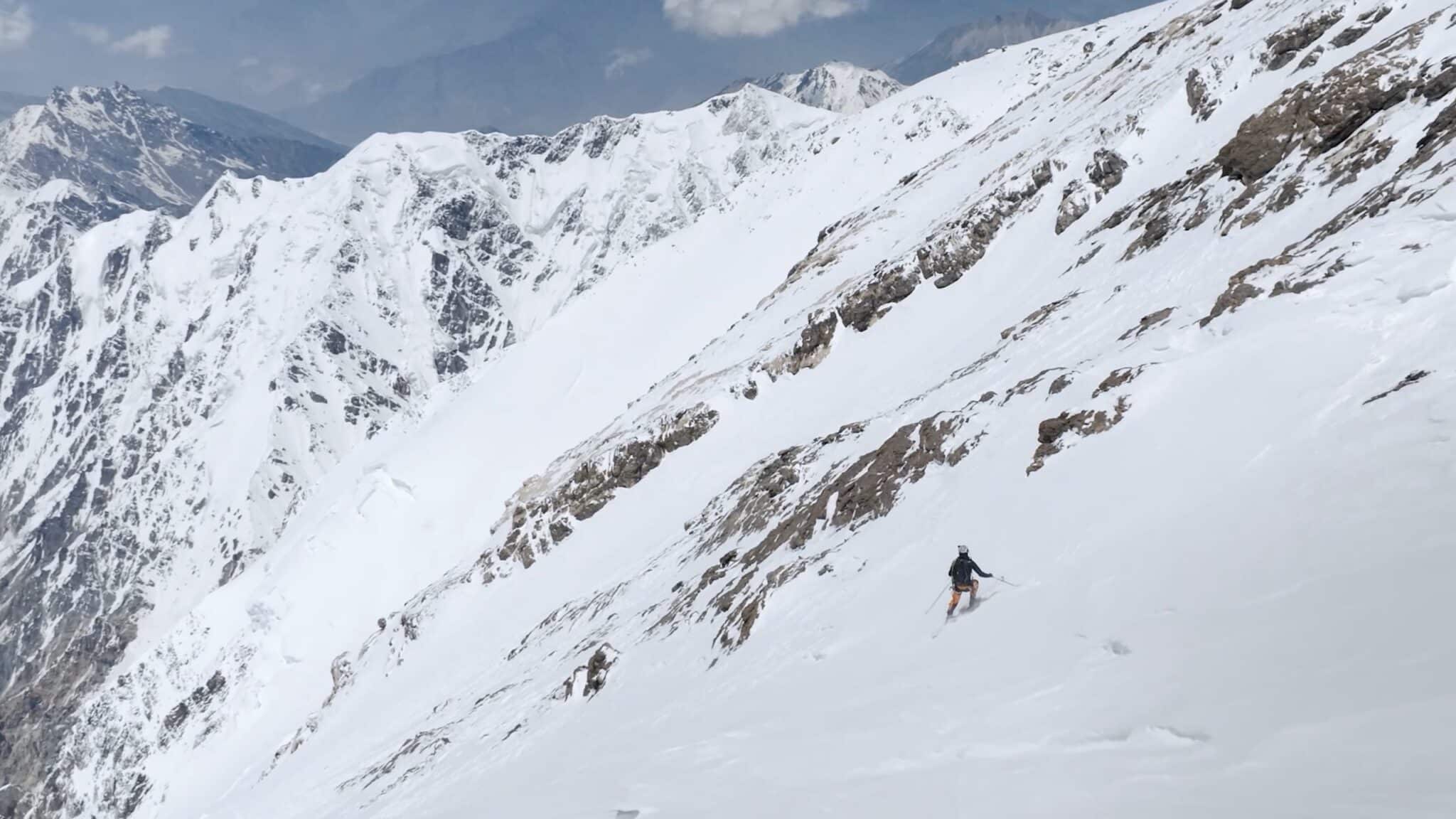
Nanga Parbat, infamously known as the "Killer Mountain" due to its extraordinarily high fatality rate relative to successful summits, presented unique obstacles that had defeated all previous ski mountaineering attempts. The primary geographic hurdle lay on the upper Diamir Face, which features a massive, unstable serac barrier—a towering wall of glacial ice that historically forced previous skiers to strip off their equipment and navigate treacherous rock and ice sections on foot.
Bargiel, however, successfully scouted and navigated a breakthrough route through this treacherous labyrinth of ice. By finding a viable line through the upper slopes, he managed to connect the true summit of Nanga Parbat directly to the continuous snowfields below. The result was an unbroken, continuous ski descent from 8,126 meters down to the end of skiable snow, bypassing the interruptions that had previously compromised the purity of earlier descent attempts.
Operating in extreme conditions where barometric pressure halves compared to sea level, Bargiel relied entirely on his physiological adaptation and years of high-altitude training. Operating without bottled oxygen compounds the physiological toll exponentially, increasing the risk of cerebral and pulmonary edema, severe frostbite, and profound cognitive impairment.
Chronology of the Expedition
The timeline of the June 2026 expedition highlights the rapid yet calculated pace of Bargiel’s assault on the peak, balanced against the narrow weather windows typical of the Karakoram summer.
The journey began in late June, with the team establishing and acclimatizing from base camp.
- June 28, 2026: Bargiel officially launched his summit push from base camp, situated at approximately 4,200 meters (13,780 feet).
- Late June (Ascent Phase): Over the course of two grueling days of climbing through shifting weather patterns, deep snow, and vertical ice, Bargiel ascended through Camps I, II, and III, pushing past 7,000 meters entirely under his own physiological power without supplemental oxygen.
- Summit Day: Bargiel successfully topped out at the 8,126-meter summit of Nanga Parbat. He spent approximately 45 minutes on the peak, balancing the necessity of capturing documentation and resting with the acute dangers of remaining at such an extreme altitude.
- The Descent: Following his brief stay at the summit, Bargiel transitioned into ski mode. He spent roughly two hours operating above the 7,900-meter threshold—deep within the lethal environment known universally as the Death Zone. Utilizing his custom route through the Diamir Face serac barrier, he executed the continuous descent before eventually returning safely to lower camps, closing out the expedition without major injury or incident.
Supporting Data and Context
To understand the magnitude of Bargiel’s accomplishment on Nanga Parbat, one must examine his broader track record in the extreme ranges of the Himalayas and the Karakoram. Bargiel has systematically dismantled several of the most deeply entrenched barriers in extreme skiing over the past decade.
In 2018, Bargiel achieved global renown by completing the first-ever ski descent of K2 (8,611 meters), Pakistan’s highest peak and the world’s second-highest mountain, widely considered the ultimate prize in high-altitude mountaineering. Following K2, Bargiel turned his focus toward completing a comprehensive project: climbing and skiing all of Pakistan’s majestic 8,000-meter peaks.
This trajectory continued in 2025, when Bargiel traveled to Nepal and successfully climbed and skied Mount Everest (8,848 meters) once again operating entirely without supplemental oxygen. The successful Nanga Parbat expedition in June 2026 serves as the latest fulfillment of his long-term regional objectives in Pakistan, cementing his status as the preeminent high-altitude ski mountaineer of his generation.
Nanga Parbat itself holds a grim reputation in mountaineering history. First summited in 1953 by Austrian mountaineer Hermann Buhl—who also climbed the peak solo and without supplemental oxygen—the mountain demands absolute precision. Its Rupal Face is the highest rock face in the world, rising 4,600 meters from its base, while the Diamir Face offers the most viable, yet still immensely perilous, route for ski descents.

Expert Analysis and Industry Implications
The implications of Bargiel’s descent extend far beyond personal glory, pushing the theoretical limits of what is considered possible in modern alpinism. For decades, the intersection of extreme skiing and high-altitude mountaineering was viewed as distinct disciplines; climbers rarely carried skis up peaks exceeding 8,000 meters, and those who did typically treated skis as a means to expedite descent from lower plateaus rather than navigating technical, vertical alpine terrain from the absolute summit.
Industry experts and veteran mountain guides note that Bargiel’s methodology—combining lightweight alpine climbing tactics with elite freeride skiing capabilities—establishes a new benchmark for future expeditions. By demonstrating that technical ski lines can be forged through complex glaciated obstacles like the Diamir Face serac, Bargiel has opened the door for a new wave of elite ski mountaineers to reimagine descents on the world’s fourteen 8,000-meter peaks.
Furthermore, executing these climbs without supplemental oxygen adds an ethical and physical purity to the endeavors that resonates deeply within the global mountaineering community. As commercial expeditions increasingly rely on fixed ropes, Sherpa support, and bottled oxygen to shepherd clients up standard routes, purists like Bargiel continue to push the envelope of self-supported, human-powered exploration.
Broader Impact on the Sport
As the global climate shifts and high-altitude ice routes become increasingly volatile due to rising temperatures and unpredictable weather patterns, the window for safe ski mountaineering in the greater ranges is narrowing. Glacial recession, melting seracs, and increased rockfall present unprecedented hazards to modern climbers. Bargiel’s successful navigation of Nanga Parbat amid these shifting environmental realities demonstrates a high degree of mountain savvy, route-finding intuition, and risk management.
With Nanga Parbat checked off his list in style, the global mountaineering and skiing communities now look eagerly toward Andrzej Bargiel’s next objective. Whether he turns his attention to remaining unskied lines on other Himalayan giants or further refining high-altitude ski descents, Bargiel has firmly cemented his legacy as a pioneer who bridges the vertical worlds of mountaineering and freeride skiing at the absolute roof of the world.

