
The International Olympic Committee (IOC) has formally ratified the inclusion of ski mountaineering, popularly known as SkiMo, in the official program for the XXVI Olympic Winter Games. This decision, reached during the 146th IOC Session held in Lausanne, Switzerland, on June 25, 2026, marks a pivotal moment for a sport that has rapidly transitioned from a niche alpine discipline to a globally recognized competitive event. The move ensures that the momentum generated during the sport’s debut at the 2026 Milan-Cortina Games will continue into the next decade, anchoring the discipline within the cultural and sporting heart of the French Alps.
The confirmation follows a period of intense evaluation by the Olympic Programme Working Group, which assessed the sport’s performance, organizational feasibility, and audience engagement. By securing its place for the 2030 Games, ski mountaineering has moved beyond the status of a "demonstration" or "additional" sport to become a central pillar of the Winter Olympic movement, reflecting the IOC’s broader strategy to modernize the Games while respecting traditional mountain heritage.
Strategic Inclusion and the Lausanne Decision
The 146th IOC Session served as the final hurdle for the sport’s inclusion in the French Alps 2030 program. Karl Stoss, the chair of the Olympic Programme Working Group, presented a comprehensive report to the committee members, highlighting the sport’s alignment with "Olympic Agenda 2020+5." This strategic roadmap emphasizes sustainability, youth appeal, and cost-effectiveness—criteria that ski mountaineering meets with high proficiency.
"We recognized the sport’s potential to add meaningful value to the program, supported by its strong presence in Alpine regions, and its ability to enhance diversity, authenticity, and appeal, while building on its growing Olympic momentum," Stoss stated during his address to the session.
The decision to include SkiMo was unanimous among the voting members, reflecting a consensus that the sport offers a unique "outdoor" aesthetic that differentiates it from the stadium-based events of traditional alpine skiing or snowboarding. The IOC’s endorsement is also seen as a nod to the host nation’s deep historical ties to the sport, as France has long been a powerhouse in international ski mountaineering competitions.
Event Format and Athlete Quotas for 2030
The 2030 Olympic program for ski mountaineering will feature five distinct medal events, maintaining a balance between traditional endurance racing and modern, spectator-friendly formats. The program is set to include:

- Men’s Individual Race: A grueling test of stamina and mountain skill involving significant elevation gain and technical descents.
- Women’s Individual Race: Parallel to the men’s event, focusing on the core essence of mountaineering.
- Men’s Sprint: A high-speed, technical race lasting approximately three to four minutes, designed for maximum broadcast impact.
- Women’s Sprint: The female counterpart to the explosive sprint format.
- Mixed Relay: A dynamic team event that has proven popular in other Olympic disciplines like biathlon and swimming.
The athlete quota has been set at 72 participants, split equally between 36 men and 36 women. This limited quota is part of the IOC’s effort to manage the overall size of the Winter Games while ensuring that the highest caliber of talent is represented. The inclusion of the "Individual" discipline is a significant addition for the 2030 Games; while the 2026 Milan-Cortina Games focused heavily on the Sprint and Relay formats, the French Alps organizers pushed for the Individual race to be included to better reflect the "soul" of the sport.
A Rapid Rise: The Chronology of Olympic Integration
The journey of ski mountaineering to the Olympic stage has been remarkably swift compared to other disciplines. Its inclusion in 2030 is the culmination of a decade-long push by the International Ski Mountaineering Federation (ISMF) and national governing bodies.
- 2020: Ski mountaineering makes its debut at the Winter Youth Olympic Games (YOG) in Lausanne. The event is a resounding success, proving that the format is broadcast-ready and appealing to younger demographics.
- 2021: The IOC officially adds ski mountaineering to the program for the 2026 Milan-Cortina Winter Olympics as an "additional" sport.
- 2022–2025: Global participation surges. National Olympic Committees (NOCs) across North America, Asia, and Scandinavia begin investing in national SkiMo programs, moving the sport’s center of gravity beyond its traditional Central European borders.
- 2026 (February): The sport debuts at the Milan-Cortina Games. Despite challenging weather conditions in the Italian Dolomites, the events draw high television ratings and praise for their "head-to-head" excitement.
- 2026 (June): The 146th IOC Session confirms the sport for the 2030 French Alps Games, solidifying its future.
Statistical Growth and Global Expansion
Supporting the IOC’s decision are compelling data points regarding the sport’s growth. Since ski mountaineering was first added to the Olympic roadmap in 2021, the number of participating National Olympic Committees has increased by over 45 percent. This indicates that countries without a deep history in the sport—such as China, the United States, and Norway—are now dedicating resources to training athletes for the Olympic stage.
Furthermore, the number of registered athlete club members under the ISMF has more than doubled in the same period. This grassroots expansion is critical for the IOC, as it demonstrates that the sport has a sustainable pipeline of talent and a growing fan base. In the United States and Canada, the "backcountry" skiing boom of the early 2020s has translated into a surge of interest in the competitive side of the sport, providing a lucrative new market for Olympic broadcasters and sponsors.
Cultural Synergy: "At Home" in the French Alps
The selection of the French Alps for the 2030 Games provides a natural habitat for ski mountaineering. Unlike many Olympic sports that require the construction of expensive, specialized venues, SkiMo utilizes the natural topography of the mountains. This aligns perfectly with the "Alpes 2030" vision of a low-impact, sustainable Olympic Games.
Edgar Grospiron, the President of the French Alps 2030 Organizing Committee and a former Olympic gold medalist in mogul skiing, emphasized the cultural importance of the sport to the region. "In the Alps, ski mountaineering is not a guest—it is at home. It is part of the scenery. Part of our landscapes. Part of our culture," Grospiron remarked. "Ski mountaineering is rooted in the history of skiing, aligned with the identity of our Games, and focused on the future."
The French organizers intend to utilize iconic alpine locations for the events, ensuring that the backdrop of the competition showcases the natural beauty of the Savoie and Haute-Savoie regions. This "authentic" approach is expected to resonate with viewers who are increasingly drawn to sports that emphasize a connection with nature.
Technical and Broadcast Appeal
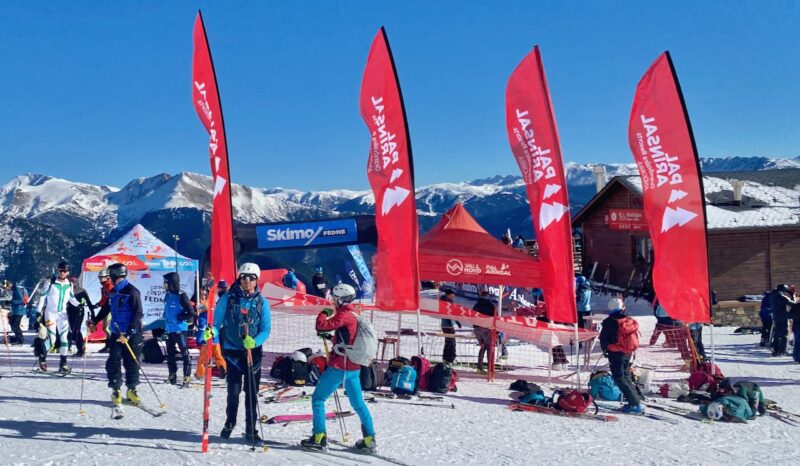
One of the primary reasons for the sport’s permanent inclusion is its "TV-friendly" nature, particularly the Sprint and Relay formats. Karl Stoss highlighted that the competition format delivered "exciting head-to-head racing" that was "easy to follow and observe."
In a traditional Individual race, athletes must navigate steep climbs using "skins" (synthetic strips attached to the bottom of skis to provide grip), transition to "boot-packing" (carrying skis on their backs while climbing on foot), and then remove the skins for high-speed descents. The transitions—where athletes must manipulate their gear in seconds—provide a dramatic element of human error and technical skill that translates well to high-definition broadcasts.
For the 2030 Games, the IOC and the Olympic Broadcasting Services (OBS) are expected to utilize advanced drone technology and GPS tracking to give viewers a real-time understanding of the athletes’ positions on the mountain, further enhancing the spectator experience.
Broader Implications for the Olympic Movement
The confirmation of ski mountaineering for 2030 signals a broader shift in the Winter Olympics’ philosophy. As climate change continues to impact the viability of low-altitude winter sports, the IOC is looking toward disciplines that are adaptable and have a smaller environmental footprint. Ski mountaineering requires no artificial snow-making on the scale of alpine downhill racing and utilizes existing mountain trails, making it a "green" alternative for future host cities.
Moreover, the success of SkiMo serves as a blueprint for other burgeoning sports seeking Olympic inclusion. It demonstrates that by focusing on youth engagement, gender parity, and operational simplicity, a sport can successfully navigate the rigorous path to the Olympic program.
As the sporting world looks toward the 2030 French Alps Games, ski mountaineering stands as a testament to the evolution of winter sports—a discipline that honors the ancient tradition of mountain travel while embracing the fast-paced, high-tech demands of modern athletics. With 72 athletes set to compete across five events, the stage is set for a new generation of Olympic heroes to emerge from the peaks of the French Alps.

