
The 2025-2026 snow season across the Western United States has concluded as one of the most volatile and climatically challenging periods in recent memory, characterized by a significant "snow drought" driven primarily by record-breaking thermal anomalies rather than a lack of moisture. While precipitation levels across several key basins remained near historical averages, the absence of sustained freezing temperatures transformed what could have been a standard winter into a period of early runoff and depleted high-altitude reservoirs. This phenomenon, which meteorologists and hydrologists have termed a "warm snow drought," has profound implications for the region’s water security, agricultural viability, and the multi-billion-dollar winter recreation industry.
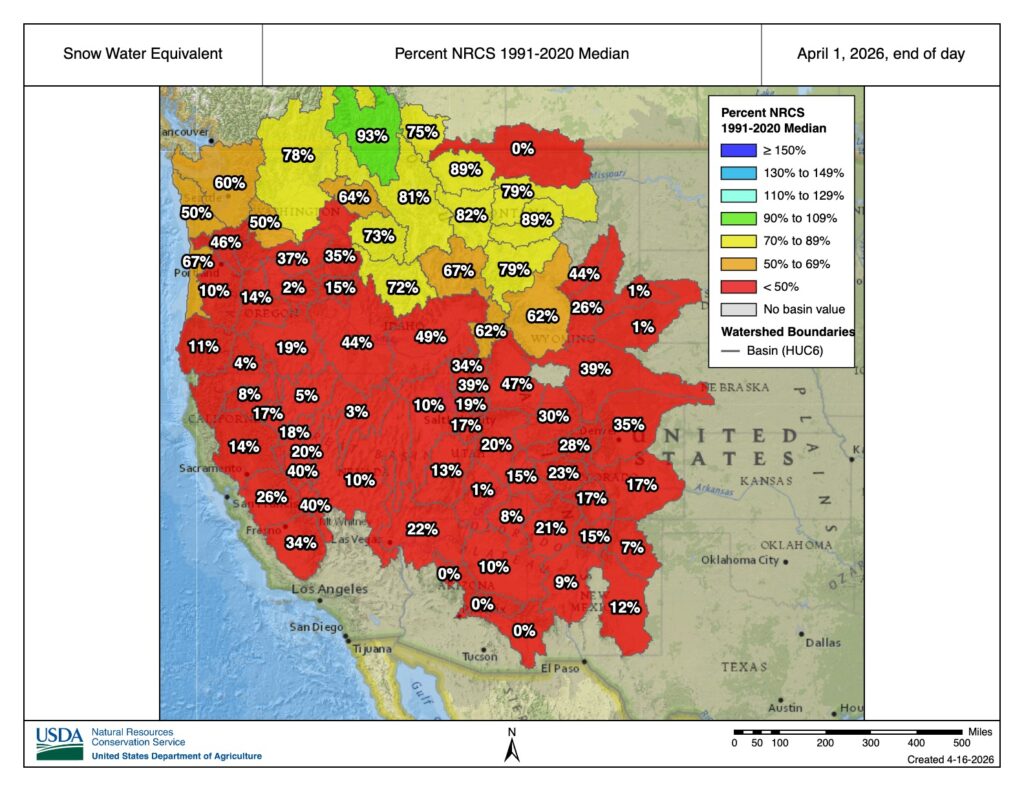
As spring transitions into summer, the data reveals a stark reality: the traditional "April 1st benchmark"—the date typically used to measure peak snow water equivalent (SWE)—showed values that were a mere fraction of long-term averages. In many locations across the Cascades, the Sierra Nevada, and the Intermountain West, the snowpack did not merely underperform; it vanished months ahead of schedule, fundamentally altering the hydrological cycle for the remainder of the 2026 calendar year.
A Season of Moving Goalposts: The Winter Chronology
The 2025-2026 season began with a sense of cautious optimism among water managers and outdoor enthusiasts. Early autumn forecasts suggested a standard precipitation pattern, and as the "water year" commenced in October, initial moisture levels were promising. However, the season quickly deviated from historical norms as a persistent high-pressure ridge dominated the western atmospheric corridor.
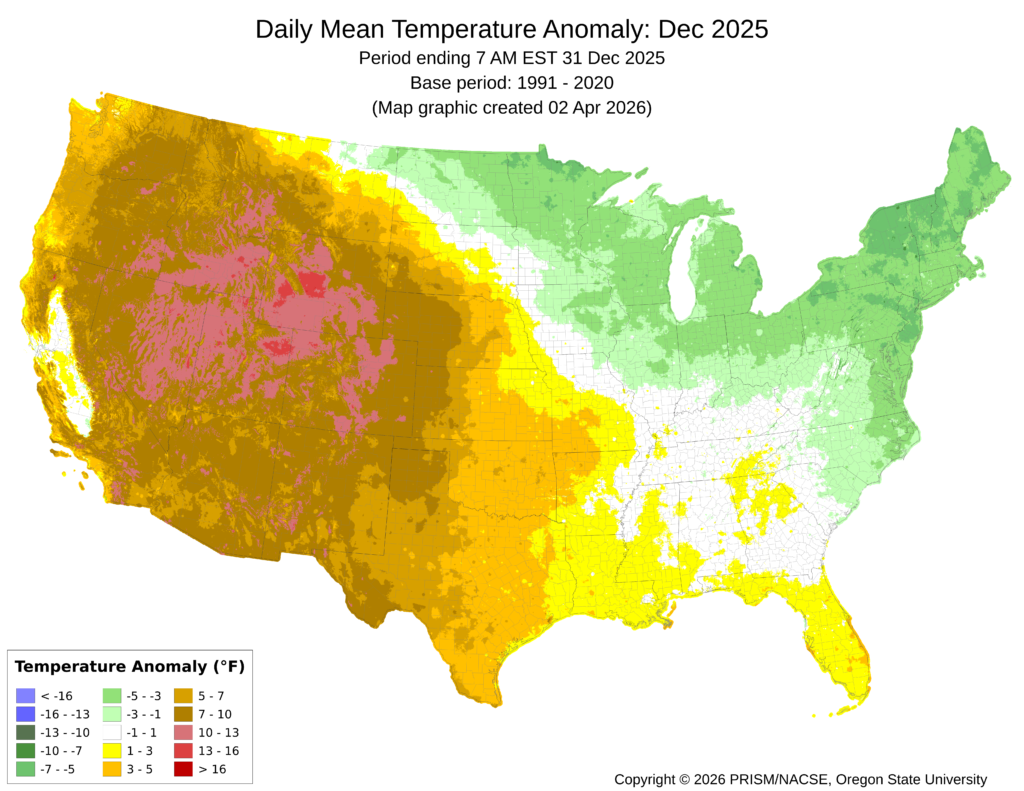
By December 2025, the situation transitioned from a slow start to a full-scale climatic crisis for the winter sports sector. Temperature data from the PRISM Climate Group indicated that much of the Western U.S. experienced anomalies ranging from 5 to 15 degrees Fahrenheit above historical averages. This heat spike meant that arriving moisture fell as rain rather than snow at all but the highest elevations. Consequently, the traditional milestones for seasonal "take-off"—typically centered around the New Year’s holiday, Martin Luther King Jr. Day, and Presidents’ Day—passed with minimal accumulation.
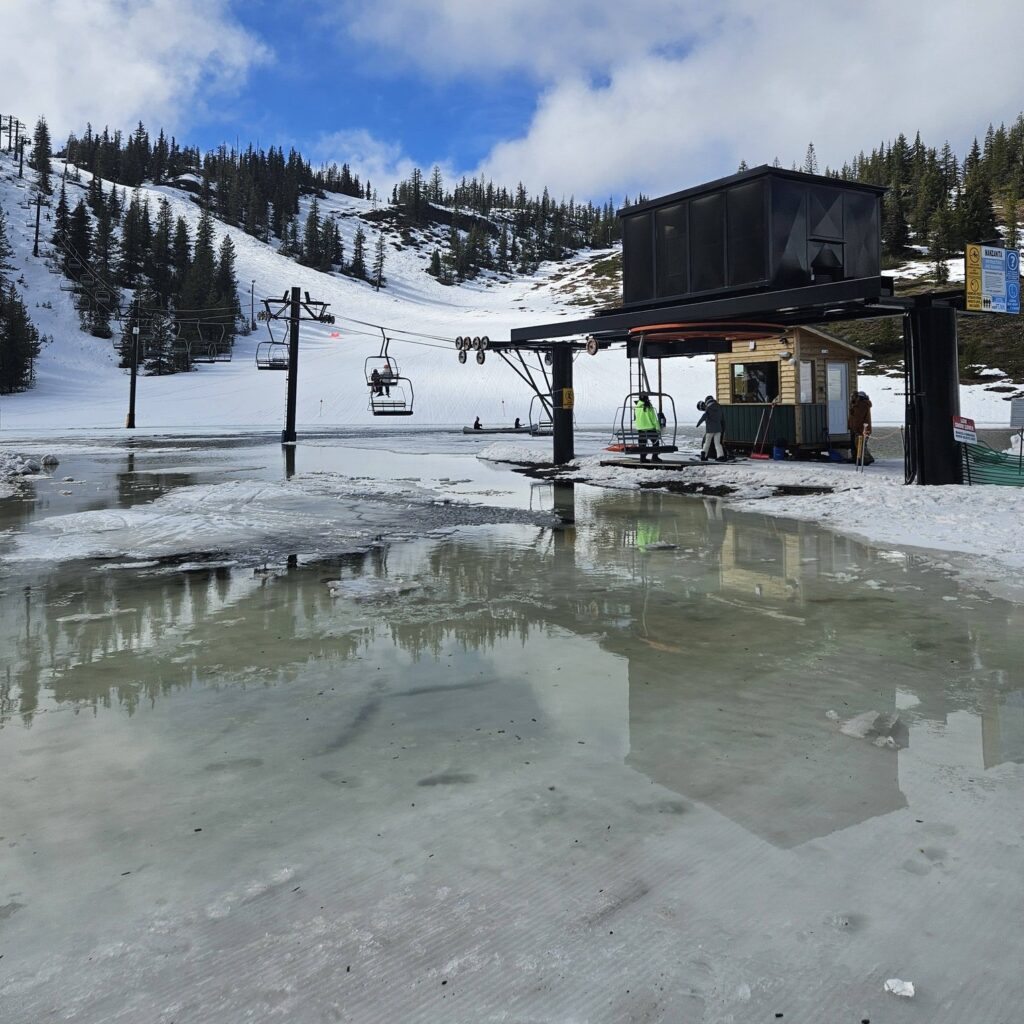
Ski resort operators, particularly in Oregon and Washington, were forced into a cycle of opening and pausing operations. The Hoodoo Ski Area at Santiam Pass became a visual shorthand for the season’s struggles when an unscheduled "pond skim"—an event usually reserved for the final days of spring—occurred naturally in mid-March due to rapid melting. By the time spring break arrived, many low-to-mid elevation resorts had already shuttered their lifts, facing a "low tide" that proved insurmountable despite late-season attempts at snowmaking.
Meteorological Drivers: Precipitation Versus Temperature
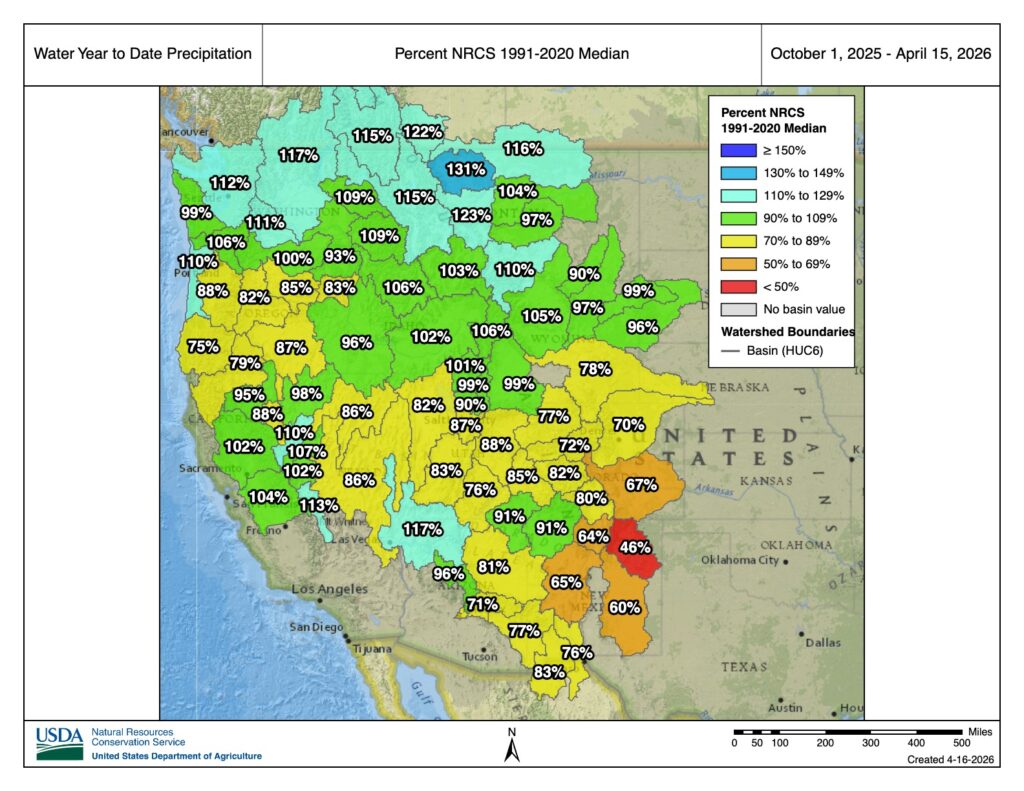
The 2025-2026 water year presents a fascinating case study in the decoupling of precipitation and snow accumulation. According to data from the Natural Resources Conservation Service (NRCS), the "wet" component of the snow recipe was largely present. Northwest Wyoming, Montana, Idaho, and Washington actually recorded precipitation levels slightly above the historical average. Oregon, Utah, and Colorado ran slightly dry, but not at levels that would typically signal a catastrophic drought.
The "smoking gun" for the failed snowpack was the temperature. When temperatures hover above the freezing threshold during storm cycles, the "snow-to-liquid ratio" collapses. Instead of the light, airy "powder" required for snowpack depth and insulation, the region saw heavy, wet "mashed potato" snow or outright rain-on-snow events. Rain-on-snow is particularly damaging to existing snowpack, as the latent heat of the rain accelerates the melting of whatever frozen reserves have managed to accumulate.
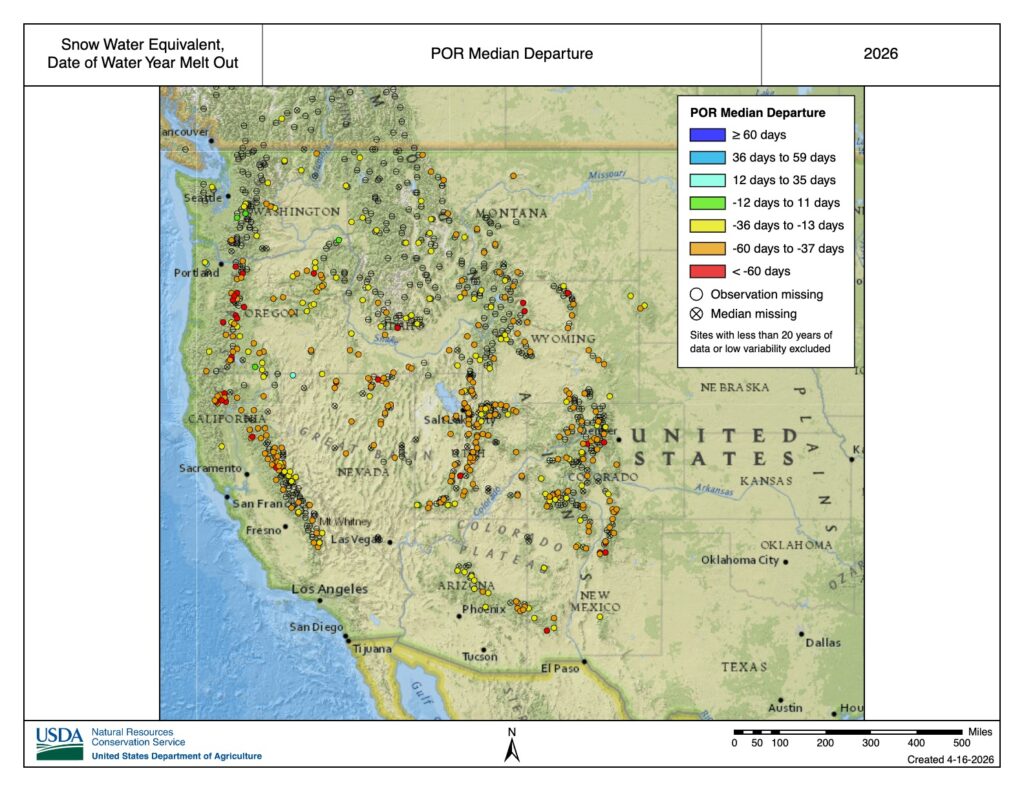
By April 1, 2026, the SWE maps for the Western U.S. were dominated by deep reds and oranges, indicating that snow water levels were at record or near-record lows. In some basins, observation stations posted the worst peak values in 45 years of recorded history. More concerning was the "snow off" date—the day the ground becomes bare. In several monitored locations, this occurred not just weeks, but a full two months earlier than the long-term average.
The Role of the Natural Snow Reservoir
To understand the gravity of the 2025-2026 season, it is necessary to view snow not just as a recreational asset, but as a critical piece of infrastructure. The Western United States relies on a "dual reservoir" system: man-made surface reservoirs (like Lake Mead and Lake Powell) and the natural seasonal snowpack.
The seasonal snowpack acts as a slow-release battery for the region’s water needs. By storing water in solid form during the winter and releasing it gradually through late spring and early summer, the snowpack ensures a steady flow of cool water into river systems. This timing is essential for several reasons:
- Flood Mitigation: A gradual melt prevents the massive "pulse" of runoff that can cause downstream flooding.
- Ecological Health: Species such as salmon and trout require cold water temperatures to survive and spawn. Early melt-out leads to low, warm stream flows in July and August, which can be lethal to aquatic life.
- Agricultural Demand: The peak demand for crop irrigation occurs in mid-to-late summer, precisely when the snowmelt has historically provided a reliable buffer.
Estimates suggest that the volume of water stored in the contiguous United States’ snowpack at its peak is approximately five times the capacity of Lake Mead at full pool. When this "snow reservoir" fails to fill, the pressure on man-made infrastructure intensifies.
Crisis in the Colorado River Basin
The poor snow performance of 2025-2026 has exacerbated an already dire situation in the Colorado River Basin. Years of consecutive dry conditions and rising temperatures have led to historically low elevations in Lake Mead, the reservoir behind the Hoover Dam. The 2026 data shows Lake Mead continuing its descent toward "power pool" levels, below which hydroelectric generation becomes impossible.
The lack of high-altitude snow in the Colorado Rockies means that the "inflow" to Lake Powell and Lake Mead will be significantly below what is required to stabilize the system. This has triggered urgent, high-level negotiations among the seven "basin states"—California, Arizona, Nevada, Colorado, New Mexico, Utah, and Wyoming—regarding mandatory water cuts. Municipalities are being forced to accelerate turf-removal programs, while farmers in the Imperial Valley and other agricultural hubs face increasingly difficult decisions regarding crop selection and fallowing.
Socioeconomic Impacts and Stakeholder Reactions
The 2025-2026 season has left a trail of economic disruption across mountain communities. For many small towns in the West, winter tourism is the primary economic engine. When ski resorts close early, the impact ripples through hotels, restaurants, and retail sectors.
Industry groups, such as Protect Our Winters (POW), have noted that the "boom or bust" nature of modern winters makes long-term business planning nearly impossible. "What we are seeing is not just a bad year; it is a shift in the baseline," noted one industry analyst. "The ‘moving goalposts’ of the 2025-2026 season represent a loss of predictability that the outdoor industry has relied on for decades."
From a water management perspective, the reaction has been one of increased urgency regarding "Advanced Quantitative Precipitation Information" (AQPI) and better snow-monitoring technology. Dr. David Hill, a professor at Oregon State University and a National Geographic Explorer, has emphasized that while the global water supply is finite—less than one-hundredth of one percent of Earth’s water is accessible for human use—the mismatch between when we get water and when we need it is our greatest challenge.
Analysis of Long-Term Trends and Future Outlook
While the 2025-2026 season was particularly extreme, it fits into a broader, documented trend of "snow loss" in the Western U.S. Long-term data from SNOTEL (Snow Telemetry) sites, such as the Hogg Pass site in Oregon, show a downward trajectory in annual maximum SWE over the last several decades.
This trend is characterized by high interannual variability—what some call "climatic whiplash." A record-breaking lean year can be followed by a record-breaking heavy year. However, the "floor" of the lean years is dropping, and the "ceiling" of the heavy years is increasingly mitigated by higher temperatures that cause faster melting.
The 2025-2026 season serves as a "stress test" for the region’s climate resilience. It highlights the fact that even in years with decent precipitation, heat can effectively "cancel out" the benefits of that moisture for the snowpack. As the region moves into a summer likely defined by low streamflows and high fire risk, the lessons of this "hot mess" of a winter will inform water policy for years to come.
The takeaway for 2026 is clear: the glass is not necessarily half-empty, but the water in it is increasingly liquid when it should be frozen. For a region built on the reliability of snow, the 2025-2026 season is a stark reminder that the future of water in the West is inextricably linked to the preservation of winter.

