
In a high-stakes convergence of environmental advocacy and federal policy, a coalition led by Protect Our Winters (POW) and the Alaska Wilderness League (AWL) arrived on Capitol Hill last week to challenge the expansion of oil and gas extraction in the Arctic. The delegation, comprised of professional athletes, climate scientists, Indigenous leaders, and outdoor industry storytellers, hand-delivered a comprehensive 74-page petition containing more than 6,000 signatures from the "Outdoor State." This mobilization comes as the federal government moves to streamline energy development in some of North America’s most sensitive ecological regions, including the Arctic National Wildlife Refuge (ANWR) and the National Petroleum Reserve in Alaska (NPRA).
The timing of the "fly-in" was strategic, coinciding with the Trump administration’s signing of new legislation designed to dismantle regulatory hurdles for drilling and mining in Arctic Alaska. The coalition’s presence in Washington D.C. was intended to signal a unified front against these measures, framing the protection of the Arctic not merely as an environmental concern, but as a matter of economic stability, Indigenous sovereignty, and national climate security.
Strategic Mobilization and the "Outdoor State" Voice
The two-day advocacy event, which also included the League of Conservation Voters (LCV), represented a multifaceted approach to lobbying. Unlike traditional corporate lobbying, this group leveraged the cultural capital of the "Outdoor State"—a demographic of over 50 million Americans who participate in outdoor recreation and contribute an estimated $1.1 trillion to the U.S. economy annually. By bringing together voices that represent the intersection of recreation, science, and lived experience, the coalition aimed to cut through partisan gridlock.
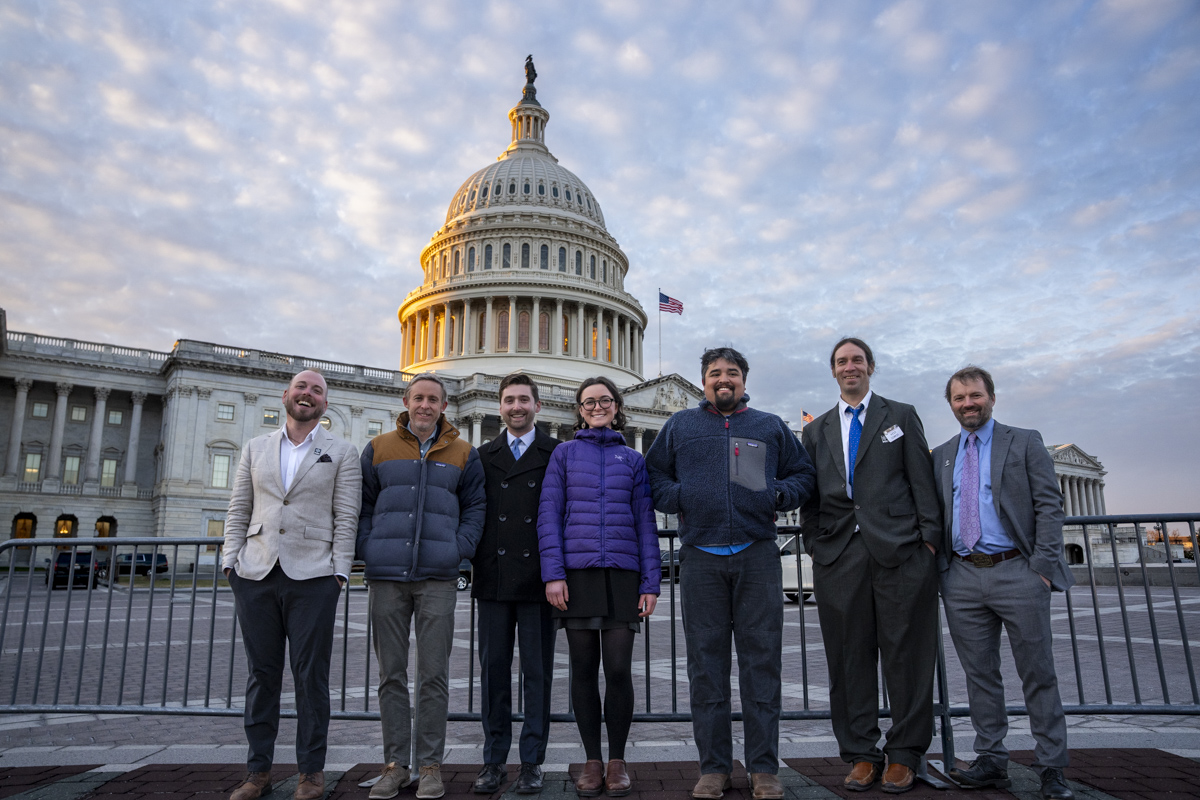
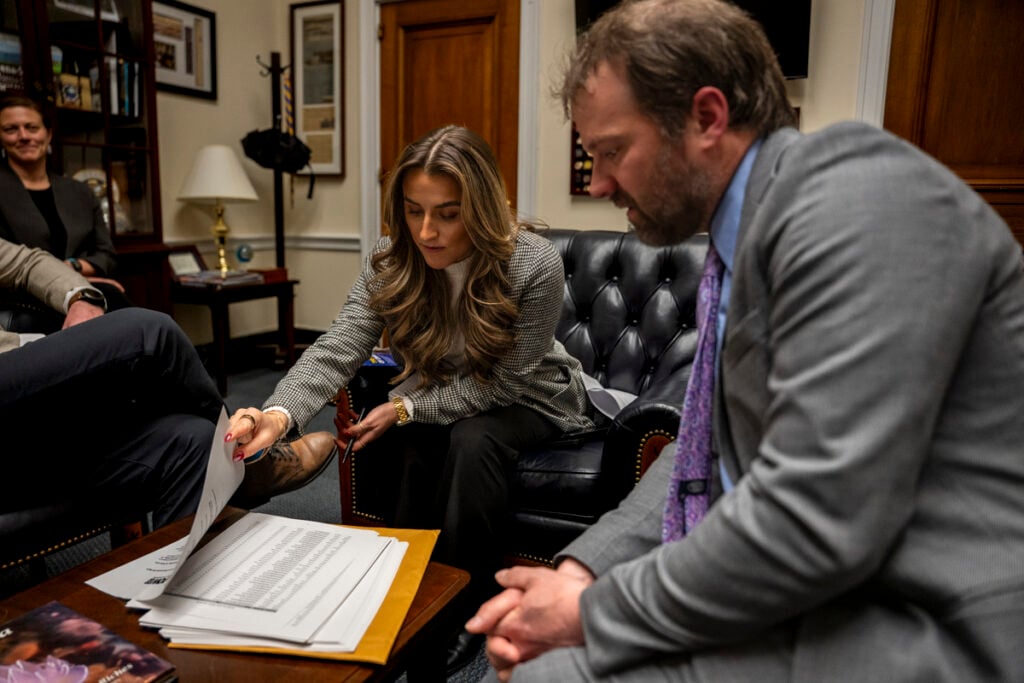
The centerpiece of the visit was the delivery of the 74-page petition. These signatures were not merely digital tallies but were presented as "receipts" of public sentiment, specifically targeting lawmakers who hold the power to influence land-use designations. The petition demands permanent protections for the Arctic, arguing that temporary administrative pauses are insufficient to protect the region from the long-term infrastructure requirements of fossil fuel extraction.
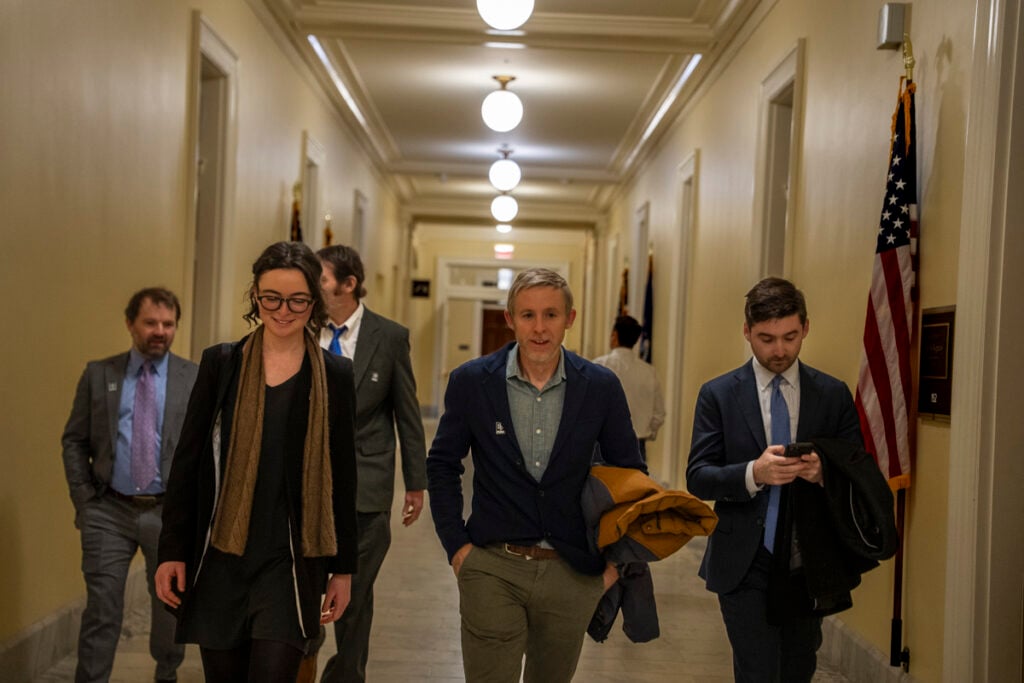
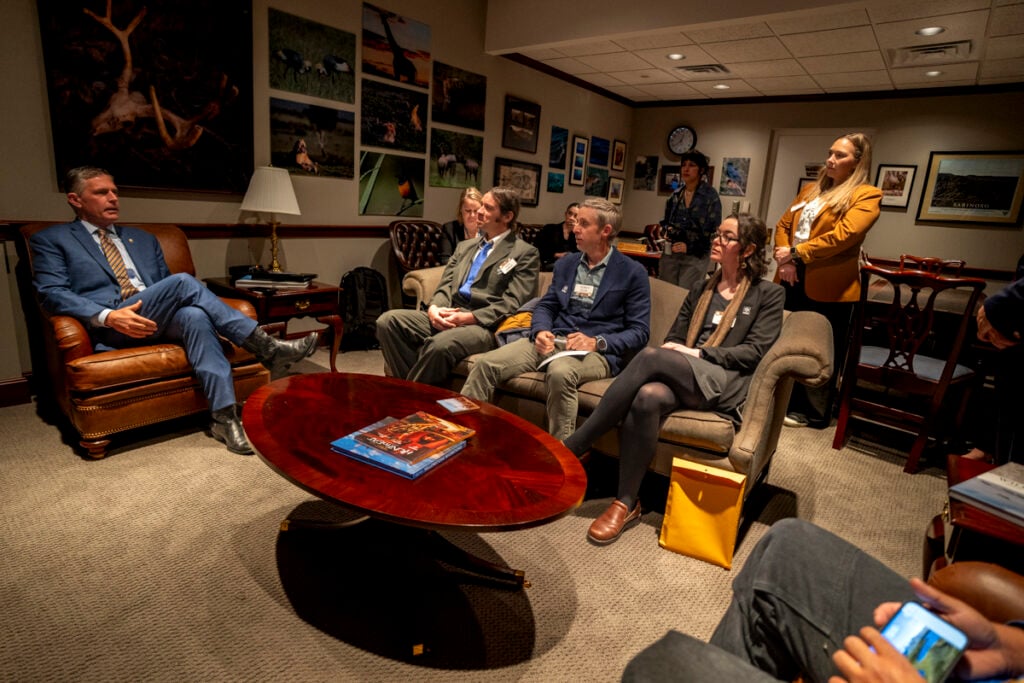
During the mission, the coalition engaged in dozens of meetings with key offices in both the House and Senate. Notable discussions were held with the staff of Senator Martin Heinrich (D-NM) and Representative Jared Huffman (D-CA), both of whom have been vocal proponents of public land conservation. However, the group also sought meetings with offices that have historically supported energy expansion, seeking to establish communication channels and present the economic risks associated with Arctic drilling.
The Legislative Context: A Shifting Arctic Policy
The urgency of the coalition’s visit was underscored by recent executive and legislative actions. On Friday, the Trump administration signed a series of bills aimed at easing the path for drilling in the Arctic. This legislative package seeks to fulfill mandates established in the 2017 Tax Cuts and Jobs Act, which required the Department of the Interior to conduct at least two lease sales in the Arctic Refuge’s 1.5-million-acre Coastal Plain by 2024.
The Arctic National Wildlife Refuge has been the subject of political debate for over four decades. Established in its current form by the Alaska National Interest Lands Conservation Act (ANILCA) in 1980, the refuge is often described as "America’s Serengeti." It serves as the primary calving ground for the Porcupine Caribou Herd and provides critical habitat for polar bears, migratory birds, and other species. For the Gwich’in people, the Coastal Plain is known as "Iizhik Gwats’an Gwandaii Goodlit" (The Sacred Place Where Life Begins), making the drilling debate a central issue of Indigenous human rights and food security.
The coalition’s advocacy also focused on the National Petroleum Reserve in Alaska (NPRA), a 23-million-acre tract of public land. While designated for energy potential, the NPRA contains "Special Areas" like the Teshekpuk Lake, which are vital for biodiversity. The group argued that new leasing in these areas ignores the shifting realities of global energy markets and the accelerating impacts of climate change in the North, where temperatures are rising four times faster than the global average.
Economic and Environmental Data: The Case Against Arctic Drilling
A significant portion of the coalition’s messaging was grounded in fiscal and environmental data. The group presented lawmakers with evidence that Arctic drilling is an increasingly risky financial investment. In recent years, several major global financial institutions—including Goldman Sachs, JPMorgan Chase, and Wells Fargo—have updated their environmental policies to prohibit or restrict the financing of new oil and gas projects in the Arctic.
The arguments presented to Congressional offices included:
- Market Volatility and Stranded Assets: The high cost of operating in the Arctic’s extreme environment, combined with the long lead times required for infrastructure development, makes these projects vulnerable to long-term declines in oil demand.
- Environmental Degradation: The Arctic acts as a massive carbon sink. Disturbance of permafrost and the introduction of industrial infrastructure threaten to release significant amounts of methane and carbon dioxide, undermining U.S. climate goals.
- Fiscal Responsibility: Previous lease sales in the Arctic Refuge have yielded far less revenue than originally projected by proponents. The 2021 lease sale, for instance, saw limited interest from major oil companies, resulting in bids that were a fraction of the billions of dollars initially estimated.
To complement their opposition to drilling, the coalition promoted the Energizing Our Communities Act (EOCA). This proposed legislation focuses on supporting a clean-energy transition at the community level. The EOCA aims to provide practical, bipartisan solutions for energy resilience, offering a pathway for economic development that does not rely on the extraction of resources from sensitive public lands.
Perspectives from the Coalition: Lived Experience on the Hill
The inclusion of professional athletes and storytellers was a deliberate choice to humanize the data. Tommy Caldwell, a renowned professional climber and member of the POW Climb Alliance, emphasized the role of policy in land management. "Like it or not, policy is the only thing that has the chance to fix our climate and save our public lands," Caldwell stated. He noted that the trip provided a "pathway" for the outdoor community to engage directly with the legislative process, moving beyond social media activism to direct political participation.
Brennan Lagasse, a member of the POW Creative Alliance and a frequent visitor to the Arctic for educational and storytelling purposes, highlighted the importance of persistence. This was Lagasse’s third trip to D.C. to advocate for the refuge. "Even given the current political climate, every office reiterated it mattered that we were there," Lagasse said. He described the coalition as a "vibrant counter-balance" to the momentum currently favoring industrial expansion.
Ming Poon, a photographer and Creative Alliance member, observed that even in adversarial meetings, the presence of the petition forced a level of accountability. "Delivering our petition with more than 6,000 signatures made it clear that people are paying attention and care deeply about protecting this place," Poon remarked.
Chronology of Recent Arctic Advocacy
The current conflict is the latest chapter in a long-standing timeline of Arctic land management:
- December 2017: The Tax Cuts and Jobs Act is signed into law, including a provision to open the Arctic Refuge to oil and gas leasing.
- January 2021: The first lease sale in the Arctic Refuge is held; results show weak industry demand.
- January 2021 – 2024: The Biden administration issues various moratoriums and environmental reviews, attempting to limit or cancel leases based on legal and environmental concerns.
- Late 2024: The return of a pro-drilling administration leads to a resurgence of legislative efforts to fast-track Arctic permits.
- December 2025: The Trump administration signs new bills to ease drilling and mining restrictions.
- December 2025: The POW/AWL/LCV coalition conducts its fly-in, delivering the 6,000-signature petition and initiating "Phase Two" of their campaign.
Implications and Future Outlook
The outcome of this legislative battle will have profound implications for the future of U.S. public lands. If the administration’s efforts to ease drilling path succeed, it could set a precedent for the deregulation of other protected areas. Conversely, the coalition’s efforts to advance the Energizing Our Communities Act suggest a growing appetite for alternative economic models in rural and energy-producing regions.
As the coalition returns from Washington, Protect Our Winters has announced it is preparing to escalate pressure. "Phase Two" of the Arctic campaign will likely involve a combination of legal challenges, grassroots mobilization in the home districts of key lawmakers, and continued engagement with the Arctic Congressional Delegation.
The debate over the Arctic remains a microcosm of the broader global struggle between fossil fuel dependence and the transition to a renewable energy economy. While the signing of recent legislation represents a setback for conservationists, the delivery of 6,000 "receipts" to Capitol Hill serves as a reminder that the "Outdoor State" remains a potent and organized political force. The coalition’s strategy indicates that they view this not as a single event, but as a long-term engagement with the federal government to ensure that the Arctic remains, in their words, "non-negotiable."
The fight for the Arctic Refuge and the NPRA is expected to intensify as 2026 approaches, with both sides viewing the coming months as a critical window for setting the trajectory of American energy policy for the next decade. For now, the voices of athletes, scientists, and Indigenous leaders have been recorded in the halls of power, ensuring that the human and ecological costs of Arctic drilling remain a central part of the national conversation.

