
Yellowstone National Park, a jewel of the American West, draws millions of visitors annually, captivated by its dramatic landscapes, including the awe-inspiring Grand Canyon of the Yellowstone and its otherworldly hydrothermal features. Yet, for many, the park’s most profound allure lies in the unparalleled opportunity to witness North America’s wildlife thriving in a remarkably intact ecosystem. This enduring appeal was recently underscored by a striking visual that has captured public attention: a mature American bison standing with its head at an approximate height comparable to that of a full-size pickup truck, a potent reminder of the sheer scale and power of these iconic animals.
The Unrivaled Majesty of Yellowstone’s Bison
Yellowstone National Park is not merely a sanctuary for bison; it is the cradle of their continuous existence on public lands in the United States. The park boasts the largest bison population found anywhere on public land, a testament to its role as a vital preserve for this North American icon. Bison have roamed these vast expanses since prehistoric times, and today, their numbers fluctuate between approximately 3,500 and nearly 6,000 individuals, comprising two primary breeding herds that are integral to the park’s ecological balance.
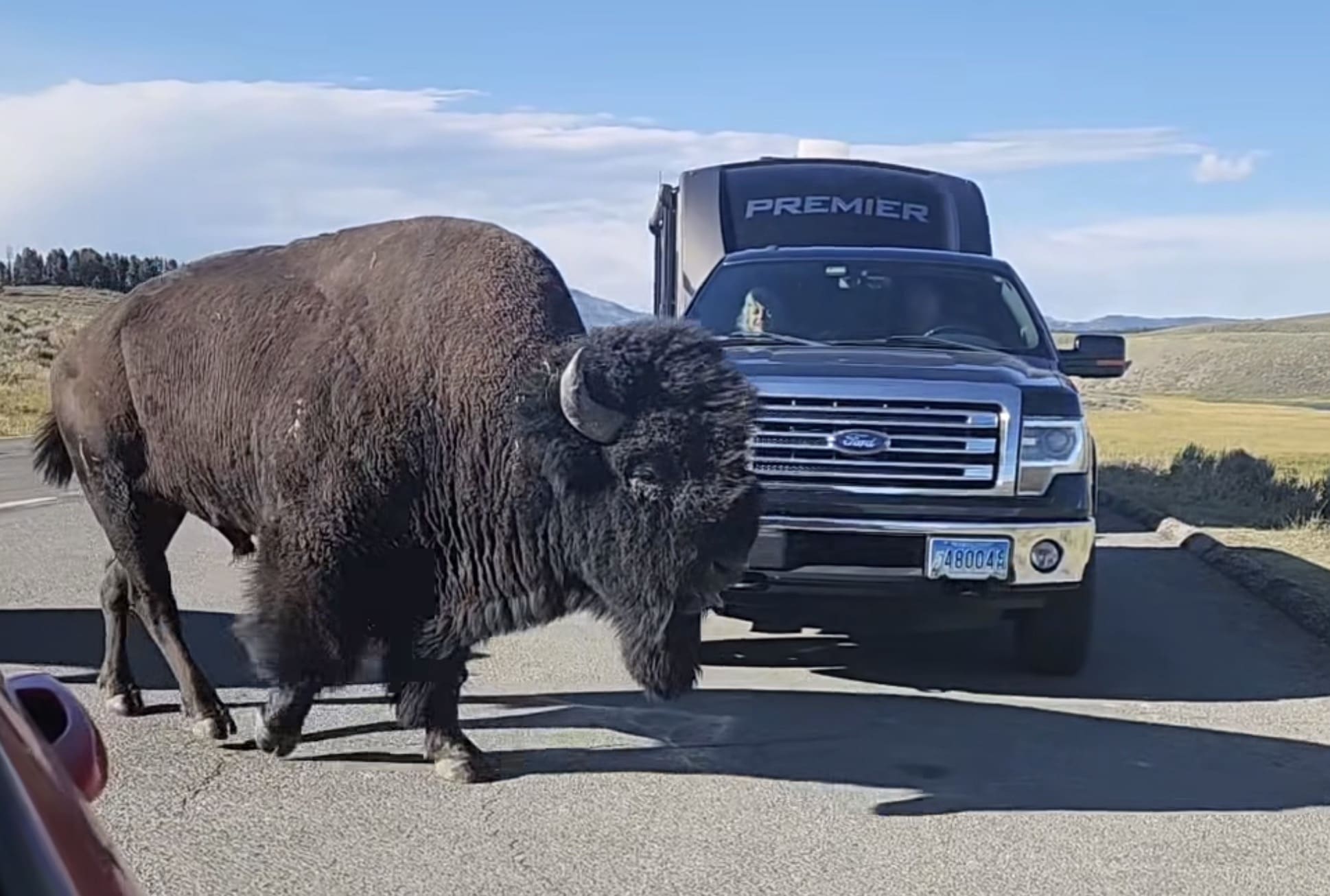
The American bison (Bison bison) stands as the largest terrestrial mammal in North America. Adult males, known as bulls, can reach imposing weights of up to 2,000 pounds, with a formidable shoulder hump and powerful neck and shoulder muscles that aid them in clearing snow for foraging during harsh winter months. A fully grown bull can stand around six feet tall at the shoulder, a stature vividly illustrated in recent imagery where one such animal was observed alongside a full-size pickup truck, appearing to be of comparable height.
The vehicle in the widely circulated image has been identified as a Ford F-150, specifically from its 12th generation. Depending on the specific model and year, these trucks typically measure no less than approximately 6.2 feet in height. While some degree of forced perspective might be at play in the photograph, the visual juxtaposition undeniably emphasizes the colossal presence of the bison, highlighting its status as a true giant of the natural world. This comparison serves as a powerful, tangible representation of the bison’s impressive physical dimensions for those unfamiliar with their true scale.
A Legacy of Coexistence and Caution
The presence of bison in Yellowstone is more than just a biological phenomenon; it represents a living link to America’s past and a cornerstone of its conservation narrative. The park’s commitment to maintaining a wild, free-roaming bison population has ensured their survival and continued presence, offering visitors a rare glimpse into a world where nature still holds sway. This continuous presence since prehistoric times distinguishes Yellowstone as a unique ecological treasure.

However, the awe-inspiring nature of these animals comes with an inherent responsibility for visitor safety. Despite their seemingly placid demeanor, American bison are wild animals with unpredictable temperaments. They possess a surprising agility and can charge with remarkable speed, capable of outpacing humans by a significant margin. This reality is underscored by park statistics, which indicate that bison have been responsible for more injuries to visitors in Yellowstone National Park than any other animal.
Navigating the Wild: Essential Safety Protocols
The National Park Service (NPS) places a paramount emphasis on visitor safety and the preservation of wildlife, issuing clear guidelines for interacting with bison. The most critical directive is to maintain a safe distance. Visitors are instructed to remain at least 25 yards (approximately 23 meters) away from bison at all times. This seemingly simple rule is fundamental to preventing dangerous encounters.
Key Bison Safety Guidelines in Yellowstone National Park:

- Maintain a Minimum Distance: Always stay at least 25 yards (23 meters) away from bison. This applies to all individuals, including children.
- Never Approach Wildlife: Do not approach, follow, or attempt to feed any wild animals, including bison.
- Stay in Your Vehicle: If a bison is near the road, pull over and wait for it to pass. Do not get out of your vehicle to take pictures.
- Be Prepared for Closures: Roads and areas may be temporarily closed to allow bison to pass or to manage visitor access for safety reasons.
- Understand Bison Behavior: Bison are wild and can be unpredictable. They may appear calm but can charge without warning if they feel threatened.
- Observe from a Safe Distance: Utilize binoculars or telephoto lenses to observe bison from a secure vantage point.
- Respect Their Space: Remember that you are a visitor in their habitat.
The NPS actively disseminates this information through various channels, including park signage, visitor centers, and official park websites, aiming to educate the public and foster a culture of responsible wildlife viewing. The visual of a bison towering over a vehicle, while striking, also serves as a potent educational tool, implicitly reinforcing the need for caution and respect for these magnificent creatures.
The Broader Implications for Wildlife Conservation
The scene captured in Yellowstone serves as a powerful, albeit unintentional, public service announcement about the scale of North American megafauna. It highlights the importance of protected areas like Yellowstone in sustaining populations of large mammals. The continued health and viability of the bison herds are indicative of successful conservation efforts, but also underscore the ongoing challenges of managing human-wildlife interactions in increasingly popular natural destinations.
The potential for conflict between visitors and wildlife is a persistent concern for park managers. As visitor numbers continue to rise, the NPS faces the dual mandate of facilitating public access and enjoyment while rigorously protecting the natural resources and ensuring the safety of both visitors and the animals. The iconic image of the bison next to the truck, while generating awe, simultaneously prompts reflection on the proximity of human infrastructure to these wild spaces and the critical need for visitor education and adherence to safety protocols.
Analysis of Implications:
- Enhanced Public Awareness: The viral nature of such imagery can significantly boost public awareness regarding the size and power of bison, potentially leading to greater respect and adherence to safety guidelines.
- Conservation Messaging: It reinforces the value of national parks as vital habitats for large mammals and the ongoing need for robust conservation funding and management strategies.
- Visitor Education Focus: The NPS may leverage such striking visuals in future public awareness campaigns to emphasize the importance of maintaining safe distances and respecting wildlife behavior.
- Ecological Significance: The thriving bison population is a marker of a healthy ecosystem. Their presence influences vegetation, soil, and the distribution of other species, making their continued well-being critical for the park’s ecological integrity.
- Balancing Tourism and Preservation: The incident underscores the delicate balance park managers must strike between promoting tourism and ensuring the preservation of natural resources and visitor safety.
The enduring presence of the American bison in Yellowstone National Park is a living legacy, a symbol of resilience and the untamed spirit of the American wilderness. As visitors flock to witness this spectacle, the powerful image of a bison standing shoulder-to-shoulder with modern machinery serves as a profound reminder: while we may bring our vehicles and our technology, we are ultimately guests in a realm governed by nature’s grand design, and respecting its inhabitants is paramount. The park’s commitment to educating the public about safe wildlife viewing practices remains a cornerstone of its mission, ensuring that these majestic creatures can continue to roam freely for generations to come.

