
The Federal Aviation Administration (FAA) has officially granted regulatory approval for the operation of the MONTIS drone-based avalanche control system, marking a transformative milestone in mountain safety and winter resort operations. Developed by Drone Amplified, the Nebraska-based robotics firm, this approval paves the way for United States ski resorts to integrate advanced unmanned aerial systems (UAS) into their primary avalanche mitigation strategies. The decision, announced on July 19, 2026, represents the culmination of years of rigorous testing, safety evaluations, and collaborative engineering, signaling a shift away from traditional, high-risk methods of snowpack management toward a more digitized and remote-controlled future.
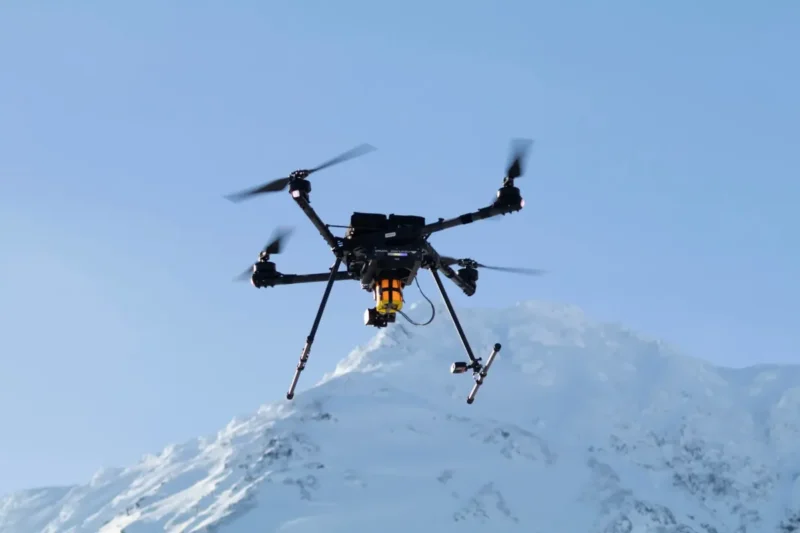
The MONTIS system is designed to allow ski patrol teams and mountain safety professionals to remotely trigger controlled avalanches from a safe distance, effectively removing personnel from the direct path of potential slides. By leveraging the precision of drone technology, resorts can now target specific "start zones" with high-grade explosives with greater accuracy than historical methods. This development is expected to be monitored closely by international mountain safety organizations, as the FAA’s decision often serves as a regulatory bellwether for aviation authorities in Europe, Canada, and Japan.
Technical Architecture and Collaborative Engineering
The MONTIS system is not a standalone innovation but rather the result of a strategic partnership between leaders in robotics, explosive manufacturing, and avalanche safety. Drone Amplified, the primary developer, utilized the foundational engineering of its successful IGNIS firefighting drone—a system widely used by the U.S. Forest Service to start controlled burns and manage wildfires—to build the MONTIS platform.
To ensure the system met the stringent safety requirements of the explosives industry, Drone Amplified collaborated with Austin Powder, a global leader in industrial explosives, and CIL Avalanche, a specialized provider of avalanche mitigation tools. This partnership ensured that the drone’s payload delivery mechanism was fully compatible with field-proven ignition and explosive technologies that have been trusted by safety professionals for decades.
The hardware consists of a heavy-lift multi-rotor drone equipped with a specialized hopper and deployment mechanism. Unlike traditional methods where explosives are hand-tossed or fired from artillery, the MONTIS system uses a digital interface that allows the operator to pinpoint GPS coordinates for charge placement. This precision reduces the likelihood of "duds" (unexploded ordnance) and ensures that the kinetic energy of the blast is maximized within the most unstable layers of the snowpack.
The Evolution of Avalanche Mitigation: A Historical Context
For nearly a century, avalanche control has relied on methods that carry inherent risks to human life. Following World War II, many North American ski resorts adopted the use of decommissioned military artillery, such as 75mm and 105mm howitzers, to trigger slides from a distance. While effective, the use of surplus military hardware has become increasingly difficult due to the scarcity of ammunition, the age of the weapons, and the risk of shrapnel in populated mountain corridors.
Other common methods include:

- Hand-Tossing: Ski patrollers manually carry explosives to the top of ridges and toss them into the path. This requires patrollers to navigate dangerous terrain during or immediately after high-intensity storms.
- Helicopter Bombing: Crews drop charges from open helicopter doors. While fast, this method is extremely expensive and depends on clear weather conditions, which are rarely present during peak avalanche cycles.
- Gazex Systems: Fixed pipes installed on mountainsides that use propane and oxygen mixtures to create an explosion. These are highly effective but cost hundreds of thousands of dollars to install and are permanent fixtures that cannot be moved.
The introduction of the MONTIS system offers a "middle ground" that combines the mobility of a helicopter with the safety of a remote system. By utilizing a drone, resorts can conduct mitigation during periods of low visibility or high winds that would ground manned aircraft, all while keeping their staff in a command center or a safe staging area.
Regulatory Milestones and the FAA Approval Process
The path to FAA approval for the MONTIS system was a multi-year journey involving complex certifications regarding the transport of hazardous materials via drone. Under the FAA’s Part 107 regulations, the transportation of explosives by UAS is generally prohibited without specific waivers and rigorous safety demonstrations.
Drone Amplified worked through a series of "Beyond Visual Line of Sight" (BVLOS) waivers and Type Certification processes to prove that the MONTIS system could operate reliably in the extreme cold and high-altitude environments typical of ski resorts. The FAA’s review focused on three primary areas:
- Command and Control (C2) Links: Ensuring the drone remains responsive to operator inputs even in rugged topography.
- Payload Reliability: Guaranteeing that the explosive charges cannot be accidentally detonated or dropped prematurely.
- Risk Mitigation: Establishing "geo-fencing" protocols that prevent the drone from entering unauthorized airspace or flying over populated areas while carrying a payload.
The approval granted in July 2026 signifies that the FAA is satisfied with the fail-safes integrated into the MONTIS software, which include automatic return-to-home features in the event of signal loss and redundant power systems to prevent crashes.
Economic and Safety Implications for the Ski Industry
The economic impact of avalanche control is substantial. According to data from the National Ski Areas Association (NSAA), a single day of closure at a major resort can result in millions of dollars in lost revenue from lift tickets, lodging, and services. Furthermore, highway closures caused by natural avalanches—such as those frequently seen on Colorado’s I-70 or Utah’s Little Cottonwood Canyon—can paralyze regional economies.
The MONTIS system promises to improve the "efficiency-to-safety" ratio in several ways:
- Reduced Operational Costs: Operating a drone is significantly cheaper than the hourly cost of a commercial helicopter, which can range from $2,000 to $5,000 per hour.
- Faster Opening Times: Because drones can be deployed more quickly than a patrol team on skis, resorts can clear their terrain and open to the public earlier in the day.
- Data Integration: The MONTIS system records the exact location and outcome of every charge dropped, providing resorts with a digital "heat map" of their snowpack stability over the course of a season.
Safety remains the primary driver of the technology. Statistics from the American Avalanche Association indicate that a significant percentage of professional avalanche fatalities occur during mitigation work. By moving the "trigger" from a human hand to a robotic arm, the industry aims to bring the number of occupational accidents in avalanche control down to near zero.
Official Responses and Industry Reaction
"Our mission is simple: use robotics to make the most dangerous jobs safer," said Carrick Detweiler, CEO of Drone Amplified, in a statement following the FAA announcement. "Avalanche mitigation crews protect communities and keep critical infrastructure open every single day. By providing them with the MONTIS system, we are giving them a tool that minimizes their exposure to the very hazards they are trying to manage."
Industry leaders have expressed cautious optimism. Many resort operators see the drone system as a necessary evolution as climate change creates more volatile weather patterns and more frequent "extreme" snow events.
"We have been watching the development of the MONTIS system for several years," noted a representative from a major Rocky Mountain resort conglomerate. "The ability to deploy mitigation measures precisely when the storm is at its peak, rather than waiting for the morning light, is a game-changer for guest safety and operational continuity."
Safety professionals also point to the environmental benefits. Traditional artillery often leaves behind heavy metal residue or unexploded shells that must be recovered in the summer. The MONTIS system uses specialized charges that are designed for high reliability and minimal environmental footprint, addressing long-standing concerns from environmental advocacy groups regarding the use of military-grade explosives in wilderness areas.
Future Outlook: A New Standard for Mountain Safety
With the FAA’s regulatory hurdle cleared, the 2026-2027 winter season is expected to be the first in which drone-based avalanche control becomes a standard operational procedure at several high-profile U.S. resorts. The initial rollout will likely be concentrated in regions with high-frequency avalanche activity, such as the Wasatch Range in Utah, the Sierra Nevada in California, and the Cascades in Washington.
As the technology matures, experts predict that the integration of Artificial Intelligence (AI) and Machine Learning (ML) will further enhance the system. Future iterations of the MONTIS software could potentially analyze snow-pit data and weather sensor inputs to autonomously suggest the most effective locations for explosive placement, further refining the accuracy of mitigation efforts.
The global community is watching the U.S. implementation closely. In the European Alps, where resorts are often located directly above ancient villages, the precision of drone-based control is viewed as a vital tool for protecting civilian infrastructure. If the MONTIS system proves successful in the American market, it is likely that the European Union Aviation Safety Agency (EASA) will face pressure to harmonize its regulations to allow for similar operations.
The FAA’s approval of the MONTIS system marks the beginning of a new era in mountain management—one where the intersection of robotics and traditional safety practices creates a more resilient and secure environment for both workers and winter sports enthusiasts. By digitizing the "boom," Drone Amplified and its partners have effectively brought 21st-century solutions to one of the most unpredictable challenges of the natural world.

