
The summer of 2026 has marked a somber milestone for European winter sports, as record-breaking temperatures and persistent heatwaves have forced the unprecedented closure of nearly all major glacier ski areas across the Alps. As of September 8, 2026, the Passo Stelvio in Italy stands as the lone survivor, having recently resumed limited operations following a forced closure in mid-August. This development underscores a growing climatic instability that threatens the future of high-altitude skiing, a sector that has historically relied on the consistent, year-round frozen state of Alpine glaciers.
The Return of Passo Stelvio
After a critical loss of snowpack necessitated a suspension of activities on August 15, the Passo Stelvio resort confirmed a partial reopening this past weekend. Management stated that a recent decline in ambient temperatures enabled the reactivation of the Pajer and Cristallo lifts. However, conditions remain precarious. The resort is currently operating with a thin 40cm base, and operational hours are restricted, with lifts closing at 12:00 PM to protect the integrity of the remaining snow. Despite these constraints, the resort maintains its objective of remaining open until the scheduled season finale on November 1. This determination reflects the desperate need to preserve the summer ski economy, even as the environmental reality makes such operations increasingly difficult.
A Summer of Unprecedented Closures
The current struggle at Passo Stelvio stands in stark contrast to the historical norms for early September. Traditionally, high-altitude hubs such as Saas-Fee in Switzerland and the Zermatt/Cervinia trans-border ski area would be fully operational, catering to national teams and summer enthusiasts. This year, those glaciers were forced to cease operations entirely, as the freezing level remained consistently above 4,000 meters for extended, record-breaking durations.
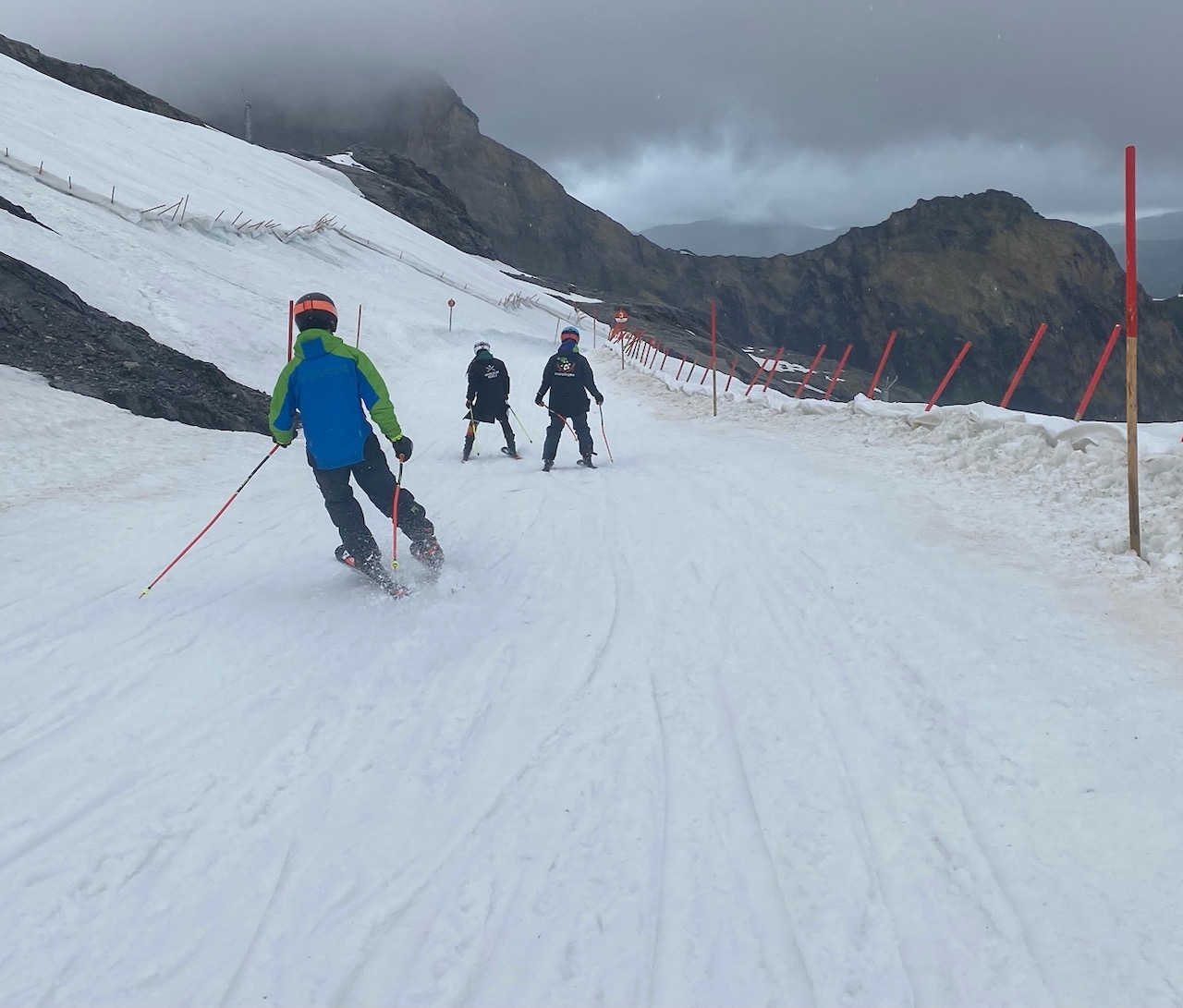
For the first time in six decades, the majority of the Alps’ glacier ski areas remained closed throughout the peak summer months. This cessation of activity is not merely a seasonal anomaly but a reflection of a long-term trend. The lack of cold overnight temperatures—a vital component for the natural preservation of glacier ice—has prevented the necessary "re-freezing" cycle, leaving the snowpack vulnerable to rapid melting during the daylight hours.
The Case of Tignes and the Vanishing Landscape
The situation in Tignes, home to the Grande Motte glacier, serves as a microcosm for the broader decline of Alpine ice. Olivier Duch, the first deputy mayor of Tignes, provided a stark assessment of the current trajectory: "In ten years, the glacier will have almost melted." Data from the past summer confirms this grim prognosis, with the Grande Motte losing approximately one meter of ice every two weeks.
This rate of degradation is consistent with observations from climatologists studying the wider European mountain range. The loss of glacial mass is not only an aesthetic or sporting tragedy; it represents the loss of a critical hydrological resource and a fundamental shift in the high-altitude ecosystem. When glaciers retreat at this velocity, the structural stability of the terrain changes, and the ability of the ground to hold snow for the upcoming winter season is significantly diminished.
Looking Toward the 2026/27 Winter Season
Despite the dismal summer performance, the ski industry is now pivoting toward the traditional winter season. Several glacier resorts in Austria, including Hintertux, Pitztal, Kaunertal, and Sölden, are currently preparing for late September openings. While specific dates have yet to be finalized, the anticipation surrounding these openings is high, as they will serve as the first major indicator of the health of the upcoming 2026/27 season. Val Senales, located in the South Tyrol region of Italy, is also preparing to commence operations within the coming fortnight, weather permitting.

The resilience of the industry was on display last month in Livigno, Italy, where the 44th annual "Gara da li Contrada" took place. The event, which features a 1km sprint on snow stored from the previous winter, serves as a cultural reminder of the region’s deep-seated commitment to snowsports. While such events rely on technological interventions like snow-farming—storing snow under insulating layers during the summer—they highlight the creative, albeit expensive, measures resorts are taking to maintain their heritage.
Global Context: Scandinavia and Beyond
The volatility is not confined to the Alps. In Norway, the Galdhøpiggen summer ski area—Scandinavia’s only dedicated summer resort—has remained closed for the majority of the summer. While a reopening is anticipated later in September, the delay is symptomatic of the northern shift in extreme weather patterns. As temperatures climb in historically cold regions, the window for traditional winter sports is narrowing, forcing resort operators to rethink their business models.
Implications for the Future of Winter Sports
The fact-based reality is that the Alpine glacier ski industry is currently facing an existential threat. The economic implications are significant: ski tourism contributes billions of euros to the Alpine regional economies. A shift in the reliability of these resorts affects local hospitality, equipment manufacturing, and the livelihoods of thousands of seasonal workers.
From an environmental standpoint, the rapid melting of glaciers has implications that extend far beyond the ski lift. Glaciers act as "water towers" for the continent, regulating river flow and supporting biodiversity. The loss of these features alters the entire hydrological cycle of the region. As the 2026/27 season approaches, analysts are calling for a more sustainable approach to mountain management. This includes investing in energy-efficient snowmaking technology, diversifying resort offerings to reduce reliance on winter sports, and developing long-term strategies for regional economies that are less vulnerable to the unpredictable nature of global warming.

A Transition in Expectations
The ski industry is entering a transitional phase. Where once high-altitude skiing was considered a reliable, year-round activity, it is now subject to the whims of an increasingly volatile climate. Industry leaders are beginning to acknowledge that the "endless winter" of the mid-20th century is a thing of the past. Future success in the industry will likely depend on the ability to adapt to shorter, more intense, and more unpredictable seasons.
As the nights begin to draw in and temperatures across the European mountain ranges gradually decline, the industry remains in a state of cautious optimism. The reopening of Passo Stelvio and the upcoming scheduled openings in Austria offer a glimmer of hope. However, the events of the summer of 2026 will be remembered as a tipping point—a moment where the industry was forced to confront the reality that the mountains are changing, and the traditions that have defined Alpine life for generations must now evolve to survive.
Chronology of Recent Events
- August 15, 2026: Passo Stelvio forced to close due to critically deteriorating snowpack and sustained high temperatures.
- August 2026: The Grande Motte glacier in Tignes records a loss of one meter of ice every two weeks.
- Late August 2026: Livigno hosts the 44th annual "Gara da li Contrada," utilizing stored snow to maintain tradition despite the heat.
- September 5, 2026: Temperatures in the high Alps begin to show a slight downward trend, prompting resorts to evaluate snow management strategies.
- September 8, 2026: Passo Stelvio announces a limited reopening of the Pajer and Cristallo lifts, with a target closing date of November 1.
- Late September 2026 (Projected): Planned openings for Austrian glacier resorts including Hintertux and Sölden.
As the industry looks forward, the focus remains on the necessity of environmental stewardship and the integration of new technologies to safeguard the future of the sport. While the glaciers themselves remain under immense pressure, the determination of the resorts to operate, even in a limited capacity, signals that the appetite for winter sports remains as strong as ever, even as the landscape in which they occur undergoes profound and permanent change.

