
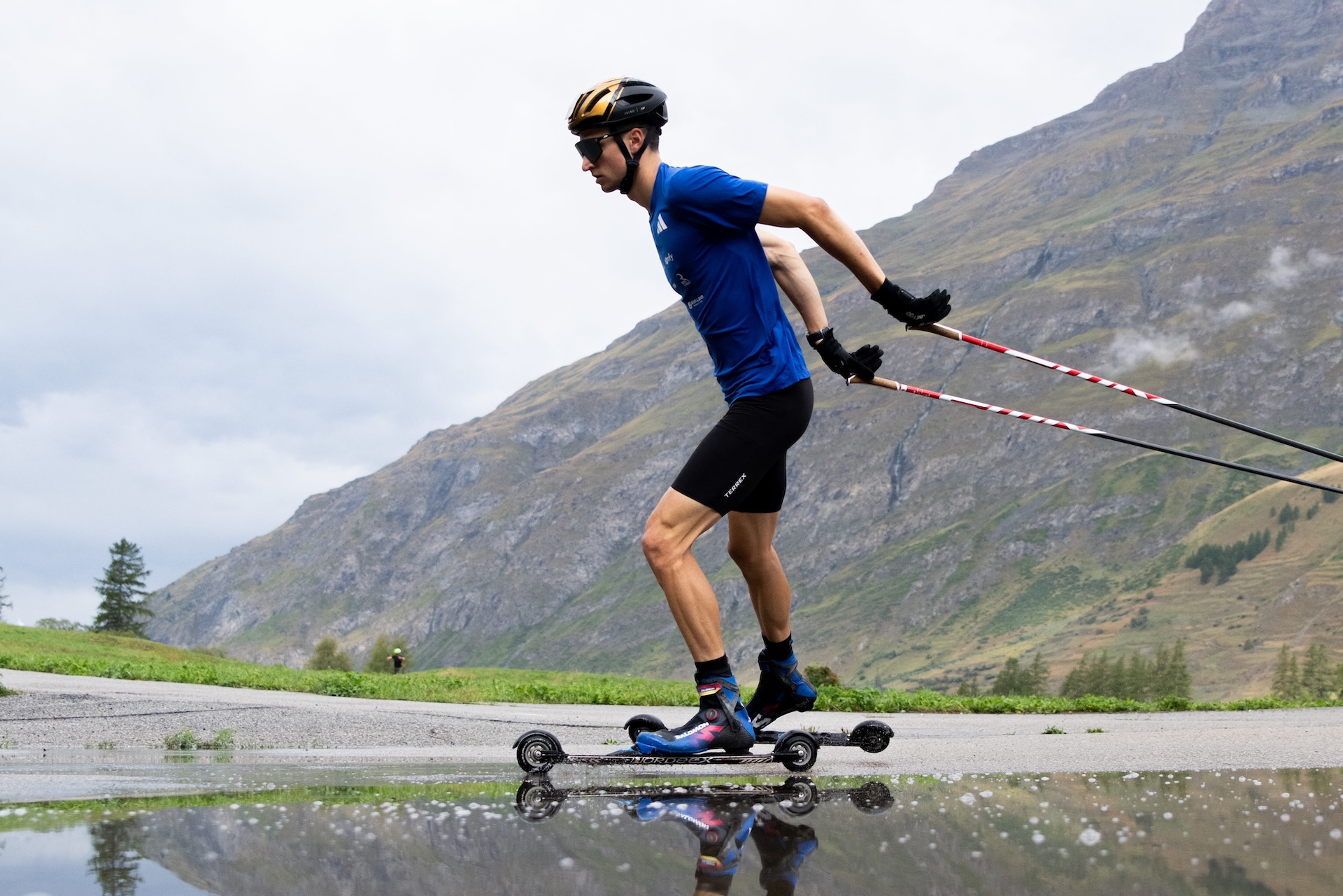
The international biathlon community was briefly left in a state of quiet bewilderment this past summer when one of the sport’s preeminent figures, Olympic and World Cup champion Eric Perrot, effectively vanished from the public eye. For two months, the 25-year-old French athlete—who boasts significant familial ties to Norway—stepped away from the high-pressure environment of the national team’s centralized training camps. Instead of the regimented structure typically associated with elite winter sports, Perrot opted for a nomadic lifestyle, traversing the Norwegian landscape in a compact motorhome alongside his partner, Chloé Lacreuse. This self-imposed exile, which spanned the entirety of June and July, has since sparked a conversation regarding the sustainability of professional athlete workloads and the efficacy of unconventional preparation.
A Summer of Solitude and Strategic Independence
Perrot’s decision to retreat to the Nordic wilderness was not a product of burnout or a desire to abandon his sport, but rather a calculated effort to regain autonomy over his training regimen. Speaking to the publication Nordic Mag, the half-Norwegian biathlete described the experience as a vital reset. "It was a fantastic experience, and something I had a very strong desire to pursue," Perrot stated. "It is incredibly refreshing to simply be alone for a while and conduct my training on my own terms. I have deep roots in Norway, and this provided a unique opportunity to reconnect with my heritage, spend quality time with my family, and immerse myself in the natural environment."
This departure from the standard training cycle is particularly notable given the current landscape of professional biathlon. While the modern era is defined by data-driven, collective training environments, Perrot’s sabbatical suggests that elite athletes are increasingly seeking psychological breathing room to maintain long-term motivation. By training at his own pace, often in remote locations, Perrot maintained his physical conditioning without the intense scrutiny of the French national team’s internal monitoring systems during the early off-season phase.
The Contrast: A Reverse Migration Pattern
The trend of cross-country and biathlon athletes migrating for better conditions is well-documented, though it typically involves Norwegian athletes heading to warmer climates during the spring. In a sharp reversal of this norm, Perrot purposefully fled the heat of the French summer to seek the cooler, more stable conditions offered by the Norwegian mountains.
"Norway is a fascinating place to train in general, particularly during the summer months," Perrot noted. "In France, the temperatures can be stifling, and the high concentration of tourists creates a distracting, congested environment. In contrast, the Norwegian highlands offer a level of serenity that is difficult to replicate elsewhere in Europe."
This geographic arbitrage has become a focal point for elite athletes who require specific aerobic conditions to sustain the heavy volume of training required for the World Cup. By opting for Norway, Perrot bypassed the logistical complications of training in a popular French region during peak tourism season, allowing for more consistent and focused sessions.
Chronology of an Unconventional Pre-Season
The timeline of Perrot’s summer reveals a disciplined, albeit solitary, approach to his profession.
- Late May: Perrot concludes his post-season commitments and begins his transition into independent training.
- June – July: The two-month "van life" period. Perrot and Lacreuse travel extensively through Norway, utilizing the motorhome as a mobile training base. During this time, he avoids the centralized French team sessions.
- August: Perrot makes a high-profile return to the sport at the Blink Festival in Norway, effectively marking the start of his serious competitive preparation.
- Post-August: Integration back into the French national team framework under the guidance of new head coach Siegfried Mazet.
The return to the team at the Blink Festival was described by the athlete as a "brutal comeback." Transitioning from the solitude of the Norwegian countryside back into the intense, high-octane atmosphere of professional competition required a significant mental shift. However, his performance at the festival served as a reassurance to his coaching staff that his self-managed training had not compromised his fitness levels.
The Influence of Siegfried Mazet and Team Dynamics
A significant factor in the success of Perrot’s unconventional summer is the professional maturity of the French national team’s current leadership. Siegfried Mazet, a legendary coach who previously played a pivotal role in the success of Johannes Thingnes Bø and the broader Norwegian team, now leads the French squad.
Mazet’s acceptance of Perrot’s absence is indicative of a coaching philosophy that prioritizes the individual needs of elite performers over rigid administrative adherence. "I needed to be alone for a while and work on myself," Perrot explained. "The coaches understood the necessity of this and respected my decision." This mutual trust is crucial for athletes who have reached the pinnacle of the sport; at the level of an Olympic and World Cup champion, the athlete’s ability to self-regulate is often as important as the physical work performed on the track.
Broader Implications for the World Cup Circuit
As the 2026-27 season approaches, the implications of Perrot’s summer are becoming clear. He is one of only two French male athletes, alongside veteran Quentin Fillon Maillet, to have secured a guaranteed spot for the World Cup season opener in Kontiolahti, scheduled for November 26–29.
This level of security allows Perrot the luxury of planning his future preparations with confidence. He has explicitly stated his intention to make annual trips to Norway a permanent fixture of his pre-season routine, though he remains pragmatic about the logistics. "I want to aim for locations and timeframes that fit into the national team’s program and my professional obligations," he noted. "However, I am not entirely sure if I will repeat the two-month stint in a motorhome exactly as I did this year. It is physically and mentally exhausting to manage that level of travel independently."
The broader impact of this behavior within the biathlon circuit is worth analyzing. As the sport continues to professionalize, the barriers to entry for international competition are tightening. The recent announcement by the Norwegian Biathlon Federation regarding their strict qualification criteria for the 2026-27 season highlights the scarcity of opportunities at the highest level. With all six spots on the Norwegian men’s team already filled, the pressure on athletes from other nations to deliver flawless performances is at an all-time high.
Conclusion: A Model for Sustainable Elite Performance?
Eric Perrot’s summer in Norway serves as a compelling case study on the balance between professional rigor and personal well-being. In a sport defined by relentless training cycles and the constant pressure of international rankings, the ability to step away—and return stronger—is a testament to the athlete’s psychological resilience.
While not every athlete possesses the resources or the standing to orchestrate a two-month, self-managed training block, Perrot’s experience has highlighted a path for those looking to mitigate the stresses of a globalized, high-intensity career. As he turns his focus toward the upcoming World Cup, the success of his unorthodox summer will likely be measured by his performance on the tracks of Kontiolahti. Whether this "Norwegian model" of preparation proves to be a sustainable blueprint for his long-term career or simply a unique chapter in his development remains to be seen, but it has undoubtedly solidified his status as an athlete who is willing to chart his own course to the podium.

