
The Nordica Speedmachine 3 130 BOA DD ski boot represents a significant evolution in alpine boot technology, focusing on delivering unparalleled fit customization and uncompromising performance for advanced and expert skiers. This boot series, long recognized for its capability to handle a wide range of snow conditions and skiing styles, takes a notable leap forward with the integration of the BOA Fit System on both the lower and upper cuffs, a first for Nordica’s Speedmachine line. This innovation aims to address the perennial challenge of achieving a precise and consistent fit, a critical factor for maximizing control and comfort on the mountain.
The Evolution of the Speedmachine Series and the BOA Integration
Nordica has a well-established reputation for producing high-performance ski boots, with the Speedmachine series consistently positioned as a benchmark for skiers seeking power, precision, and versatility. The core philosophy behind the Speedmachine has always been to provide a boot that can excel on groomed slopes, navigate challenging mogul fields, and perform admirably in variable snow conditions, including powder.
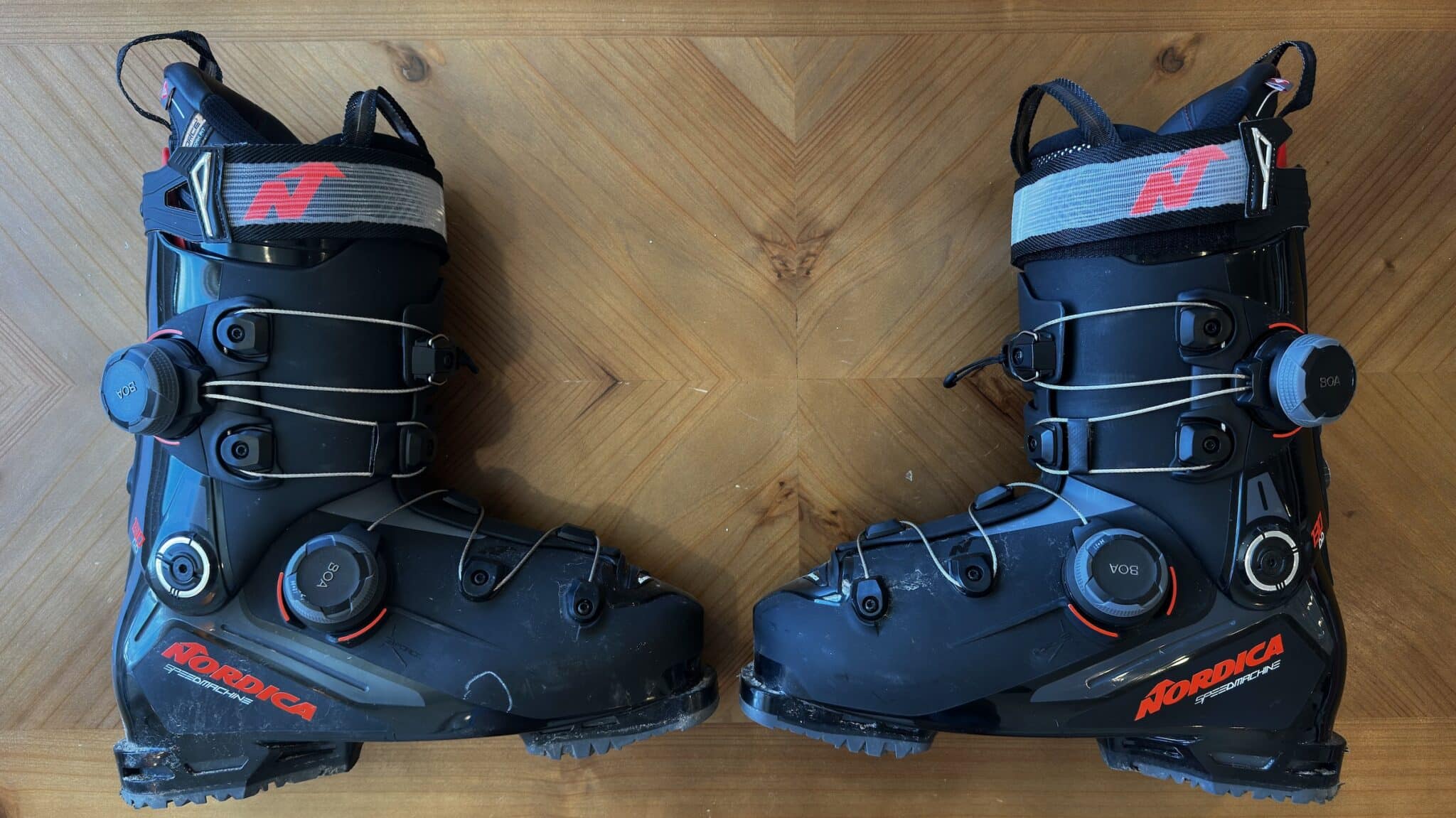
The introduction of the BOA Fit System in previous iterations of the Speedmachine series focused on the lower cuff, offering a micro-adjustable alternative to traditional buckles for achieving a snug and secure fit around the forefoot and instep. This proved to be a popular advancement, allowing skiers to fine-tune their boot tension with greater ease and precision. However, the upper cuff, which plays a crucial role in ankle support and forward flex control, traditionally relied on buckles and a power strap.
The Speedmachine 3 130 BOA DD marks a pivotal moment as it extends the BOA system to the upper cuff. This strategic placement allows for a more uniform and encompassing fit around the ankle and lower leg. The dual-BOA system, with one dial controlling the lower cuff and another managing the upper, promises a level of customization previously unattainable with conventional closure systems. This is particularly significant for skiers who experience pressure points, looseness in the heel, or an inconsistent hold in the ankle area.
Engineering for Precision: Key Features and Technologies
The Nordica Speedmachine 3 130 BOA DD is engineered with a suite of technologies designed to optimize performance and comfort. The boot features a 100mm last, categorizing it as a medium-volume boot. This width is a crucial consideration for skiers, as it aims to accommodate a broad spectrum of foot shapes. While a 100mm last is generally considered versatile, skiers with exceptionally narrow or wide feet may still benefit from professional boot fitting to ensure optimal contact and support.
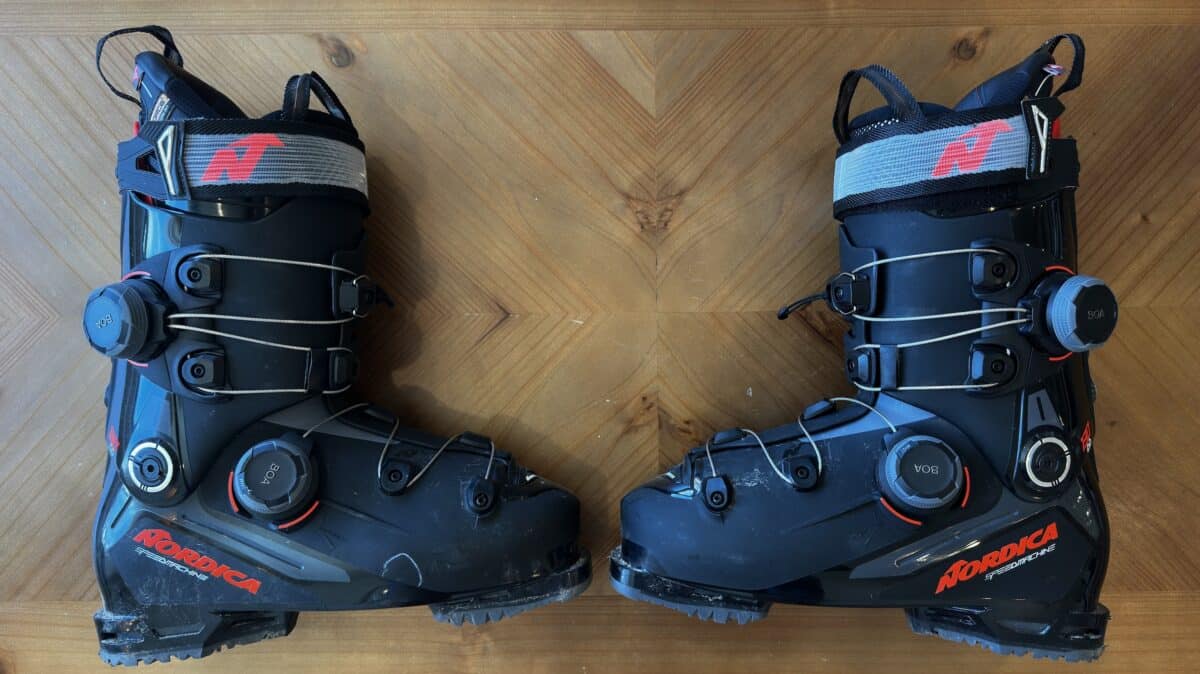
The boot boasts a flex index of 130, designating it as a stiff boot suitable for aggressive skiers who demand immediate power transfer and precise edge control. This stiffness is complemented by the materials used in its construction: a Bimat PU (polyurethane) cuff and shell. Polyurethane is a common material in high-performance ski boots due to its ability to offer a balance of stiffness, durability, and responsiveness across a range of temperatures.
Key technical specifications include:
- Last Width: 100mm (Medium Volume)
- Flex Index: 130
- Closure System: Dual BOA Fit System (lower and upper cuff)
- Liner: 3D Cork Fit Primaloft liner, designed for comfort and thermal insulation.
- Shell and Cuff Material: Bimat PU
- Sole: Gripwalk® Extra-Grip soles, providing enhanced traction on slippery surfaces and improved compatibility with Gripwalk bindings.
- Listed Weight: Approximately 1920 grams (for a size 28.5, as indicated by user experience).
- Sizing: Available in sizes ranging from 24.5 to 30.5.
The inclusion of a 3D Cork Fit Primaloft liner is noteworthy. Cork offers a unique combination of lightweight insulation, natural water resistance, and the ability to mold precisely to the skier’s foot over time. Primaloft insulation further enhances thermal properties, ensuring warmth even in cold conditions. This liner is designed to provide comfort from the initial try-on, with the expectation that it will further conform to the foot through use and heat molding, either professionally or through a natural break-in process on the mountain.

First Impressions and On-Snow Performance
Initial fitting of the Speedmachine 3 130 BOA DD can present a slight learning curve, particularly with the dual-BOA system. Some users may find the initial process of getting in and out of the boot to be slightly more cumbersome than traditional buckles, especially with the lower BOA dial. This is often attributed to the snugness required for optimal performance and the liner conforming to the foot. However, this initial adjustment period is typically short-lived as the liner molds and the system becomes more familiar.
On the mountain, the impact of the dual-BOA system becomes readily apparent. The ability to independently adjust the tension in both the lower and upper cuffs allows for a highly personalized fit. For skiers with specific foot concerns, such as a high instep or a need for enhanced ankle lock, this system offers significant advantages. The boot is reported to provide a comfortably tall instep, a crucial factor for skiers who often experience pressure on the top of their foot. While some minor pressure points on the sides of the foot might be present initially, these are often addressable with minor boot work.
The toe box is described as providing ample room for toe articulation, contributing to overall comfort and preventing numbness during long days on the slopes. The combination of the Isotherm Liner Material and Primaloft insulation aims to keep feet warm and dry, a vital aspect of sustained skiing enjoyment.

Unpacking the BOA Advantage: Heel Hold and Ankle Retention
The most significant advantage highlighted by users is the exceptional heel hold and ankle retention offered by the Speedmachine 3 130 BOA DD. The BOA system on the upper cuff is reported to lock the foot in place with remarkable efficacy, minimizing heel lift and enhancing the skier’s ability to engage the ski directly. This precise control is paramount for advanced skiers who rely on immediate feedback and responsiveness from their equipment.
The lower BOA dial, while potentially requiring a bit more effort to initially secure, allows for fine-tuning of the forefoot and instep fit. This customization is invaluable for skiers with unique foot anatomies, enabling them to dial in a snug yet comfortable fit that prevents unnecessary movement. While the reviewer noted that they did not undergo professional heat molding, the boots reportedly broke in effectively over three to four days of skiing, suggesting a well-designed liner that conforms naturally to the foot’s contours.
Performance Across Varied Terrain
The 130 flex rating positions the Speedmachine 3 130 BOA DD as a robust boot capable of handling aggressive skiing. Its stiffness translates directly into stability and power transfer, allowing skiers to drive the skis with confidence. The boot reportedly excels on groomed corduroy, providing precise edge grip and responsiveness for carving turns.

Beyond the groomers, the boot’s performance extends to more challenging conditions. In moguls and choppy "mashed potato" snow, skiers reported feeling in control, with the boot’s secure fit and responsiveness allowing them to adapt to the terrain effectively. While direct testing in deep powder was not feasible during the reported period, the consistent heel hold across various conditions suggests that the boot’s supportive structure would likely translate well to off-piste scenarios, assuming appropriate technique and snow conditions.
Considerations for Skiers: Who is This Boot For?
The Nordica Speedmachine 3 130 BOA DD is meticulously designed for a specific segment of the skiing population. Its 100mm last and 130 flex are best suited for:
- Advanced to Expert Skiers: Those who ski aggressively, demand high levels of power transfer, and have well-developed skiing technique.
- Medium-Volume Feet: Skiers whose foot width and volume align with a 100mm last. While some minor adjustments can be made, individuals with significantly narrow or wide feet might find better options elsewhere.
- Carving Enthusiasts: Skiers who prioritize precision on groomed slopes and enjoy making clean, powerful turns.
- All-Mountain Skiers Seeking Control: Those who want a boot that offers confidence and responsiveness across a variety of terrain, from corduroy to bumps and variable snow.
Conversely, the boot might not be the ideal choice for:

- Beginner or Intermediate Skiers: The 130 flex can be excessively stiff and difficult for less experienced skiers to control, potentially hindering technique development.
- Narrow or Low-Volume Feet: Skiers with very slender feet may find the 100mm last too spacious, leading to a lack of necessary support and control.
- Heavier Skiers with Lighter Flex Needs: While the 130 flex is powerful, skiers who can’t flex a boot with significant force might consider a boot with a lower flex rating for better engagement.
- Extremely Wide Forefoots: Despite the 100mm last, skiers with exceptionally wide forefoots might experience discomfort that even professional boot work cannot fully alleviate. In such cases, Nordica’s Sportmachine series, often offering a wider last, might be a more suitable alternative.
The Importance of Professional Boot Fitting
As with any high-performance ski boot, the recommendation for professional boot fitting remains paramount. While the Speedmachine 3 130 BOA DD offers advanced customization through its dual-BOA system and well-designed liner, an experienced boot fitter can assess a skier’s unique foot anatomy, gait, and skiing style. They can identify potential fit issues, recommend appropriate shell modifications (such as heat molding, punching, or grinding), and ensure the boot is optimally aligned for the skier’s biomechanics. This personalized approach is crucial for unlocking the full potential of any ski boot and maximizing comfort and performance throughout the ski season.
Broader Implications for Ski Boot Technology
The widespread adoption of advanced closure systems like BOA in performance ski boots signifies a shift in how manufacturers are approaching fit customization. The success of systems like the dual-BOA on the Speedmachine 3 130 suggests a growing demand for precise, micro-adjustable fits that can cater to a wider range of foot shapes and individual preferences. This trend is likely to continue, pushing the boundaries of boot design and potentially leading to further innovations in materials, liner technology, and integration with other boot components. The emphasis on a secure and personalized fit is not merely about comfort; it is directly linked to the skier’s ability to control their equipment, enhance their performance, and ultimately, enjoy their time on the mountain more fully. The Nordica Speedmachine 3 130 BOA DD stands as a testament to this ongoing evolution, offering a compelling option for skiers who demand the best in fit and function.

