
As global investment in renewable energy infrastructure reaches record highs, a parallel and sophisticated campaign of disinformation has emerged to challenge the transition from fossil fuels to clean power. While the scaling of wind, solar, and battery technology represents a significant leap in human innovation, it has simultaneously triggered a backlash characterized by misleading headlines, social media echo chambers, and strategically placed narratives designed to seed public doubt. From claims that offshore wind turbines are devastating marine life to assertions that electric vehicles are more harmful to the environment than their internal combustion counterparts, the modern landscape of energy discourse is increasingly defined by a struggle between scientific data and coordinated influence operations.
The Distinction Between Misinformation and Disinformation
To understand the current friction in the energy sector, it is essential to distinguish between two frequently conflated terms: misinformation and disinformation. Misinformation refers to the accidental spread of false information. This often occurs when concerned citizens share unverified claims—such as a belief that wind farms negatively impact local property values—without an intent to deceive. While inaccurate, these concerns often stem from a genuine lack of access to peer-reviewed data or a misunderstanding of complex industrial processes.
In contrast, disinformation is the intentional creation and dissemination of false or misleading narratives to achieve a specific goal. In the context of the energy transition, disinformation is frequently utilized as a strategic tool by entities with a vested financial interest in maintaining the status quo of the fossil fuel economy. By seeding "straw man" arguments and "red herrings," these actors aim to distract the public from systemic climate solutions, stalling policy progress and protecting existing market shares. The result is a fractured public discourse where legitimate concerns about infrastructure development are co-opted by bad actors to derail the transition entirely.
A Chronology of Climate Obstructionism
The current wave of renewable energy disinformation is not a new phenomenon but rather the latest iteration of a decades-long strategy. To analyze the current landscape, one must look at the historical timeline of climate-related communications:
- The 1970s and 1980s (The Era of Internal Knowledge): Internal documents from major oil companies, such as Exxon (now ExxonMobil), reveal that industry scientists were aware of the link between fossil fuel combustion and global warming as early as 1977. Despite this internal consensus, public-facing communications remained neutral or dismissive of the risks.
- The 1990s (The Era of Outright Denial): Following the establishment of the Intergovernmental Panel on Climate Change (IPCC) in 1988, fossil fuel interests funded organizations like the Global Climate Coalition. The primary goal during this decade was to emphasize scientific uncertainty and claim that climate change was a natural fluctuation rather than a result of human activity.
- The 2000s and 2010s (The Shift to Economic Fear): As scientific consensus became undeniable, the narrative shifted toward the economic "catastrophe" of transitioning away from coal and oil. Arguments focused on job losses and the alleged unreliability of early-stage renewable technologies.
- 2020 to Present (The Era of "Greenwashing" and Diversion): Today, the strategy has evolved into "climate delayism." Many large-scale energy suppliers publicly endorse decarbonization while simultaneously expanding oil and gas production. Disinformation now focuses on the "imperfections" of renewables—such as the environmental impact of mineral mining—to suggest that the transition is just as harmful as the problem it seeks to solve.
Debunking Core Myths with Empirical Data
A central component of the disinformation campaign involves taking real, nuanced challenges associated with renewable energy and magnifying them to suggest the entire transition is flawed. By examining the data, however, these claims often lose their empirical standing.
Electric Vehicle (EV) Lifecycle Emissions
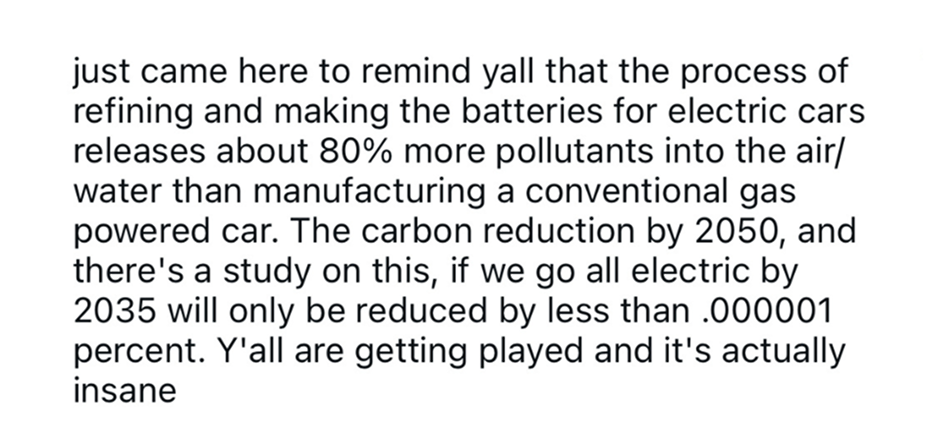
A common narrative suggests that the resource extraction required for EV batteries makes them more carbon-intensive than gasoline-powered cars. While it is true that mineral mining (lithium, cobalt, nickel) has an environmental footprint, researchers at the Massachusetts Institute of Technology (MIT) have provided a comprehensive lifecycle analysis. Their data shows that, on average, gasoline-powered vehicles emit more than 350 grams of CO2 per mile driven over their entire lifespan. In contrast, fully battery-electric vehicles generate approximately 200 grams per mile. As the power grid becomes cleaner with more solar and wind input, the carbon footprint of an EV continues to drop, whereas a gasoline car’s emissions remain static or increase as engine efficiency degrades over time.
Offshore Wind and Marine Ecosystems
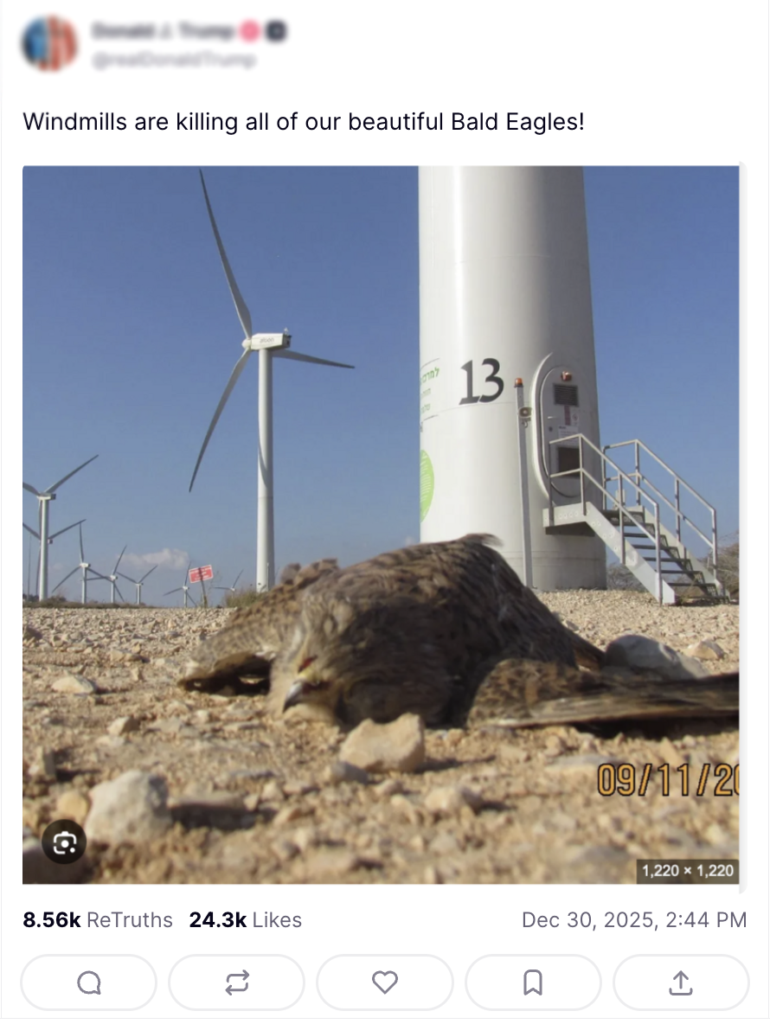
Opponents of offshore wind often claim that these projects are the primary cause of whale strandings or massive bird die-offs. However, marine biologists and government agencies, including the National Oceanic and Atmospheric Administration (NOAA), have found no scientific evidence linking offshore wind site surveys or operations to whale mortality. The greatest threats to ocean ecosystems remain climate change—which causes ocean acidification and warming—along with commercial shipping strikes and entanglement in fishing gear. Furthermore, while wind turbines do pose a risk to birds, the numbers are statistically dwarfed by other human-made hazards. According to the U.S. Fish and Wildlife Service, collisions with glass buildings account for up to 1 billion bird deaths annually in the U.S., while cats account for 2.4 billion. Wind turbines are responsible for a fraction of a percent of total avian mortality.
Land Use and Resource Extraction
Critics frequently point to the land required for solar farms as a reason to halt their development, often citing the "destruction" of farmland. In reality, the land footprint of the entire fossil fuel industry—including mines, wells, pipelines, and refineries—is significantly larger and causes more permanent ecological damage. Solar farms can be integrated with agriculture (agrivoltaics) and are increasingly being built on "brownfields" or degraded land. When a solar farm reaches the end of its 30-year lifespan, the land can be restored; in contrast, land used for fracking or coal mining often suffers from long-term chemical contamination.
The Paradox of Big Oil’s Decarbonization Claims
A significant portion of energy disinformation comes in the form of "greenwashing," where fossil fuel companies use marketing to present an environmentally friendly image that does not align with their capital expenditures. While many companies have rebranded themselves as "energy companies" rather than "oil companies," the International Energy Agency (IEA) notes that the vast majority of industry investment still flows into new fossil fuel exploration.
Industry analysts point out the logical inconsistency: it is impossible to meet global net-zero targets while simultaneously increasing the production of the very fuels that generate carbon emissions. This strategy serves as a "red herring," allowing companies to appear cooperative in climate goals while actively lobbying for policies that extend the lifespan of carbon-intensive assets.
The Societal and Economic Implications of Delay
The persistence of disinformation has tangible consequences for the global economy and public safety. By stalling the transition, disinformation campaigns contribute to higher long-term costs. The Levelized Cost of Energy (LCOE) for solar and onshore wind has plummeted by over 80% and 40%, respectively, over the last decade, making them the cheapest forms of new electricity generation in most of the world. Delaying the adoption of these technologies keeps consumers tethered to the volatile pricing of global oil and gas markets.

Furthermore, the "perfection is the enemy of the good" fallacy utilized by skeptics ignores the urgency of the climate crisis. Every year of delay in decarbonization increases the frequency and intensity of extreme weather events, which carry a massive economic burden in the form of disaster relief, insurance premium hikes, and infrastructure repair.
Strategies for Information Literacy and Advocacy
To counter the influence of coordinated disinformation, experts suggest a multi-pronged approach rooted in information literacy and civic engagement.
- Source Verification: Advocates are encouraged to seek information from non-partisan scientific bodies, such as the IEA, the IPCC, and academic research institutions. If a claim lacks a citation from a peer-reviewed source, it should be treated with skepticism.
- Identifying Logical Fallacies: Recognizing "straw man" arguments—where a critic attacks a weakened version of an opponent’s position—is vital. For example, arguing that "wind doesn’t blow all the time" ignores the reality of battery storage and grid diversification.
- Local Engagement: Much of the battle over renewable energy takes place at the local municipality level. Participating in zoning board meetings and local elections is critical, as disinformation often targets small communities to prevent the permitting of new projects.
- Supporting Advocacy Organizations: Groups like Protect Our Winters (POW) and other climate-focused non-profits work to bridge the gap between scientific data and public policy, providing a counter-narrative to well-funded industry PR campaigns.
The transition to a clean energy economy is a massive industrial undertaking, perhaps the largest in human history. While it is legitimate to have questions about the logistics of this shift, it is essential to distinguish between constructive criticism and the manufactured doubt of disinformation. As the evidence shows, while clean energy is not a perfect solution, it remains the most viable and scientifically sound path toward a stable and prosperous future.

