
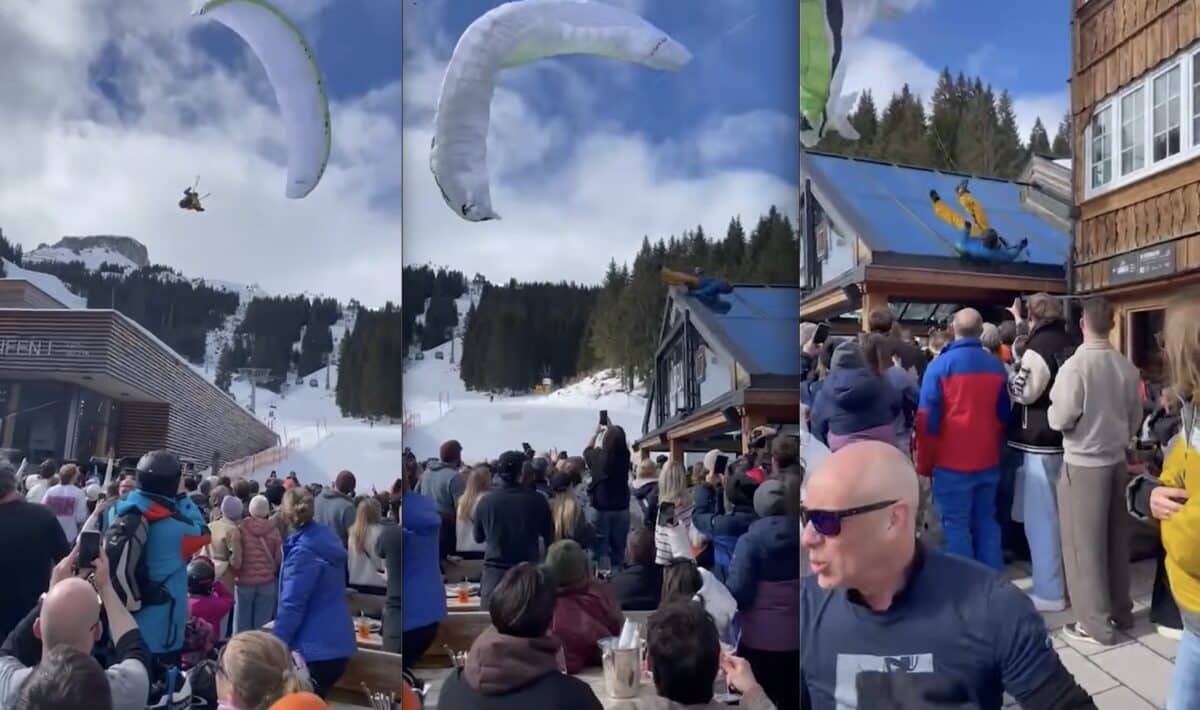
An audacious attempt by a paraglider to "buzz" an après-ski party at the base of the Ifen Ski Resort in Austria ended in an unexpected collision with a building, an incident captured on video that has since garnered significant attention. The paraglider, aiming to create a spectacle for the gathered crowd, misjudged his approach, leading to a dramatic and unplanned landing.
The Incident Unfolds
Eyewitness accounts and the viral video footage suggest the paraglider descended from the mountain with the apparent intention of flying low over the bustling après-ski gathering. As he neared the event, located at the foot of the slopes, the paraglider lost control or miscalculated the proximity of the structures. The paraglider made forceful contact with the roofline of a building adjacent to the party. Following the initial impact, he was seen sliding backward off the roof and falling to the ground.
Despite the alarming nature of the fall, initial reports indicate that the paraglider sustained no serious injuries. He is reported to be "safe and doing well," a fortunate outcome considering the potential risks associated with such an uncontrolled descent. The exact cause of the misjudgment remains under investigation, but factors such as wind conditions, altitude, speed, and pilot error are all potential contributors to the incident.
Context of Extreme Sports and Public Spectacle
This event highlights the growing trend of integrating extreme sports with public entertainment, particularly in popular ski resorts. While many such displays are executed safely and add to the excitement of events, they inherently carry risks. The desire to create memorable moments or attract attention can sometimes lead individuals to push the boundaries of safety. In this instance, the paraglider’s objective was clearly to be part of the celebratory atmosphere, but his execution resulted in an unintended and hazardous consequence.
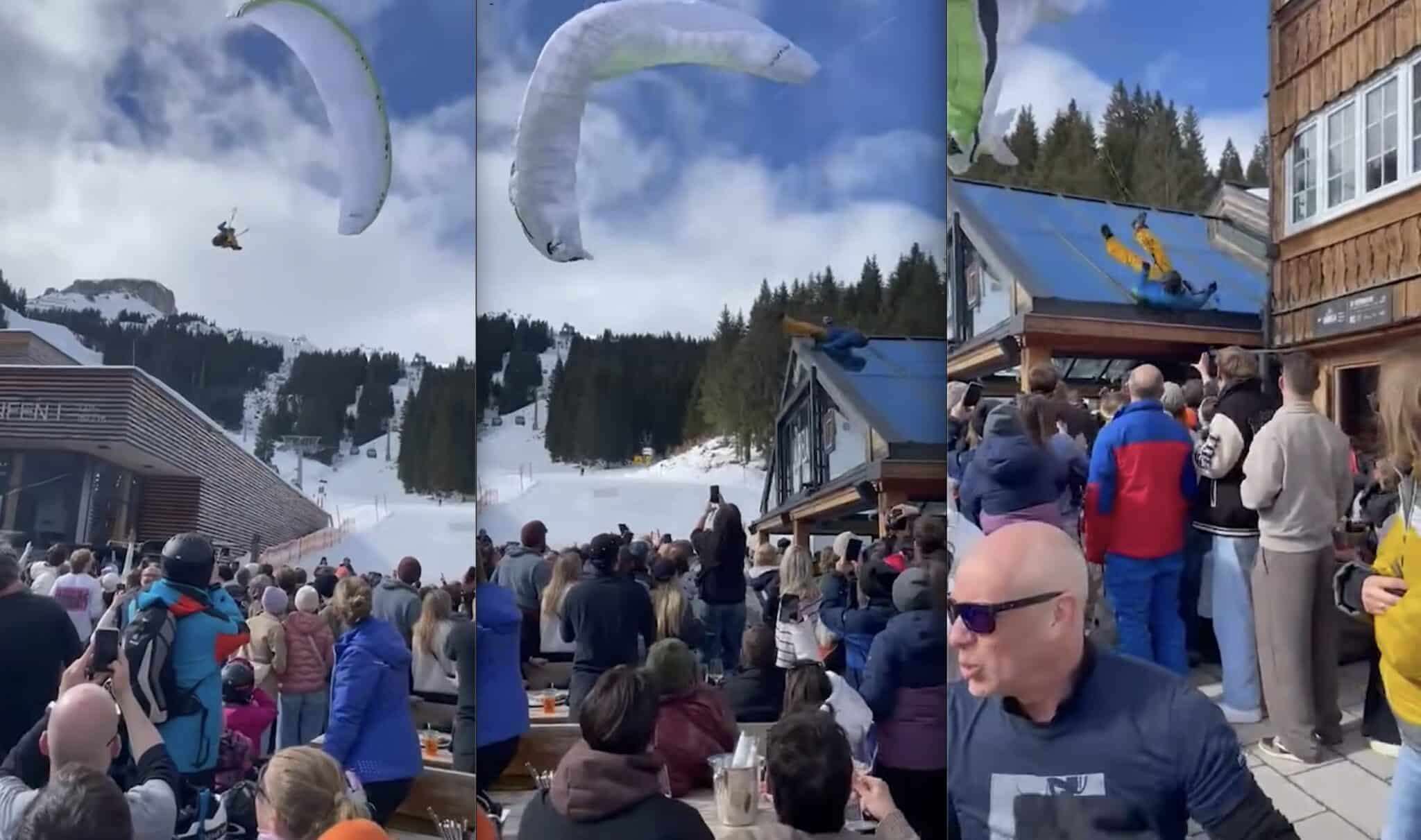
The Ifen Ski Resort is part of the Kleinwalsertal region in Austria, a well-known destination for winter sports enthusiasts. Après-ski parties are a staple of the resort experience, providing a lively atmosphere for skiers and snowboarders to relax and socialize after a day on the slopes. The paraglider’s decision to incorporate his aerial activity into this setting was an attempt to amplify the existing festivity, albeit with a dangerous miscalculation.
A Second, More Perilous Austrian Paragliding Incident
Adding to a week of notable paragliding events in Austria, a separate and far more perilous incident involved an experienced 44-year-old Austrian paraglider who miraculously survived a mid-air collision with a small Cessna 172 sightseeing plane. This near-catastrophic event occurred over the Austrian Alps and was also captured on video, providing a stark contrast to the more lighthearted, though still risky, après-ski incident.
The collision occurred when the sightseeing plane, piloted by a 28-year-old individual, struck the paraglider. The impact was severe enough to completely shred the paraglider’s main canopy, sending her into an uncontrolled, terrifying free fall. In a display of remarkable skill and presence of mind, the paraglider managed to deploy her emergency reserve parachute while spiraling towards the ground. She eventually landed safely on a forest road, with both herself and the pilot of the Cessna escaping serious injury.
This second incident underscores the inherent dangers associated with aviation and aerial sports, even when conducted by experienced individuals. The probability of such a mid-air collision between a paraglider and a powered aircraft is exceedingly rare, making the survival of the paraglider even more remarkable. Investigations into this accident have been launched by local authorities to determine the precise circumstances that led to the mid-air encounter.
Analysis and Implications
The two incidents, while different in nature and severity, both draw attention to the risks associated with paragliding. The first, a case of poor judgment leading to a physical collision with a structure, highlights the need for careful planning and execution, even in seemingly less critical situations. The second, a freak accident involving an aircraft, emphasizes the unpredictable nature of aerial activities and the importance of robust safety protocols and clear airspace management.
The fact that both incidents occurred in Austria within a short period may draw increased scrutiny from aviation authorities and paragliding organizations regarding safety practices. For the après-ski incident, the implications might include a review of airspace regulations around ski resort areas during peak hours and events, as well as increased awareness among paragliders about the potential dangers of flying low over populated or crowded areas.
For the mid-air collision, the investigation will likely focus on factors such as communication between air traffic control and the pilots, the flight paths of both the aircraft and the paraglider, and any potential visibility issues or pilot distractions. The survivor’s description of the event as her "second birthday" is a poignant testament to the gravity of the situation and the extraordinary outcome.
These events serve as a stark reminder that while paragliding can offer exhilarating experiences, it demands a profound respect for safety, meticulous preparation, and a constant awareness of the surrounding environment. The desire for thrill or spectacle must always be balanced with the paramount importance of personal safety and the safety of others. The video evidence from both incidents, though captured by chance or by design, will undoubtedly play a crucial role in any official inquiries and future safety recommendations within the paragliding community and the broader aviation sector.

