
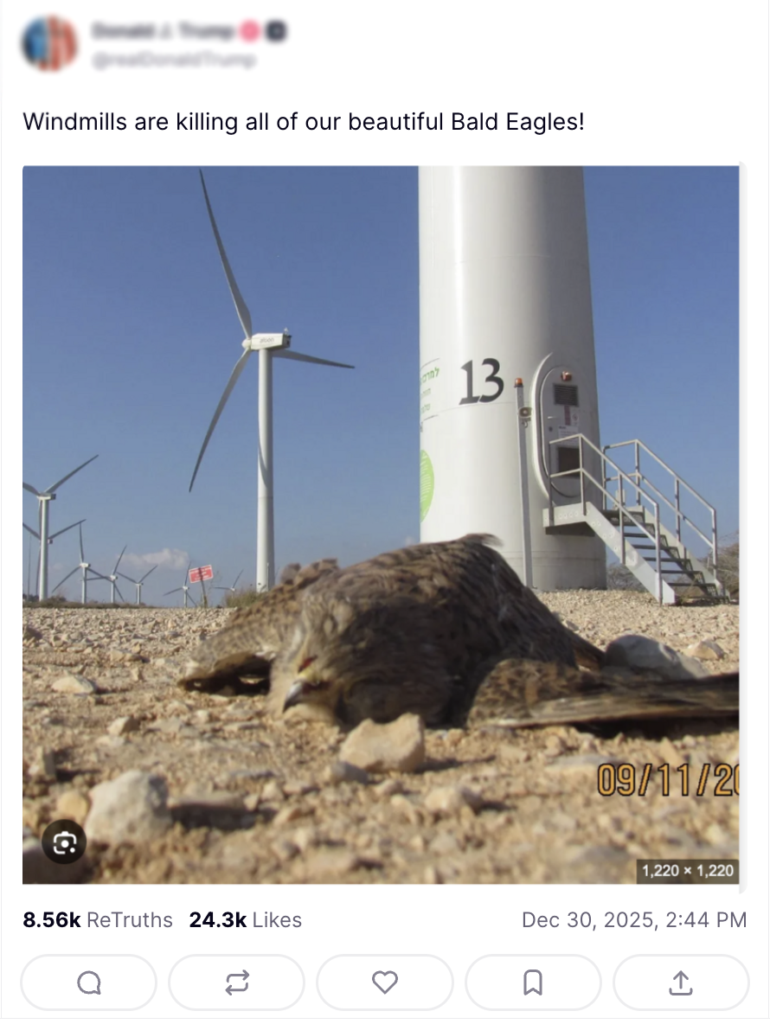
As the global transition toward renewable energy reaches an unprecedented scale, it is being met by an equally expansive and sophisticated campaign of strategic opposition. This movement, often characterized by high-visibility social media posts and coordinated local lobbying, seeks to instill public doubt regarding the safety, reliability, and environmental impact of clean energy technologies. From claims that offshore wind turbines are responsible for whale strandings to assertions that solar farms are toxic to agricultural land, the rhetoric is becoming a central feature of the modern energy discourse. However, recent investigations and academic research suggest that these narratives are frequently not grassroots concerns, but rather the result of well-funded disinformation campaigns designed to protect the interests of the fossil fuel industry and maintain the status quo of carbon-intensive energy production.
The current information landscape is defined by a critical distinction between misinformation—the unintentional sharing of false data—and disinformation, which involves the deliberate seeding of misleading narratives to achieve a specific political or economic objective. In the context of climate change and the energy transition, this distinction is vital. While a local resident might express genuine, albeit unfounded, concern about property values near a wind farm, that concern is often rooted in talking points generated by well-resourced think tanks and industry-backed PR firms. By flooding the public square with "red herring" arguments and "straw man" fallacies, these actors successfully derail substantive policy discussions, replacing them with circular debates over debunked scientific claims.
A Chronology of Strategic Delay
The history of energy-related disinformation is not a new phenomenon; it is the evolution of a strategy that has been refined over half a century. To understand the current wave of anti-renewable sentiment, one must examine the timeline of corporate communication regarding climate science.
In the late 1970s and early 1980s, internal documents from major oil companies, such as Exxon, revealed that their own scientists had accurately predicted the trajectory of global warming caused by fossil fuel combustion. However, rather than pivoting their business models, these entities began a multi-decade effort to manufacture doubt. By the 1990s, the formation of groups like the Global Climate Coalition allowed the industry to lobby aggressively against international climate agreements, such as the Kyoto Protocol, by questioning the consensus of the scientific community.
As the 2000s progressed and the physical reality of climate change became undeniable, the strategy shifted from "denial" to "delay." This era saw the rise of "greenwashing," where companies publicly supported carbon reduction goals while privately funding campaigns to block renewable energy mandates. The current era, beginning around 2015 with the signing of the Paris Agreement, represents the third phase of this chronology: the targeted disparagement of renewable alternatives. As solar and wind power became the cheapest forms of new energy generation in history, the threat to the fossil fuel bottom line became existential, prompting a shift toward aggressive character attacks on green technology.
Analyzing the Data: Fact vs. Fiction in the EV Sector
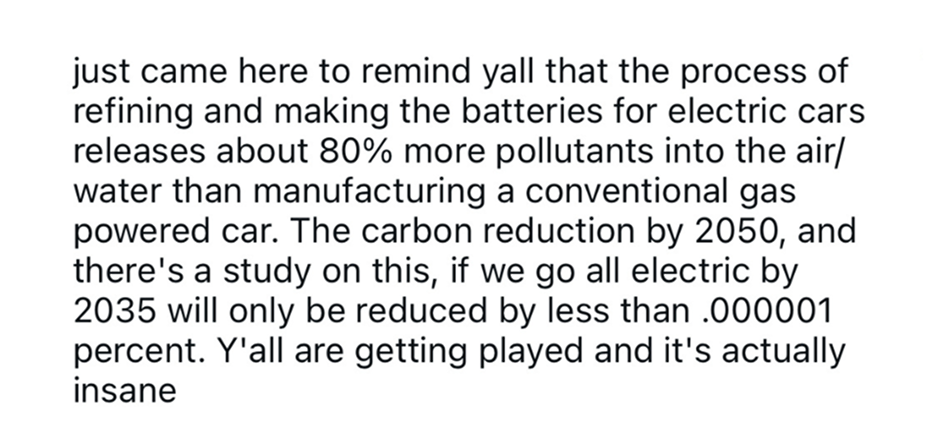
One of the most persistent narratives in the anti-renewable campaign involves the lifecycle impact of electric vehicles (EVs). Critics often argue that the mineral extraction required for EV batteries—such as lithium, cobalt, and nickel—renders the vehicles more harmful to the environment than traditional internal combustion engine (ICE) cars.
However, empirical data from the Massachusetts Institute of Technology (MIT) and other leading research institutions provide a different perspective. While it is true that mineral mining has an environmental footprint, the total lifetime emissions of an EV are significantly lower than those of a gasoline-powered vehicle. According to MIT’s Energy Initiative, gasoline cars emit an average of more than 350 grams of CO2 per mile driven over their entire lifecycle. In contrast, fully battery-electric vehicles create approximately 200 grams of CO2 per mile, a figure that continues to decrease as the electrical grids used to charge them become cleaner.
Furthermore, the "resource extraction" argument often ignores the massive and continuous extraction required to sustain the fossil fuel economy. Unlike gasoline, which is burned once and lost forever, the materials in EV batteries are 98% recyclable. As battery recycling infrastructure matures, the need for virgin mineral extraction is projected to plummet, creating a circular economy that fossil fuels can never achieve.
The Offshore Wind Controversy and Biodiversity
Another focal point of recent disinformation is the development of offshore wind farms. In the United States, particularly along the Atlantic coast, social media campaigns have linked wind turbine pre-construction activity to a series of whale strandings. These claims have been widely circulated despite a lack of scientific evidence.
The National Oceanic and Atmospheric Administration (NOAA) and the Bureau of Ocean Energy Management (BOEM) have repeatedly stated that there is no evidence linking offshore wind surveys to whale mortality. Instead, necropsies of stranded whales frequently point to vessel strikes and entanglement in fishing gear as the primary causes of death, both of which are exacerbated by climate-driven changes in whale migration patterns.
From a comparative risk perspective, the infrastructure of the fossil fuel industry poses a demonstrably higher threat to marine ecosystems. The 2010 Deepwater Horizon disaster, for instance, released over 130 million gallons of crude oil into the Gulf of Mexico, causing catastrophic damage to wildlife that persists to this day. In contrast, while offshore wind requires careful planning to minimize local habitat disruption, it addresses the single greatest threat to ocean biodiversity: the acidification and warming of waters caused by carbon emissions.
The Economic Influence of Disinformation
The funding mechanisms behind these campaigns are often obscured through "dark money" channels and 501(c)(4) organizations. According to reports from InfluenceMap and the Center for Countering Digital Hate (CCDH), a small number of well-funded organizations are responsible for a disproportionate amount of the anti-renewable content found on platforms like X (formerly Twitter) and Facebook.
These organizations use sophisticated micro-targeting to reach specific demographics. For example, in rural areas, disinformation may focus on the "loss of prime farmland" to solar arrays, despite the fact that solar leases often provide farmers with a stable income that prevents the land from being sold for permanent residential or industrial development. In suburban areas, the focus shifts to property values and aesthetics. These narratives are designed to trigger emotional responses, which are more effective at stalling local zoning approvals than dry, fact-based arguments.
Expert Reactions and Scientific Consensus
Energy policy analysts argue that the success of these disinformation campaigns is not due to the validity of their claims, but to the "perfection trap." Dr. Emily Grubert, an associate professor of sustainable energy policy, has noted that critics often hold renewable energy to a standard of "absolute zero impact" that no human activity can meet.
"Every form of energy production involves trade-offs," says Grubert. "The relevant question is not whether a wind turbine has an impact, but how that impact compares to the alternative of continued fossil fuel combustion. When you look at the data on air pollution, water usage, and climate stability, renewables win by an overwhelming margin."
International bodies like the International Energy Agency (IEA) have emphasized that the transition to clean energy is not only an environmental necessity but an economic one. The IEA’s 2023 reports indicate that for every dollar spent on fossil fuels, 1.7 dollars are now being spent on clean energy. Disinformation serves as a friction point in this economic shift, potentially costing taxpayers billions in delayed infrastructure and missed opportunities in the burgeoning green economy.
Implications for Public Policy and Democracy
The broader implication of coordinated disinformation is the erosion of the democratic process. When local town halls are dominated by debunked fears, elected officials find it difficult to pass the legislation required to meet national climate goals. This creates a "policy gap" where the technological and economic readiness for renewables is stymied by artificial social resistance.
To combat this, advocacy groups and government agencies are increasingly focusing on "pre-bunking"—the practice of educating the public about the tactics of disinformation before they encounter it. By understanding the common logical fallacies used by industry-funded actors, citizens are better equipped to evaluate the information they see online.
Ultimately, the transition to renewable energy represents one of the most significant shifts in human history. It is a transition from a fuel-based economy to a technology-based economy. While the fossil fuel industry relies on the continuous extraction and combustion of finite resources, renewable energy relies on the deployment of manufactured hardware that harvests infinite natural flows. This fundamental shift threatens the most profitable business model in history, making the current campaign of disinformation not just a series of random internet rumors, but a calculated defense of a dying industry.

The path forward requires a commitment to scientific literacy and a rigorous defense of the truth. As clean energy continues to scale, the noise of the "fear campaign" is likely to increase. However, with data-driven analysis and a clear understanding of the motivations behind the rhetoric, the global community can continue to move toward a safer, more sustainable, and more affordable energy future. Professional journalism and public awareness remain the strongest tools in ensuring that the progress of the many is not derailed by the profits of the few.

