
The indefinite suspension of summer skiing operations on the Horstman Glacier at Whistler Blackcomb marks a definitive turning point for the North American winter sports industry. Once a premier training ground that produced generations of Olympic athletes and freeskiing pioneers, the glacier’s retreat has rendered it no longer viable for seasonal use. For Mike Douglas, a professional skier and Salomon ambassador often hailed as the "Godfather of Freeskiing," the loss of the Horstman is more than a logistical hurdle; it is a visceral reminder of the environmental degradation he has witnessed over a three-decade career. As the outdoor industry grapples with shrinking snowpacks and shifting seasonal cycles, the partnership between Salomon and the non-profit organization Protect Our Winters (POW) has emerged as a blueprint for how corporate entities and high-profile athletes can pivot from passive awareness to systemic advocacy.
The Decline of the Horstman Glacier: A Case Study in Climate Change
In the 1990s, the Horstman Glacier was the epicenter of the skiing world during the summer months. It served as a high-altitude laboratory where innovators like Mike Douglas developed the twin-tip ski and helped transition freestyle skiing from a niche discipline into a global phenomenon. However, the geographic reality of the glacier has changed drastically. According to glaciological surveys in British Columbia, glaciers in the region have been losing mass at an accelerating rate since the turn of the century. The Coast Mountains, where Whistler Blackcomb is situated, have seen significant thinning of ice due to rising average temperatures and decreased winter accumulation.
The official closure of the glacier for summer operations in 2023 followed years of remedial efforts, including the installation of snowmaking infrastructure on the glacier itself—a desperate measure to preserve the remaining ice. The decision to suspend operations indefinitely reflects a broader trend across the Alps and the Rockies, where "summer skiing" is rapidly becoming a relic of the past. For the local economy and the global ski culture, the disappearance of these year-round snow patches represents a loss of heritage and a narrowing window for athlete development.
Mike Douglas: From Performance to Purpose
Mike Douglas’s career trajectory mirrors the evolution of the outdoor industry’s relationship with the environment. In the early years of his career, the focus was primarily on performance, equipment innovation, and the exploration of remote backcountry terrain. However, as the impacts of climate change became impossible to ignore, Douglas transitioned into a leading voice for environmental stewardship.
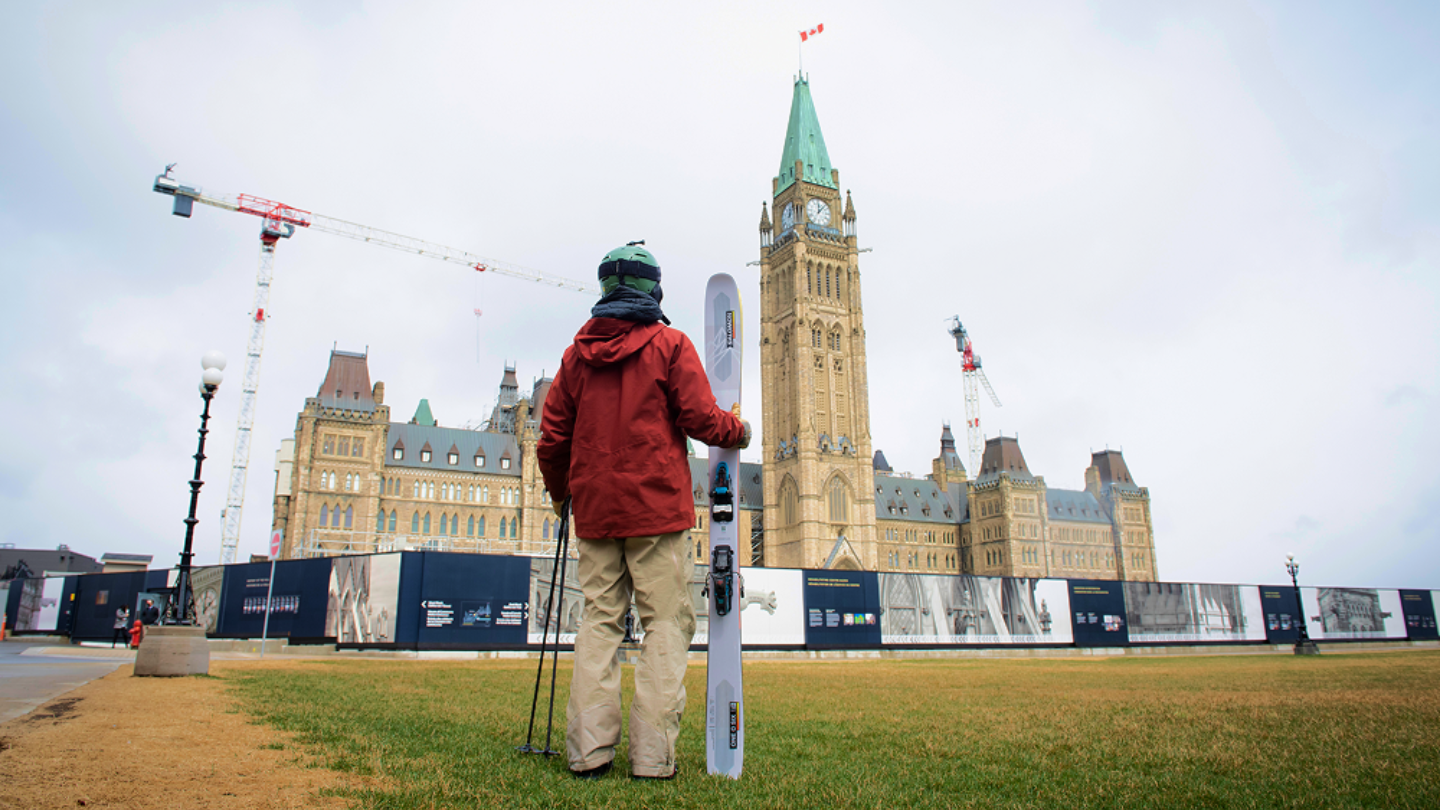
Since joining the Protect Our Winters Canada Alliance in 2018, Douglas has utilized his platform to bridge the gap between the thrill of the sport and the sober reality of its future. His role involves a delicate balance: maintaining the high-performance standards required by a global brand like Salomon while pushing for radical changes in how that brand operates. Douglas has noted that while individual lifestyle changes are important, the scale of the crisis requires corporate action and policy shifts. By leveraging his influence, he acts as a conduit between the grassroots outdoor community and the executive boardrooms where production decisions are made.
The Evolution of Salomon’s Corporate Responsibility
Salomon, a titan in the winter sports and outdoor footwear markets, has recognized that the longevity of its business model is tied directly to the health of the planet. The company’s "Change our Play" initiative represents a multi-pronged approach to sustainability that moves beyond traditional corporate social responsibility (CSR) tropes.
Sustainable Manufacturing and Circularity
A key component of Salomon’s strategy is the implementation of circular economy principles. In recent years, the brand has introduced products designed specifically for recyclability, such as the Index.01 running shoe and the Addikt Pro skis. These products are engineered to be disassembled at the end of their life cycles, with materials being repurposed into new gear. This reduces the reliance on virgin plastics and minimizes the carbon footprint associated with waste.
Supply Chain Optimization
The outdoor industry is notoriously carbon-intensive, particularly regarding the global transport of heavy equipment. Salomon has committed to a 30% reduction in its overall carbon emissions by 2030. To achieve this, the company is analyzing its entire supply chain, from the sourcing of raw materials in Asia and Europe to the energy efficiency of its "Annecy Design Center" in the French Alps. By optimizing logistics and shifting toward renewable energy sources in manufacturing facilities, Salomon aims to decouple its economic growth from environmental impact.
Supporting the Athlete-Advocate Model
Salomon’s support for athletes like Douglas extends beyond traditional sponsorship. The brand provides funding for documentary projects that highlight environmental issues and supports tours like the Quality Ski Time (QST) initiative, which combines ski film screenings with climate education. By empowering its athletes to speak on behalf of the environment, Salomon leverages the high level of trust that the outdoor community places in these figures.
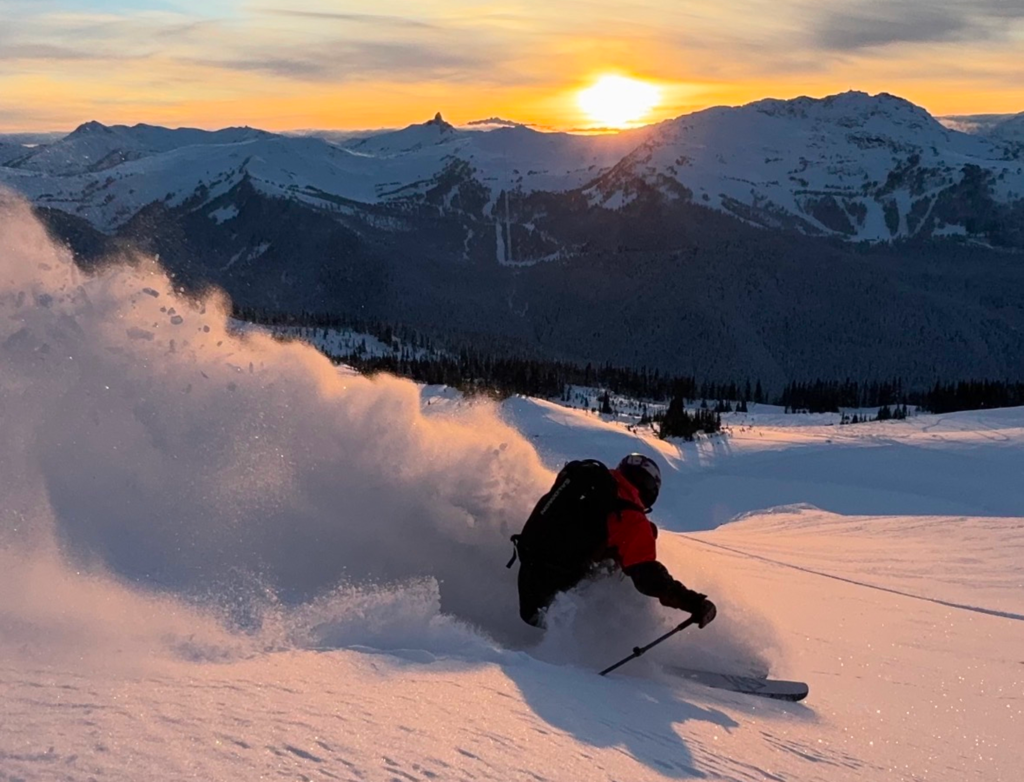
The Role of Protect Our Winters (POW) in Industry Transformation
Protect Our Winters has become the primary vehicle for political and systemic change within the outdoor sector. Founded by professional snowboarder Jeremy Jones in 2007, the organization has shifted the focus of the environmental movement from individual carbon footprints to collective political action.
The partnership between POW and Salomon is strategic. While Salomon addresses the "how" of production, POW addresses the "why" of policy. The organization trains athletes, scientists, and business leaders to meet with lawmakers and advocate for clean energy legislation, carbon pricing, and the protection of public lands. In a world saturated with "greenwashing," the POW-Salomon alliance stands out because it focuses on measurable outcomes, such as the passage of the Inflation Reduction Act in the United States, which included historic climate provisions.
Economic and Cultural Implications of a Warming World
The stakes for the outdoor industry are high. According to data from the Outdoor Industry Association (OIA), the outdoor recreation economy contributes over $887 billion to the U.S. GDP annually and supports millions of jobs. In Canada, the ski industry is a vital component of rural economies in British Columbia and Alberta.
Shortened winters and unpredictable weather patterns directly threaten this economic engine. When ski resorts close early or glaciers become inaccessible, the entire ecosystem—from hotel operators and restaurateurs to equipment retailers—suffers. Furthermore, the cultural identity of mountain towns is at risk. The loss of the Horstman Glacier is not just a loss of ice; it is a loss of the "proving ground" that defined the character of Whistler for decades.
Fact-Based Analysis: The Path Forward
The data provided by the Intergovernmental Panel on Climate Change (IPCC) suggests that even under moderate warming scenarios, low-to-mid-elevation ski resorts will face significant challenges by mid-century. This reality necessitates a two-track approach for the industry:

- Mitigation: Rapidly reducing greenhouse gas emissions through manufacturing innovation and corporate advocacy for clean energy.
- Adaptation: Diversifying resort offerings to include year-round activities that are less dependent on snow, while simultaneously improving snowmaking efficiency and water conservation.
The "all-hands-on-deck" approach mentioned by Mike Douglas is reflected in the growing number of brands joining the "B-Corp" movement or signing onto the Outdoor Industry Association’s Climate Action Corps. These frameworks provide a standardized way for companies to measure and report their environmental impact, ensuring accountability.
Conclusion: The Closing Window for Action
The story of Mike Douglas and the Horstman Glacier is a microcosm of a global crisis. It illustrates the transition from an era of abundance and ignorance to an era of scarcity and responsibility. The collaboration between Salomon and Protect Our Winters serves as a call to action for the rest of the outdoor industry.
As Mike Douglas emphasizes, the window for effective climate action is closing. The industry can no longer afford to be a silent bystander to the degradation of the environments that sustain it. Through responsible manufacturing, athlete-led advocacy, and a commitment to systemic policy change, brands like Salomon are attempting to restore the balance. The success of these efforts will determine whether future generations will have the opportunity to experience the same "powder days" that defined the lives of those who came before them, or if the history of skiing will be confined to the stories of vanished glaciers.

