
The European continent is currently grappling with a climate emergency of historic proportions as a relentless series of heatwaves in July 2026 has pushed temperatures to record-breaking levels, accelerating the destruction of Alpine glaciers and igniting catastrophic wildfires across the Alps and the Pyrenees. As of July 15, 2026, meteorologists and environmental scientists warn that the current thermal event is the longest and most intense of the year, following significant heat spikes already recorded in May and June. The crisis has reached a tragic human peak with the confirmed death of a young firefighter in the French Alps, while thousands of residents and tourists have been forced to evacuate high-risk zones in the south.
The Triple Heatwave of 2026: A Chronology of Rising Temperatures
The summer of 2026 has been characterized by a rhythmic and punishing succession of heatwaves that have left the European landscape parched and vulnerable. The first significant anomaly occurred in late May, an unusually early start to the thermal season that depleted the seasonal snowpack before the summer solstice. This was followed by a more intense period in mid-June, which further destabilized the high-altitude permafrost.
The current July heatwave, however, is proving to be the most durable and dangerous. In Switzerland, MeteoSwiss has issued Level 3 heatwave warnings across much of the territory, indicating a significant risk of heat-related health complications for the general population. On the northern side of the Alps, temperatures have consistently hovered between 31 and 35 degrees Celsius, with localized peaks reaching a blistering 38 degrees. The southern slopes are experiencing similar conditions, with averages between 31 and 34 degrees.
Perhaps most alarming to glaciologists is the "freezing level"—the altitude at which the temperature drops to zero degrees Celsius. In mid-July 2026, this level has been recorded at well over 4,000 meters. This means that even the highest peaks in Europe, including major massifs in the Swiss and French Alps, are experiencing melting conditions 24 hours a day. Night-time temperatures have offered little reprieve, with urban areas seeing minimums as high as 23 degrees Celsius, while mountain valleys remain trapped in a pocket of warm air ranging from 15 to 20 degrees.
The Rapid Deterioration of Alpine Glaciers
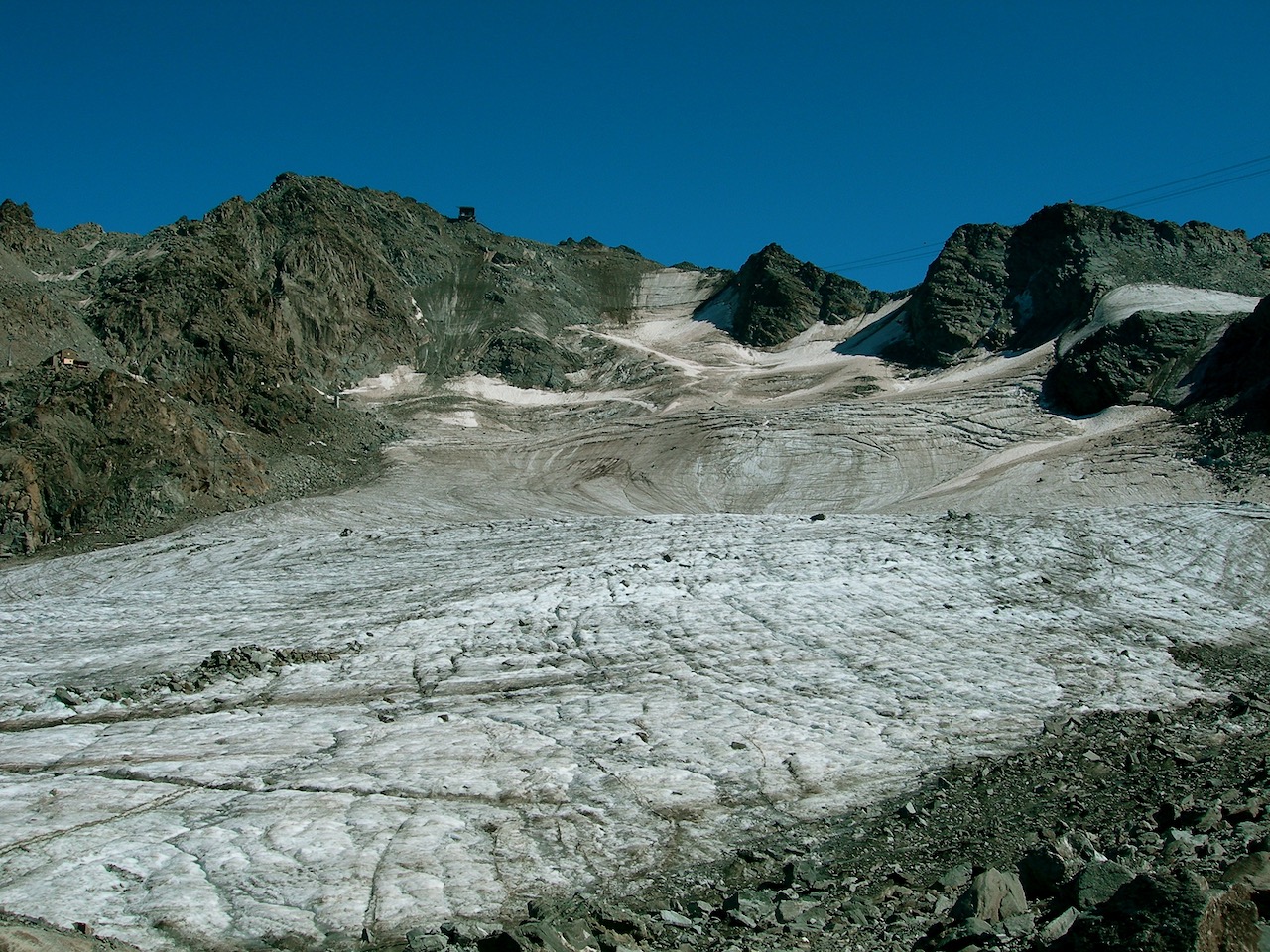
The impact on Europe’s "water towers"—the Alpine glaciers—has been catastrophic. Monitoring stations at the Rhone Glacier in Switzerland have reported that the ice is thinning at a rate previously thought impossible. In the first two weeks of July alone, some sections of the glacier lost nearly 1.5 meters of ice thickness. This acceleration is attributed to the early loss of protective snow cover; without the reflective white snow to bounce sunlight back into the atmosphere (the albedo effect), the ancient, darker ice beneath absorbs the sun’s energy directly, leading to rapid liquification.
In France, the Grande Motte glacier above Tignes has become a focal point for both climate study and tourism. While hundreds of skiers have flocked to the glacier to escape the stifling heat of the valleys, the environment they are visiting is in a state of terminal decline. Experts now warn that the Grande Motte, a staple of European summer skiing, could disappear entirely within the next 10 to 15 years if current warming trends persist.
The situation is even more dire in the Pyrenees, where glaciers have all but vanished. The few remaining patches of permanent ice are no longer classified as active glaciers but rather as stagnant ice fields, incapable of movement or self-sustenance. The loss of these ice masses is not merely an aesthetic or recreational tragedy; it represents a fundamental shift in the hydrology of the region.
Wildfires and the Human Toll
The combination of extreme heat and a lack of precipitation has turned the forests of the Alps and Pyrenees into tinderboxes. In the Savoie region of the French Alps, the battle against the flames turned fatal this week. France’s Interior Minister confirmed with "deep sadness" the death of a 22-year-old firefighter who was killed while tackling a wildfire that has already consumed hundreds of acres. The blaze is one of several major fires erupting simultaneously, stretching emergency resources to their breaking point.
Further south, in the Pyrénées-Orientales department, the situation is equally volatile. Since Saturday, July 4, a massive wildfire has scorched over 4,600 hectares of land. The intensity of the fire and the speed of its progression necessitated the emergency evacuation of more than 10,000 people, including residents and holidaymakers at local campsites.
Interior Minister Laurent Nunez, speaking on the French television station TF1, cautioned that the battle is far from over. "This morning conditions are deteriorating again," Nunez stated, citing high winds and low humidity as primary obstacles. The wildfire also disrupted one of the world’s premier sporting events, the Tour de France. Spectators were urged to stay away from the conclusion of the third stage, which ran 121 miles from Granollers in Spain to the French ski resort of Les Angles, to ensure that emergency vehicles had unimpeded access to the fire zones.
Comparative Data: A Continent on Fire
While 2025 went down in history as Europe’s worst-ever year for wildfires, the data for 2026 suggests a worrying trend. As of mid-July, 155,569 hectares have been burnt across Europe. Although this figure is currently below the 228,098 hectares recorded at the same point in 2025, scientists from the European Forest Fire Information System (EFFIS) fear that the 2026 total could eventually exceed last year’s record. The reason lies in the early onset of the fire season and the cumulative drought conditions that have left deep-seated vegetation dangerously dry.
For the past three decades, Europe has been warming faster than any other continent. This accelerated warming is creating a feedback loop: higher temperatures lead to drier soil, which leads to more frequent and intense fires, which in turn release more carbon dioxide into the atmosphere and destroy carbon-absorbing forests.
Hydrological Implications and the Waterwise Project
The melting of the glaciers and the loss of the snowpack have profound implications for the water security of millions. The Intergovernmental Panel on Climate Change (IPCC) has repeatedly warned that the melting of Alpine glaciers threatens the water supply of mountain communities and the millions of people living downstream who rely on the Rhine, Rhone, Po, and Danube rivers for agriculture, industry, and drinking water.
In response to this looming crisis, the "Waterwise Project" has been launched as a transnational initiative to model the future of Alpine water resources. One of the primary pilot sites is the Contamines-Montjoie Nature Reserve near Mont Blanc. Researchers there are collecting data from high-altitude streams—known as headwater catchments—to understand how these ecosystems will evolve under various climate scenarios.
Initial findings from the project suggest that the glaciers are losing vast amounts of stored water that will not be replenished in the coming winter cycles. This "peak water" phenomenon means that while there is currently an abundance of runoff due to the melting ice, the source will eventually run dry, leading to severe seasonal water shortages in the future.
Looking Ahead: The Future of the Alpine Environment
The summer of 2026 is serving as a stark reminder of the vulnerability of high-altitude ecosystems. In Switzerland, the resort of Saas-Fee still plans to open for summer skiing on July 18, with operations scheduled through October. However, the viability of such activities is being questioned as the physical environment shifts beneath the skiers’ feet.
The broader implications for the European economy and public health are significant. The persistent heatwaves are not only damaging the tourism and agricultural sectors but are also placing an immense strain on energy grids and healthcare systems. The Level 3 warnings in Switzerland and similar alerts in France and Italy underscore the physical danger posed by "tropical nights," where temperatures do not drop enough to allow the human body to recover from daytime heat.
As the July 2026 heatwave continues, authorities remain on high alert. The focus remains on containing the wildfires in the Pyrenees and Savoie, while scientists continue to monitor the rapid retreat of the ice. The data collected during this extraordinary summer will likely form the basis of new climate adaptation strategies, but for now, the Alps and Pyrenees remain in the grip of a historic and transformative weather event.
The immediate priority for the French and Swiss governments is the safety of their citizens and the protection of what remains of the Alpine wilderness. However, the events of 2026 have made one fact undeniable: the "eternal snows" of Europe are no longer eternal, and the continent must now prepare for a future where its most iconic mountain ranges are fundamentally altered.

