
A young ski racer has been airlifted to a specialist medical facility in Innsbruck after sustaining severe injuries during a high-speed training session on the Hintertux Glacier in Austria. The incident, which occurred on the morning of Wednesday, October 21, 2026, has prompted an immediate investigation by local authorities into the safety protocols governing early-season glacier training. The teenager, whose identity has been withheld by Tirol Police at the request of his family, was reportedly navigating the red-rated No. 3 slope when the accident occurred.
Chronology of the Incident
According to reports filed by the Tirol Police, the accident took place at approximately 11:30 local time. The skier was engaged in a routine training exercise, a common practice for competitive youth squads during the October pre-season. While navigating a technical left-hand turn, the athlete lost control of his trajectory at a high rate of speed.
The momentum carried him beyond the designated course boundaries, where he collided with the perimeter safety netting. The force of the impact was insufficient to arrest his movement, and the teenager subsequently fell roughly 30 meters down a rocky embankment adjacent to the glacier slope.
The onsite ski patrol, which is permanently stationed at the Hintertux Glacier to manage the high volume of professional and amateur athletes, reached the victim within minutes. After providing initial trauma stabilization, the patrol alerted the regional emergency response services. Due to the nature of the injuries and the challenging terrain, an emergency medical helicopter was dispatched to the site. The patient was airlifted directly to a hospital in Innsbruck, where he remains under care for serious injuries to his back and face.
The Context of Hintertux Training
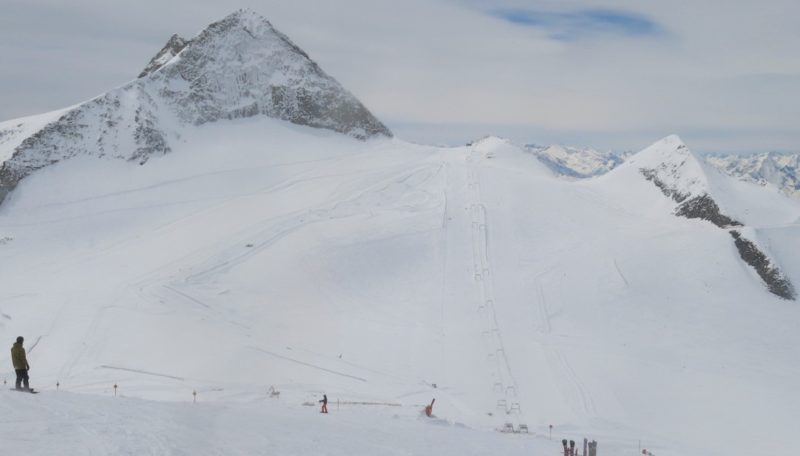
The Hintertux Glacier is widely recognized as one of the few reliable locations for early-season alpine skiing in Europe. Because of its high altitude—reaching up to 3,250 meters—it maintains a consistent snowpack even when lower-altitude resorts are transitioning between seasons. As such, the resort has become the primary training ground for national and regional race teams preparing for the upcoming World Cup and FIS-sanctioned winter calendar.
The No. 3 slope, where the accident occurred, is a staple of the glacier’s training infrastructure. During the autumn months, the resort typically restricts access to specific corridors to allow race teams to set up slalom and giant slalom gates. While these areas are protected by standard-issue fencing and safety netting, the inherent risks of high-speed racing on glacial ice—which can be significantly harder and more unforgiving than mid-winter snow—are well documented.

Safety Standards and Liability Investigations
The Tirol Police have confirmed that an official investigation is currently underway to determine the precise circumstances of the crash. Forensic teams are expected to examine the integrity of the safety netting at the point of impact and review the course setting standards that were in place at the time of the incident.
In the European alpine sector, training protocols are governed by strict FIS (International Ski Federation) safety guidelines. These include specific requirements for the installation of "B-nets" and "A-nets," which are designed to absorb kinetic energy during a crash. Investigators will likely seek to determine whether the netting met the required safety certifications for the speed at which the athlete was travelling.
While the name of the teenager remains protected, the accident has sent ripples through the youth racing community. Coaches and club directors across the region are expected to review their own safety briefings following this incident, as the start of the 2026/27 season intensifies.
The Implications for Early-Season Racing
This incident highlights the precarious nature of early-season glacier training. As global temperatures fluctuate, glaciers are becoming increasingly sensitive, often requiring the use of aggressive chemical treatments or mechanical grooming to keep the surface skiable. This can create a surface that is not only faster but also more hazardous for younger, less experienced racers who may be attempting to master advanced technical skills under high-pressure environments.
Medical professionals in Innsbruck, who frequently treat severe injuries sustained in the Zillertal Alps, have previously noted that high-velocity crashes into unyielding rocky terrain are among the most difficult to manage. Injuries to the spinal column and facial structure often require multi-stage surgeries and long-term rehabilitation, which can have profound implications for a young athlete’s career.
Industry Response and Future Protocols
The management of Hintertux Glacier has issued a brief statement confirming their cooperation with the authorities. They have noted that the resort’s primary goal remains the safety of all guests, and they are currently reviewing the incident logs from Wednesday to assist the police investigation.
Industry analysts suggest that this event could lead to a tightening of regulations regarding the placement of training courses on glacial terrain. Potential changes could include:
- Enhanced Buffer Zones: Increasing the mandatory distance between race gates and the perimeter safety nets to allow for a larger "run-off" area.
- Surface Mitigation: Stricter requirements for the grooming of transition areas and the removal of exposed rocks near the edges of training slopes.
- Speed Management: New limitations on the types of training drills permitted during early-season conditions, particularly for youth squads that may be pushing their limits to qualify for mid-winter competitions.
A Community in Transition
As the 2026/27 season approaches, the focus in the alpine community often shifts toward new equipment, technical innovations, and the promise of the upcoming winter. However, incidents such as this serve as a stark reminder of the risks inherent in snowsports.
The Hintertux Glacier remains open, and training sessions continue, though the atmosphere on the slopes is reportedly more somber as athletes, coaches, and staff await further updates on the teenager’s condition. For the families of those involved in competitive skiing, the news is a harrowing reminder of the vulnerability of athletes in a high-stakes sport where the margin for error is often measured in millimeters.
Moving Forward
The investigation is expected to take several weeks, with a final report likely to be submitted to the local prosecutor’s office. Until then, the focus remains on the medical recovery of the victim.
For the broader ski industry, the incident acts as a catalyst for a necessary conversation regarding safety. While the technological advancements in protective gear—such as spinal protectors and high-impact helmets—have come a long way in the last decade, they cannot fully negate the dangers of high-speed collisions with immovable objects. As the sport continues to grow, the balance between fostering competitive excellence and ensuring the welfare of young participants remains the most critical challenge for ski resorts and governing bodies alike.
The community of Hintertux and the wider alpine racing world remain in a state of cautious observation, awaiting the outcome of the investigation and, more importantly, hopeful for the full recovery of the injured teenager. Further updates will be provided as the Tirol Police release additional information regarding the findings of their inquiry.

