
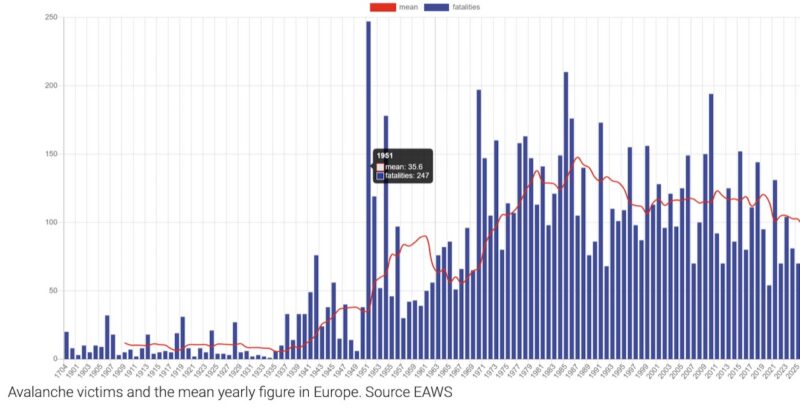
The European 2025/26 winter season has officially become one of the deadliest in recent decades, with the total number of avalanche-related fatalities surpassing the 147 deaths recorded during the 2017/18 season. As of May 11, 2026, the death toll continues to fluctuate within what experts describe as natural but extreme parameters, driven by a combination of volatile weather patterns and an exceptionally unstable snowpack. This year’s figures represent a sharp increase from the 2024/25 winter, which saw 70 fatalities, and sits significantly higher than the annual average of approximately 100 deaths. Data from the European Avalanche Warning Services (EAWS) indicates that this season’s mortality rate is approaching levels not seen since the 2009/10 season, when 190 people lost their lives, and the 2015/16 season, which recorded 151 victims.
The spike in fatalities comes despite advancements in mountain safety technology and increased public awareness. Authorities have noted a disturbing trend: a high proportion of victims this year were seasoned professionals, including mountain guides, ski patrollers, off-piste instructors, and experienced members of alpine clubs. The complexity of the snowpack during the 2025/26 cycle has proved deceptive even for those with decades of experience, highlighting a season defined by "persistent weak layers" and "hidden" dangers that did not align with traditional visual cues of instability.
Recent Fatalities in the French Alps
The latest tragedies occurred during the late spring period, a time when many skiers assume the snowpack has reached seasonal stability through melt-freeze cycles. On Saturday, May 9, 2026, a backcountry skier died while descending the north face of the Aiguille du Plan in Chamonix. The victim was part of a group of three highly capable skiers navigating technical terrain. According to local mountain rescue services (PGHM), the slide was triggered on a steep section of the north face. Authorities described the snow at the time as "new and wet," a dangerous combination that can lead to heavy, powerful slides even in late spring. At the time of the accident, the avalanche risk was rated at Level 2 (Moderate) on the European five-point scale.
Just one day prior, on Friday, May 8, another fatality was recorded in the Ecrins Massif. A ski mountaineer was caught in a slab avalanche while ascending the north face of the Aiguillette de l’Olan in Saint Christophe en Oisans, France. The individual was climbing with skis attached to their backpack at an altitude of 3,300 meters when a slab released. Despite being with a colleague and equipped with safety gear, the force of the slide proved fatal. Local authorities noted that the incident occurred in terrain more commonly associated with technical mountaineering than standard ski touring. Similar to the Chamonix incident, the risk level was listed as Level 2 at the time of the accident.
The occurrence of fatal slides during Level 2 conditions is a point of concern for safety experts. While Level 3 (Considerable) is statistically the most dangerous risk level due to the frequency of human-triggered slides, Level 2 often lures backcountry users into a false sense of security, leading them to attempt steeper, more complex faces where isolated but lethal instabilities may still reside.
Meteorological Origins of an Unstable Season
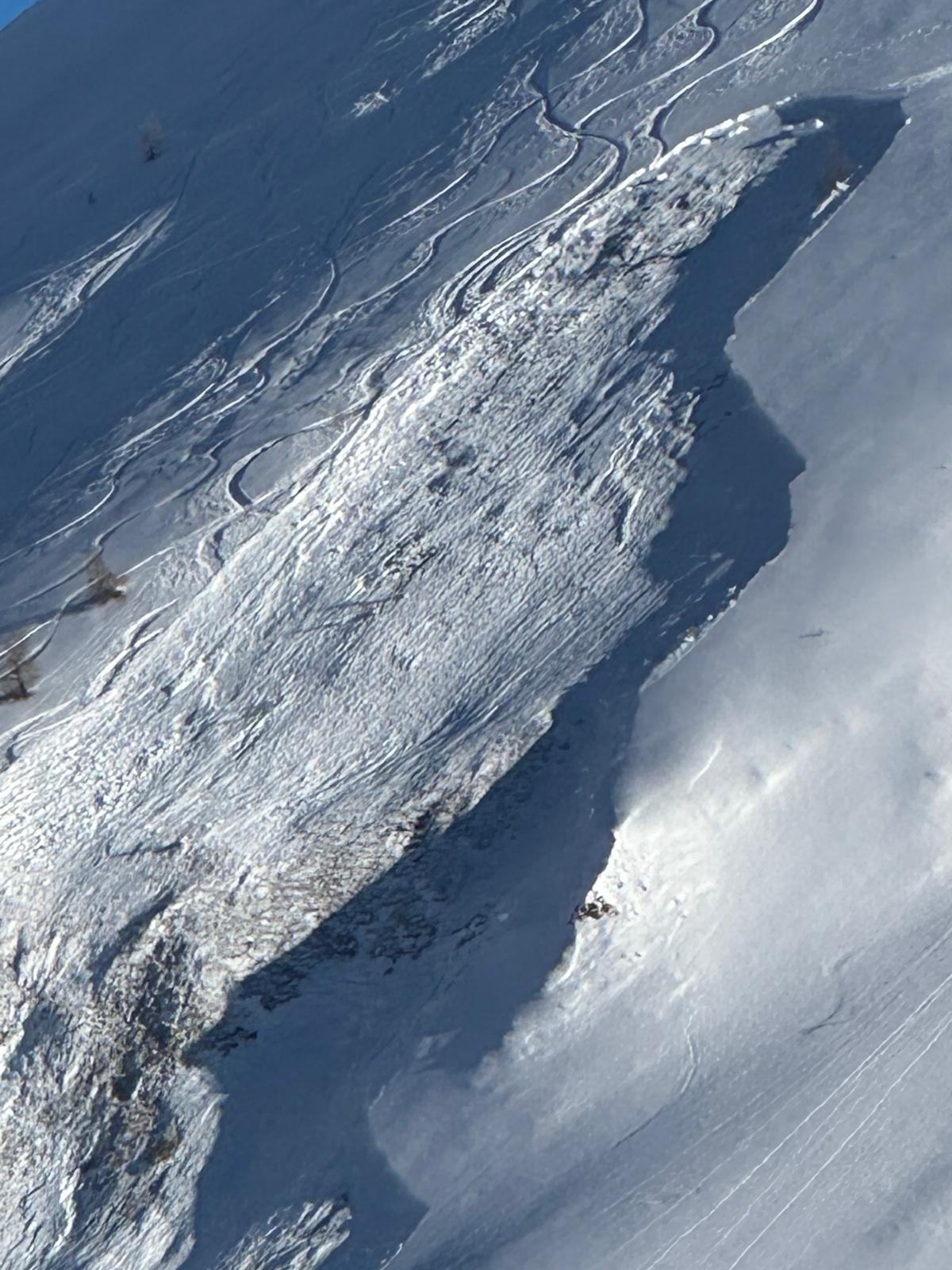
The primary driver behind the high death toll this winter can be traced back to the very beginning of the season. In November 2025, an early cold snap hit the European Alps before a significant base of snow had been established. This cold weather, combined with a thin snow cover, created a high temperature gradient within the snowpack. This process led to "faceting," where snow crystals transform into sugar-like, unstable grains known as depth hoar. These faceted crystals do not bond well with one another, creating a "persistent weak layer" at the base of the snowpack.
As January and February 2026 brought heavy, sustained snowfall, this new weight overloaded the buried weak layers. The vast majority of the season’s victims were caught in wind slab avalanches or collapses linked to these deep-seated instabilities. In many cases, the slides were "remote-triggered," meaning a skier could trigger an avalanche from a distance or on a lower-angle slope that then propagated up to a steeper face.
During the months of March and April, the snowpack underwent some stabilization due to typical spring melt-freeze cycles. However, the deep instabilities from early winter remained present in many high-altitude, north-facing sectors. The late-season fatalities in May underscore the reality that these weak layers can persist until the snowpack completely melts out, especially in the high alpine where temperatures remain low.
Comparative Data and Historical Context
To understand the severity of the 2025/26 season, it must be viewed within the context of historical avalanche data. The deadliest winter in recorded European history remains the 1950/51 season, known as the "Winter of Terror." During that period, a series of three major weather events led to 247 deaths across the Alps. In Switzerland alone, 98 people died, 1,500 buildings were destroyed, and hundreds of head of livestock were lost.
While modern infrastructure, reforestation, and avalanche barriers have significantly reduced the risk to villages and roads, the risk to recreationalists in the backcountry remains high. The 2025/26 season’s figure of over 147 deaths puts it in the top tier of modern-era fatalities.
| Season | Total Fatalities (Europe) |
|---|---|
| 1950/51 | 247 |
| 2009/10 | 190 |
| 2015/16 | 151 |
| 2017/18 | 147 |
| 2024/25 | 70 |
| 2025/26 | 147+ (Ongoing) |
Geographically, the fatalities have been concentrated in the "Big Four" alpine nations: France, Switzerland, Austria, and Italy. Conversely, several countries with significant mountain ranges have reported zero avalanche deaths this season, including the Czech Republic, Finland, Germany, Iceland, Liechtenstein, Romania, Scotland, and Sweden. This discrepancy is largely attributed to different weather patterns that favored a more stable snowpack in Northern Europe and the Highlands, as well as lower overall participation rates in high-risk off-piste skiing in those regions compared to the central Alps.
The "Expert Trap" and Human Factors
One of the most striking aspects of the 2025/26 season is the profile of the victims. Usually, avalanche fatalities involve a mix of inexperienced tourists and seasoned locals. However, this year has seen a disproportionate number of experts caught in slides. This has led to renewed discussions within the mountain guiding community regarding "heuristic traps"—mental shortcuts that can lead to poor decision-making.
In a season where the danger was "not easy to recognize," even for professionals, experts may have relied on their familiarity with the terrain or the absence of immediate warning signs (such as "whumpfing" sounds or recent natural slides). Because the weak layers were buried so deep, traditional stability tests like the "Compression Test" or "Rutschblock Test" occasionally yielded false-stable results, leading even instructors to believe the slopes were safe.
The concentrated nature of the fatalities—most occurring in a two-month window between late December and late February—suggests that the window for safe high-altitude skiing was exceptionally narrow this year. When the sun came out after heavy storms, the "bluebird day" effect drove thousands of skiers into the backcountry, creating a high-probability environment for human-triggered incidents.
Official Responses and Safety Implications
In response to the rising death toll, national avalanche centers across Europe have called for a reassessment of how risk is communicated to the public. The European Avalanche Warning Services (EAWS) has emphasized that "Level 2" does not mean "safe." In their official bulletins, they have noted that "persistent weak layers" require a much more conservative approach to terrain selection than "wind slab" or "storm snow" problems.
"We are seeing a season where the snowpack has a memory," stated one senior forecaster from Météo-France. "The decisions made in November by the weather are still haunting us in May. This year has proven that you cannot judge a slope solely by the fresh snow on top; you have to understand the entire history of the winter’s weather."
The economic impact of these fatalities is also being felt within the adventure tourism sector. Insurance premiums for mountain guides are under review in several regions, and there is an ongoing debate about whether certain high-risk zones should be subject to temporary closures during periods of extreme instability. However, the prevailing sentiment in the alpine community remains focused on education rather than regulation.
Broader Impact and Future Outlook
As the 2025/26 season draws to a close, the data serves as a sobering reminder of the inherent risks of mountain sports. The surge in deaths has prompted a surge in demand for AIARE (Avalanche Research and Education) and similar certification courses across Europe. Equipment manufacturers are also seeing increased interest in electronic safety gear, such as Alpride or Black Diamond jet-force airbags and sophisticated transceivers with interference protection.
The 2025/26 winter will likely be studied by snow scientists for years to come. It serves as a case study in how a specific sequence of weather events—early cold followed by heavy mid-winter precipitation—can create a lethal environment that defies modern prediction models. For the families of the 147-plus victims, the season is a tragedy; for the skiing community at large, it is a loud call for humility in the face of natural forces.
As climate change continues to alter weather patterns in the Alps, experts predict that "erratic" seasons like this one may become more frequent. The oscillation between extreme cold and rapid warming creates a complex "sandwich" of snow layers that are difficult to analyze. The 2025/26 season has set a grim benchmark for the 21st century, reminding all who venture into the mountains that the snowpack is a living, changing, and occasionally unforgiving entity.

