
As the global community accelerates its transition toward a low-carbon economy, the rapid scaling of renewable energy infrastructure has been met with an increasingly sophisticated and coordinated campaign of opposition. While the technological and economic viability of wind, solar, and electric mobility continues to improve, a parallel industry of skepticism has emerged, often characterized by the dissemination of misleading narratives regarding property values, ecological impact, and grid reliability. This phenomenon is not merely a collection of isolated concerns but is frequently identified by analysts as a strategic effort to delay the transition and protect the market share of legacy fossil fuel interests. By examining the mechanisms of misinformation, the historical context of energy lobbying, and the empirical data surrounding clean technology, a clearer picture emerges of the challenges facing the modern energy landscape.
The Distinction Between Misinformation and Disinformation
In the discourse surrounding climate change and renewable energy, it is critical to distinguish between misinformation and disinformation. While both result in the spread of false or misleading claims, their origins and intentions differ significantly. Misinformation often occurs when individuals share inaccurate data without the intent to deceive, frequently driven by a lack of access to technical nuances or the echo-chamber effect of social media. A common example includes local concerns regarding the noise levels of wind turbines or the aesthetic impact of solar farms on rural landscapes. While these concerns may be rooted in personal preference or misunderstood data, they are generally shared in good faith.
Disinformation, conversely, refers to the intentional seeding of false narratives designed to manipulate public opinion or stall legislative progress. According to researchers at the University of Cambridge and the Massachusetts Institute of Technology (MIT), disinformation campaigns in the energy sector often utilize "astroturfing"—the practice of creating fake grassroots movements—to oppose renewable projects. These campaigns are frequently funded by entities with a direct financial stake in maintaining the status quo of the hydrocarbon economy. By shifting the conversation toward narrow, exaggerated, or scientifically unfounded claims, these actors create a climate of "strategic doubt," similar to the tactics used by the tobacco industry in the 20th century regarding the health risks of smoking.
A Chronology of Strategic Obstruction
The history of organized opposition to climate action and renewable energy transition is well-documented, spanning several decades of shifting tactics.
- The Era of Denial (1970s–1990s): Internal documents from major oil companies, such as Exxon, reveal that their own scientists confirmed the link between fossil fuel combustion and global warming as early as 1977. Despite this internal knowledge, public-facing campaigns during this period focused on denying the existence of a scientific consensus on climate change.
- The Era of Uncertainty (2000s–2010s): As physical evidence of climate change became undeniable, the narrative shifted from total denial to the exaggeration of scientific uncertainty. The goal was to suggest that more research was needed before any "drastic" policy shifts toward renewables could be justified.
- The Era of Practicality and "Greenwashing" (2020–Present): Today, the opposition has largely moved toward "solutions skepticism." This involves acknowledging climate change while simultaneously claiming that renewable energy is too expensive, unreliable, or environmentally damaging in its own right. This stage also includes significant spending on "greenwashing" advertisements, where fossil fuel companies highlight small-scale investments in biofuels or carbon capture while the vast majority of their capital expenditure remains focused on new oil and gas exploration.
Analyzing the Lifecycle of Electric Vehicles
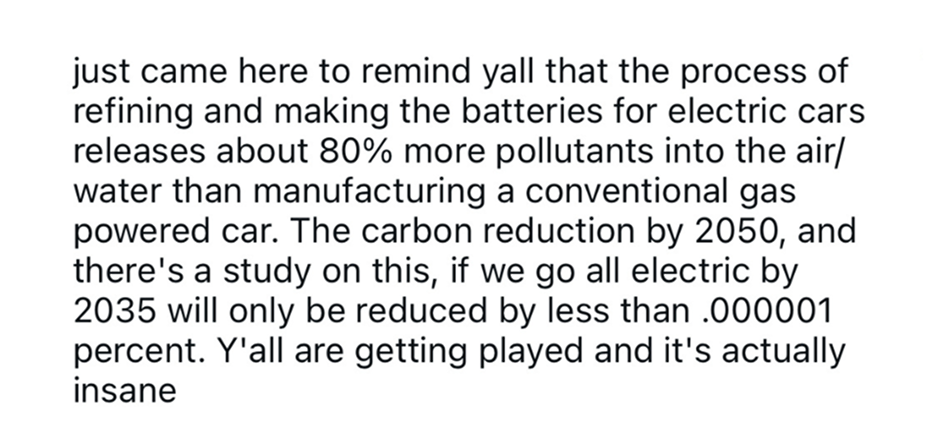
One of the most persistent narratives in the disinformation playbook is the claim that electric vehicles (EVs) are more harmful to the environment than internal combustion engine (ICE) vehicles due to mineral extraction and battery production. While it is factual that the manufacturing of lithium-ion batteries is energy-intensive and involves complex supply chains, empirical data consistently demonstrates that EVs have a significantly lower carbon footprint over their entire lifecycle.
Research conducted by the MIT Energy Initiative highlights a stark contrast in emissions. According to their findings, a standard gasoline-powered vehicle emits an average of 350 grams of CO2 per mile driven over its lifetime. In comparison, a fully battery-electric vehicle, even when accounting for the carbon intensity of current power grids and the manufacturing process, creates approximately 200 grams per mile. As the power grid itself becomes cleaner through the integration of more wind and solar, the lifecycle emissions of EVs continue to drop, a benefit that gasoline cars can never achieve. Furthermore, the development of battery recycling technologies and the shift toward LFP (Lithium Iron Phosphate) batteries, which do not require cobalt or nickel, are further reducing the environmental impact of the EV sector.
Ecological Concerns and Offshore Wind Infrastructure
The development of offshore wind has become a primary target for disinformation, with claims often surfacing that these projects are responsible for mass wildlife mortality, particularly among whale and bird populations. However, federal agencies and scientific organizations have repeatedly found no evidence linking offshore wind surveys or operations to recent whale standings. The National Oceanic and Atmospheric Administration (NOAA) has stated that the primary threats to marine mammals remain ship strikes, entanglement in fishing gear, and the warming of ocean temperatures due to climate change.
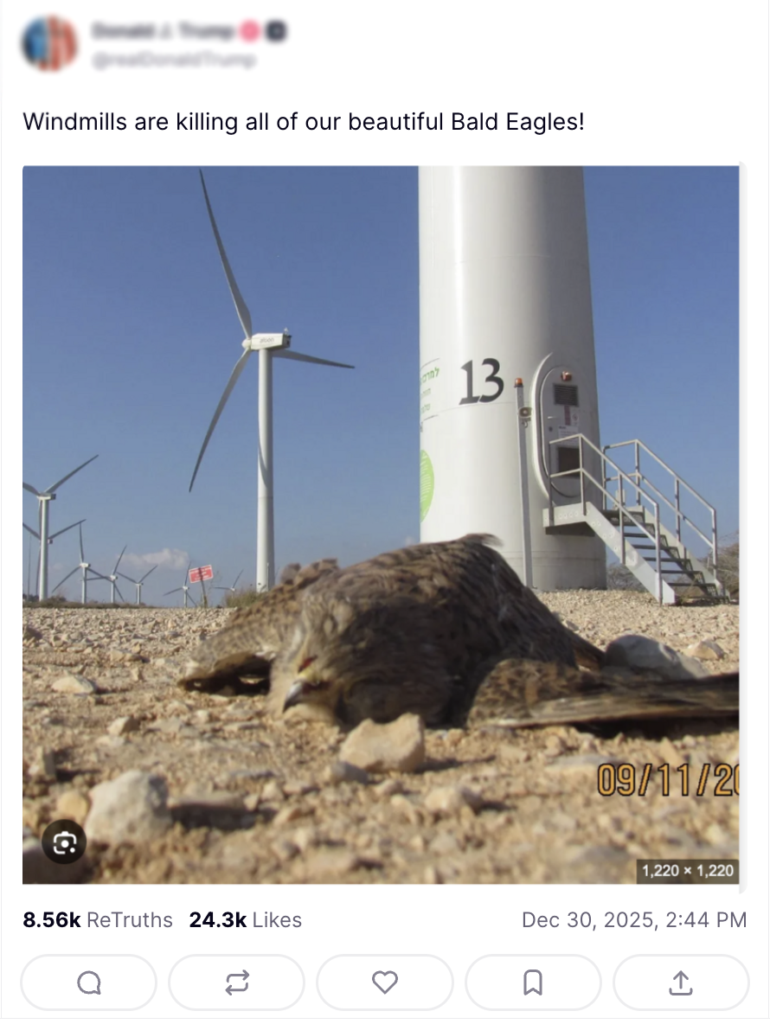
Regarding avian populations, the narrative that wind turbines are a primary threat to birds is frequently used as a "red herring" to distract from more significant hazards. Data from the U.S. Fish and Wildlife Service indicates that while wind turbines account for a small fraction of bird deaths, domestic cats, building glass collisions, and habitat loss due to climate change are the leading causes of avian mortality.
The comparison between renewable infrastructure and fossil fuel infrastructure is also critical. Offshore oil drilling carries the inherent risk of catastrophic spills, such as the Deepwater Horizon disaster, which released millions of barrels of oil into the Gulf of Mexico, causing long-term devastation to aquatic ecosystems. In contrast, the risks associated with offshore wind are localized and manageable through proper siting and conservation-focused construction practices.
Economic and Grid Reliability Realities
A third pillar of renewable energy skepticism focuses on the alleged unreliability of the grid and the "hidden costs" of wind and solar. Critics often point to the intermittent nature of these sources—the fact that the sun does not always shine and the wind does not always blow—as proof that they cannot support a modern economy.
However, the International Energy Agency (IEA) and various grid operators have demonstrated that a diversified mix of renewables, supported by battery storage and smart grid management, can provide high levels of reliability. The cost of utility-scale battery storage has plummeted by nearly 90% over the last decade, allowing for the "smoothing out" of energy delivery. Moreover, in many regions, wind and solar are now the cheapest forms of new electricity generation, even without subsidies.
The "unreliability" argument also ignores the vulnerabilities of the fossil fuel supply chain. Extreme weather events, such as Winter Storm Uri in Texas, demonstrated that natural gas infrastructure is highly susceptible to freezing, leading to massive grid failures. Renewables, particularly when paired with decentralized microgrids, often provide a more resilient energy architecture in the face of a changing climate.
Broader Impact and the Path Toward Truth
The persistence of disinformation has tangible consequences for global climate goals. When local communities are saturated with false claims about property values or health risks, it leads to the delay or cancellation of critical infrastructure projects. This, in turn, slows the decarbonization process and increases the ultimate cost of climate adaptation.
To counter these trends, experts emphasize the importance of "pre-bunking"—educating the public on the tactics of disinformation before they encounter it. This includes promoting media literacy and encouraging the use of primary scientific sources, such as reports from the Intergovernmental Panel on Climate Change (IPCC) or reputable academic institutions.
The transition to clean energy is not a claim of perfection; it is a pursuit of a superior alternative. Every form of energy production requires land, minerals, and infrastructure. However, the data confirms that the ecological, economic, and health impacts of renewable energy are a fraction of those associated with the continued extraction and combustion of fossil fuels. As the global energy map continues to be redrawn, the ability of the public to distinguish between legitimate scientific debate and coordinated disinformation will be a deciding factor in the success of the energy transition.

In conclusion, the path toward a sustainable future requires more than just technological innovation; it requires a commitment to factual integrity. By addressing the concerns of the community with transparent data and exposing the financial motivations behind disinformation, society can move past the manufactured controversies and focus on the responsible, low-impact deployment of the technologies that will power the next century. Participation in the democratic process, support for transparent energy policies, and a reliance on peer-reviewed science remain the most effective tools for ensuring that the transition to renewable energy is both rapid and just.

