
The intersection of high-performance athletics and orthopedic medicine often centers on the recovery process, yet for Dr. Greg Lichtman, the focus has shifted toward the prevention of the very injuries he is trained to repair. As an orthopedic surgeon based in Auburn, California, and a pool physician for the U.S. Women’s Ski Team, Lichtman has observed a persistent trend in alpine sports: while equipment and technique have evolved, the incidence of Anterior Cruciate Ligament (ACL) tears remains a significant hurdle for recreational and professional skiers alike. His mission is to bridge the gap between surgical excellence and preventative education, utilizing his unique background in sports medicine to keep skiers on the slopes and out of the operating room.
From Vail to the World Cup: A Foundation in Sports Medicine
Dr. Lichtman’s specialized perspective on knee injuries began during a formative gap year spent at the Steadman Philippon Research Institute in Vail, Colorado. While many young skiers spend their gap years in seasonal employment on the mountain, Lichtman immersed himself in the clinical and research aspects of orthopedic surgery. The institute, world-renowned for its treatment of elite athletes, provided him with a front-row seat to the complexities of the ACL—a critical ligament that stabilizes the knee joint.
During his time in Vail, Lichtman worked alongside U.S. Ski Team athletes, witnessing the grueling reality of post-surgical rehabilitation. This experience was further refined during a sports medicine fellowship at the University of Massachusetts, where he began to notice a discrepancy in the available data. While land-based sports like soccer and basketball had robust, validated injury-prevention protocols, the skiing industry lacked a similarly standardized approach. This realization, combined with his experience skiing the challenging terrain of the East Coast and later the Sierra Nevada, shaped his current practice. Today, his role with the U.S. Women’s Ski Team takes him to international venues such as Portillo, Chile, and Val d’Isère, France, where he monitors the world’s best athletes, applying the same principles of biomechanics to help them avoid catastrophic knee failures.
The Biomechanics of the ACL Tear: Mechanisms of Failure
Understanding how to prevent an ACL tear requires a deep dive into the physics of skiing. According to Lichtman, most injuries occur within a window of just 60 milliseconds—too fast for a human to react once the process has begun. He identifies two primary mechanisms that lead to the majority of non-contact ACL injuries on the hill: the "Slip-catch" and the "Phantom Foot."
The Slip-catch mechanism is particularly prevalent among racers and high-speed carvers. It occurs when the skier’s downhill ski loses contact with the snow and then abruptly catches an edge. As the ski engages, the leg is forced into a position of internal rotation while the knee is flexed. This combination of forces—valgus stress (the knee collapsing inward) and internal rotation of the tibia—is the "perfect storm" for an ACL rupture. This often happens so quickly that the skier is on the ground before they realize they have been injured.
The Phantom Foot mechanism is more common among recreational skiers who find themselves in the "backseat"—a position where the skier’s weight is too far back, and the hips are below the knees. In this vulnerable stance, the tail of the ski acts as a lever. If the skier falls backward and away from the hill, the uphill edge of the downhill ski can catch. Because the skier is seated so low, the boot and the back of the ski (the "phantom foot") create a twisting force that the knee cannot sustain. This lever effect often tears the ACL before the binding’s release mechanism can even be triggered.
Environmental Risk Factors: Snow, Light, and Geography
Beyond biomechanics, Lichtman emphasizes that environmental conditions play a decisive role in injury rates. His observations suggest that different regions present unique risks. On the East Coast, where hardpack and icy conditions are the norm, the Slip-catch mechanism is a frequent threat because skis are more likely to chatter or lose grip unexpectedly. Conversely, in the Sierra Nevada, the heavy, wet snow often referred to as "Sierra Cement" poses a different challenge. This dense snow can abruptly grab a ski, throwing a skier off balance and into the backseat.
Visibility is another critical factor. "Flat light" or "whiteout" conditions are statistically associated with higher injury rates. When a skier cannot perceive changes in terrain or snow texture, their ability to maintain an athletic, forward-leaning stance is compromised. This lack of visual feedback often leads to "defensive skiing," where the individual leans back to lower their center of gravity, inadvertently entering the high-risk "backseat" zone.
The Chronology of Risk: Why December is the Most Dangerous Month
Data from orthopedic clinics in mountain towns often shows a significant spike in ACL injuries during the month of December. Lichtman attributes this to a combination of factors that create a "perfect storm" for early-season injuries. First, many skiers have not yet regained their "ski legs," meaning their sport-specific muscular endurance is at its lowest point of the year.
As the day progresses, muscular fatigue sets in. When the quadriceps and hamstrings tire, they lose their ability to dynamically stabilize the knee joint. A fatigued skier is more likely to drop into the backseat to rest their muscles, which, as previously established, is the most dangerous position for the ACL. Furthermore, early-season snow conditions are often variable, with man-made snow and hidden obstacles increasing the likelihood of an unexpected "catch" or "slip."
The Science of Prevention: Beyond the Wall Sit
To combat these risks, Lichtman advocates for a shift in how skiers approach off-season training. The traditional "wall sit" may build isometric strength in the quads, but it does little to address the rotational stability required to protect the ACL.
Lichtman points to the Gluteus Medius—a muscle on the outside of the hip—as one of the most important, yet neglected, muscles for ski safety. The Gluteus Medius is responsible for lateral leg movement and, more importantly, for keeping the knee aligned over the toes during flexion. When this muscle is weak, the knee is more likely to collapse inward (valgus), which is a prerequisite for an ACL tear.
In addition to hip strength, Lichtman emphasizes core stability, specifically the obliques and deep abdominal muscles. A strong core allows a skier to recover their balance without relying solely on their legs. If a skier gets "bucked" by a bump, a strong core can help them pull their weight forward and stay out of the backseat. He suggests that the skiing community should look toward the "FIFA 11+" program—a specialized warm-up and conditioning routine used in soccer that has been proven to reduce ACL injuries by 40 to 60 percent.
The Role of Equipment: Bindings and the DIN Myth
A common misconception among recreational skiers is that their bindings will always release in time to prevent an injury. However, Lichtman notes that most ACL tears occur before the binding ever releases. This is because standard alpine bindings are designed primarily to release during a forward or backward fall (vertical release) or a twisting fall (lateral release at the toe), but they are often less sensitive to the specific internal rotation of the tibia that causes ACL tears.
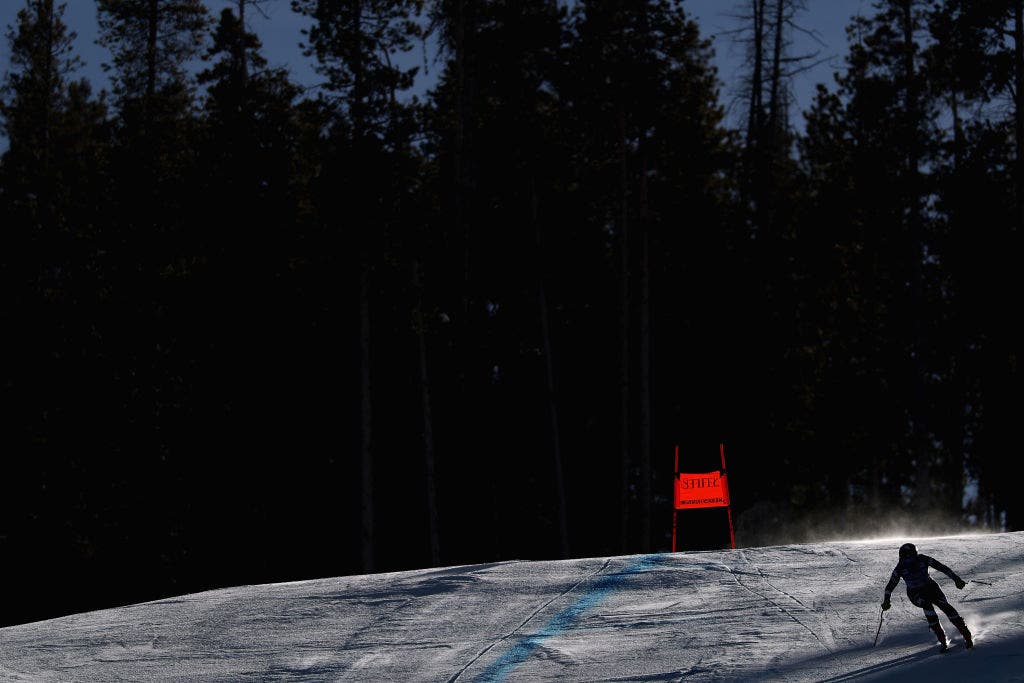
Lichtman advises all skiers to ensure their DIN settings—the industry-standard scale for binding release force—are accurately set by a professional based on their current weight, height, age, and ability level. He warns against "cranking down" bindings to mimic professional racers like Breezy Johnson. While racers require high DIN settings to prevent "pre-release" at 80 mph, the average recreational skier needs a setting that prioritizes safety over retention.
He also highlights the potential for future innovation in binding technology. Some manufacturers, such as Look with their multidirectional release systems and newer companies focused on "knee-binding" technology, are attempting to address the specific lateral and rotational forces that target the ACL. However, Lichtman maintains that no equipment is a substitute for proper technique and physical preparation.
Broader Implications and the Path Forward
The economic and personal impact of ACL injuries is staggering. With surgery and rehabilitation costs often exceeding $20,000 per injury, and a recovery timeline that can span nine to twelve months, the "cost" of a single fall is high. Furthermore, an ACL tear increases the long-term risk of developing post-traumatic osteoarthritis, even with a successful surgical reconstruction.
Dr. Lichtman’s advocacy for a standardized, data-driven prevention program for skiing represents a necessary evolution in the sport. As participation in backcountry and high-intensity freeride skiing continues to grow, the need for "fatigue awareness" and "mechanism education" becomes even more pressing.
The path forward, according to Lichtman, involves a cultural shift. Skiers must learn to view "calling it a day" as a safety maneuver rather than a sign of weakness. By combining professional instruction to correct "backseat" habits, targeted off-season conditioning for the hips and core, and a realistic assessment of snow conditions, the skiing community can begin to see the same reduction in ligament injuries that land-based sports have achieved over the last two decades. For Lichtman, the ultimate success isn’t found in a perfect surgical outcome, but in the silence of an operating room because the skiers are still out on the mountain.

