
The modern snowboard industry has long pursued a dual mandate: engineering products that push the absolute boundaries of high-speed freestyle progression while simultaneously catering to the deeply traditional, soul-surfing ethos of backcountry riding. Within this landscape, oversized powder boards have evolved from niche experimental shapes into refined, highly calculated instruments of alpine geometry. Among the latest contributions to this evolution is the Korua Stork, a winter hardware release designed to tune out the peripheral noise of modern resort riding and refocus the rider’s attention squarely on the fundamental art of the turn. Embodying minimalist aesthetics and meticulous construction, the Stork has emerged as one of the most talked-about additions to the contemporary split and solid snowboard market, bridging the gap between ocean-inspired surf mechanics and high-altitude powder dynamics.
Main Facts and Design Philosophy
At its core, the Korua Stork is engineered for a specific segment of the snowboarding demographic: riders who prioritize fluid motion, low-frequency rhythm, and absolute efficiency in deep snow over high-speed straight-lining or park progression. Measuring up to a commanding 178 centimeters in length, the board defies the industry’s recent trend toward compact, maneuverable freestyle decks. Yet, despite its imposing physical footprint, the Stork is designed to handle with deceptive agility.
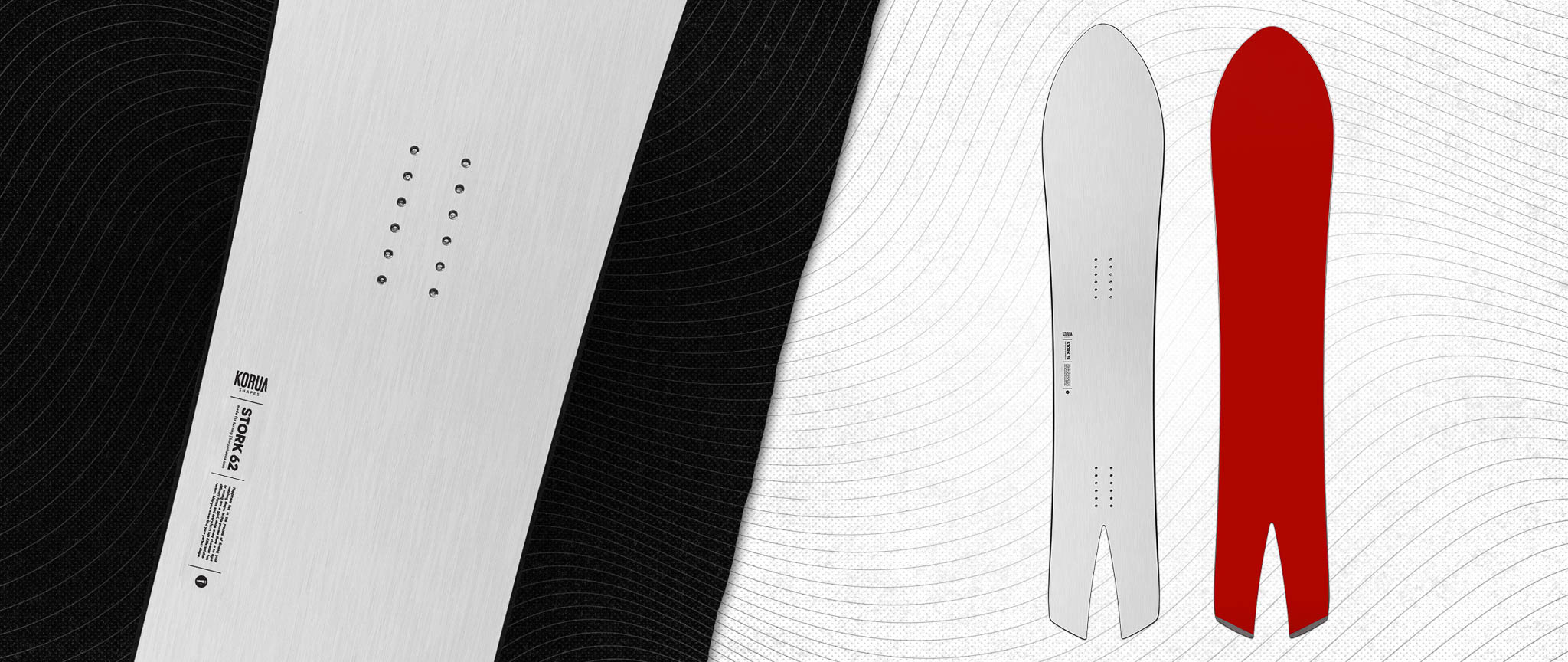
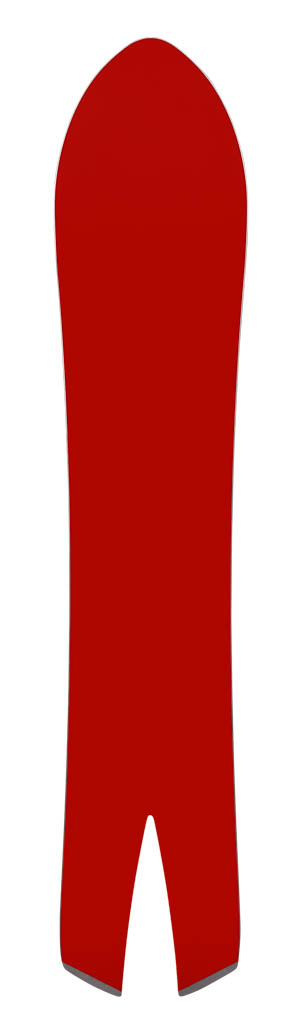
The structural anatomy of the board relies on a triumvirate of powder-specific design features: a massive rockered nose, a pronounced taper, and a distinctive, deep swallowtail. These elements work in concert to eliminate the physical effort traditionally required to keep a long board afloat in untracked snow. By shifting the rider’s stance significantly toward the rear, the design naturally unweights the front end, allowing the massive scooped nose to plane effortlessly over the snowpack. According to preliminary technical data from product testers, this configuration virtually eliminates the risk of nose-diving, even in the deepest and most challenging backcountry conditions.
Chronology and Development of Korua’s Design Language
The trajectory of Korua Shapes offers essential context for understanding the engineering choices behind the Stork. Founded with an explicit dedication to turning and the pursuit of powder, the brand has spent years refining the principles of shape-driven performance. Unlike brands that rely heavily on complex camber profiles or high-tech composite dampening systems to force a board into submission, Korua has consistently championed a philosophy of simplicity—arguing that the outline of the board should do the heavy lifting.
The development of the Stork represents an extension of this chronological evolution. While earlier models in the brand’s catalog established a reputation for aggressive, hard-carving capabilities on groomed runs, the Stork introduces a more measured, elongated approach to the geometry. The prototyping phase focused heavily on how a board of this magnitude could maintain playfulness in tight tree runs without sacrificing the stability required for wide, drawn-out arcs at high speeds. The resulting Winter design iteration successfully resolves this paradox by utilizing a front-biased contact point that shortens the board’s functional radius when riding on compact snow.
Technical Specifications and Materials Science
A granular examination of the Stork’s construction reveals a careful balance between rigidity and compliance. The chassis is built around a dual wood core, which provides a predictable, uniform flex pattern from tip to tail. This core is paired with a softer-flexing biax fiberglass layup, deliberately chosen to avoid the twitchy, overly reactive feel often associated with stiff, high-performance freeride decks.
On hardpack and groomers, this construction interacts with a setback camber profile to facilitate smooth, methodical carves. Rather than biting aggressively into the snow with a sudden, jarring hook, the Stork encourages a drawn-out, surf-inspired engagement. The swallowtail further enhances this transition; its two independent halves flex slightly apart to smooth out the exit of each turn, while a long effective edge maintains structural grip throughout the arc.
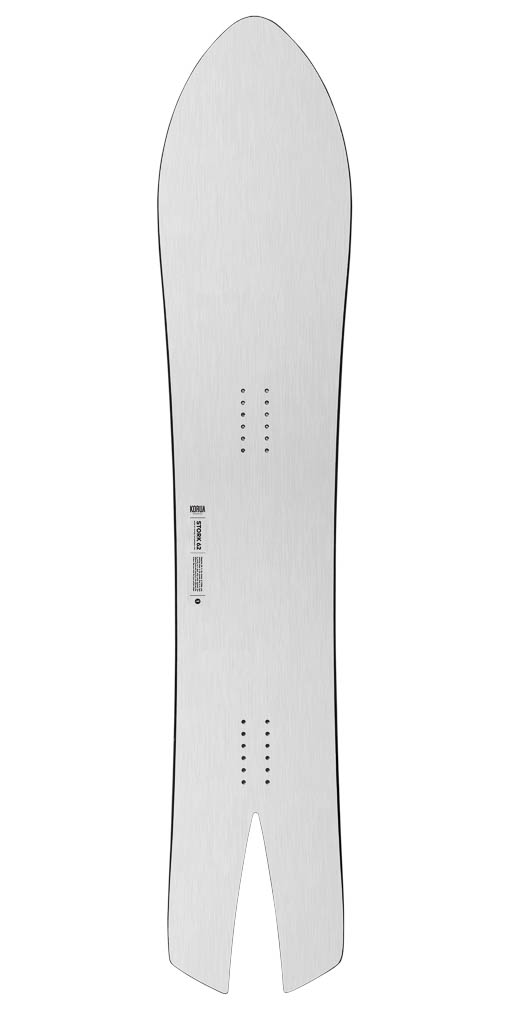
One of the most innovative material applications on the Stork addresses a common real-world problem in backcountry riding: heavy, wet, and sticky snow. While pristine, feather-light powder easily sheds from a topsheet, dense spring snow or maritime powder frequently accumulates on the board, adding dead weight and compromising float. To counter this, Korua incorporated a specially brushed topsheet that acts as a physical barrier against snow accumulation. This detail ensures that the massive nose remains unweighted throughout long descents, preserving the board’s intended buoyancy regardless of changing snow temperatures and moisture content.
Expert Analysis and Industry Response
Industry insiders and veteran testers have widely evaluated the Stork’s performance across varying alpine environments, offering detailed insights into its operational limits. Noted snowboard journalist and tester Ed Leigh provided a comprehensive assessment of the board following field evaluations, highlighting its paradoxical handling characteristics.
"This is a magic board," Leigh noted, addressing the initial apprehension surrounding its 178cm length. "Hiding its length, it feels like a 55 in the trees and tight stuff and a 65 on the piste. Obviously, there are limits to its freestyle and switch capabilities, but it is incredibly versatile on piste and in powder and put a huge smile on my face. I would definitely buy this board."
This dual nature is central to the Stork’s market positioning. While it is fundamentally a powder-specific displacement tool, its ability to transition seamlessly onto groomed terrain broadens its utility for riders who must navigate hardpack sections to access backcountry bowls. However, industry analysts emphasize that the board is not designed as an all-mountain daily driver for the average resort rider. Its directional swallowtail shape, lack of twin-tip symmetry, and specialized flex profile make it an intentionally single-minded instrument, optimized explicitly for directional flow and deep-snow immersion.
Broader Market Implications and Environmental Ethos
The release of the Korua Stork arrives at a time of shifting consumer priorities within the winter sports sector. As climate variability alters snowpacks globally and resort overcrowding increases, a growing segment of the snowboarding population is pivoting away from high-speed park riding and crowded lift lines in favor of self-propelled touring and contemplative backcountry exploration.
Products like the Stork reflect this cultural shift, commercializing a design ethos centered on the "slow life" movement—valuing the qualitative experience of a single, well-executed turn over the quantitative metric of vertical feet descended per day. By aligning hardware design with this philosophy, manufacturers are catering to an aging, highly discerning demographic of snowboarders who view the mountain less as a terrain park to be conquered and more as a canvas to be interpreted.
Ultimately, the Korua Stork stands as a testament to the power of deliberate, purpose-driven industrial design in action sports. By marrying classic surf geometry with modern materials science—such as the anti-accumulation brushed topsheet and optimized core profiles—the brand has delivered a product that successfully redefines expectations for large-format powder boards. Whether navigating tight subalpine timber or executing sweeping arcs on open alpine faces, the Stork provides a masterclass in how form and function can converge to elevate the simple, timeless act of turning a snowboard.

