
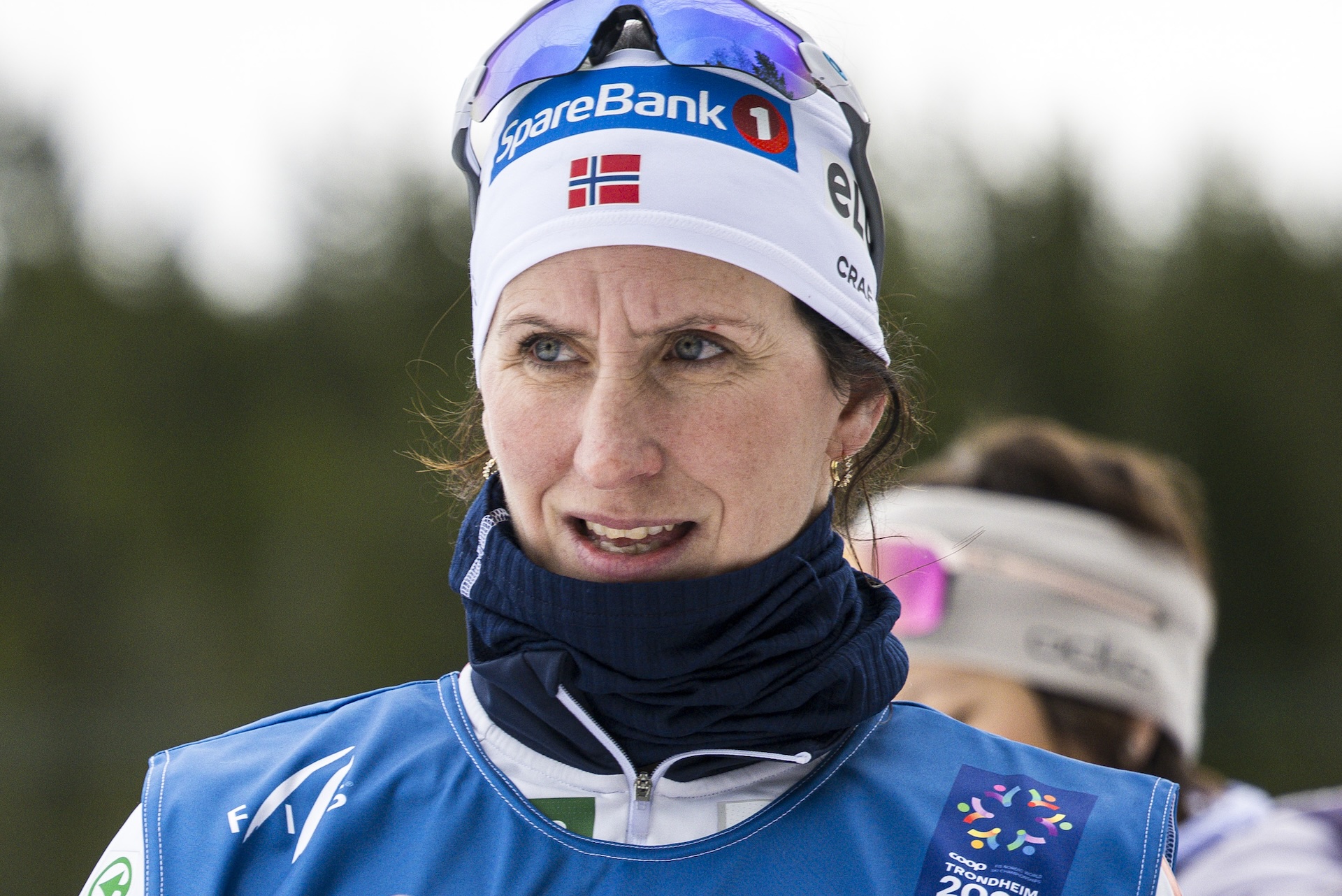
Marit Bjørgen, the legendary Norwegian cross-country skier and now a respected coach for the national elite team, has voiced concerns regarding Heidi Weng’s burgeoning interest in road running, urging the seasoned athlete to maintain her focus on the upcoming World Championships. Bjørgen, in her third season coaching the national squad, expressed apprehension that Weng’s pursuit of personal bests in road races might detract from her primary objectives for the season, particularly the prestigious World Championships in Falun.
Heidi Weng, a prominent figure in cross-country skiing, recently announced that the 2026-27 season would mark her final campaign in the sport. Despite this declaration, the 34-year-old athlete has emphatically stated that she is far from being tired of competition. Instead, she appears to have developed a newfound passion for road running, setting ambitious personal goals for herself in this discipline.
"I’ve suddenly found it fun to push myself in something new," Weng told TV 2, referring to her foray into road races. "For example, 10,000-meter road races. It’s become a thing for me." She clarified that her motivation is not solely about winning, but rather about testing her personal limits and achieving specific time targets. "It’s not about coming first across the finish line, but I’m curious about how fast I can run a 10-kilometer. The goal is to get under the 32-minute mark. Then we’ll see if I can manage it."
However, Weng’s recent performances in road races have not yet met this ambitious target. At the Bjørndalenmila event on Saturday, she experienced a significant setback, struggling particularly in the latter half of the race. She ultimately finished with a time of 33 minutes and 44 seconds, more than a minute behind the winner, Therese Johaug. This result fell short of her sub-32-minute aspiration.
Looking back at her performance at the Sentrumsløpet in late April, Weng clocked in at 32 minutes and 24 seconds. While this was a closer finish to her goal, Therese Johaug again emerged victorious, though the margin of victory was a mere nine seconds. These results, while demonstrating Weng’s dedication and competitive spirit, highlight the significant challenge she faces in achieving her personal road running ambitions, especially when competing against world-class athletes like Johaug.
Coaching Concerns and the Priority of World Championships
The coaching staff, including Bjørgen, has expressed reservations about Weng’s increased involvement in road running. Last year, head coach Sjur Ole Svarstad had already conveyed a clear message to Weng about managing her training load. Now, Marit Bjørgen has reiterated these concerns, emphasizing the importance of the upcoming World Championships in Falun as the season’s paramount event.
"I’m impressed by what she’s done with her running, both last year and this spring," Bjørgen stated. "But I believe Heidi needs to remember that the World Championships in Falun are what count. She mustn’t focus too much on road running, but also on the World Championships. She needs to do what it takes to be as good as possible there. Because Heidi can be a contender for the very top prizes in Falun," Bjørgen added, underscoring Weng’s potential in her primary discipline.
Bjørgen acknowledged Weng’s autonomy in making her own decisions but expressed a sincere hope that the coaching staff’s input would prompt a period of reflection. "Heidi will probably decide most things herself, but I hope what we say can make her think a little," Bjørgen concluded.
The dynamic between Bjørgen and Weng offers an interesting perspective. They were once national team colleagues during the earlier stages of Weng’s career, with Bjørgen serving as the established veteran. Today, the roles have shifted, with Weng now being the experienced athlete on the team. This shift in perspective likely informs Bjørgen’s coaching approach, blending her personal experience with her current role as a mentor.
Weng’s announcement that the 2026-27 season will be her last, with a slight caveat of "maybe," suggests a desire to leave the sport on her own terms. However, the timing of this announcement, coupled with her new athletic pursuits, has naturally led to discussions about her priorities and the potential impact on her final years of elite cross-country skiing.
Background and Context of Heidi Weng’s Career
Heidi Weng’s career in cross-country skiing has been marked by significant achievements and a reputation for resilience. She has consistently been a top contender in various disciplines, showcasing her versatility and competitive drive. Her career highlights include multiple World Cup victories, podium finishes in major championships, and a reputation for her strong finishing capabilities.
The announcement of her intention to retire after the 2026-27 season signals a significant transition period for the Norwegian national team. As one of the most experienced and accomplished athletes, her departure will undoubtedly create a void that younger skiers will aim to fill. Her decision also raises questions about her long-term engagement with sports and her potential future endeavors.
The Rise of Road Running as a Complementary Discipline
The increasing popularity of road running among elite endurance athletes is not a new phenomenon. Many cross-country skiers, biathletes, and even track and field athletes have found that road running can complement their primary training regimens. It offers a different type of physiological stimulus, can help maintain aerobic fitness during the off-season, and provides a mental break from the specific demands of their core sport.
For Weng, the appeal of road running appears to stem from a desire for personal challenge and a different kind of competitive satisfaction. The allure of testing her speed over a standardized distance like 10 kilometers, with a clear time-based goal, offers a distinct motivation compared to the tactical and often unpredictable nature of cross-country ski races.
However, the inherent risks of increased training volume and different biomechanical stresses associated with road running cannot be overlooked. The coaching staff’s concerns are likely rooted in ensuring that this additional training does not compromise Weng’s preparation for the World Championships, which demand peak performance in a specific discipline under high-pressure conditions.
Data and Performance Metrics
To understand the coaching staff’s concerns, examining Weng’s recent road running performances in comparison to elite standards and her own potential is crucial.
-
Heidi Weng’s 10k Road Race Times:
- Bjørndalenmila: 33:44 (Winner: Therese Johaug)
- Sentrumsløpet: 33:24 (Winner: Therese Johaug, margin 9 seconds)
-
Elite 10k Road Race Standards (Women):
- World Record: 29:17 (Letesenbet Gidey, Ethiopia)
- Top Norwegian times typically fall within the 31-32 minute range for competitive club runners and national-level athletes.
- Therese Johaug’s demonstrated capability in the 10k road race suggests a strong level of fitness that Weng is aiming to match.
The data indicates that while Weng is performing well for a recreational runner or a developing road racer, her current times are still a significant margin away from the elite performances, including that of her compatriot Therese Johaug. The goal of breaking the 32-minute barrier is a respectable but challenging objective that requires dedicated and focused training.
Implications for the World Championships
The World Championships in Falun represent the pinnacle of the cross-country skiing season. Success at this event requires athletes to be in peak physical and mental condition, with training programs meticulously designed to optimize performance for the specific demands of ski racing.
If Weng dedicates a substantial portion of her training time and energy to road running, it could potentially lead to:
- Overuse Injuries: The different biomechanics of running can place different stresses on the body compared to skiing, potentially increasing the risk of injuries if not managed carefully.
- Reduced Ski-Specific Fitness: While road running contributes to aerobic capacity, it does not replicate the full spectrum of muscle engagement, power output, and technical demands of cross-country skiing.
- Mental Fatigue: Juggling multiple high-level athletic pursuits can lead to mental fatigue, potentially impacting focus and motivation for the primary sport.
- Compromised Tactical Preparation: The strategic elements of ski racing, including pacing, waxing, and race tactics, require dedicated mental rehearsal and practice that might be overshadowed by road running goals.
Conversely, a well-managed integration of road running could potentially offer benefits such as improved cardiovascular fitness, enhanced leg strength, and mental rejuvenation. The key lies in the balance and prioritization, which is precisely what Bjørgen is urging Weng to consider.
Official Statements and Related Parties
The statements from Marit Bjørgen, a respected figure with extensive experience at the highest level of the sport, carry significant weight. Her role as a coach provides her with an intimate understanding of Weng’s current capabilities and the demands of elite cross-country skiing.
While not directly quoted in this article, it can be inferred that other members of the coaching staff and potentially the Norwegian Ski Federation would share similar concerns regarding the prioritization of training. The federation’s primary objective is to ensure its athletes are best prepared to achieve success at major international events like the World Championships.
Heidi Weng’s own statements reveal a genuine enthusiasm for her new pursuit. Her clarification that the goal is personal improvement rather than outright victory suggests a desire for a different kind of athletic fulfillment. The "maybe" attached to her retirement date might also indicate a desire to keep her options open, contingent on her performance and enjoyment of the sport in her final years.
Broader Impact and Future Considerations
The situation with Heidi Weng highlights a common dilemma faced by elite athletes as they approach the later stages of their careers. The drive to compete and excel often persists, leading to explorations of new challenges or a desire to extend their competitive lives.
For the Norwegian cross-country skiing team, the continued success of athletes like Weng is crucial. Her experience and leadership are invaluable, especially as the team navigates the post-Bjørgen era and prepares for future Olympic cycles. The challenge for coaches is to support their athletes’ personal ambitions while ensuring that the primary goals of the team are not jeopardized.
The discussion around Weng’s road running also brings attention to the evolving landscape of elite sports. As athletes become more sophisticated in their training and management, the lines between traditional disciplines can blur. The key takeaway is the importance of open communication, clear goal setting, and a strategic approach to training that balances personal interests with the demands of peak athletic performance.
Ultimately, Heidi Weng’s decision will be her own. However, the insights from a respected figure like Marit Bjørgen serve as a timely reminder of the delicate balance required for sustained success at the elite level. The coming months will likely reveal how Weng navigates this exciting but potentially challenging phase of her career, with the World Championships in Falun serving as the ultimate test of her priorities.

