
The future of one of Finland’s brightest biathlon talents, Arttu Heikkinen, hangs in the balance as legal repercussions from a tragic hunting accident in 2024 continue to escalate. The 22-year-old former junior world champion, once seen as a cornerstone of the Finnish national team’s future, is currently prohibited from possessing firearms—a mandate that presents a near-insurmountable hurdle for an athlete whose profession relies entirely on the use of a rifle. Following the recent dismissal of his appeal by the appellate court and a subsequent increase in financial penalties, the sporting community is grappling with the reality that Heikkinen’s professional career may have reached an abrupt and premature conclusion.
A Chronology of a Tragic Event
The legal proceedings stem from an incident in the autumn of 2024, when a hunting excursion turned into a life-altering tragedy. During the outing, Heikkinen was involved in an accident that resulted in severe, permanent injuries to his hunting companion, who was also his godfather. The victim sustained critical trauma, including the permanent loss of vision in one eye.
In the subsequent investigation, the Rovaniemi District Court determined that Heikkinen’s conduct during the hunt constituted gross negligence. The initial ruling mandated significant financial restitution to the victim, substantial daily fines, and, most crucially for his athletic career, the revocation of his firearms license. Heikkinen and his legal counsel immediately challenged the verdict, arguing that the court’s assessment was flawed and based on an inaccurate interpretation of the events. However, the appellate court not only upheld the original conviction but also increased the financial liability of the athlete, leaving Heikkinen with limited legal recourse. He now faces a 60-day window to determine if he will attempt to escalate the case to the Supreme Court of Finland.
The Stance of the National Team
Erik Kulstad, the Norwegian head coach of the Finnish national biathlon team, has been vocal about the team’s support for the embattled athlete, while simultaneously acknowledging the gravity of the situation. Kulstad’s position is defined by a strict adherence to the intersection of law and sport.
"It is a harrowing situation for him. To be perfectly honest, I do not know how this will develop," Kulstad stated in recent remarks to Finnish media. Despite the legal cloud hanging over the 22-year-old, the coaching staff maintains that as long as Heikkinen remains legally permitted to train and compete, he remains a valued member of the national squad. Kulstad emphasized that the judicial verdict does not alter the team’s perception of Heikkinen as an athlete or a person. However, the practical reality of being a professional biathlete without the ability to legally own or operate a rifle is a hurdle that the coaching staff admits they are currently unprepared to navigate.
The absence of Heikkinen from the team’s recent training camp in France and the absence of his participation in last week’s scheduled press briefings underscore the isolation the athlete currently faces. The team is in a state of suspended animation, waiting for the final word from the judiciary before they can plan for the upcoming competition season.
The Impact of Firearms Regulations on Biathlon
The technical nature of biathlon makes it perhaps the most vulnerable sport to changes in firearm legislation. Unlike other winter sports that rely purely on physical endurance and skiing technique, the biathlon requires the precise, repetitive handling of a small-bore rifle. Under the rules of the International Biathlon Union (IBU) and local Finnish law, an athlete must possess a valid firearms license to participate in competitive events.
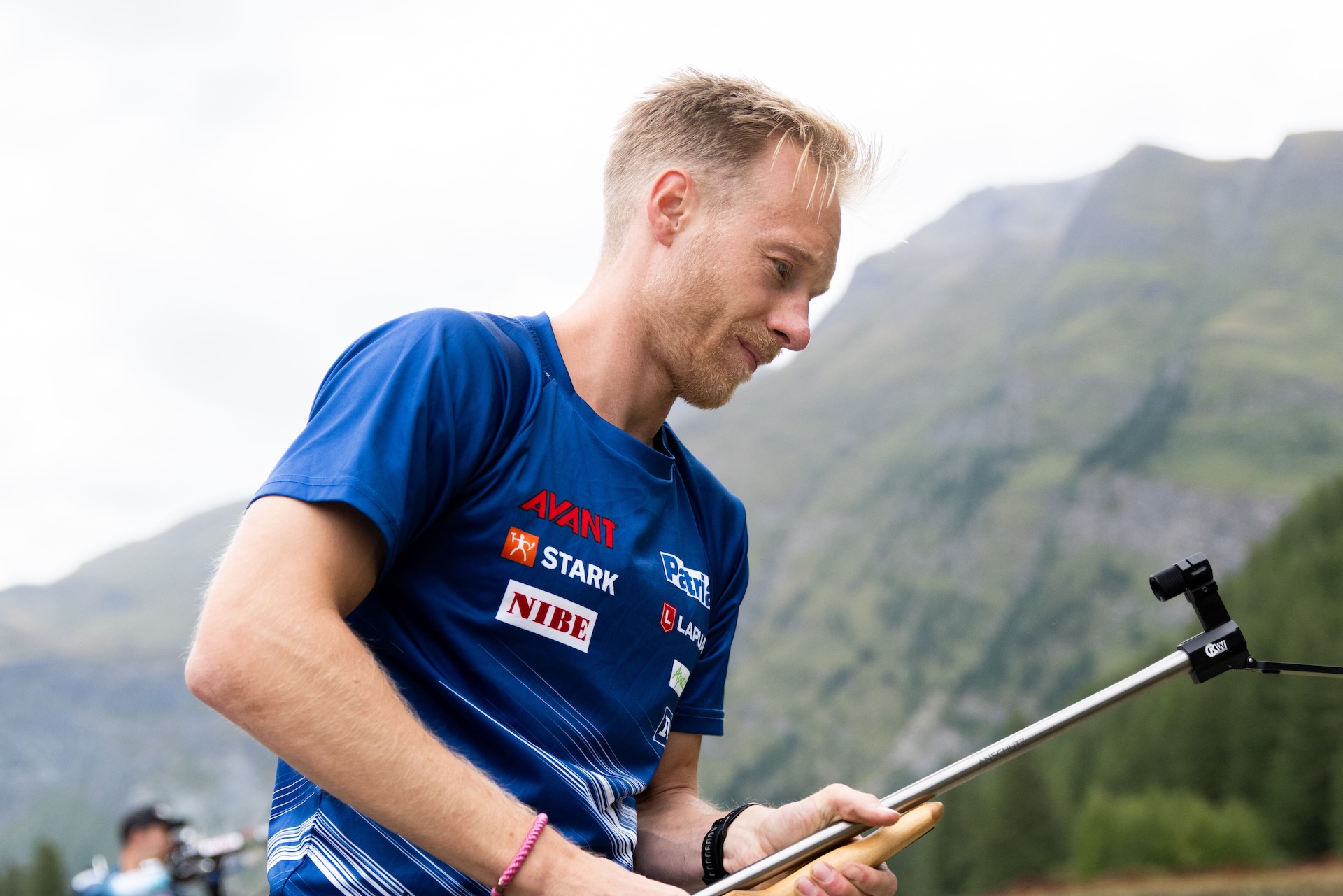
Without this legal permit, Heikkinen cannot train with his rifle, nor can he compete in IBU-sanctioned events. This creates a "dead zone" for the athlete; while he can continue to maintain his physical conditioning through cross-country skiing and aerobic training, the loss of his rifle-handling skills—which require constant, daily practice to maintain at an elite level—means that his competitive edge is rapidly eroding. Even if a legal path were to open in the future, the time away from the range may have already caused irreversible damage to his performance trajectory.
Performance Context and Career Potential
Prior to the legal challenges, Heikkinen was widely considered to be on a steep upward trajectory. His 2025-2026 season was marked by consistent progress, signaling that he was ready to transition from a promising junior talent to a regular top-20 contender in the senior circuit.
Key performance milestones from his recent season include:
- World Cup, Otepää (March): A 14th-place finish, demonstrating his capability to compete against the world’s elite in individual events.
- World Cup, Kontiolahti: A 4th-place finish in the relay, highlighting his role as a reliable team asset under high-pressure conditions.
- Olympic Games (Milano/Cortina): Heikkinen served as one of the standout performers for the Finnish contingent, proving his ability to handle the psychological demands of a major multi-sport event.
These results underscore the loss that his absence would represent for the Finnish national program. Finland, a nation with a rich tradition in biathlon, has been investing heavily in young talents like Heikkinen to bolster its competitiveness in the wake of aging veterans. The potential loss of a skater of his caliber represents not just a personal tragedy for the athlete, but a strategic setback for the national sports federation.
Legal and Ethical Implications
The case of Arttu Heikkinen serves as a stark reminder of the responsibilities that accompany the privilege of firearm ownership, even within the context of professional sport. The courts have maintained that the level of negligence displayed during the hunting accident was significant enough to justify the removal of the individual’s right to own weapons, regardless of the impact on his professional livelihood.
Legal analysts observing the case note that the appellate court’s decision to increase the compensation amount suggests a firm stance on the gravity of the injuries sustained by the victim. While sports fans often focus on the competitive loss, the legal proceedings prioritize the victim’s right to restitution and the broader societal interest in ensuring that individuals who have demonstrated a lack of caution with firearms are prohibited from their use.
For the governing bodies of Finnish sport, the situation highlights a complex ethical dilemma. They are forced to balance the desire to support an athlete who has contributed to the national program with the necessity of respecting the finality of judicial decisions. As Kulstad noted, the federation’s support is conditional upon legality. Should the Supreme Court refuse to hear the case or uphold the lower court’s ruling, the Finnish biathlon community will be forced to accept that the career of one of its most promising stars has come to a premature end.
Future Outlook
As the 60-day window for an appeal to the Supreme Court closes, the uncertainty surrounding Heikkinen continues to affect the national team’s preparations. The coaching staff has expressed that they can only "hope for the best" while preparing for a scenario where they must move forward without their young star.
For Heikkinen, the path ahead is fraught with difficulty. Even if he were to clear his name or find a way to navigate the legal requirements for a firearm license, the social and psychological toll of the accident, combined with the intense media scrutiny, will present a challenge to his return to elite competition. The sporting world, while often focused on redemption arcs and comebacks, here faces a situation defined by the permanent consequences of a single, tragic moment.
As the Finnish public and the international biathlon community await the final decision, the case stands as a cautionary tale regarding the responsibilities inherent in elite sports. It serves as a reminder that the boundary between an athlete’s public persona and their private life is often porous, and that actions taken in the latter can have a profound, and potentially terminal, impact on the former. For now, the Finnish biathlon team remains in a holding pattern, hoping for a legal resolution that, regardless of the outcome, will leave an indelible mark on the sport for years to come.

