
As the winter season approaches and thousands of holidaymakers prepare to book flights for skiing and winter sports excursions, the reality of modern air travel is increasingly defined by systemic challenges. What was once a routine experience—the transit between home and destination—has been fundamentally altered by a new industry landscape characterized by persistent delays, operational disruptions, and the volatility of dynamic pricing. A definitive new study conducted by Click Intelligence has shed light on the current state of the UK aviation sector, ranking major airports based on their propensity to cause passenger stress and dissatisfaction.
Methodology and Scope of the Investigation
The research, which evaluated major UK air transport hubs, employed a multi-faceted approach to quantify "Airport Stress." Researchers assessed several key performance indicators directly correlated with passenger anxiety, including flight cancellation rates, the frequency and duration of delays, facility congestion, and subjective customer satisfaction ratings. By aggregating these metrics into a singular "Airport Stress Score" on a scale of 0 to 100—where 100 represents the highest level of difficulty for travellers—the study provides a stark benchmarking tool for the aviation industry.
Factors analyzed in the study extended beyond mere flight scheduling. The passenger rating system incorporated granular feedback regarding the quality of the on-ground experience, such as the efficiency of check-in queues, the cost-to-value ratio of airport retail and dining, and the maintenance standards of public amenities, including terminal restrooms.
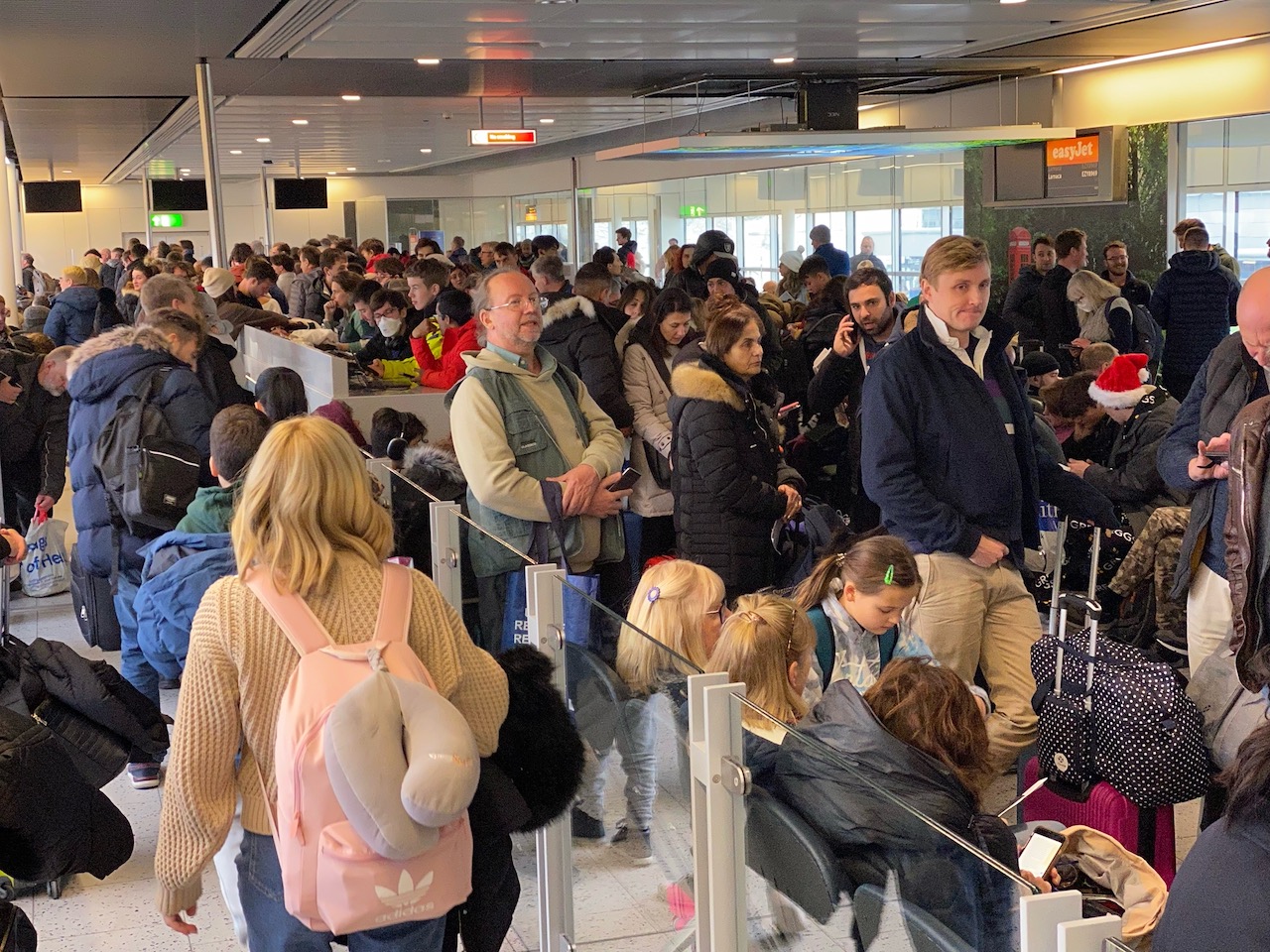
The Rankings: Where Passengers Face the Greatest Hurdles
According to the data, Manchester Airport has emerged as the most challenging hub for travellers in the United Kingdom, recording a stress score of 95.2. This ranking is bolstered by a customer satisfaction score of only 50 out of 100, the lowest in the country. Passengers frequently cited the high cost of food and retail, coupled with a lack of adequate seating near departure gates, as primary drivers of their negative experiences. Operationally, the airport struggles with significant reliability issues, with 34.5% of all departing flights suffering from delays and approximately 1 in 300 flights being cancelled outright.
Luton Airport follows in the second position, with a stress score of 77.3. Serving over 18 million passengers annually, the hub struggles to manage its high throughput efficiently, leading to a 24.5% delay rate and an average departure delay of 13 minutes. While seemingly modest, these delays are often sufficient to trigger a cascade of missed connections for passengers travelling further afield.
Birmingham Airport, ranking third with a stress score of 77, highlights a recurring theme in the report: the intersection of capacity constraints and reliability. With a cancellation rate of 0.64%—nearly double that of Manchester—and a 30% flight delay rate, Birmingham illustrates the operational friction currently impacting regional UK hubs.
Heathrow and the Burden of Scale
London Heathrow, the UK’s primary international gateway, occupies the fourth position with a stress score of 74.2. Despite its massive infrastructure, the airport faces immense pressure due to its passenger density, which reaches approximately 27,929 people per acre. The sheer volume of traffic at Heathrow brings unique challenges; it maintains the highest cancellation rate of the top-ranked airports at 1.23%. Passenger feedback for Heathrow consistently highlights frustrations regarding lost luggage, poor seating availability, and high-priced amenities.

Rounding out the top five, Cardiff Wales Airport presents a distinct set of challenges. While it serves fewer passengers than the major London or Manchester hubs, it records the highest frequency of flight delays in the country at 35%. Passengers at Cardiff also face the longest average wait times for delayed departures, clocking in at 24.6 minutes, which significantly compounds the frustration of travellers attempting to maintain strict itineraries.
Industry Context and Structural Challenges
The current volatility in air travel is not a localized phenomenon but rather the result of a post-pandemic recovery phase that has been hampered by labour shortages, supply chain disruptions, and aging infrastructure. James Owen, Co-founder and Director at Click Intelligence, noted that many airports are currently trapped in a cycle of expansion that inadvertently hinders the passenger experience.
"Airports are struggling to manage the sheer volume of passengers," Owen observed. "Even when they attempt to expand their footprint, the presence of ongoing construction sites creates a fragmented environment that disrupts the flow between gates and increases passenger stress. At hubs like Heathrow, the primary issue is structural. Management often treats individual passenger complaints as isolated service failures rather than systemic issues that require comprehensive, long-term strategic overhauls."
Comparative Analysis: The European Experience
While the UK study focuses on domestic hubs, experienced travellers often contrast these findings with the efficiency of European airports. Frequent flyers have long noted the marked difference between high-stress, congested hubs and smaller, more agile airports. In an unscientific assessment of European gateways, Geneva Airport is frequently cited by seasonal travellers as a high-pressure environment, particularly during peak ski weekends when the influx of passengers carrying heavy, cumbersome equipment pushes the facility to its physical limit.

Conversely, airports like Innsbruck in Austria are frequently praised for their efficiency and ease of transit, providing a more streamlined experience despite the geographical challenges of operating in mountainous terrain. Narvik in Norway has also been highlighted as a model for efficient regional travel, where the integration of local transport and airport operations minimizes the friction points often found in larger, more bureaucratic UK hubs.
Implications for the Future of Aviation
The implications of this study are significant for both airport operators and the travelling public. As airlines continue to implement dynamic pricing models—where fares fluctuate based on demand and operational costs—the "hidden cost" of travel, in terms of time, stress, and inconvenience, is becoming a primary factor in consumer decision-making.
For airports like Manchester and Birmingham, the data serves as a clear indicator that capital investment must be directed toward the passenger experience rather than just capacity expansion. The data suggests that increasing the number of gates or runways is insufficient if the "soft" infrastructure—such as seating, restroom cleanliness, and information transparency—is neglected.
As the industry moves toward 2027, the challenge for UK airports will be to reconcile their operational capacity with the rising expectations of a public that is increasingly sensitive to the quality of their travel experience. Without a shift toward structural improvements and a more holistic approach to customer service, the "new norm" of travel will likely continue to be one of dissatisfaction and operational friction.

Summary Table of Findings
| Airport | Satisfaction (/100) | Density (Pax/Acre) | Cancellation Rate (%) | % Flights Delayed | Avg Delay (min) | Stress Score |
|---|---|---|---|---|---|---|
| Manchester | 50 | 23,261 | 0.34 | 34.5 | 17.8 | 95.2 |
| Luton | 51 | 17,097 | 0.18 | 24.5 | 12.9 | 77.3 |
| Birmingham | 57 | 16,877 | 0.64 | 30.0 | 14.9 | 77.0 |
| Heathrow | 57 | 27,929 | 1.23 | 22.5 | 13.4 | 74.2 |
| Cardiff Wales | 68 | 1,637 | 0.77 | 35.0 | 24.6 | 72.4 |
| Gatwick | 56 | 25,264 | 0.42 | 25.4 | 13.6 | 71.3 |
| Bristol | 57 | 22,193 | 0.26 | 26.9 | 13.9 | 71.0 |
| Stansted | 53 | 12,667 | 0.18 | 24.3 | 12.7 | 65.2 |
| Exeter | 80 | 951 | 3.68 | 28.5 | 13.6 | 60.5 |
| Glasgow | 63 | 11,236 | 0.77 | 21.3 | 11.5 | 59.2 |
The full dataset, detailing the complete methodology and individual airport performance indicators, is available through the official report published by Click Intelligence. As passengers plan their winter travel, this data serves as a vital resource for navigating the current complexities of the UK’s aviation infrastructure.

