
As winter approaches and mountain resorts begin preparing their snowmaking infrastructure for the upcoming ski season, winter sports enthusiasts turn their attention toward gear maintenance, pass purchases, and physical conditioning. While the allure of fresh powder and long cruiser runs drives millions of skiers to the slopes each year, the physical toll of alpine skiing remains a significant concern for medical professionals. Whether navigating early-season hazards such as hidden rocks and thin snowpacks or charging through tracked-out powder during peak winter, skiers subject their bodies to immense mechanical forces, rapid deceleration, and high-velocity impacts.
According to sports medicine data compiled by orthopedic research groups, acute knee injuries—particularly tears of the anterior cruciate ligament (ACL)—along with shoulder separations and wrist fractures continue to dominate emergency room admissions at ski-town medical centers. While hazards like tree collisions, unexpected terrain changes, and errant skiers are impossible to completely eliminate, sports physical therapists emphasize that foundational physical conditioning can drastically reduce an individual’s susceptibility to severe trauma. To address this, Dr. Matt Hastings, an orthopedic and sports physical therapist at The Alpine Athlete in Denver, Colorado, has outlined five essential pillars of ski fitness designed to fortify the body against the unique demands of alpine terrain. By establishing a robust conditioning routine well before the first snowfall, skiers can transform their movement efficiency, enhance joint stability, and protect themselves against debilitating injuries.
The Biomechanical Realities of Alpine Skiing
To understand why specialized conditioning is necessary, one must examine the biomechanics of alpine skiing. Unlike running or cycling, which rely on linear, predictable movement patterns, skiing is a multi-planar, highly dynamic sport. Descending a mountain requires the lower extremities to function continuously as biological shock absorbers. Every bump, rut, and transition encountered on a descent sends kinetic energy up through the ankles, knees, hips, and spine.
Furthermore, carving turns places asymmetric, sustained loads on the musculoskeletal system. Maintaining an edge on a steep, icy slope requires isometric muscle contractions that can quickly exhaust unconditioned muscle fibers, leading to a breakdown in form, delayed reaction times, and ultimately, vulnerable joint positioning. Recognizing these physiological stressors allows trainers and physical therapists to reverse-engineer off-season workout regimens that directly replicate or prepare the body for the forces experienced on the snow.
1. Eccentric Exercises: Training the Body to Absorb Downhill Forces
The first critical component of an injury-prevention routine involves eccentric muscle contractions. In an eccentric movement, the target muscle lengthens while under tension, acting as a brake against an external load. In the context of strength training, this is commonly recognized as the lowering phase of an exercise, such as the descent of a squat or a leg press.
On the ski hill, eccentric loading occurs constantly. As a skier navigates downward, gravity accelerates their mass, and the legs must dynamically yield and absorb the terrain to maintain contact with the snow and keep the upper body stable. Without adequate eccentric strength, the quadriceps and glutes fatigue rapidly, shifting stress away from muscular tissue and onto passive restraints such as ligaments and joint capsules—a primary precursor to knee injuries.
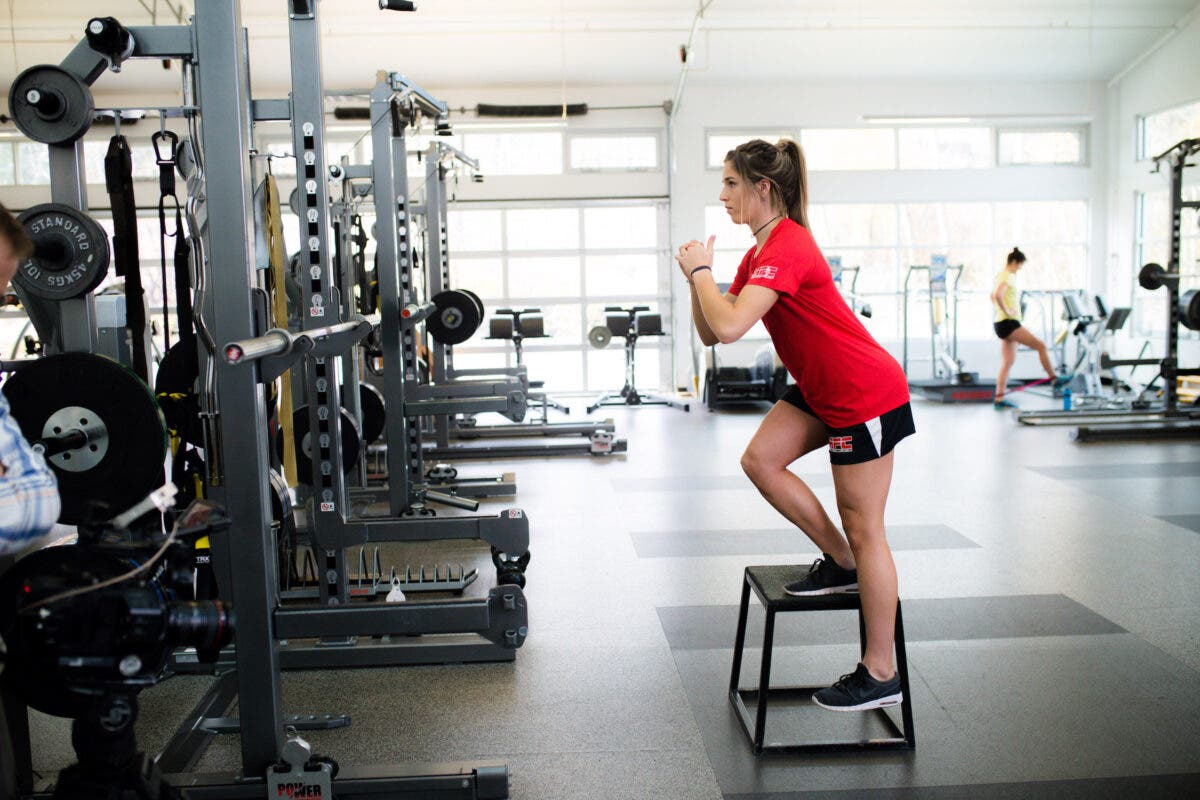
To build eccentric capacity into a standard gym routine, athletes should deliberately slow down the lowering phase of lifts like squats, lunges, and step-ups. Controlling the descent over a three- to four-second window forces muscle fibers to adapt to high-load resistance over extended durations. This heightened tissue tolerance directly translates to smoother, more controlled descents during long, sustained ski runs where leg fatigue is often the primary limiting factor.
2. Isometric Strengthening: Conquering the Dreaded Quad Burn
Few sensations are as universally recognized by skiers as the deep, searing muscle burn in the thighs during a long, unyielding carving turn. This physiological response is the result of isometric muscle contractions—a state in which a muscle fires to stabilize a joint at a fixed angle without shortening or lengthening.
When a skier holds a deep, carved arc down a steep slope, the knee and hip joints remain locked in a semi-flexed position while the quadriceps work overtime to prevent the body from collapsing under centrifugal and gravitational forces. If these stabilizing muscles lack endurance, form deteriorates, balance is compromised, and the skier becomes exponentially more susceptible to a fall or a blown knee.
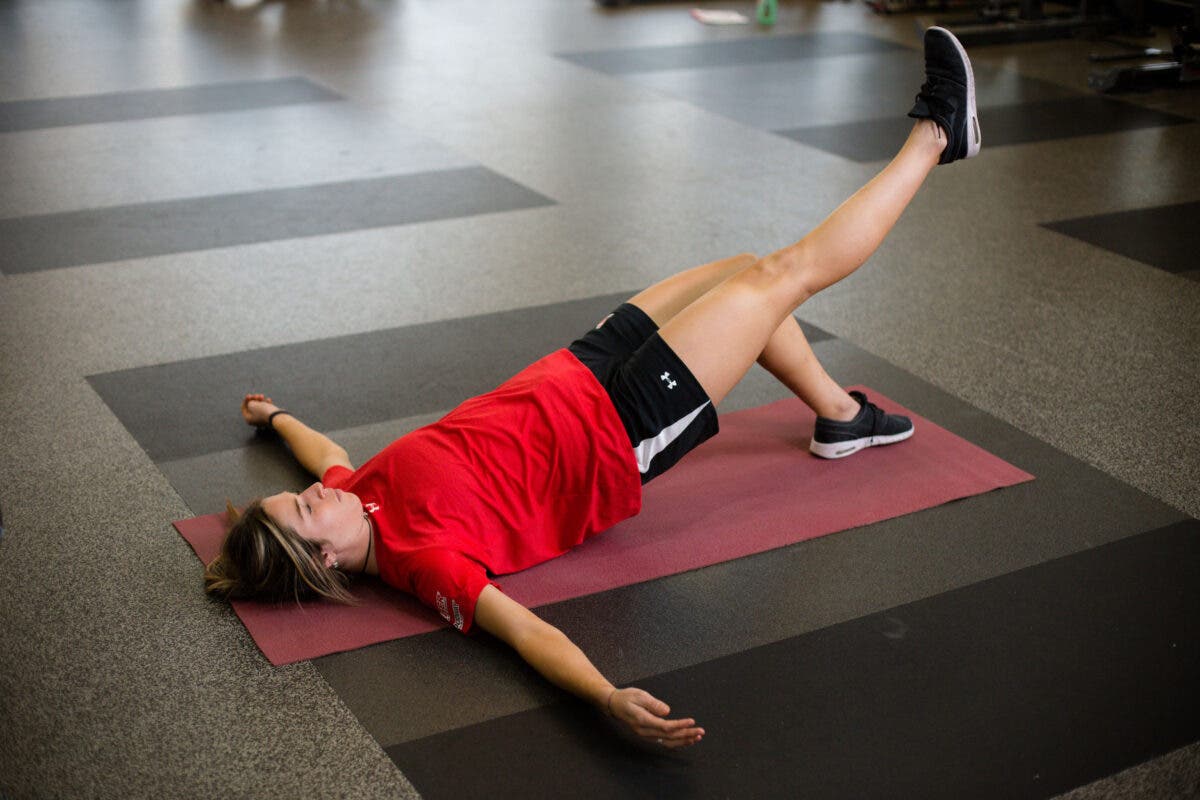
To combat this, physical therapists recommend integrating targeted isometric holds into off-season workouts. The classic wall sit remains one of the most effective, accessible tools for building isometric endurance in the quads. To maximize its efficacy for skiing, athletes can progress from bodyweight holds to adding external resistance, such as holding dumbbells or pressing weight plates outward at arm’s length. Single-leg isometric holds, such as the single-leg glute bridge, additionally target the posterior chain—including the glutes and hamstrings—providing a balanced foundation of joint stability across the entire lower body.
3. Single-Leg Mechanics: Addressing the Asymmetric Nature of Turns
While bipedal movement is standard for human locomotion, alpine skiing is fundamentally a single-leg sport executed simultaneously on two separate planks. As a skier moves down the mountain, body weight shifts dynamically from the inside edge of the downhill ski to the inside edge of the newly established downhill ski with every single turn transition.
This weight-shifting requires exceptional unilateral balance, stability, and strength. If one leg is significantly stronger or more coordinated than the other, the skier will experience mechanical imbalances that compromise edge control and increase the risk of uneven loading during a fall.
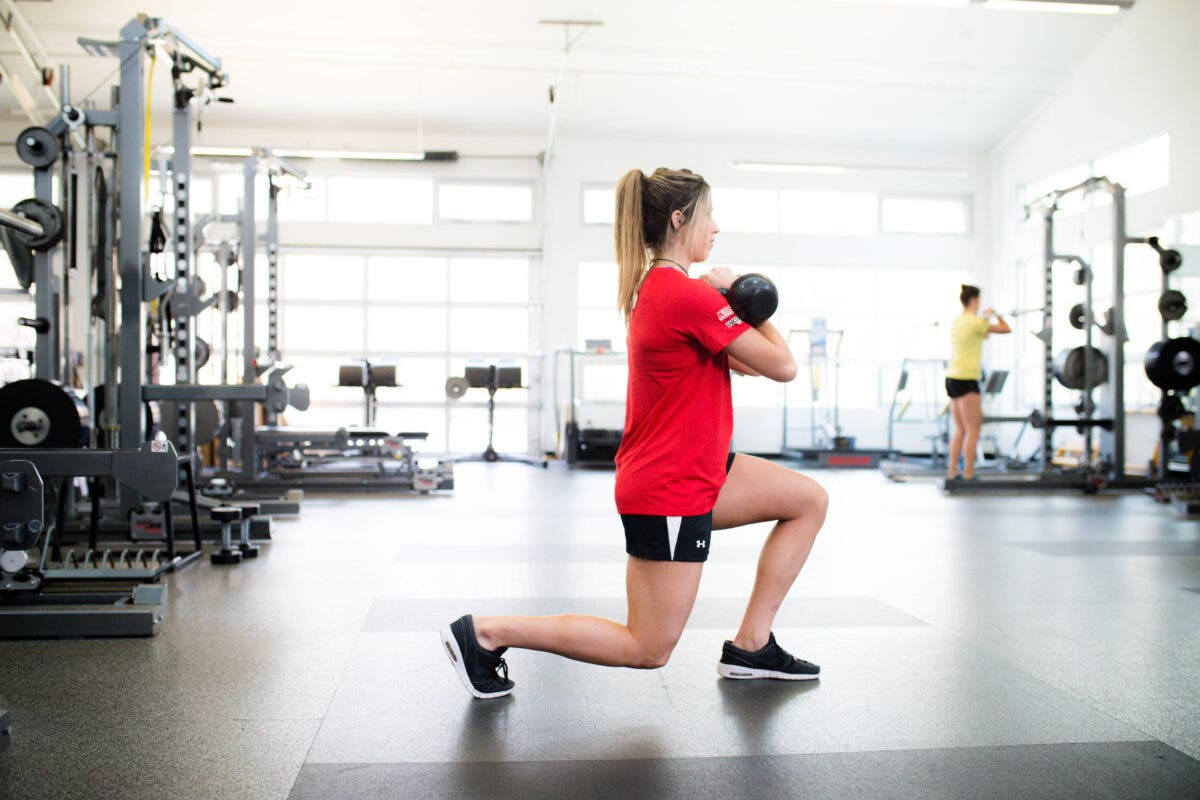
To rectify this, conditioning routines must move away from bilateral movements like standard squats and deadlifts and incorporate multi-planar single-leg exercises. Lunges performed in forward, reverse, and lateral planes challenge the stabilizing muscles of the hips, quads, and hamstrings from varying angles. By forcing the smaller stabilizing muscles—such as the gluteus medius—to engage, athletes improve their lateral stability, ensuring they can absorb unexpected impacts or recover balance when a ski catches an edge unexpectedly.
4. Advanced Core and Trunk Control Through Plank Variations
The core is often misunderstood as merely the abdominal wall, but in alpine sports, the core encompasses the entire trunk, including the deep abdominals, obliques, lower back, and hips. Skiing demands that the upper and lower extremities operate independently while the central trunk remains braced and stable. A weak core results in a disconnect between upper-body posture and lower-body tracking, leading to erratic turns and a higher likelihood of lower back strain.
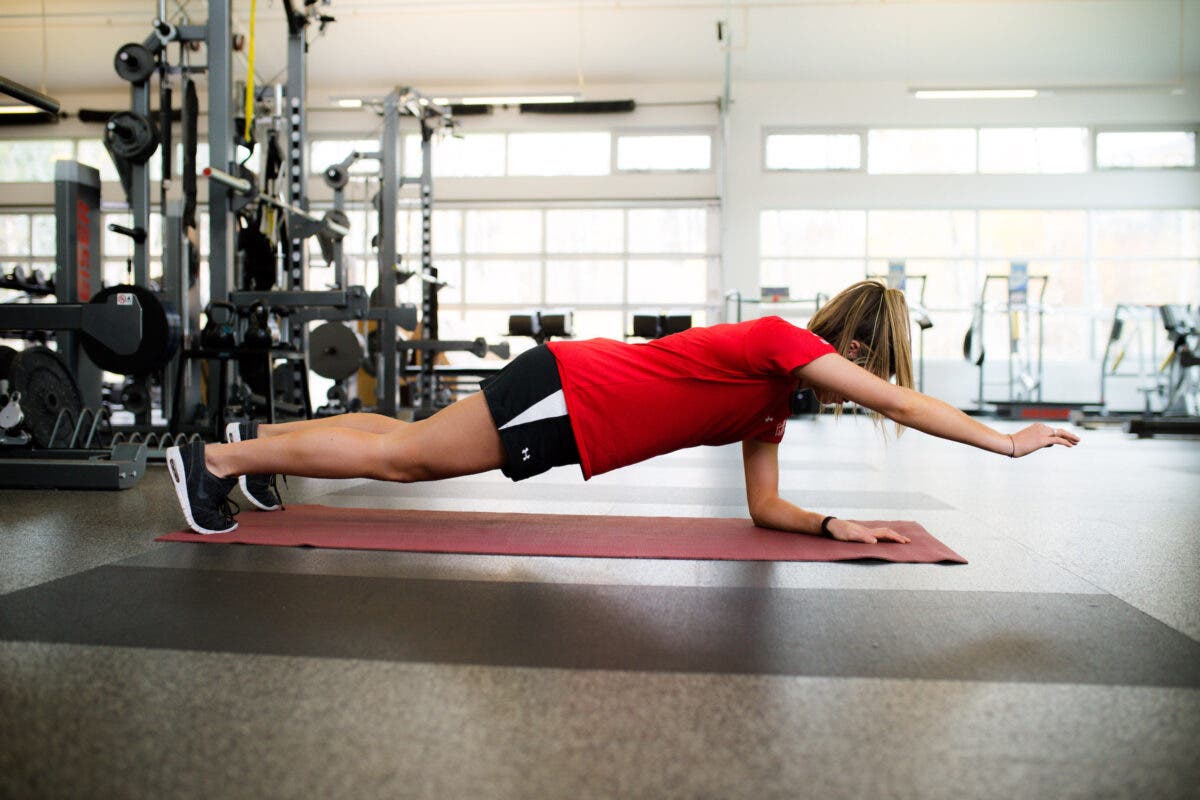
While traditional forearm planks are a staple of general fitness, they often fail to prepare the body for the rotational and lateral forces experienced on a mountain. Dr. Hastings recommends advancing core regimens by incorporating multi-directional variations that challenge the midsection from all angles.
Side-lying planks, planks with alternating arm or leg reaches, and advanced movements like the Copenhagen plank—which heavily targets the adductors and core stabilizers—are exceptionally effective. These dynamic variations train the nervous system to maintain trunk rigidity while the limbs move independently, mirroring the physical demands of planting a ski pole while carving a high-speed turn.
5. Comprehensive Mobility Work and Active Recovery
Strength and stability alone are insufficient without the requisite joint mobility to allow full, uninhibited ranges of motion. Ski boots lock the ankles into a rigid, slightly forward-flexed position, shifting physical compensation demands upward into the knees, hips, and lumbar spine. If a skier lacks adequate mobility in these critical joints, movement patterns break down, leading to overuse injuries, chronic stiffness, and a diminished capacity to recover between hard ski days.
Incorporating structured mobility work into both pre- and post-ski routines is vital for long-term joint health and injury mitigation. Rather than relying on a generalized stretching template, athletes should assess their specific movement restrictions—paying close attention to ankle dorsiflexion, hip internal and external rotation, and thoracic spine extension.
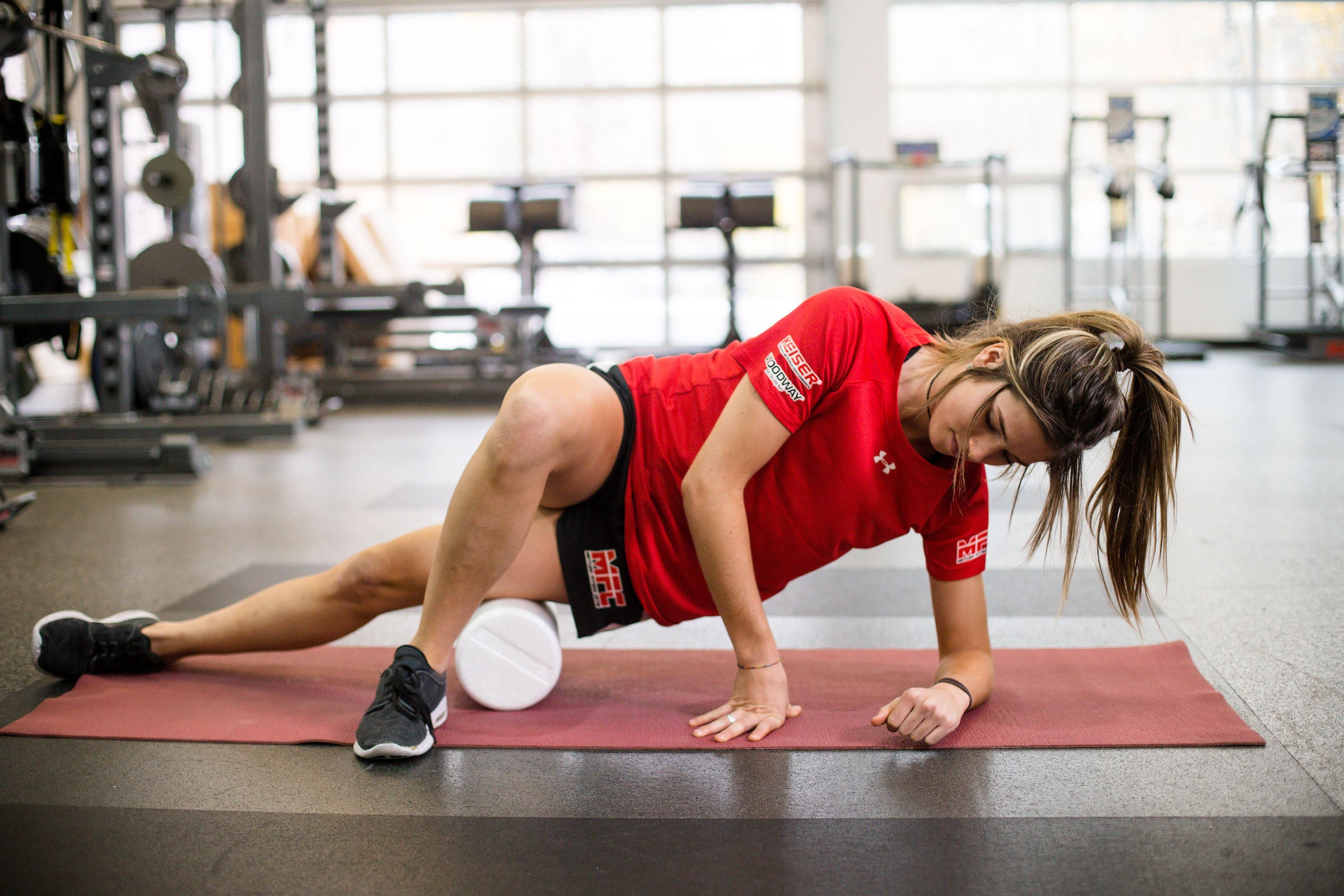
Using soft-tissue tools such as foam rollers, massage guns, and resistance bands helps alleviate localized muscle tightness, break down fascial adhesions, and restore normal tissue sliding mechanics. By prioritizing recovery alongside strength training, skiers ensure their bodies can handle the cumulative stress of a high-volume winter season without succumbing to preventable physical breakdown.
Broader Implications for the Ski Industry and Public Safety
The growing emphasis on pre-season physical conditioning reflects a broader cultural and economic shift within the winter sports industry. Mountain resorts, ski patrols, and orthopedic clinics have long observed the correlation between early-season fatigue and high-acuity trauma incidents. By educating the public on scientifically backed training methodologies—such as those advocated by orthopedic specialists like Dr. Hastings—the snowsports community aims to alleviate the immense strain placed on rural emergency medical services and ski patrol departments during peak operational windows.
Furthermore, as the demographic of active skiers broadens to include older adults and families participating well into their later decades, injury prevention has evolved from an elite athletic concern into a public health priority. Medical analysts note that proactive conditioning not only reduces catastrophic knee ligament tears and bone fractures but also minimizes the prevalence of chronic overuse injuries, such as patellar tendinopathy and lower back pain, which prematurely end many recreational skiing careers.
Ultimately, while the inherent risks of skiing on unpredictable alpine terrain can never be entirely eradicated, bridging the gap between sedentary off-season habits and the rigorous biomechanical demands of the sport remains the single most effective tool in a skier’s arsenal. Through disciplined adherence to eccentric loading, isometric endurance, unilateral strength, core stability, and targeted mobility, enthusiasts can step onto the snow with confidence, ensuring a safer, stronger, and more enjoyable season on the mountain.

