
The transition from the sun-drenched days of summer to the crisp chill of winter often catches recreational athletes off guard, particularly when it comes to the physical demands of alpine skiing. While ski season typically occupies only four to six months of the calendar year, sports medicine professionals and elite trainers increasingly emphasize that true conditioning is a year-round commitment. Maintaining functional strength, joint stability, and core resilience during the off-season is no longer viewed merely as a preventative measure against soreness; it is an absolute necessity for minimizing the risk of severe ligament tears, chronic back pain, and debilitating joint injuries on the slopes.
As winter sports enthusiasts look ahead to the upcoming ski season, physical conditioning experts are advocating for standardized baseline testing and targeted functional training regimens. By establishing measurable strength metrics months before the first snowfall, skiers can identify biomechanical imbalances, build robust support structures around vulnerable joints, and ensure they hit the powder operating at peak physical capacity.

The Physiology of Skiing and the Need for Off-Season Preparation
Alpine skiing is a uniquely demanding discipline that places immense, multi-directional stress on the human body. Unlike linear endurance sports such as running or cycling, skiing requires continuous eccentric muscle contractions—where muscles lengthen under load—as the body absorbs high-impact forces while carving through powder, navigating steep moguls, and enduring sudden shifts in terrain. The quadriceps, glutes, hamstrings, deep core stabilizers, and spinal erectors must work in unison to maintain balance, execute sharp turns, and absorb the shock of high-speed descents.
Sports science data indicates that the vast majority of skiing-related injuries occur during the latter half of the afternoon, when accumulated muscular fatigue compromises joint stability and reflex response times. When core and lower-extremity muscles become exhausted, the load shifts disproportionately to passive structures such as ligaments and tendons, drastically elevating the probability of anterior cruciate ligament (ACL) tears, meniscus damage, and lower back strains.
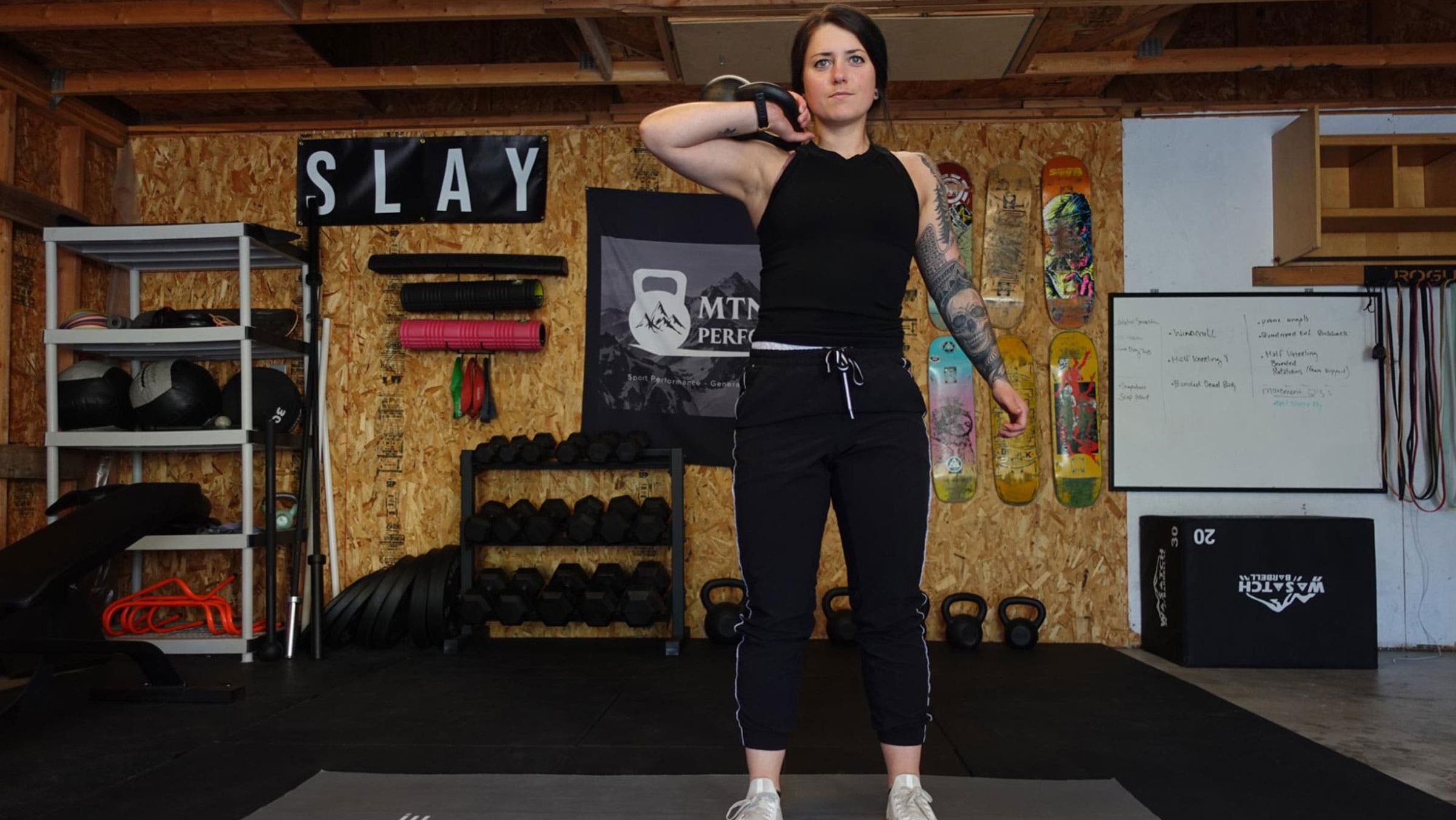
To combat this vulnerability, conditioning specialists recommend introducing dedicated off-season training protocols at least twelve to sixteen weeks prior to the opening of local ski resorts. This structured lead-up time allows for neuromuscular adaptations, hypertrophy of slow- and fast-twitch muscle fibers, and the fortification of connective tissues.
Assessing Baseline Strength: The Side Plank Test
Before diving into a rigorous off-season conditioning routine, trainers advise athletes to conduct a foundational self-assessment to gauge current strength levels in the hips, trunk, and core. One of the most reliable and clinically relevant evaluations is the side plank test, a movement that specifically targets the obliques, gluteus medius, and lateral stabilizers of the spine.
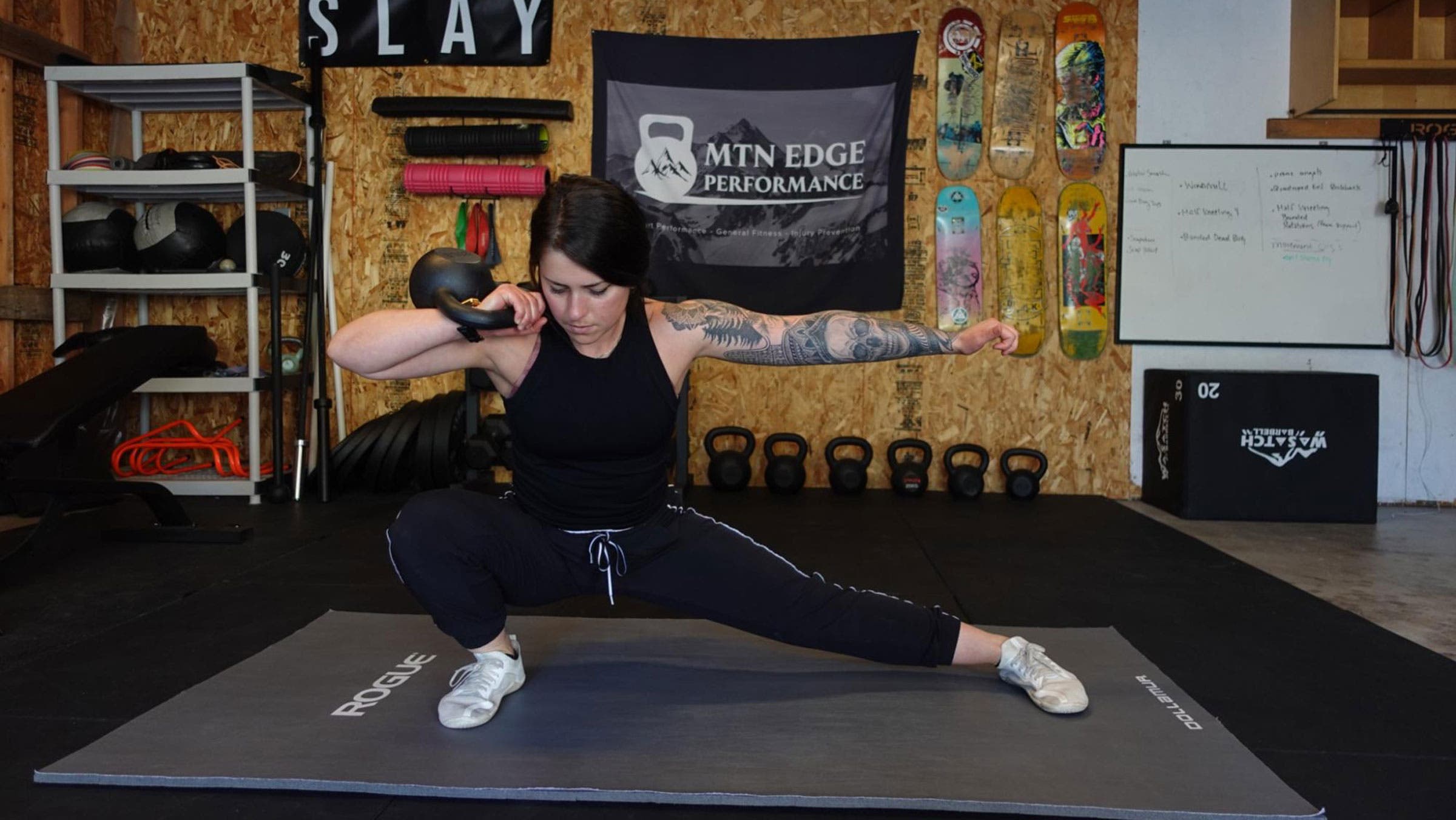
During a ski descent, rotational stability is paramount. The body must continuously resist unwanted lateral forces while adapting to uneven snow conditions. Deficits in hip abduction and oblique strength frequently manifest as pelvic drop, knee valgus (the inward collapse of the knees), and compensatory lower back strain—all of which degrade skiing performance and elevate injury risks.
Executing the Side Plank Evaluation
To perform the side plank assessment accurately, an individual lies on their side with the forearm positioned directly beneath the shoulder, ensuring the elbow and shoulder joint are aligned perpendicularly. The legs are stacked neatly on top of one another. By contracting the core and lateral hip muscles, the individual lifts their hips off the floor, driving them slightly forward to establish a completely straight, rigid line from the crown of the head to the tips of the toes.
To challenge dynamic stability, the top foot is flexed and lifted independently to approximately hip height, held momentarily, and then lowered back down with control. The test concludes when form deteriorates—signified by the supporting shoulder collapsing, the hips sagging toward the floor, or the body losing its linear stack.
Normative data suggests that a well-conditioned skier should comfortably complete at least five controlled lifts per side before experiencing form breakdown. The ultimate training objective for off-season resilience is achieving the capacity to perform 10 to 15 pristine repetitions on each leg, demonstrating the muscular endurance required to withstand prolonged physical exertion on the mountain.
Five Essential Off-Season Exercises for Alpine Conditioning
Once baseline strength is established, athletes can integrate a specialized suite of multi-planar movements designed to mimic the physical demands of skiing. These exercises focus heavily on unilateral stability, rotational control, eccentric leg strength, and posterior chain endurance.
- Lateral Lunges
Traditional forward lunges are valuable, but alpine skiing is fundamentally a lateral and rotational sport. Lateral lunges build robust hip, abductor, and adductor strength, enabling skiers to push off powerfully into turns and absorb lateral impacts efficiently.
Execution: Stand tall with feet hip-width apart. Take a wide step out to the right side, immediately bending the right knee and pushing the hips back while keeping the left leg straight. Ensure the right knee tracks in line with the toes and the chest remains upright. Drive forcefully through the right heel to return to the starting position.
Programming: Complete 8 to 12 repetitions per leg, performing either alternating sides or finishing all reps on one leg before switching. To progress the movement, intermediate and advanced athletes can hold a dumbbell or kettlebell in a goblet position at the chest.
- Step-Ups
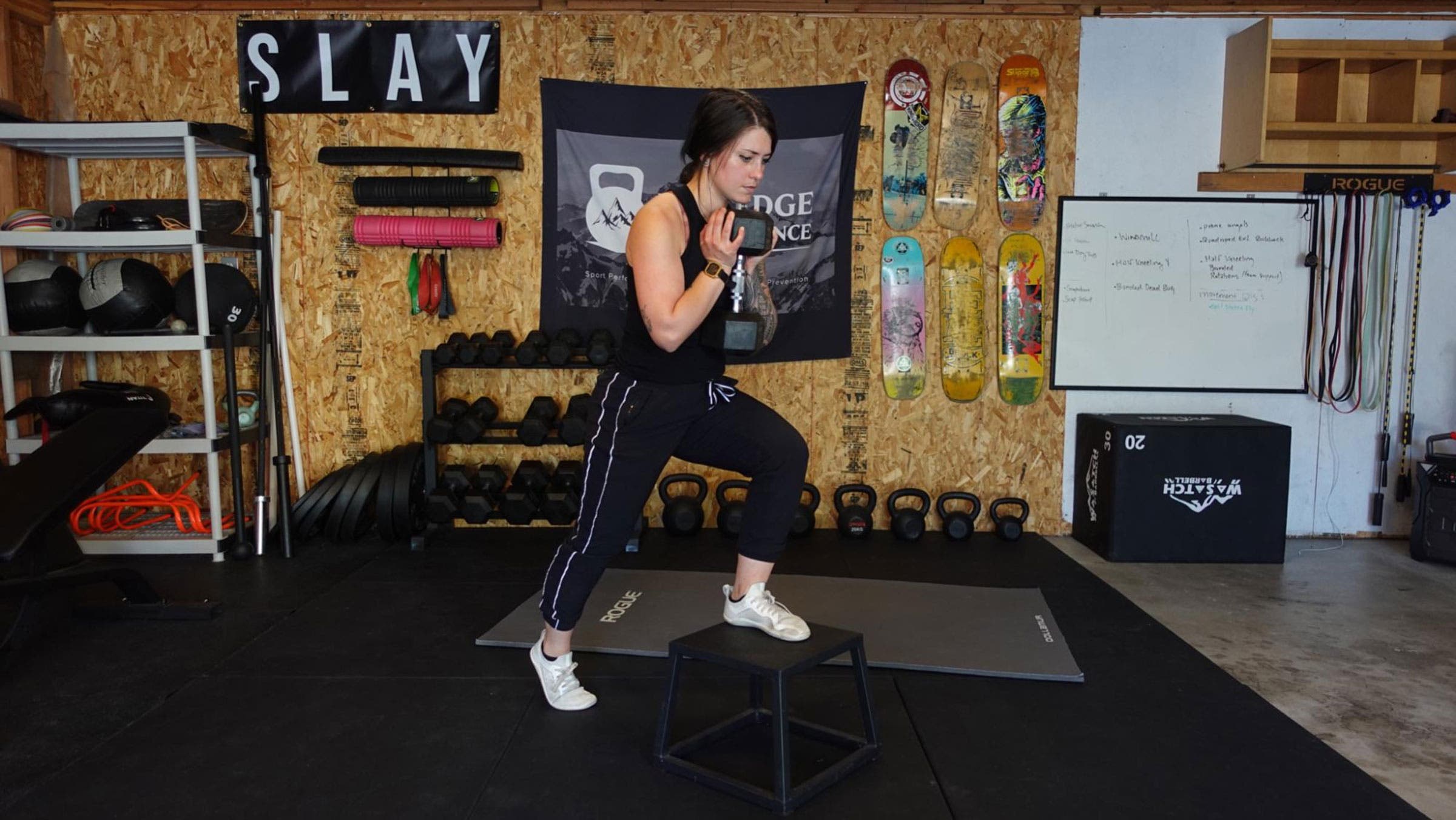
Step-ups are a premier closed-chain exercise that targets the quadriceps, glutes, and hamstrings while rigorously challenging single-leg stability. By eliminating strength asymmetries between the left and right legs, step-ups ensure balanced power delivery during high-speed carving.
Execution: Utilizing a sturdy box, bench, or plyometric step set at shin or knee height, place your right foot flat on the surface. Drive downward through the right heel to lift your body onto the box, bringing the left foot up to meet it with control. Slowly and deliberately reverse the motion, lowering your body back to the floor without relying on momentum.
Programming: Perform 8 to 12 repetitions on one leg before transitioning to the other. Holding a pair of dumbbells at your sides or a single weight at your chest will increase the training stimulus.
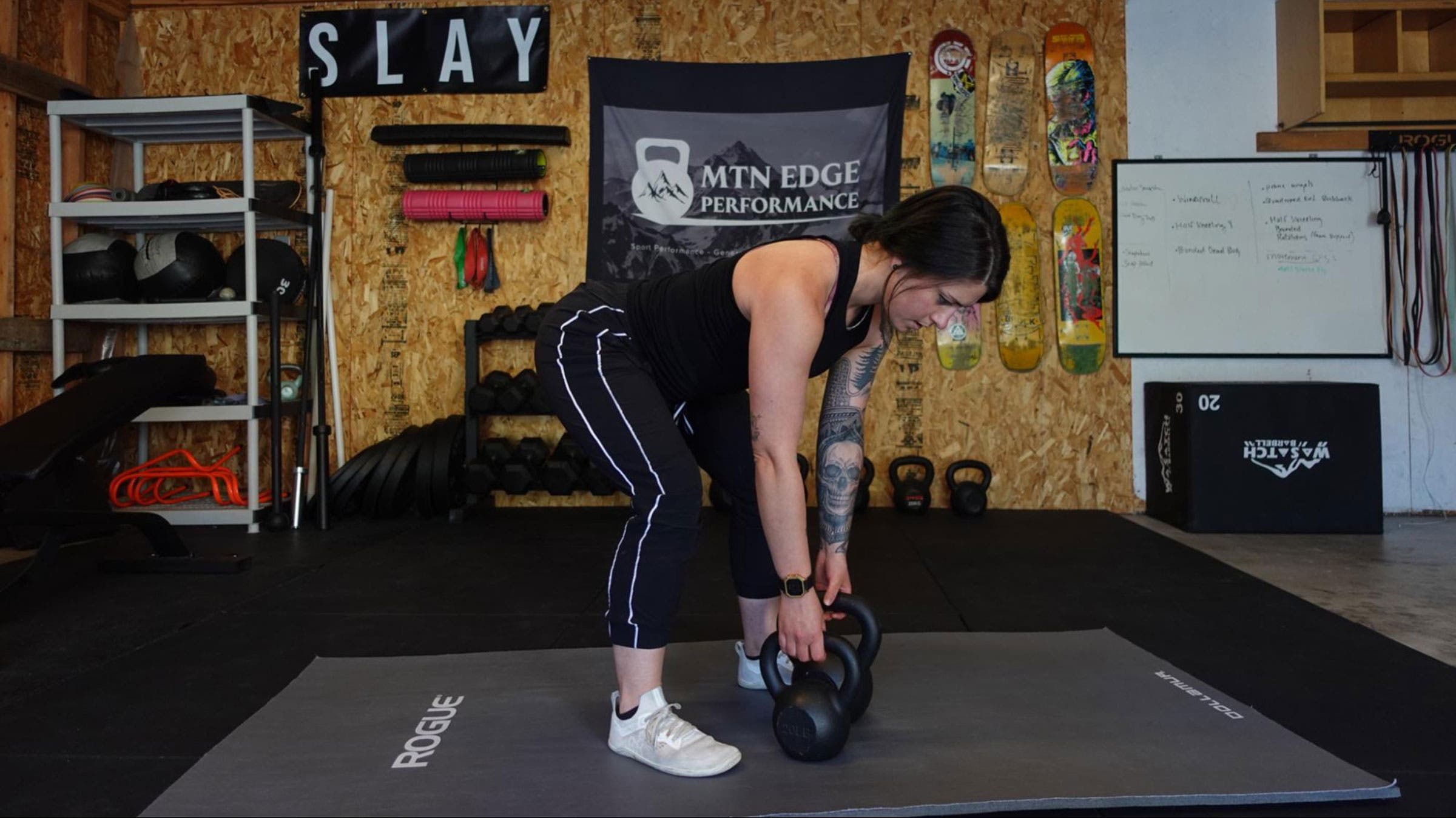
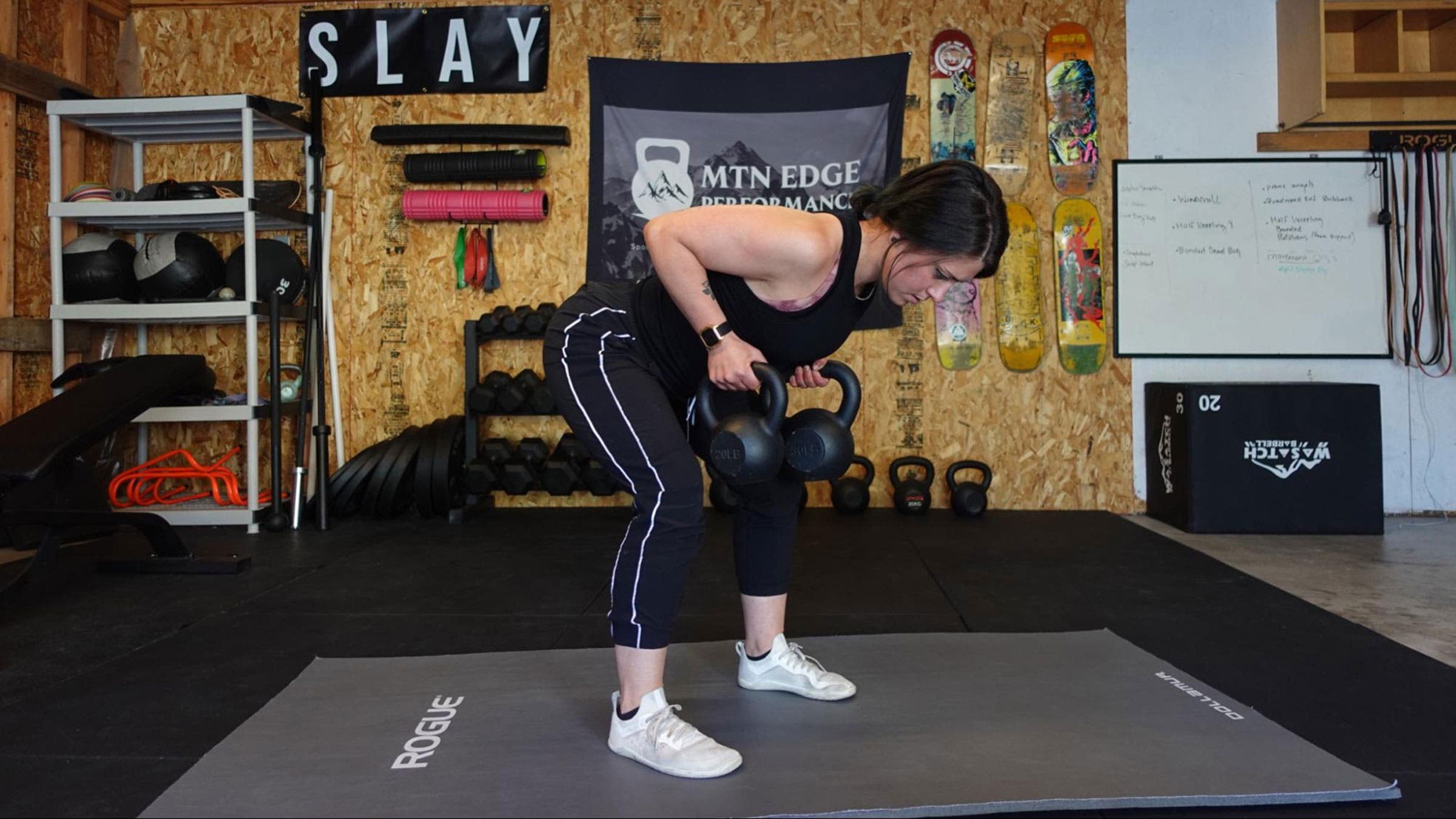
- Gorilla Rows
While lower body strength is critical, a skier’s upper body and core must cooperate to maintain an athletic posture and absorb heavy impact forces. The gorilla row is an advanced compound movement that targets the lower back, core, and erector spinae—the deep spinal muscles responsible for stabilizing the torso when landing jumps or charging through rough crud.
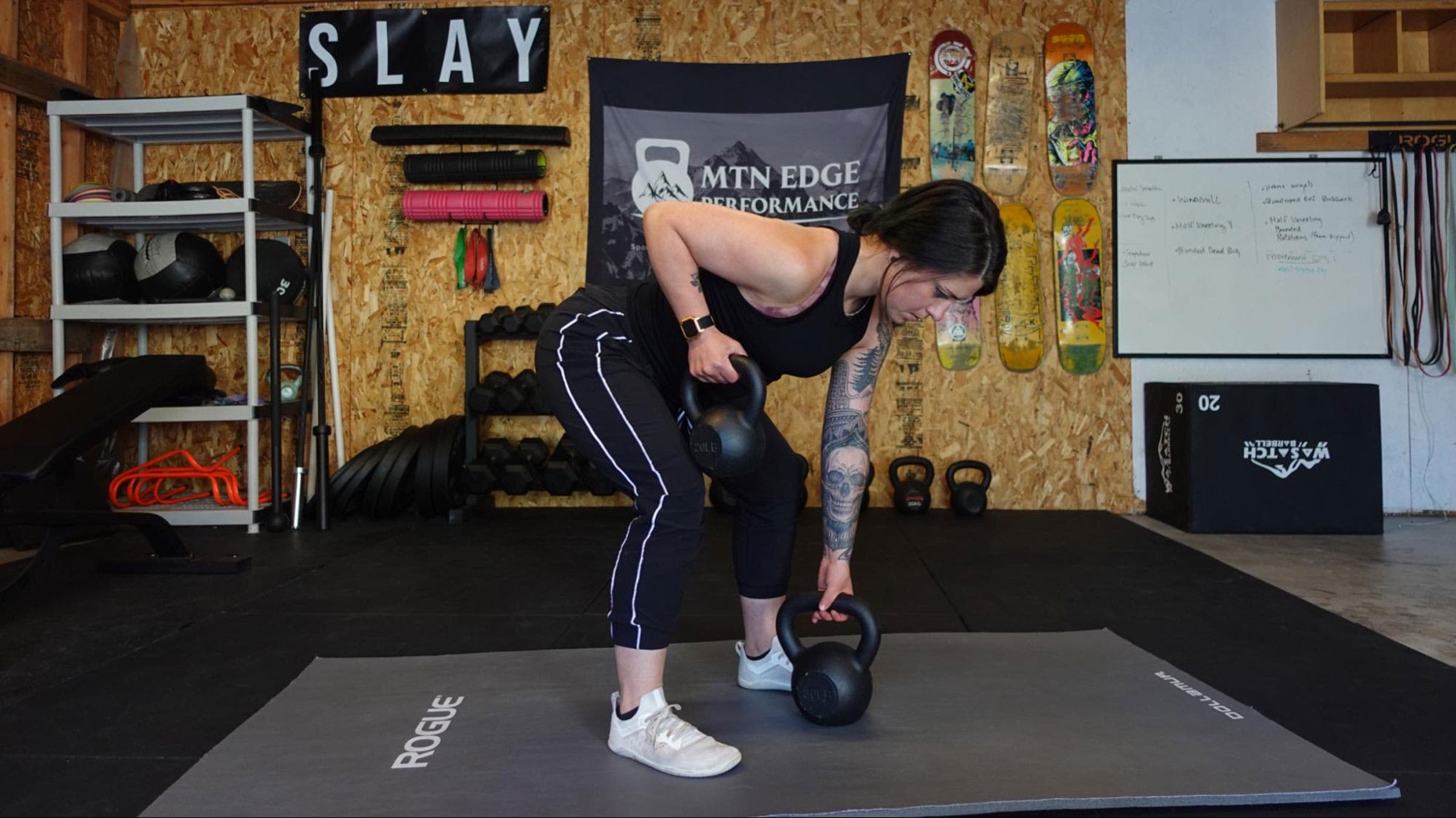
Execution: Place two kettlebells on the floor between your feet. Assume a wide stance, hinge deeply at the hips, and maintain a flat, neutral spine with a braced core. Grasp the handles of the kettlebells. Row one kettlebell upward toward your ribcage while driving the opposite hand and knuckles firmly into the stationary kettlebell for balance. Lower the weight with control and repeat on the opposite side.
Programming: Athletes can alternate pulling arms or execute simultaneous rows for an intensified core challenge. Aim for 8 to 12 repetitions per side across 3 to 4 sets.
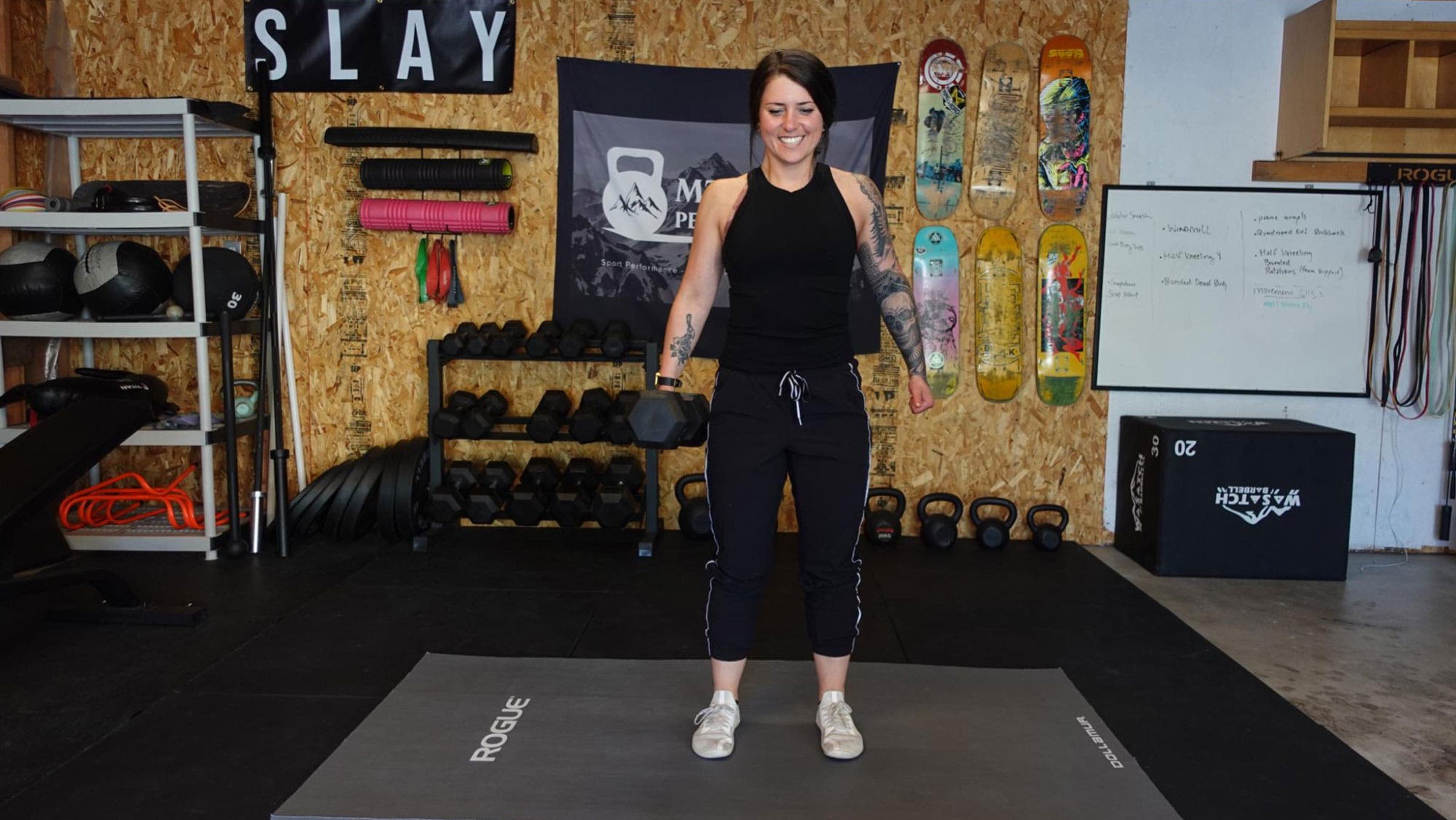
- Suitcase Marches
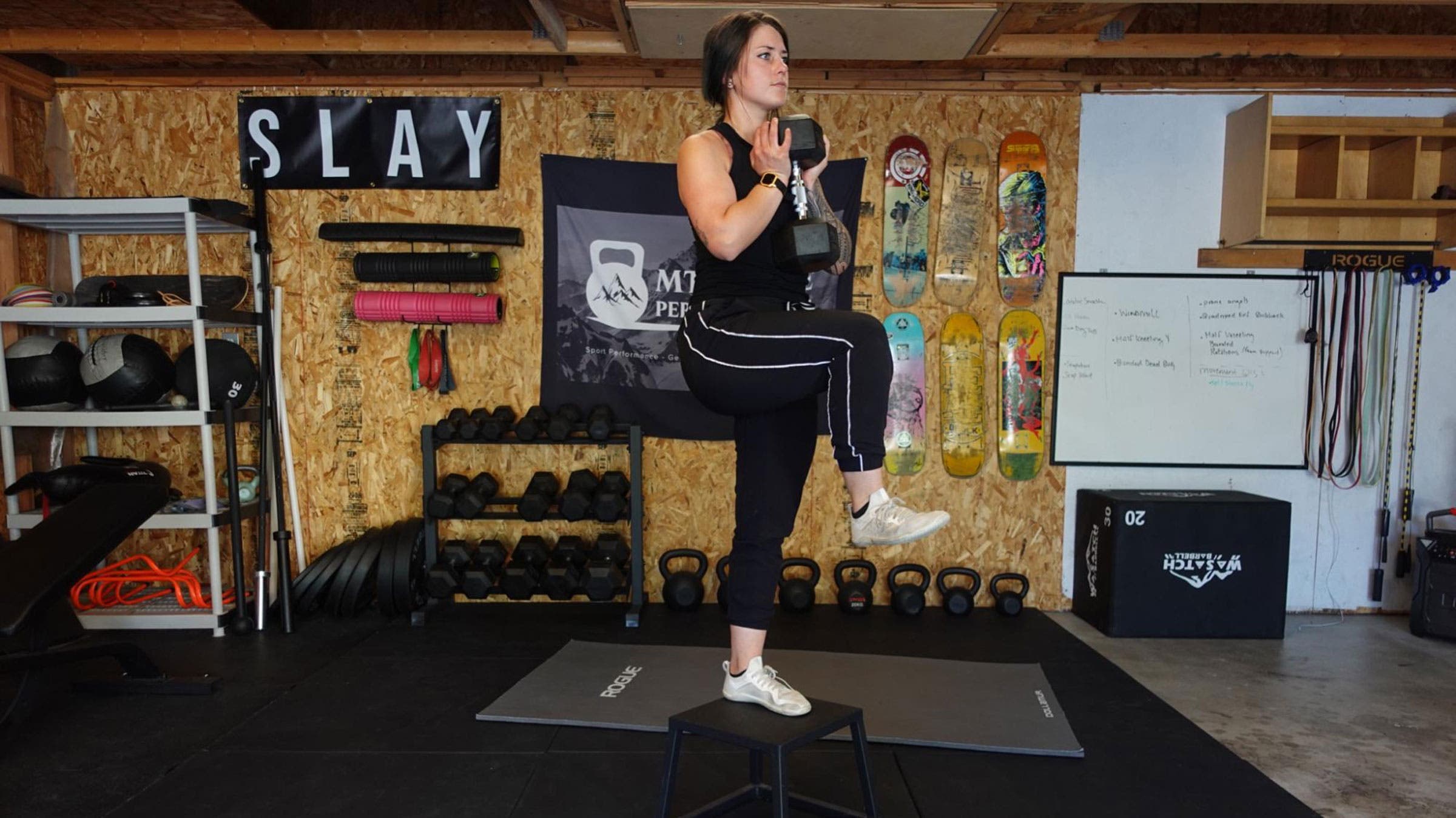
Maintaining an upright, stable torso while moving across dynamic, unpredictable terrain requires exceptional anti-lateral flexion strength of the core. The suitcase march trains the deep stabilizing muscles of the spine and abdomen to resist unwanted bending, directly translating to superior balance when carving through variable snow conditions.
Execution: Hold a medium-to-heavy dumbbell or kettlebell in one hand at your side, exactly as you would carry a suitcase. Stand tall with shoulders leveled and core tightly braced. Begin marching in place, lifting your knees to hip height sequentially while making certain the weighted hand does not pull your torso off-center.
Programming: Execute slow, deliberate marches for 30 to 60 seconds per side, completing 2 to 4 working sets.
- Plank Pull-Throughs
Core stability serves as the absolute anchor for all athletic movement. Plank pull-throughs elevate the standard isometric plank by introducing dynamic upper-body movement, forcing the abdominal wall and obliques to stabilize the pelvis against rotational forces.
Execution: Begin in a high push-up plank position with your hands stacked directly beneath your shoulders and your feet slightly wider than hip-width apart for a stable base. Place a single dumbbell on the floor just outside one hand. Reach underneath your torso with the opposite hand, grab the dumbbell, and drag it horizontally across the floor to the opposite side. Reposition your hand and repeat the movement with the opposing arm.
Programming: Perform continuous, controlled repetitions for 30 to 50 seconds per set, completing 2 to 4 working sets total.
Expert Analysis and Broader Implications
Sports medicine clinicians and physical therapists note that proactive off-season conditioning programs yield quantifiable reductions in emergency room visits and orthopedic clinic consultations during the winter months. Data compiled by alpine safety organizations consistently highlights that poorly conditioned recreational skiers account for a disproportionate percentage of early-season soft tissue injuries.
By systematically addressing muscular weaknesses through diagnostic tests like the side plank evaluation and incorporating multi-planar strength exercises, skiers fundamentally alter their physical risk profile. Experts emphasize that consistency is far more valuable than intensity; engaging in structured, ski-specific training two to three times a week throughout the spring, summer, and autumn months ensures that when the winter season finally arrives, the body is not merely surviving the slopes, but thriving upon them.

